
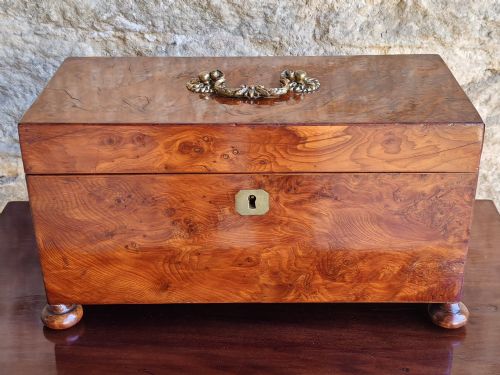
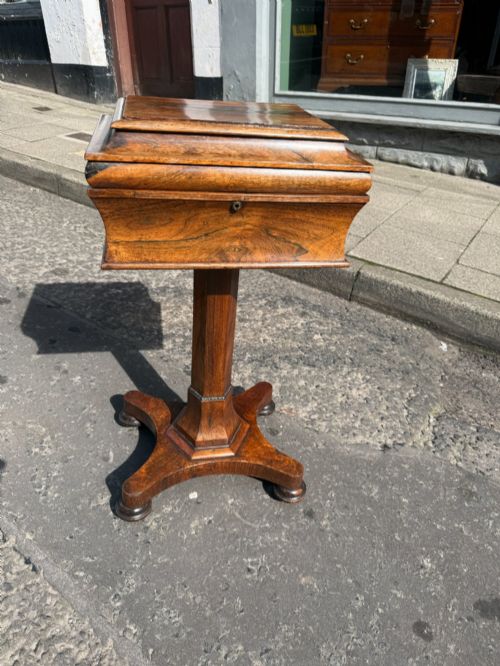
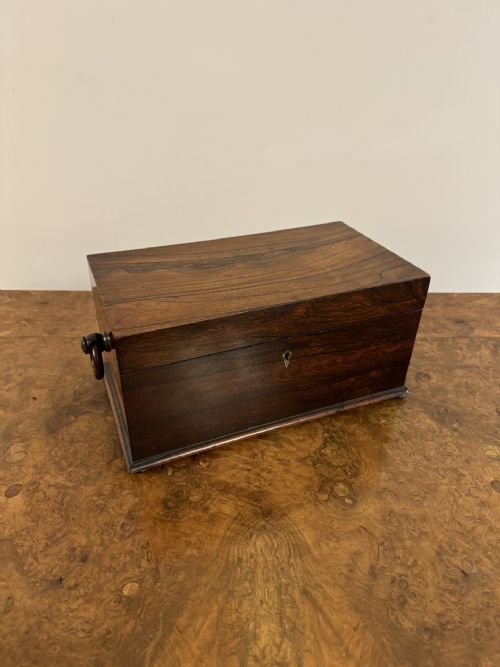
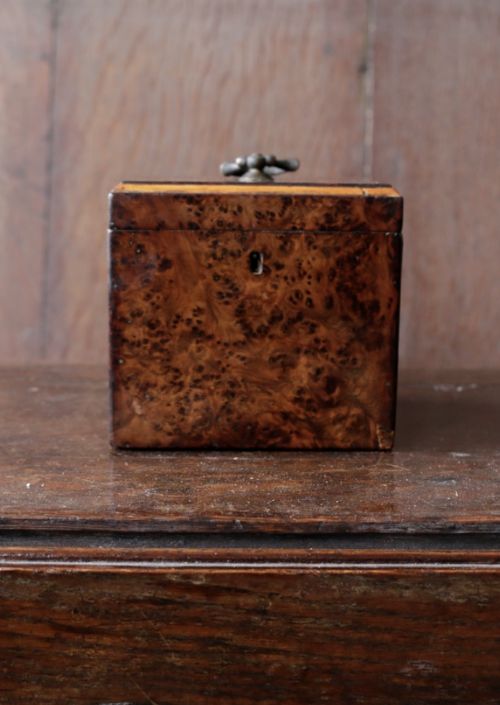


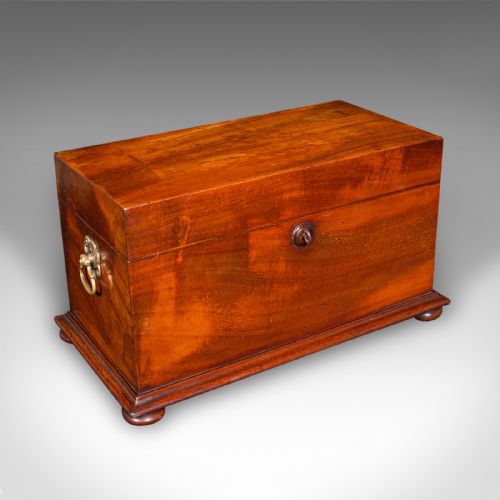

Brown Wood Storage Caddy
A brown wood storage caddy brings tactile warmth and period utility to a room, offering compartments once reserved for precious tea leaves.
Brown Wood Storage Caddy
When you search for a brown wood storage caddy, you encounter timber boxes designed to safeguard dry goods, valuables, or writing implements. The examples gathered here span the eighteenth and nineteenth centuries, including Georgian, Regency, and Victorian periods.
The objects take several forms, most notably tea caddies, teapoys, dual compartment beverage cases, and jewellery boxes. Mahogany, rosewood, and burr yew dominate the selection, often shaped into cubes, octagons, or sarcophagus forms.
You also meet related items influenced by these styles, such as chests of drawers featuring caddy tops and apothecary display boxes. Each piece reflects the domestic habits of earlier centuries through partitioned interiors and lidded compartments.
How they were made
Cabinetmakers utilised dense hardwoods like mahogany and rosewood as foundational materials, frequently pairing them with contrasting veneers such as amboyna and boxwood. Decorative surfaces often rely on burr yew and partridge wood to create distinct natural grain patterns.
Inlay work and fine stringing punctuate the exterior surfaces of many pieces, demonstrating precise woodworking techniques from the Georgian and Regency eras. Internal fittings typically incorporate turned bone handles and fitted compartments designed to hold tea or small valuables securely.
Listings feature mahogany, rosewood, and burr yew across the Georgian and Regency periods.
What varies in quality
The distinction between standard domestic boxes and superior examples rests on the choice of timber figure and the precision of the veneer work. Burr yew and partridge wood specimens with complex grain patterns generally indicate higher ambition in the workshop.
Interior completeness also shapes the standing of a piece, particularly the survival of original mixing bowls, interior lids, and bone knobs. The subtlety of exterior stringing and the crispness of edge mouldings further separate accomplished cabinetwork from simpler production.
Hunter and Palmer
The Brown Wood Storage Caddy Glossary
- Teapoy
- A freestanding container on a pillar and base, or a large tabletop chest, used for storing tea. These pieces often feature internal compartments for different leaf varieties.
- Caddy top
- A moulded tabletop or chest lid shaped to mimic the inverted profile of a traditional tea caddy. This form appears on later nineteenth and early twentieth century case furniture.
- Partridge wood
- A dense tropical timber valued for its speckled, partridge-feather grain pattern. Cabinetmakers selected it for decorative banding and small luxury boxes.
- Sarcophagus-shaped
- A box design featuring a steep, sloping lid and a wider body, popular during the Regency and William IV periods. The form draws inspiration from classical stone tombs.
- Stringing
- Narrow inlay lines of contrasting wood set flush into the surface of a box. This technique defines the edges and geometric panels of Georgian and Regency pieces.
Brown Wood Storage Caddy: Frequently Asked Questions
What is a brown wood storage caddy used for?
These boxes originally held high-value tea leaves under lock and key in period drawing rooms. Today, collectors utilise them to store small keepsakes, jewellery, or desk accessories.
The compartmentalised interior makes them practical for organising modern desktop items or collectibles while retaining their historical character.
How do I tell a Regency caddy from a Georgian one?
Georgian pieces often favour straightforward mahogany or inlaid veneers with square or oval proportions. Regency examples frequently introduce rosewood, brass mounts, and bolder architectural shapes.
Sarcophagus and cube forms become more prominent in the Regency period, alongside heavier pedestals on teapoys.
Are interior components usually original?
Many surviving boxes retain their internal lidded canisters, though glass mixing bowls and bone knobs are sometimes replaced over the centuries. Examining the interior timber helps determine if the partitions remain undisturbed.
Complete sets of inner lids add significantly to the historical integrity of a tea chest.
Where should I place a wooden caddy at home?
These boxes sit well on side tables, chest surfaces, or desks where their figured grain and polished timber can be appreciated up close. Keeping them out of direct sunlight protects the rosewood and mahogany veneers from fading.
Their compact size allows them to integrate easily into both traditional and contemporary interiors.