
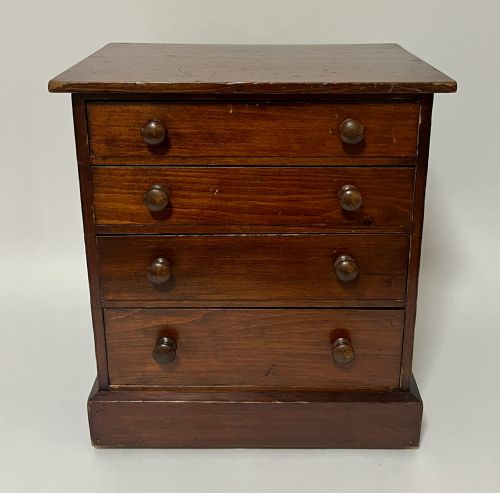

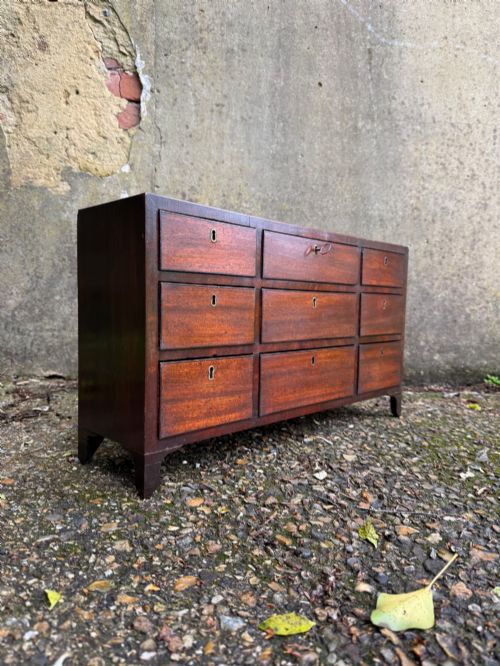


Brown Wood Miniature Cabinet
A brown wood miniature cabinet brings the presence of grand furniture to a tabletop, offering collectors a compact place for small treasures.
Brown Wood Miniature Cabinet
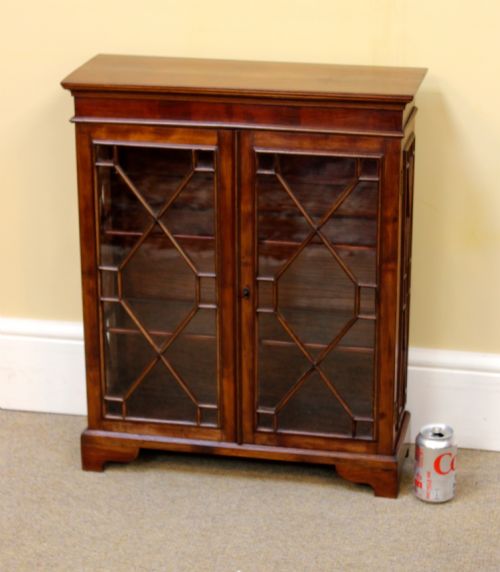
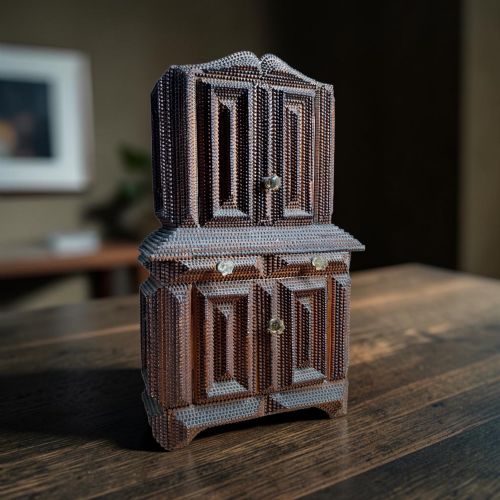
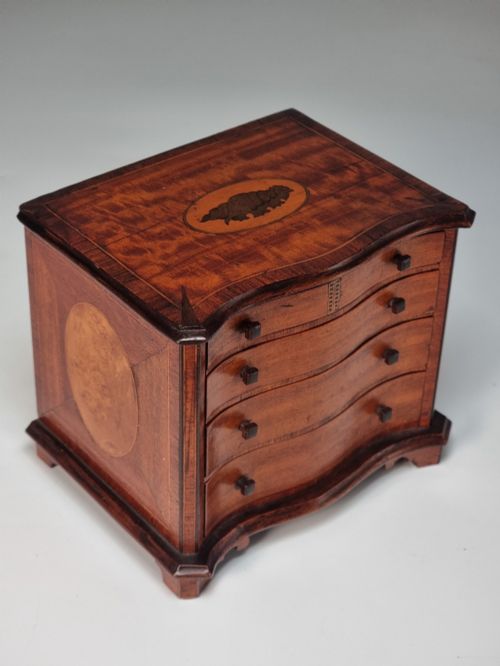
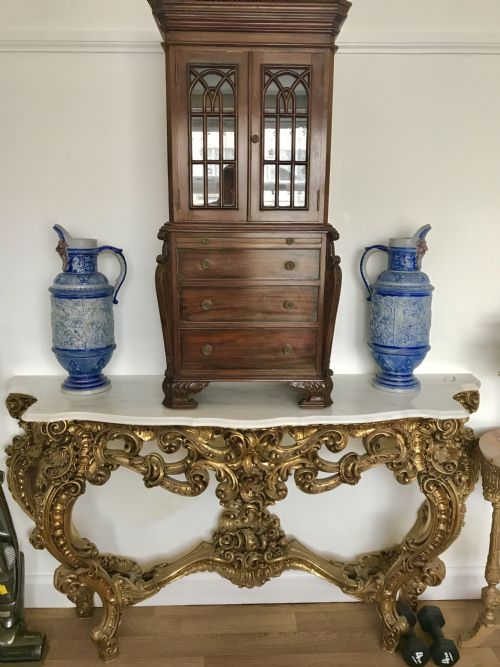
A brown wood miniature cabinet appears in various forms on this page, including chests of drawers, display cases, bureaux, and armoires. These pieces replicate full-size domestic furniture on a small scale, often serving as apprentice pieces, salesman samples, or specialised containers for specimens and jewellery.
The selection spans multiple eras, drawing heavily from Georgian, Victorian, and Edwardian periods. Makers utilised native and exotic timbers to construct desktop cabinets, table cabinets, and wall-hanging variants for domestic display or commercial travel.
Makers often drew upon established furniture styles such as French Country, Arts and Crafts, and Folk Art, applying traditional proportions to diminutive carcases. Buyers encounter items designed for practical tabletop use or precise display purposes.
Materials and construction methods
Makers constructed these cabinets using timbers such as mahogany, walnut, oak, satinwood, elm, and deal. Solid boards and veneered surfaces formed the carcases, often paired with secondary woods for internal drawer linings and back panels.
Joinery techniques mirrored those of full-scale cabinet making, employing dovetails for drawer construction and mortise and tenon joints for frames. Surfaces received French polish, wax, or varnish, while brass handles, escutcheons, and glass panels completed the detailing.
Listings feature pieces spanning the eighteenth, nineteenth, and early twentieth centuries, incorporating Georgian, Victorian, and Edwardian design traditions.
Distinctions in craftsmanship
Quality rests in the fidelity of the proportions and the precision of the scaling, distinguishing careful cabinet work from simpler box construction. Fine examples display restrained moulding, well-fitted drawers, and timber selection that respects grain direction on a small canvas.
The treatment of secondary details like hand-cut dovetails, original brass hardware, and inlay work separates standard utility pieces from exhibition or apprentice standards. Grain matching across small drawer fronts indicates deliberate planning by the maker.
A. F. Lloyd, Bideford
The Brown Wood Miniature Cabinet Glossary
- Apprentice piece
- A small furniture item made by a trainee to demonstrate mastery of joinery techniques before admission to a guild or trade. These pieces reflect full-scale construction methods in miniature.
- Specimen cabinet
- A small storage unit fitted with shallow drawers designed to hold natural history items like shells, minerals, or insects. They feature tight-fitting closures to protect contents from dust.
- French polish
- A wood finishing technique that applies many thin coats of shellac dissolved in alcohol using a rubbing pad. This method produces a high-gloss surface with a deep amber warmth.
- Escutcheon
- A flat plate of brass or other metal placed around a keyhole to protect the surrounding wood from wear. They range from plain geometric shapes to elaborate cast designs.
- Serpentine front
- A furniture front characterised by a concave central section flanked by two convex ends, or the reverse. Executing this curve on a miniature scale requires exacting carpentry.
Brown Wood Miniature Cabinet: Frequently Asked Questions
What were miniature cabinets used for?
These small cabinets served multiple purposes, from holding precious jewellery and personal letters to storing natural history specimens. Some functioned as salesman samples to demonstrate designs to clients without transporting full-scale furniture.
Others were created by apprentices to prove their proficiency to master craftsmen. Today, collectors utilise them to display small curiosities in domestic interiors.
How do I date a wooden miniature cabinet?
Dating relies on examining the timber species, construction methods, and hardware style. Secondary woods inside drawers and the type of fixings used provide clear chronological markers.
Stylistic cues such as Georgian bracket feet or Victorian ebonised mouldings align the piece with specific manufacturing periods. Tool marks left by hand saws or early machinery also help narrow down the decade.
Where should I place a table cabinet at home?
A table cabinet fits naturally on a desk, chest of drawers, or side table where its details can be viewed closely. Placing the piece away from direct sunlight and heat sources protects the timber and finish from drying out.
Because these cabinets occupy minimal space, they work well in studies, hallways, or living rooms as focal points for small collections.
How do apprentice pieces differ from ordinary miniatures?
Apprentice pieces were built to exact scale proportions to test a trainee's ability across various joints and decorative elements. They often exhibit the same complex construction found in full-size furniture, such as functioning secret compartments or working locks.
Ordinary miniatures might use simplified construction methods or serve purely as decorative desktop accessories. Examining the interior joinery reveals whether the maker applied full architectural rigour to the scale model.