
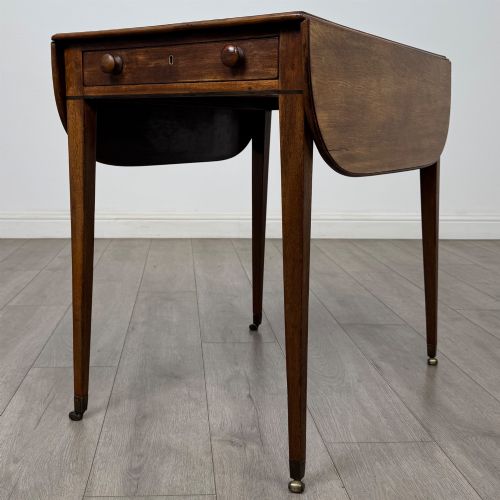
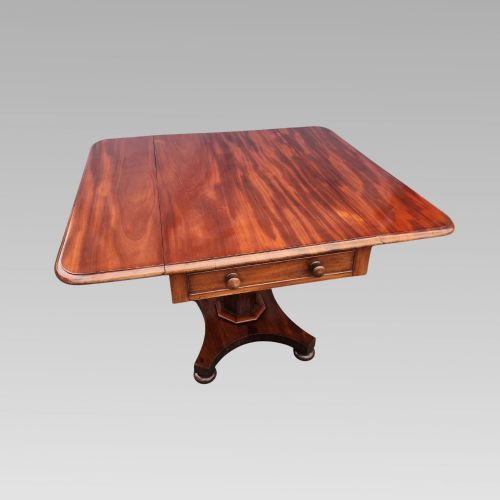
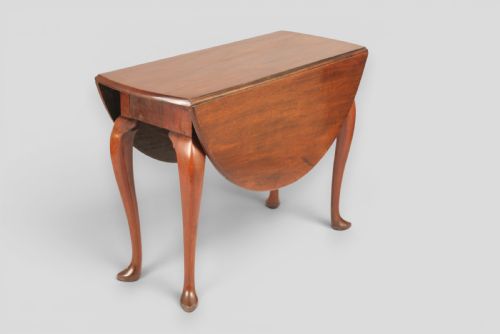


Brown Wood Flap Table
A brown wood flap table is a versatile surface that expands when guests arrive and folds down to save space.
Brown Wood Flap Table
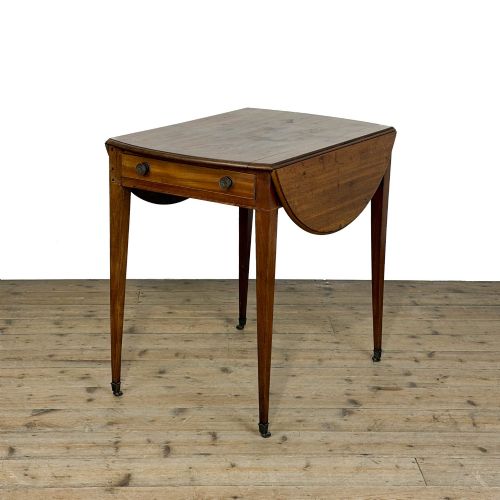
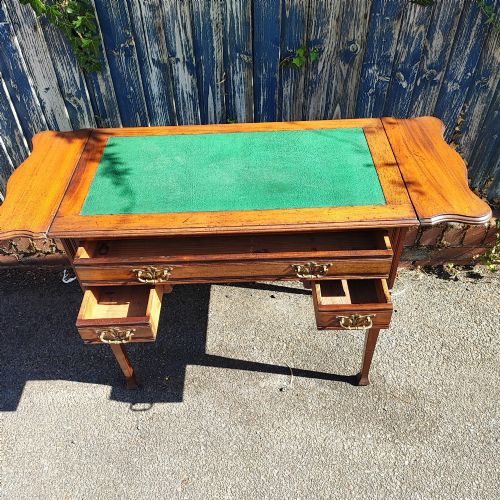
A brown wood flap table encompasses dining tables, Pembroke tables, sofa tables, and gateleg tables originating from the eighteenth, nineteenth, and early twentieth centuries. These pieces appear across Georgian, Regency, and Victorian periods, reflecting shifting domestic needs for flexible furniture.
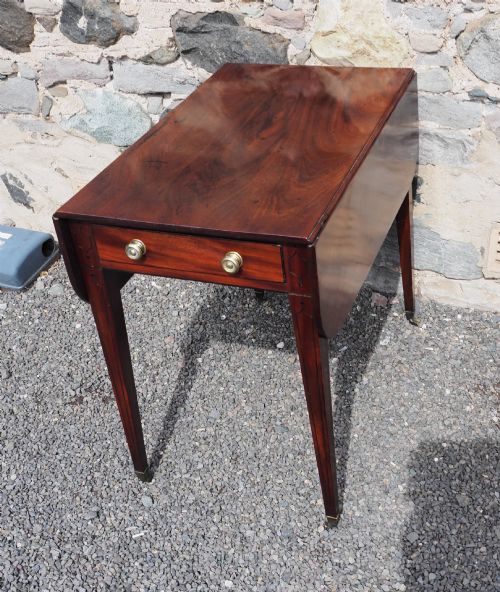
The most common form met on this page is the Pembroke table, typically featuring drop leaves supported by hinged brackets or swinging legs. Alongside these, larger gateleg dining tables and compact Sutherland tables offer varying footprints suited to period and modern interiors alike.
Materials and construction
Cabinet makers relied primarily on mahogany, oak, and walnut, often selecting figured timbers such as burr walnut, burr ash, and satinwood for decorative veneers. Solid cuts formed the structural frames and gatelegs of heavier dining pieces, while finely grained veneers embellished tabletop surfaces.
Hinges, brass castors, and drop handles provided necessary mechanical function to folding leaves and moving drawers. Joinery techniques such as mortise and tenon secured the folding legs and gate mechanisms that support the drop flaps.
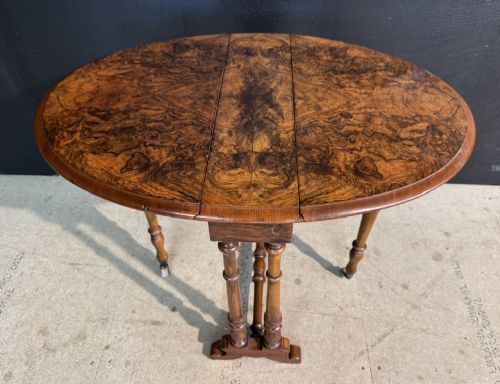
A tiny nineteenth-century miniature Sutherland table proves that Victorian cabinet makers loved building perfectly scaled furniture for dolls or display.
Judging quality in folding tables
Quality rests upon the selection of timber and the precision of the folding mechanism. Finer examples display carefully matched grain patterns across the leaves and incorporate thoughtful additions like working drawers or delicate stringing.
Sturdiness of the drop leaf support separates standard domestic items from superior workshop output. Well-engineered gatelegs and smooth-operating hinges ensure the extended surface remains level and reliable under weight.
Gillows
The Brown Wood Flap Table Glossary
- Pembroke table
- A small rectangular table with hinged drop leaves on either side, often fitted with one or more drawers. Designed in the eighteenth century, it served multiple domestic purposes from breakfasting to writing.
- Gateleg table
- A table with hinged leaves supported by legs that swing outward like a gate. This construction provides robust support for large dining surfaces when fully opened.
- Sutherland table
- A narrow drop-leaf table featuring exceptionally slender legs and leaves that fold down almost vertically. It was developed during the Victorian period for easy movement and compact storage.
- Sofa table
- A long, narrow table designed to stand in front of a sofa, typically equipped with drop flaps at each end and pedestal or trestle supports. Regency versions frequently incorporate brass paw feet and stretcher rails.
- Marquetry
- The art of applying pieces of veneer to a structure to form decorative patterns and pictures. Craftsmen utilised contrasting timbers such as satinwood and mahogany to create detailed tabletop motifs.
Brown Wood Flap Table: Frequently Asked Questions
How do I use a drop flap table in a small room?
Keep the leaves dropped against the wall or sides to function as a console or writing surface. Raise one or both flaps to create extra space when dining or entertaining.
Position the table away from direct heat sources to prevent the timber and veneers from drying out or splitting over time.
How can I tell a Georgian table from a Victorian one?
Georgian pieces, particularly those from the eighteenth century, often display simpler, elegant proportions with mahogany or oak solids. Detail work tends toward restrained crossbanding and subtle stringing.
Victorian versions frequently employ heavier timbers, elaborate turned legs, or decorative burr walnut veneers. They also include specialised forms like the Sutherland table.
How do I care for antique mahogany and walnut surfaces?
Dust regularly with a soft, dry cloth and apply a quality beeswax periodically to nourish the wood. Avoid silicone-based polishes that build up and attract dirt.
Protect the timber from hot items and moisture by using coasters and placemats. Direct sunlight will fade rich mahogany and walnut tones if left unchecked.