

Brown Wood Desk Table
A brown wood desk table brings practical surface area and warm timber tones into a room, spanning periods from the eighteenth century to the twentieth.
Brown Wood Desk Table
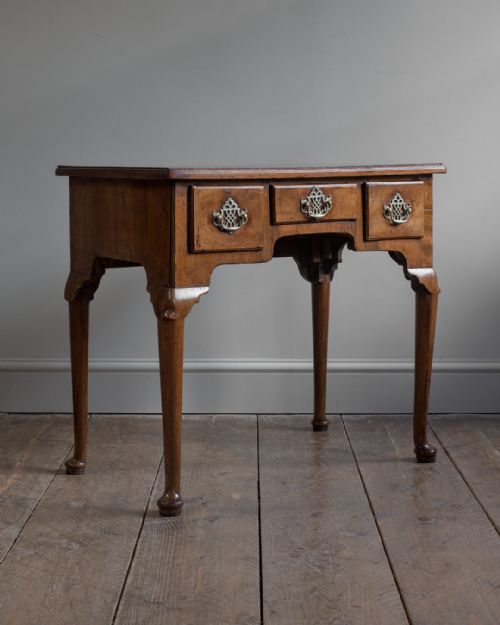
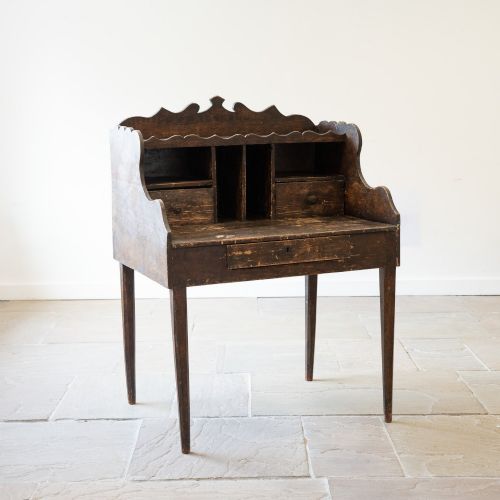
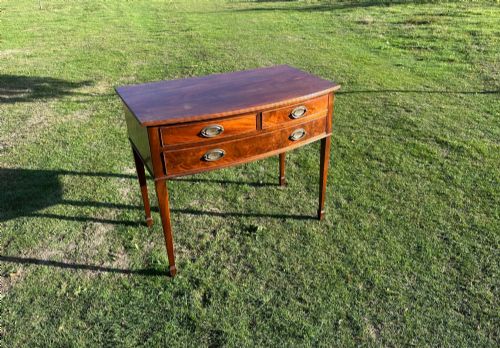
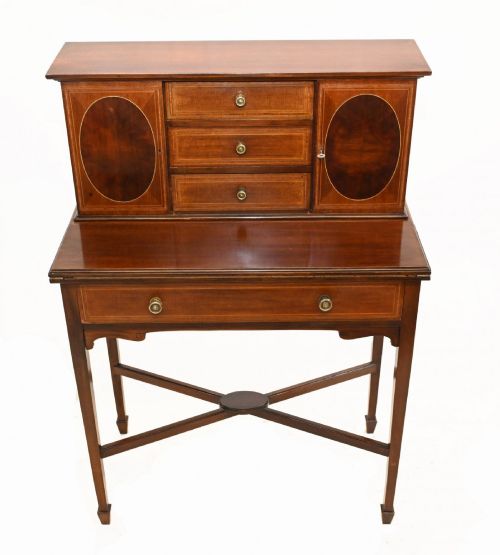
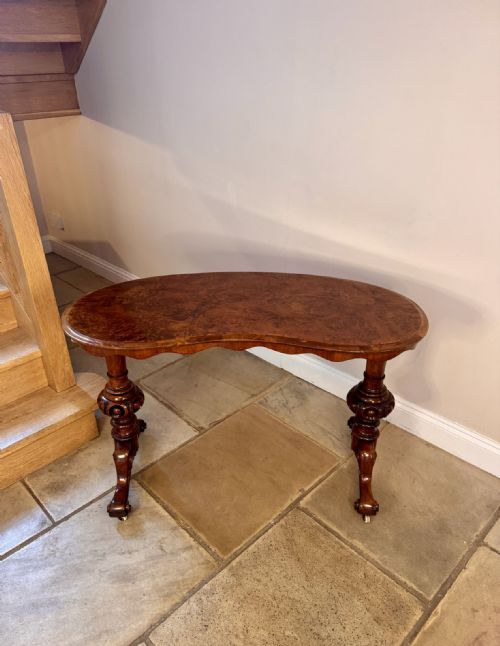
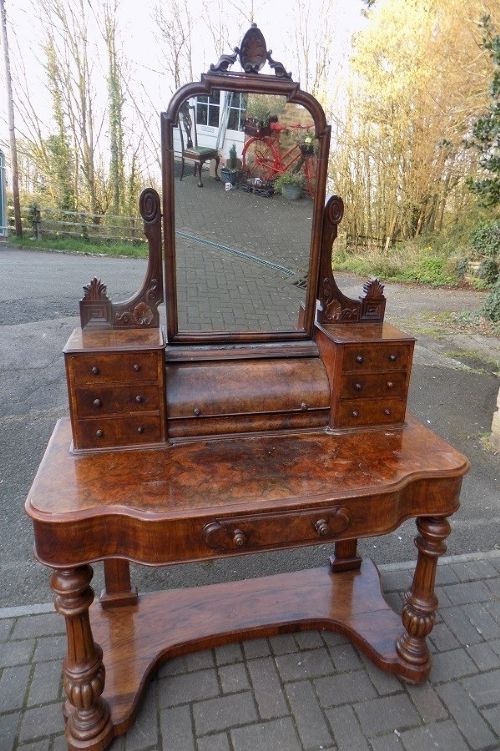
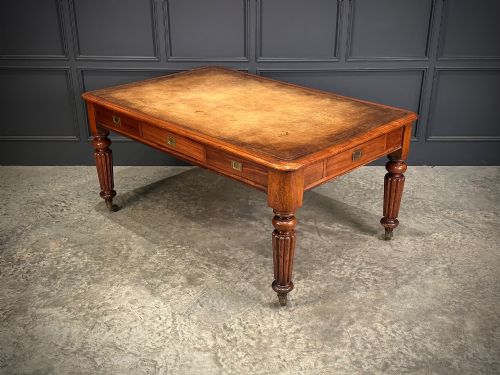
A brown wood desk table selection encompasses writing tables, side tables, dressing tables, and desks originating from periods such as the Georgian, Victorian, Edwardian, and Regency eras. Buyers searching for a brown wood desk table encounter various timber forms designed for writing, serving, and domestic use.
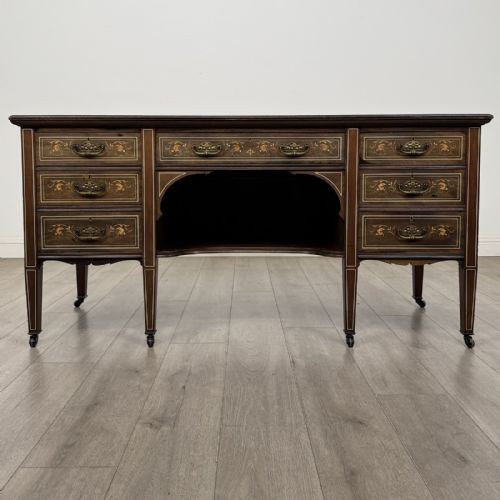
Mahogany and walnut predominate among these items, alongside oak, burr walnut, cherry wood, and rosewood. Pieces range from formal partners desks and pedestal desks to simpler side tables and refectory dining tables adapted for modern rooms.
How they were made
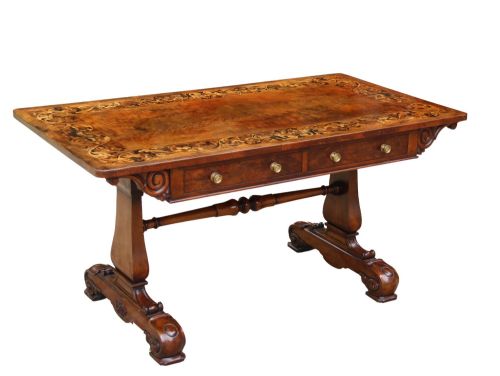
Construction relies heavily on dense hardwoods like mahogany, walnut, and oak, often shaped into writing desks, side tables, and dining tables. Timber is frequently enhanced through marquetry inlay, veneer work, or hand carving.
Additional materials such as brass fittings, leather writing surfaces, and glass elements appear across the pieces. Joinery techniques reflect the specific period, from eighteenth-century dovetailed drawers to campaign-style folding mechanisms.
Brown Wood Desk Table Retail Price Guide 2026
Typical asking prices for brown wood desk table among the pieces listed under this phrase on Sellingantiques today, from the lower quarter to the upper quarter. They describe what is for sale here now, not the wider market.
Periods represented span from the seventeenth century through the Georgian, Victorian, and Edwardian eras up to the nineteen-thirties.
What varies in quality
Quality separates pieces through the selection of timber veneers, such as burr walnut or figured mahogany, and the precision of marquetry inlay. Subtleties in hand-carved details and the integration of brass hardware distinguish finer workshops from standard production.
Structural integrity depends on the retention of original surfaces, drawer configurations, and timber stability across centuries of use.
Trollope & Sons
The Brown Wood Desk Table Glossary
- Partners Desk
- A large double-sided desk designed for two people to sit opposite one another, typically featuring cupboards and drawers on both sides.
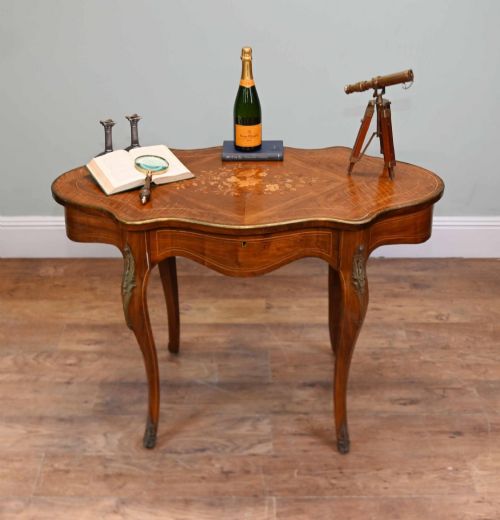
- Marquetry
- Decorative veneer work arranged in geometric or floral patterns across the wooden surface.
- Lowboy
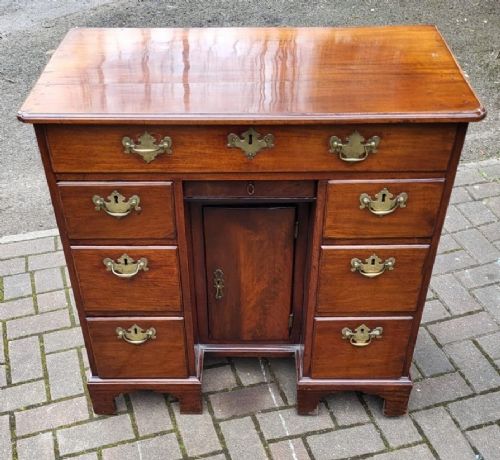
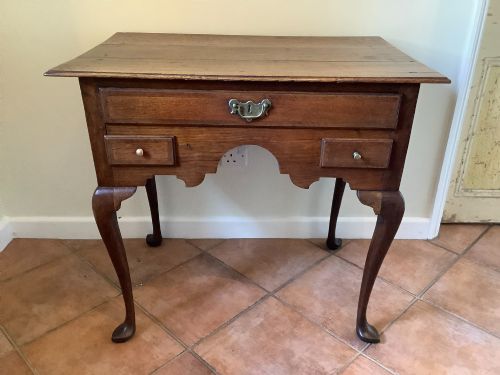
- A small eighteenth-century dressing table or side table featuring one or more rows of drawers beneath a flat top.
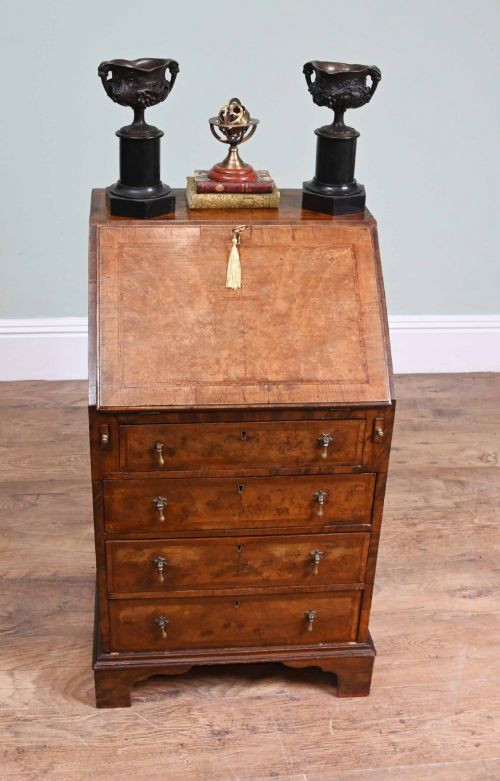
- Writing Table
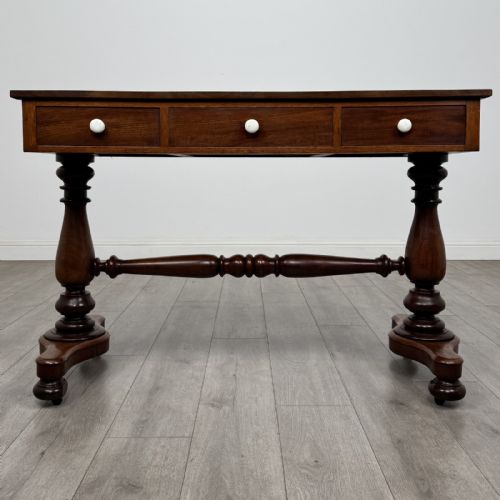
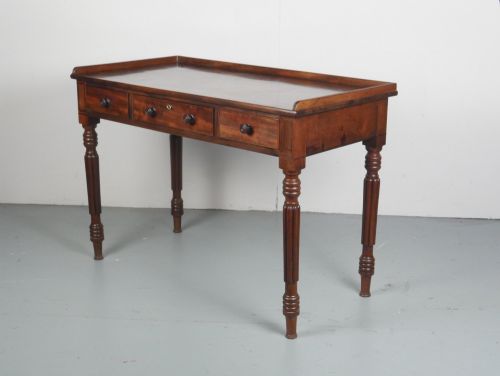
- A freestanding table designed primarily for correspondence and paperwork, often fitted with drawers beneath the writing surface.
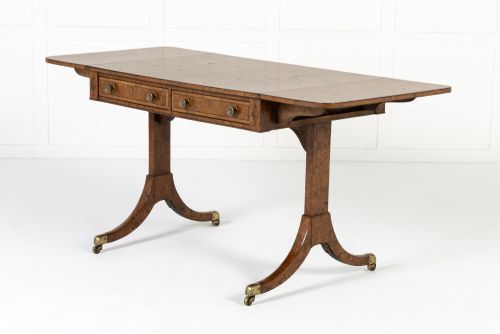
- Sofa Table
- An elongated nineteenth-century table traditionally placed in front of a sofa, featuring drop leaves at either end.
Brown Wood Desk Table: Frequently Asked Questions
What is a brown wood desk table?
A brown wood desk table is a piece of antique or vintage wooden furniture used for writing, working, or display. These items include writing desks, side tables, and dressing tables made from timber such as mahogany, walnut, and oak.
They originate from various historical periods, including the Georgian, Regency, Victorian, and Edwardian eras. Each piece brings functional surface space and distinct period craftsmanship to a home office or living room.
How do I style a writing table at home?
A writing table functions well as a compact home office desk or a console table in a hallway or living room. Placing it against a wall or floating it in the centre of a room highlights its timber grain and construction.
Pairing the table with a simple chair allows it to serve as a practical workspace without dominating the room. Items with drawers also provide concealed storage for everyday stationery and small objects.
Were these tables used for writing only?
While many pieces are specifically designated as writing tables or desks, their historical uses varied widely. Side tables, serving tables, and lowboys served multiple domestic functions in dining rooms, bedrooms, and parlours.
Today, these versatile wooden tables adapt easily to modern requirements as display surfaces, dressing tables, or occasional desks.