
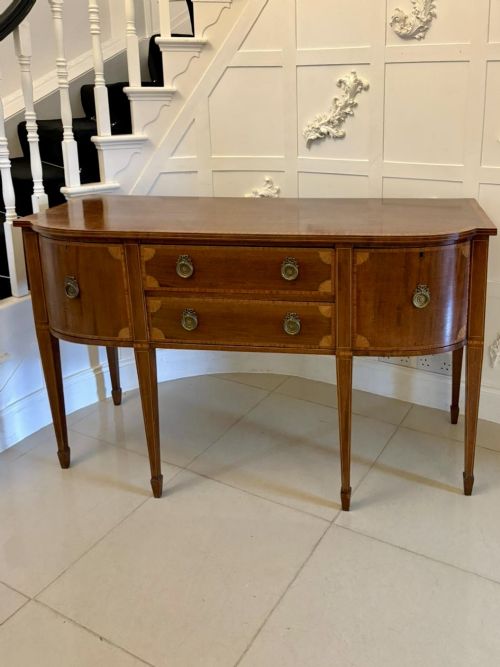
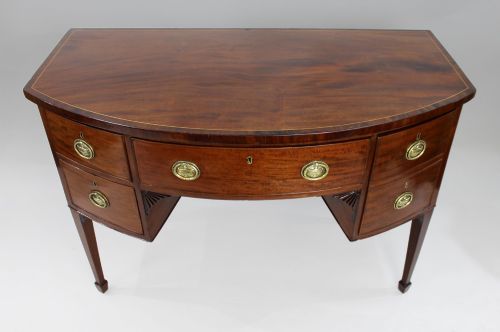
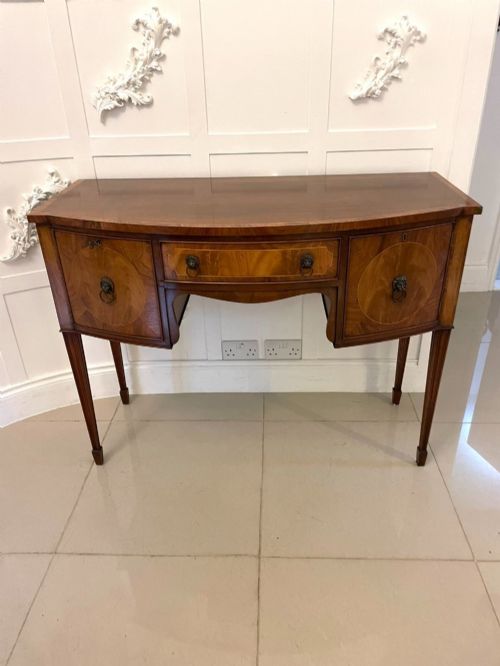
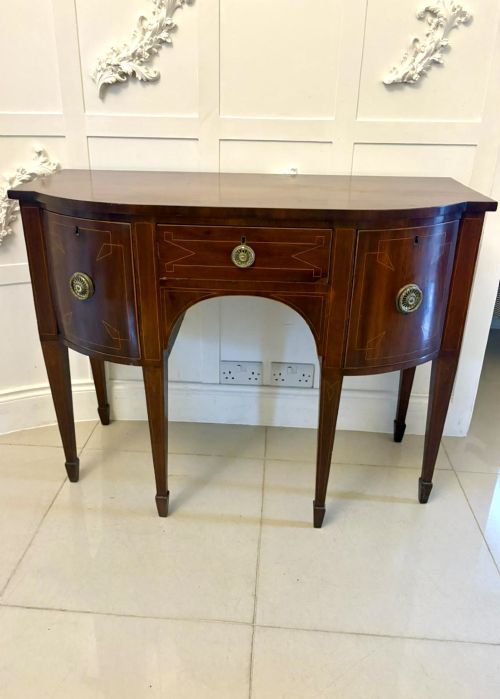
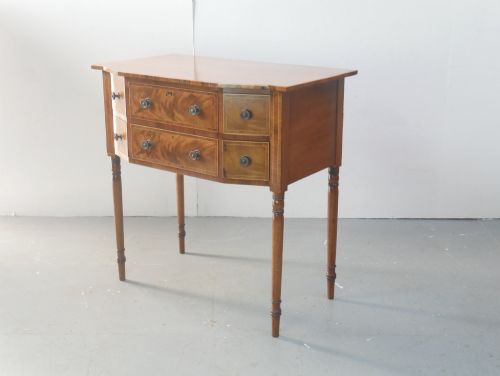
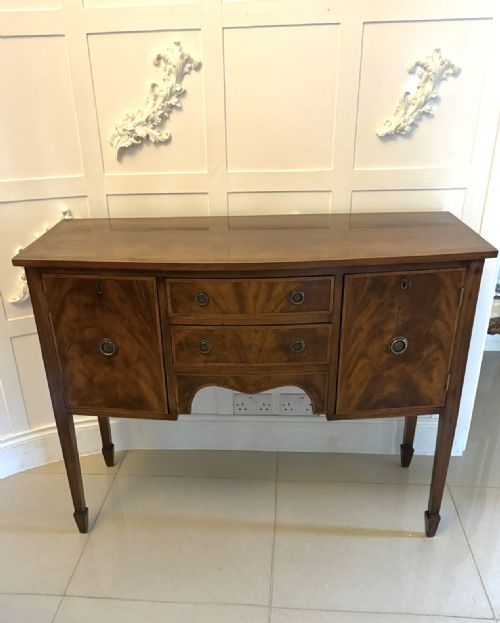
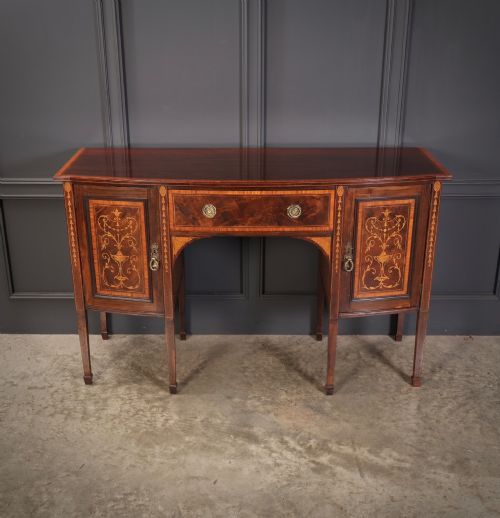

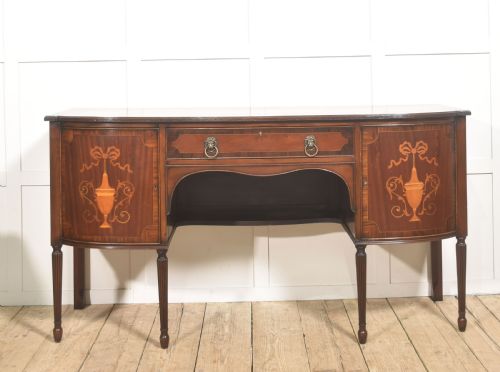


Brown Wood Bowfront Sideboard
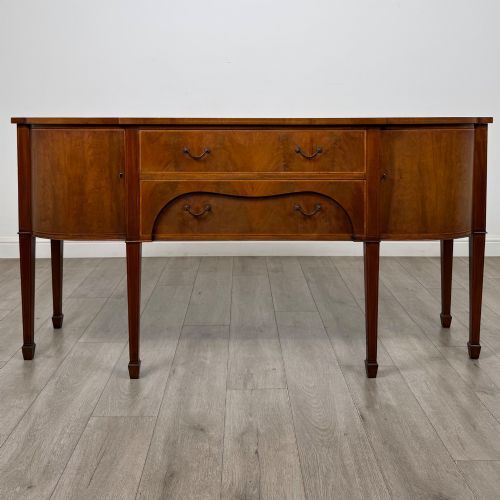
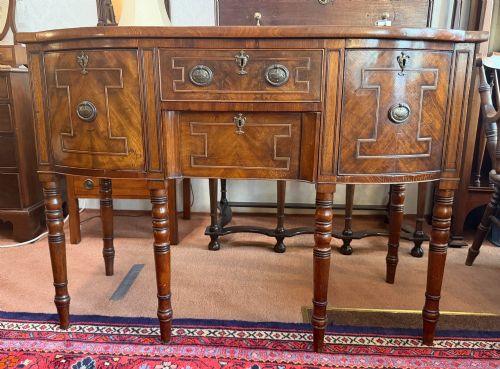
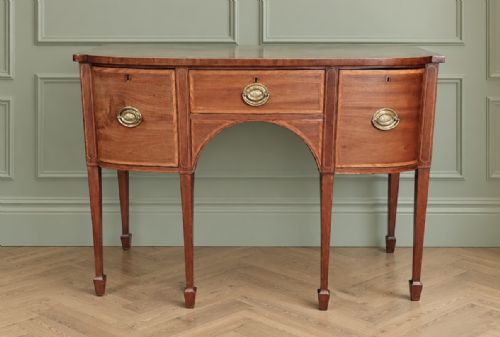
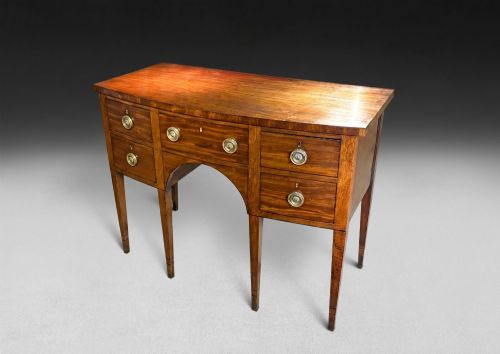
A brown wood bowfront sideboard offers curved dining room storage, combining rich timber grain with a distinctive bowed profile that softens formal room layouts.
Brown Wood Bowfront Sideboard
A brown wood bowfront sideboard provides generous dining room storage through a curved front facade that projects outward in the centre. Buyers searching this phrase encounter substantial case pieces designed to hold linen, silver and dining accessories.
The pieces on this page span the eighteenth, nineteenth and early twentieth centuries, encompassing Georgian, Regency and Edwardian eras. Most examples take the form of mahogany servers and side cabinets featuring inlaid decorative borders.
Materials and construction methods
Cabinet makers constructed these pieces primarily from solid mahogany and mahogany veneers, often selecting figured timbers to create patterned surfaces on the curved drawer fronts. Secondary timbers such as oak frequently appear in drawer linings and interior framing.
Craftsmen applied contrasting stringing and banding using boxwood and satinwood inlay to define the curved edges and perimeters. Brass hardware, including original ring pulls and knobs, completes the structural assembly.
Object forms span serving tables, credenzas, side cabinets and standard sideboards.
Distinguishing quality across periods
Quality rests upon the selection of timber grain, particularly the choice of flame or figured mahogany across the curved drawer fronts. Superior examples display seamless matching of wood veneers that follow the natural contour of the bow.
The crispness of boxwood and satinwood inlay differentiates finer workshops from standard production. Well-executed pieces maintain tight joinery in the complex curves of the carcase and retain patinated original brass fittings.
The Brown Wood Bowfront Sideboard Glossary
- Bowfront
- A convex curved cabinet front that projects outward from the centre. This shape softens the linear geometry of a traditional dining room.
- Inlay
- A decorative technique where contrasting woods like boxwood or satinwood are inserted into recesses within the primary timber surface.
- Flame mahogany
- A veneer cut from timber where the grain resembles flickering flames. Cabinet makers prized this figure for principal display surfaces.
- Credenza
- A low cabinet used for serving food and storing tableware. The term frequently applies to nineteenth-century decorative variations.
- Stringing
- Thin strips of contrasting wood inlaid into cabinet surfaces to create narrow borders. It outlines drawer fronts and top perimeters.
Brown Wood Bowfront Sideboard: Frequently Asked Questions
What is a bowfront sideboard?
A bowfront sideboard is a dining room storage cabinet featuring a convex curved front facade. This curved design projects outward in the centre to provide internal depth while maintaining clearance in the room.
Cabinet makers developed this form during the Georgian and Regency periods to soften interior angles and showcase figured timber grains. These pieces typically contain multiple drawers and side cupboards configured for tableware.
How do I date a sideboard?
Dating relies on examining construction methods, timber choice and decorative styles. Pieces from the eighteenth and early nineteenth centuries often feature hand-cut dovetails and native oak linings, whereas Edwardian revivals utilise later machinery techniques.
Stylistic markers such as Hepplewhite influence, Sheraton inlay patterns and brass hardware types also indicate the manufacturing period. Comparing timber patination and secondary woods clarifies the era of production.
Where were sideboards placed?
Sideboards traditionally stood against the dining room wall to assist with serving meals and displaying silver. They functioned as auxiliary surfaces during large dinners before dining tables became permanent fixtures.
In modern interiors, these cabinets find placement in hallways, living rooms and reception spaces as general storage credenzas. Their shallow curved profiles allow them to occupy passage areas without obstructing movement.
What woods were used?
Mahogany serves as the primary timber across the vast majority of these pieces, often utilised as solid planks or figured veneers. Cabinet makers selected it for its rich colour and stability.
Accents and decorative borders frequently incorporate lighter woods like boxwood and satinwood for inlay work. Secondary timbers such as oak appear in internal drawer construction and carcase framing.