
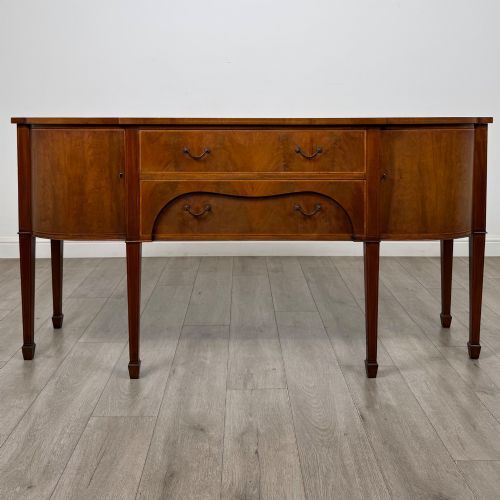
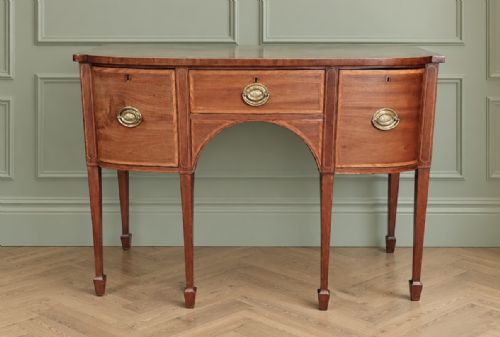
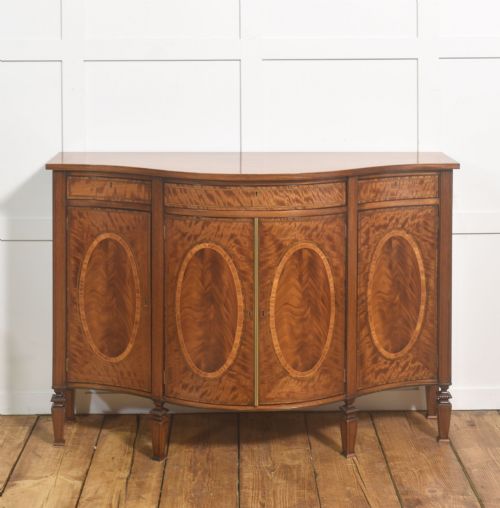
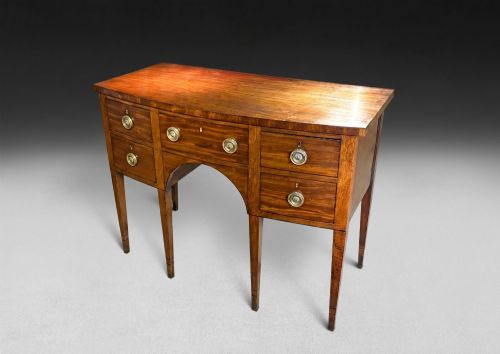
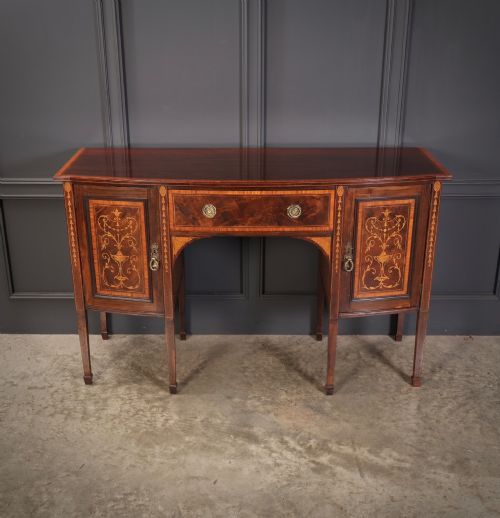
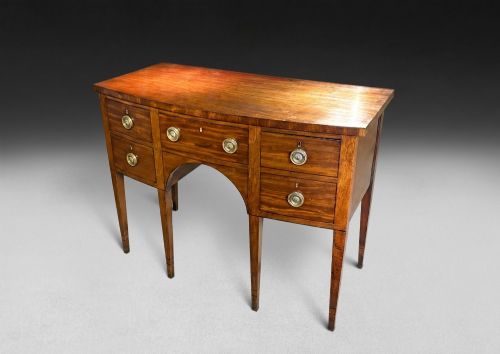
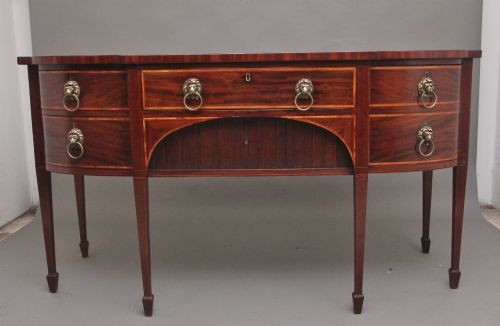
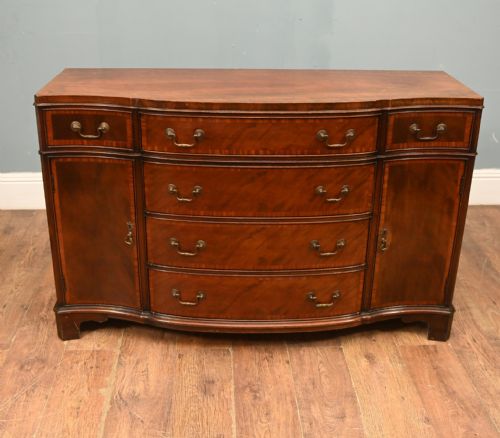
Mahogany Bowfront Server Cabinet
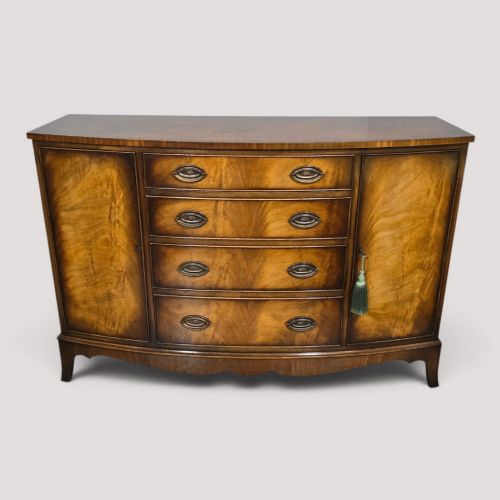
A mahogany bowfront server cabinet offers a curved silhouette and deep timber tones, serving as both a functional dining room piece and a striking focal point.
Mahogany Bowfront Server Cabinet
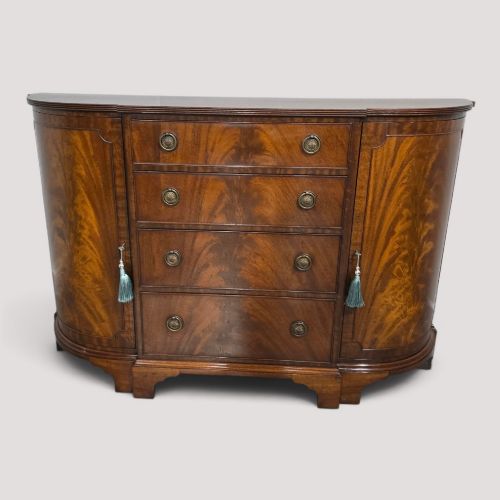
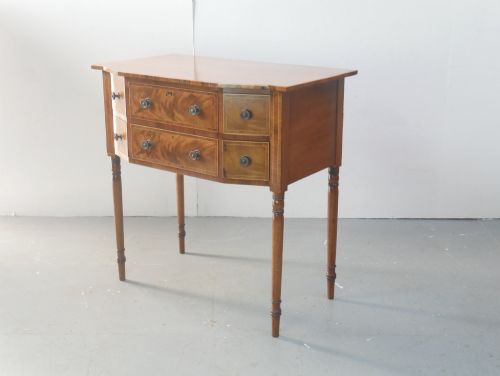
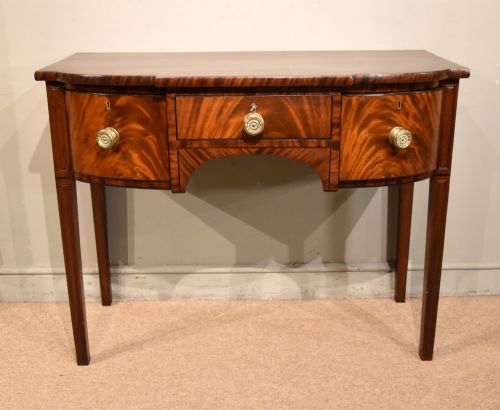
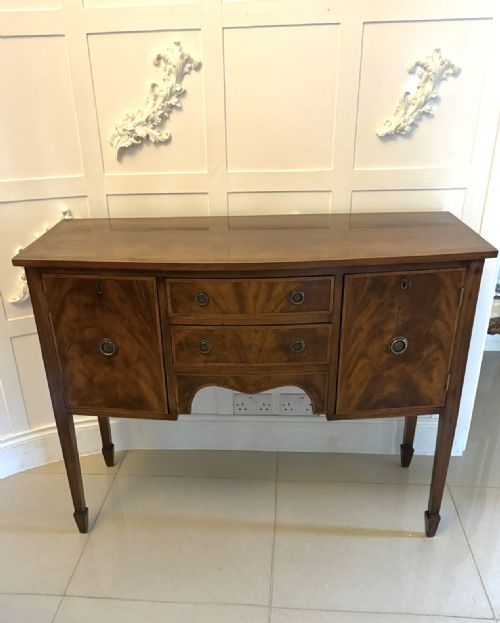
A mahogany bowfront server cabinet combines storage and display within a characteristic curved silhouette designed to sit flush against a dining room wall. These pieces function as sideboards, buffets, and serving tables that conceal tableware while displaying silver and porcelain.
The pieces on this page span several distinct periods, drawing heavily from the eighteenth century, the Georgian era, and the Regency period, alongside later nineteenth and early twentieth-century revivals. Buyers will encounter both authentic period pieces from the eighteen and nineteenth centuries and Edwardian revivals executed in Sheraton and Chippendale styles.
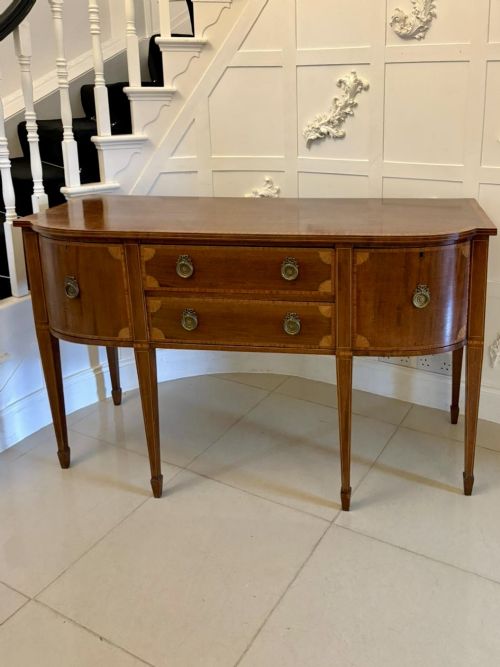
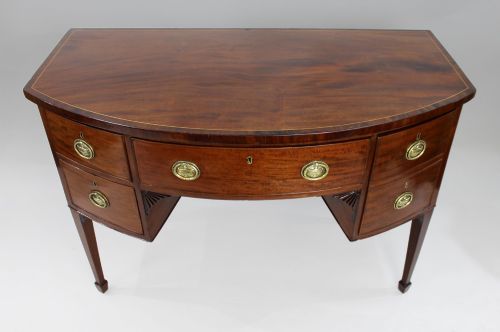
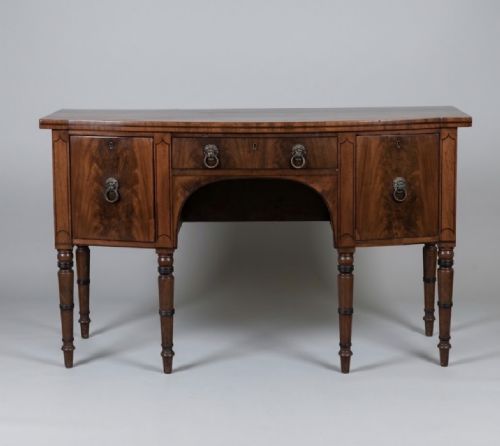
Formations range from neat, compact side cabinets to large six-legged servers and breakfront configurations. Solid timbers and veneered surfaces define the physical presence of these cabinets across all eras.
What Varies in Quality
The selection of timber veneer determines much of the visual hierarchy, with figured flame mahogany and crisp contrasting boxwood inlay representing superior craftsmanship. The precision of the joinery along the complex curved bowfront requires high technical skill from the maker.
Proportion and scale separate standard production from exceptional examples, particularly in smaller formats and six-legged variations. Original brass hardware and intact internal configuration further distinguish the finer pieces on the market.
Six-legged Georgian servers provide extra stability for midnight feasts and heavy silver platters.
The Mahogany Bowfront Server Cabinet Glossary
- Bowfront
- A convex curved cabinet front that projects outward in the centre. This shape softens the corners of a room and allows for deeper central storage drawers.
- Flame mahogany
- A wood veneer figure resembling flickering flames, achieved by cutting across the branch junction of the tree. Cabinet makers reserved this striking grain for principal drawer fronts and doors.
- Inlay
- A technique where pieces of contrasting timber, such as satinwood or boxwood, are inserted into recessed cavities of the primary wood to create decorative patterns.
- Crossbanding
- A border of veneer laid around the perimeter of a tabletop or drawer front where the grain runs perpendicular to the central panel. This frames the primary timber and adds structural stability.
- Server
- A dining room storage piece designed for holding dishes and serving food during meals. These items often feature shallower depths than traditional sideboards.
Mahogany Bowfront Server Cabinet: Frequently Asked Questions
Where should I place a server cabinet?
These cabinets suit dining rooms, hallways, and living spaces where a shallow footprint is required. Their curved fronts allow them to sit comfortably in rooms with limited floor space.
Ensure the piece has adequate clearance for doors and drawers to open fully without obstruction from surrounding furniture.
How do I care for mahogany surfaces?
Maintain the timber by dusting regularly with a soft, dry cloth and applying natural beeswax periodically to nourish the grain. Avoid placing the cabinet in direct sunlight or near heat sources to prevent the wood from drying out.
Keep liquids away from the top surface and use coasters beneath glasses or serving dishes to protect the polish.
What is the difference between an eighteenth century piece and a revival?
Eighteenth century and Georgian pieces show period construction techniques, hand-cut dovetails, and genuine age patination on the timber. Revival pieces from the Edwardian era replicate these styles using machine-assisted precision and characteristic early twentieth-century secondary woods.
Examining the drawer linings and interior construction helps determine the exact period of manufacture.
Can these cabinets be used for modern storage?
The interior compartments accommodate modern tableware, linens, and glassware while adding historic character to a room. Cupboard and drawer dimensions vary by piece, so verify internal measurements for specific storage needs.
Smaller bowfront cabinets function well as media consoles or hallway storage units.