
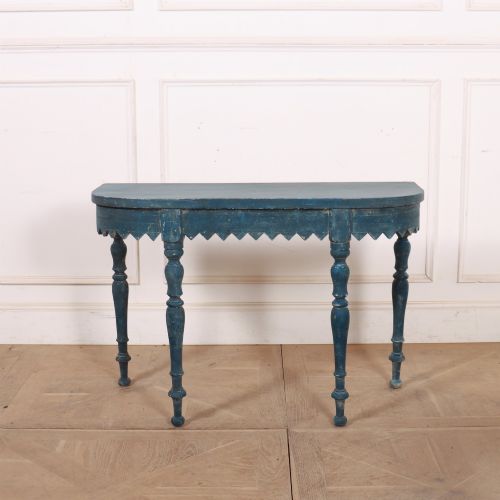


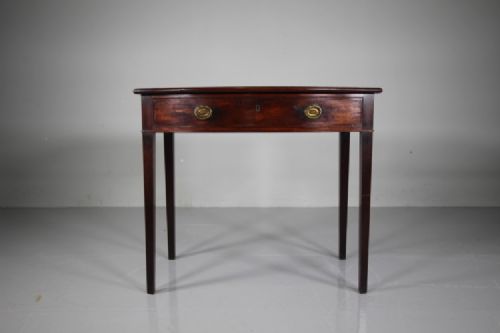


Antique Bow Fronted Console
An antique bow fronted console brings a sweeping, convex line to a hallway or reception room, offering surface space and drawers without heavy proportions.
Antique Bow Fronted Console
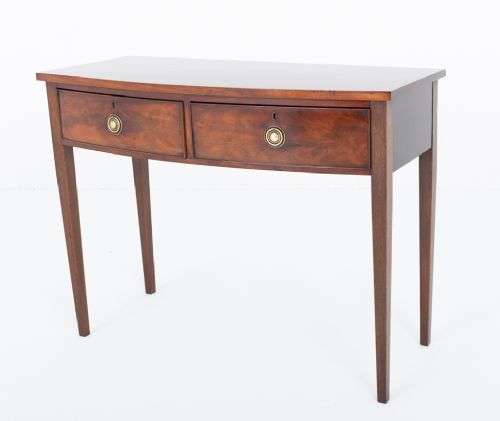
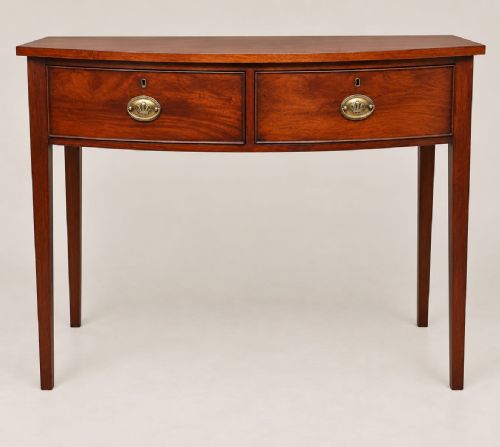
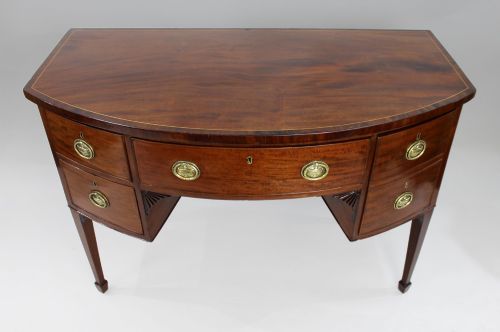
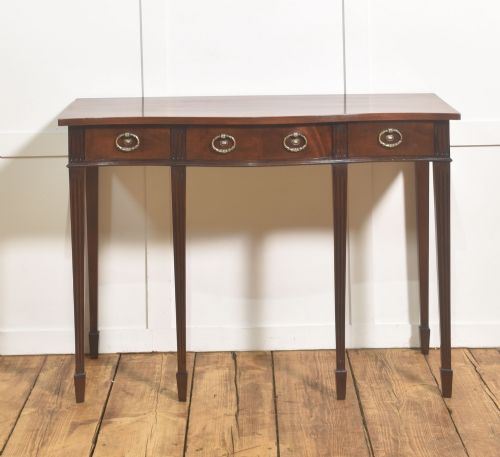
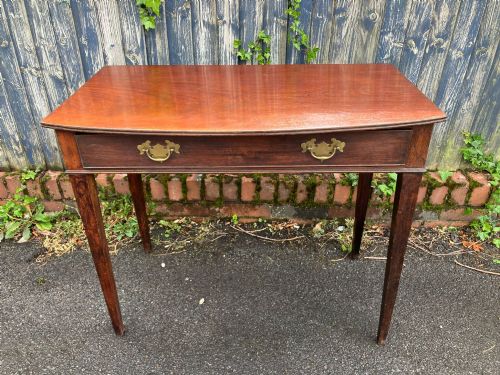
An antique bow fronted console takes the form of a side table, serving table, or small sideboard designed with a convex, curved front. These pieces emerge primarily from the Georgian, Regency, and Victorian periods, with 19th-century mahogany examples appearing most frequently on this page.
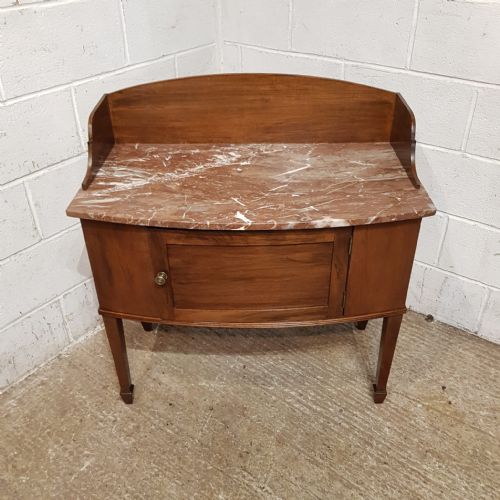
Makers adapted the bowed silhouette for domestic use in halls, dining rooms, and bedrooms, creating varied formats that include multi-drawer side tables, marble-topped washstands, and compact writing desks. The curve softens the linear geometry of traditional rooms while maintaining a shallow depth suitable for narrow spaces.
How they were made
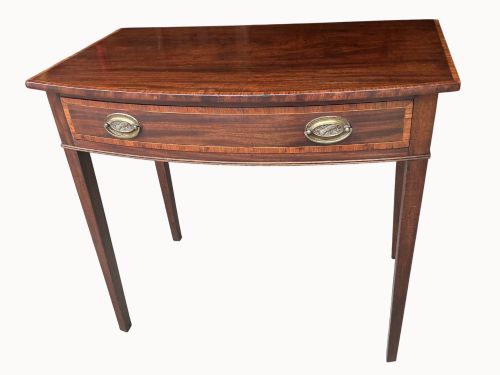
Cabinetmakers constructed these tables largely from solid mahogany and veneers, often pairing the primary timber with secondary woods such as oak for drawer linings. Workshops applied contrasting stringing in boxwood and satinwood, or incorporated intricate wood inlay and marquetry across the curved drawer fronts and tops.
Structural elements such as the convex drawer fronts required specialised joinery to shape solid timber or bend veneers over curved frames. Selected examples integrate alternative materials, including marble tops and brass handles, alongside painted or parcel-gilt finishes.
Listings feature mahogany predominantly, alongside alternative materials including marble, brass, boxwood, satinwood, pitch pine, and paint.
What varies in quality
Quality rests in the precision of the curved joinery and the selection of timber figures, where rich mahogany grain and crisp wood inlay distinguish finer pieces from simpler utility furniture. The handling of the bowed front determines the visual harmony of the piece, particularly where drawers meet the curved frame.
Secondary details such as original brass hardware, clean oak drawer linings, and integrated decorative elements like satinwood banding elevate the status of a table. Simpler pitch pine or plain painted versions reflect more utilitarian domestic origins.
Maples
The Antique Bow Fronted Console Glossary
- Bow front
- A convex, curved front projection on a cabinet or table that softens the rectilinear appearance of the furniture. This shape became popular during the late 18th and early 19th centuries.
- Sheraton
- A neoclassical design style associated with the late 18th century, characterised by straight tapered legs, delicate proportions, and contrasting wood inlay. Pieces in this style often utilise satinwood and mahogany veneers.
- Marquetry
- Decorative veneer patterns formed by fitting together small pieces of different coloured woods, ivory, or shell to create pictorial or geometric designs. This technique decorates the surfaces of select cabinets and tables.
- Side table
- A small table designed to stand against a wall, frequently utilised in dining rooms, halls, or parlours for display or serving. These items often feature one or more drawers beneath the top.
- Serving table
- A large rectangular or bow-fronted table used in dining rooms for holding dishes before service, predating or supplementing the full sideboard. They frequently share proportions with console tables.
Antique Bow Fronted Console: Frequently Asked Questions
Where do I put a bow front console?
These tables suit narrow hallways, landings, and living room walls where a shallow depth is required. Their curved fronts allow people to walk past them more easily than rectangular furniture.
They also function effectively in dining rooms as serving surfaces or beneath mirrors in reception rooms.
How do I date a mahogany console table?
Dating relies on observing timber characteristics, construction methods, and stylistic details such as leg shape and inlay patterns. Georgian and Regency pieces typically show hand-cut dovetails and specific secondary woods like oak inside the drawers.
Later Victorian and Edwardian revivals often incorporate machine-sawn elements or different interior timbers.
Can I use a washstand as a console?
Marble-topped washstands adapt well to hall or bathroom placement because the stone surface resists moisture and stains. The original ceramic basins are generally absent in these surviving formats.
The resulting flat stone top provides a durable surface for display.
What is the difference between a console and a side table?
Console tables historically attached to walls with brackets or rested on front legs, whereas side tables stand independently on four or more legs. In modern usage, the terms often overlap for antique wall-placement furniture.
Both formats appear with bowed fronts across the Georgian and Victorian periods.