
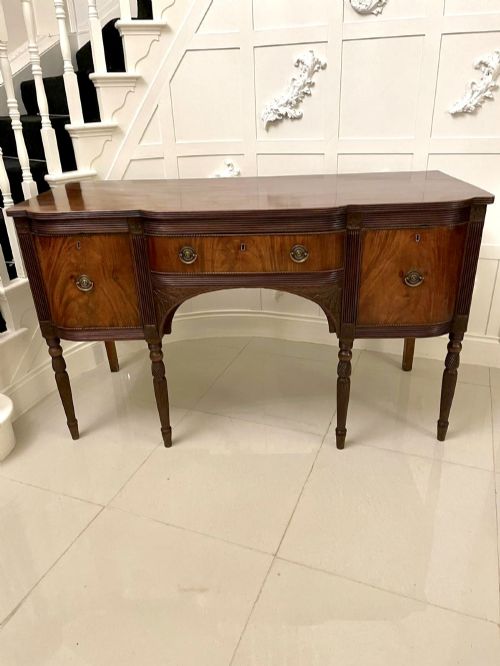
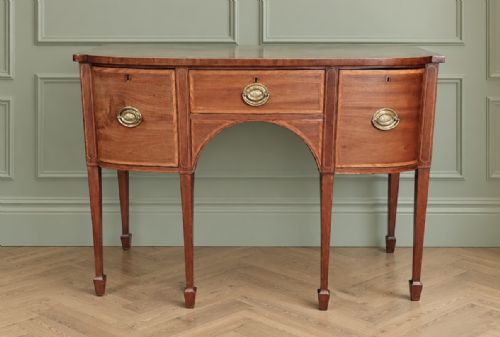
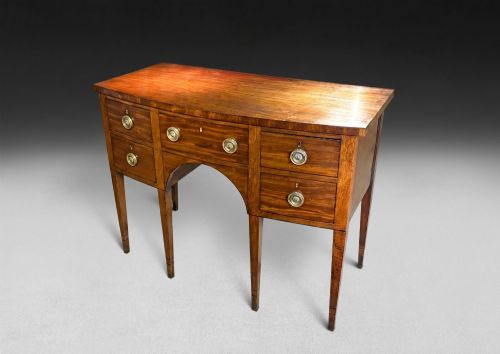
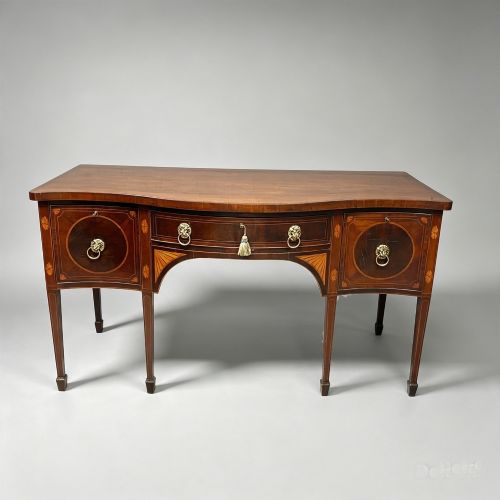
18th Century Mahogany Server
An 18th century mahogany server brings enduring dining room utility and rich timber grain to the interior.
18th Century Mahogany Server
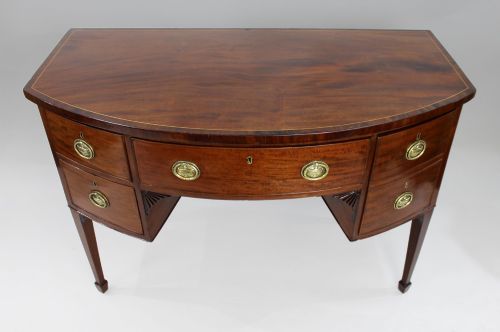
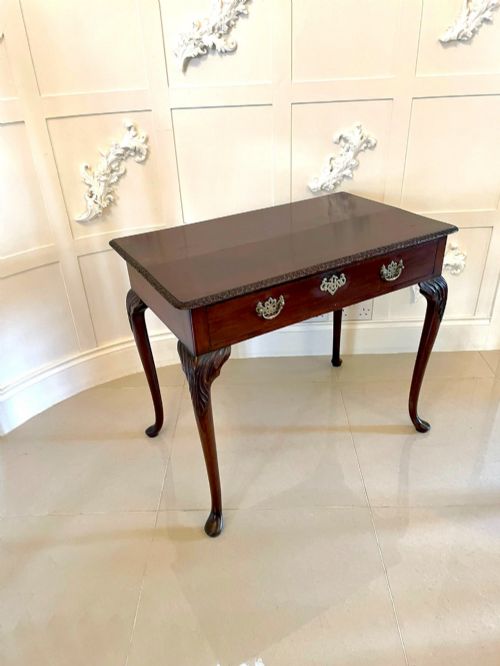
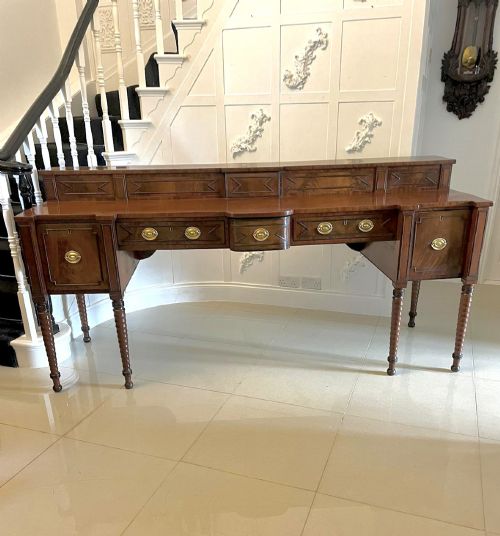
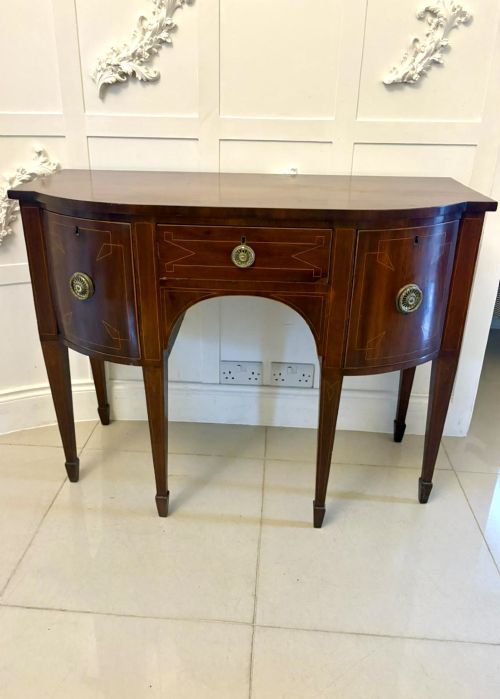
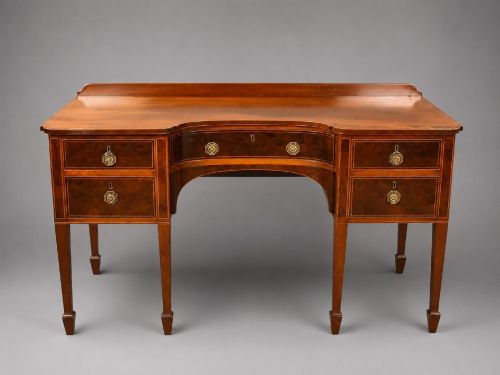
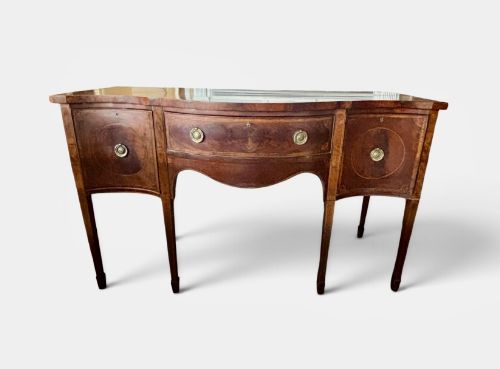
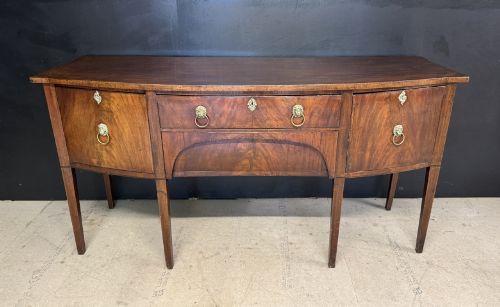
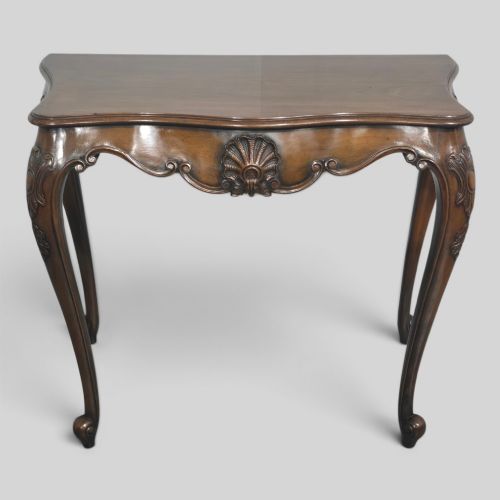
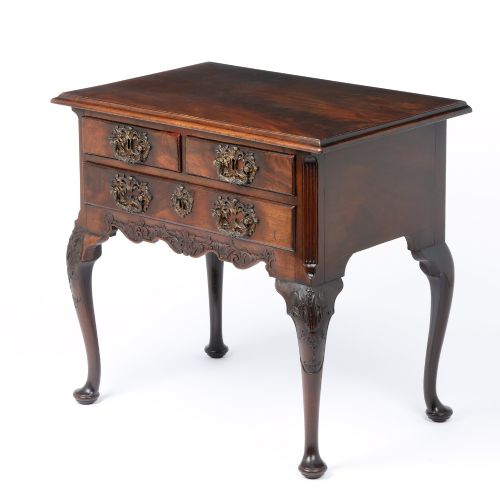
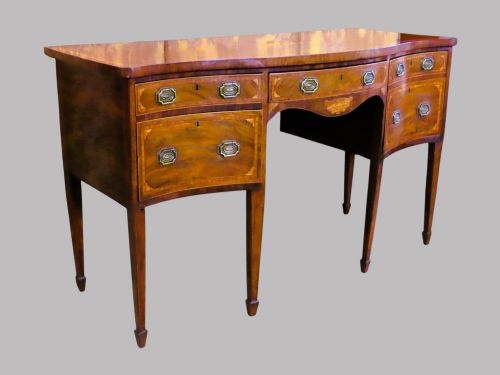
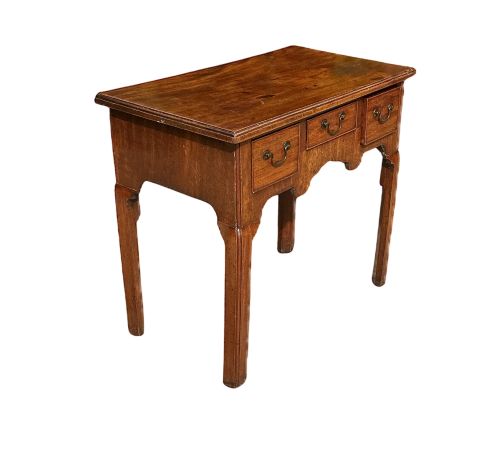
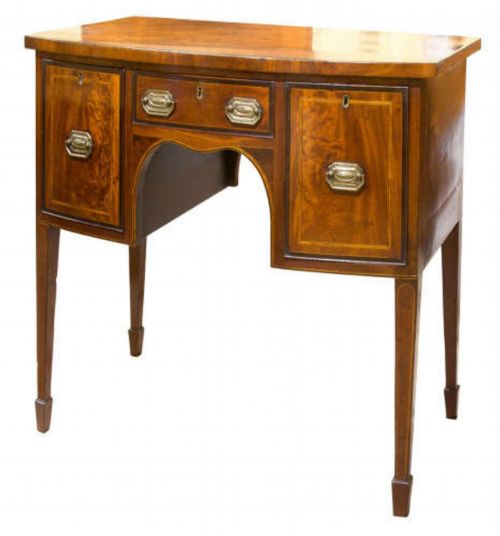
An 18th century mahogany server encompasses serving tables, sideboards, and side tables designed for dining spaces during the Georgian era. These forms range from straight-front and bow-front serving tables to serpentine sideboards and lowboys.
Buyers encounter pieces spanning George II, George III, and Sheraton styles, originating from English, Irish, and Scottish workshops. The selection frequently includes sideboards with inlaid details alongside simpler side tables and console tables.
Materials and construction
Makers utilised solid mahogany and flame mahogany veneer, often pairing the dense timber with secondary woods. Surface enrichment relied on precision woodwork rather than heavy ornament.
Inlay work incorporated satinwood and boxwood to create contrasting borders and geometric motifs on drawer fronts and legs. Brass hardware, including handles and escutcheons, completed the structural assembly.
Listings feature periods spanning Georgian, 18th Century, and 19th Century, alongside George II, George III, and Sheraton styles.
Gradations in quality
The degree of figuration in the timber veneer dictates visual distinction, with highly figured flame mahogany marking superior examples. Crisp execution of inlays and carving, such as Gothic pierced brackets or cabriole legs, separates standard utilitarian pieces from masterwork outputs.
Proportion and scale drive desirability, particularly in smaller formats or complex serpentine and breakfront configurations. Regional traits, such as Scottish stage-backs or Irish console proportions, influence the standing of individual pieces.
The 18th Century Mahogany Server Glossary
- Serpentine
- A furniture front curving outward in the centre and inward at the sides. This contour requires immense skill from the cabinet maker.
- Bow front
- A convex, outward-curving front profile common on serving tables and sideboards. It softens the linear appearance of dining room furniture.
- Lowboy
- A small side table with one or more rows of drawers, standing on four legs. They served various household functions including dressing and serving.
- Dumbwaiter
- A freestanding tiered piece of furniture with revolving circular trays on a central column. These items stood beside dining tables to hold dishes without servants present.
- Inlay
- A technique where contrasting woods like boxwood and satinwood are fitted into recesses in the primary timber. This practice defines Sheraton and late Georgian decorative schemes.
18th Century Mahogany Server: Frequently Asked Questions
What is a server?
A server is a piece of dining room furniture designed for holding food, silver, and linens during meals.
These forms include serving tables, sideboards, and side tables originating from the Georgian period.
How do I date an item?
Dating relies on stylistic markers such as George II cabriole legs, George III straight lines, or Sheraton inlaid motifs.
Construction methods and timber selection also indicate whether a piece belongs to the eighteenth century or later periods.
Where were they made?
These pieces originated primarily in English, Scottish, and Irish workshops during the Georgian era.
Regional cabinet makers utilised locally available secondary woods alongside imported mahogany.
How do I maintain mahogany?
Maintenance involves keeping timber away from direct sunlight and extreme temperature shifts to protect the polish and veneer.
Regular dusting with a dry cloth preserves the finish of eighteenth-century surfaces.