






Brown Walnut Workbox
These brown walnut workboxes are practical nineteenth-century sewing and decorative cases designed to hold needlework and small treasures.
Brown Walnut Workbox
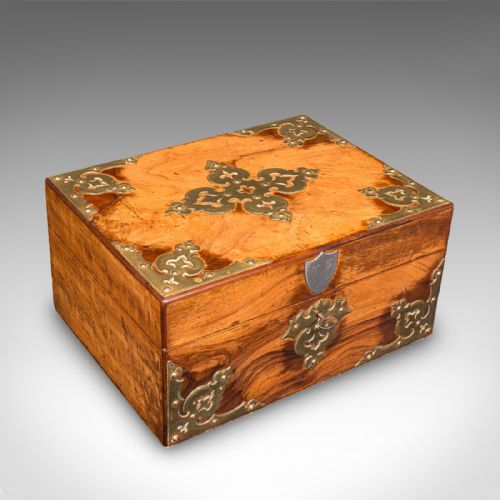
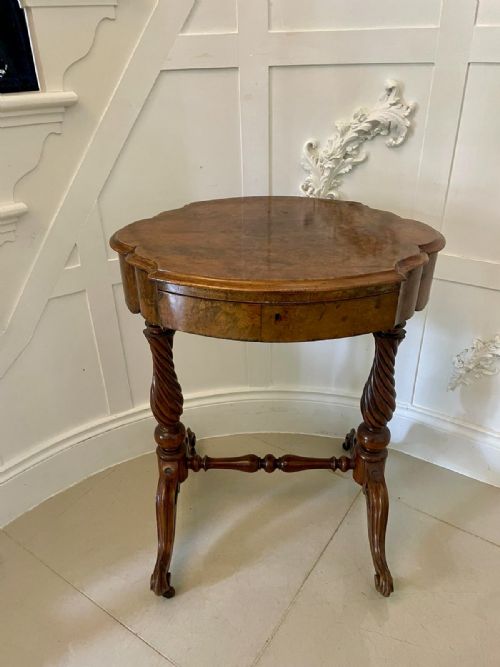
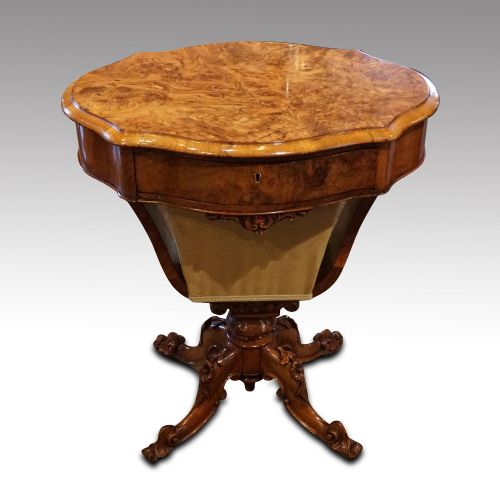
When you search for a brown walnut workbox, you encounter small personal storage chests alongside freestanding sewing tables from the Victorian era. These pieces range from tabletop boxes with intricate inlays to trumpet-shaped pedestal tables designed for needlework.
The selection on this page leans heavily towards Victorian walnut and burr walnut forms, spanning the mid-nineteenth century up to later Edwardian and Art Deco interpretations. Many items combine storage functions with games boards or occasional tables, reflecting domestic utility of the period.
How they were made
Cabinet makers utilised solid walnut and decorative burr walnut veneers over secondary timbers, often applying marquetry inlay and boxwood stringing to create geometric or floral patterns. Brass fittings such as locks, hinges and handles provide structural security and visual contrast against the dark timber.
Interior compartments frequently incorporate fitted trays lined with fabric and textile elements to organise sewing implements and jewellery. Specialised techniques like Tunbridge ware feature micro-mosaic wooden tesserae arranged into intricate pictorial lid panels.
Some nineteenth-century workboxes double as chess tables, proving that Victorian needlework occasionally required tactical warfare.
What varies in quality
The selection of timber veneer determines much of the visual appeal, with richly figured burr walnut commanding attention through complex grain patterns. Finely executed marquetry inlay and well-preserved interior silk or fabric linings elevate the standard of an individual piece.
Structural integrity depends on the precision of the joinery, particularly in trumpet pedestals and tripod bases where stability is essential. Original hardware, functional locking mechanisms and intact internal compartments preserve the integrity of the design.
The Brown Walnut Workbox Glossary
- Burr walnut
- A prized timber veneer taken from the wart-like growths on walnut trees, yielding swirling, highly decorative grain patterns. Cabinet makers used this veneer on the primary surfaces of superior boxes and tables.
- Tunbridge ware
- A form of British woodworking originating in Kent, characterised by tiny mosaic tiles assembled from different coloured woods to form geometric or pictorial designs. These mosaics typically decorate the lids of ladies' boxes.
- Trumpet workbox
- A nineteenth-century sewing table featuring an octagonal or flared body shaped like an inverted trumpet, mounted on a pillar and tripod base. The sloping sides open to reveal compartmentalised storage for thread and needles.
- Marquetry inlay
- The art of applying small pieces of veneer into a fitted recess within a solid wooden panel to create pictures or decorative patterns. Boxwood and darker woods often form these contrasting motifs.
Brown Walnut Workbox: Frequently Asked Questions
What is a brown walnut workbox used for?
These boxes and tables served as dedicated storage for sewing supplies, embroidery threads and small personal valuables in nineteenth-century households. Many incorporated hinged lids, lift-out trays and compartmentalised interiors to keep needlework organised.
Larger freestanding versions doubled as occasional tables, games surfaces for chess or draughts, and writing desks while maintaining their primary craft function.
How can I date a Victorian workbox?
Dating relies on combining stylistic clues, construction methods and timber choices recorded across the pieces. Mid-nineteenth-century examples often feature heavy burr walnut veneers and trumpet pedestals, while later variations incorporate Edwardian or Art Deco influences.
Internal fittings, paper linings and the style of brass locks or hinges provide further chronological markers for items spanning the Victorian era.
What is Tunbridge ware?
Tunbridge ware refers to wooden items decorated with precise mosaic veneers made from numerous tiny blocks of naturally coloured British timbers. These mosaics create detailed floral or geometric pictures, most commonly found on the lids of small ladies' boxes.
Craftsmen in Kent produced these distinctive pieces throughout the nineteenth century, utilising hundreds of contrasting wood species without employing artificial dyes.
Are these workboxes sturdy enough for daily use?
Tabletop workboxes and fitted sewing tables were built to withstand regular domestic handling by Victorian craftspeople, using robust walnut frames and secure dovetail joinery. Freestanding tripod and pedestal tables offer stable platforms when placed on level flooring.
While structurally sound for light modern storage, historic fabric linings and delicate boxwood stringing benefit from gentle handling to preserve their condition.