
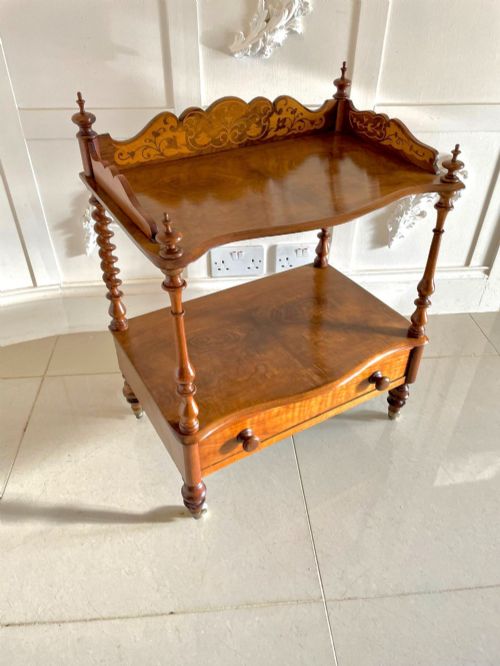
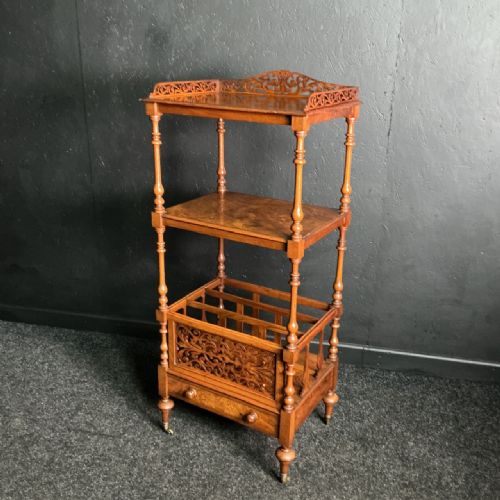


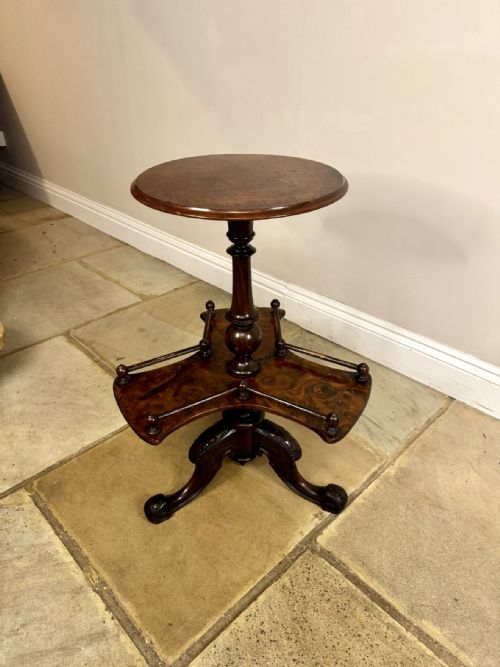


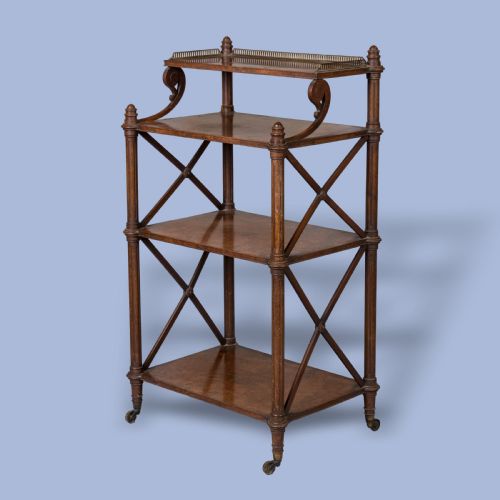


Brown Walnut Whatnot Table
These brown walnut whatnot table pieces bring tiered elegance and practical display space into a room.
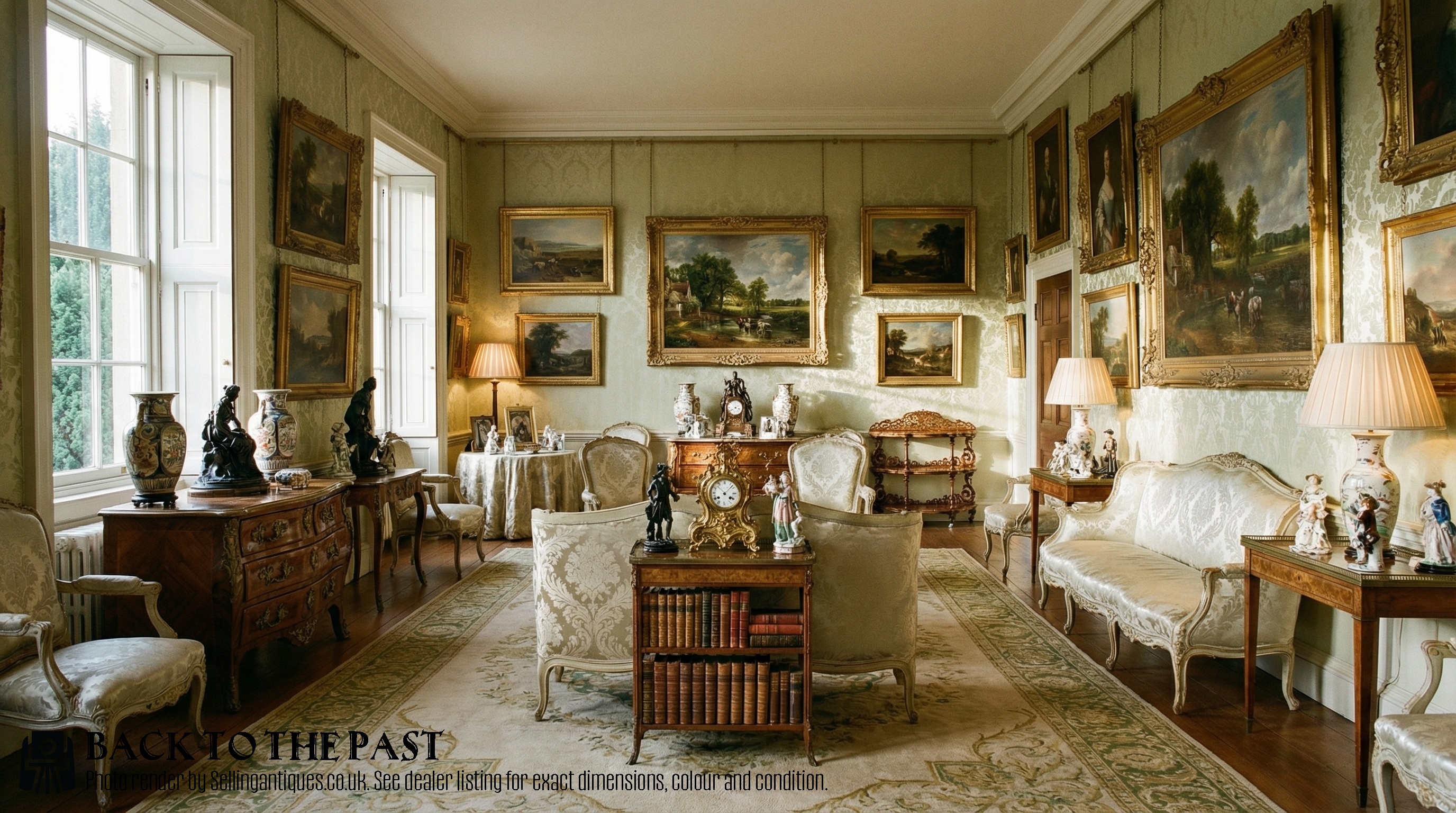
Brown Walnut Whatnot Table
A brown walnut whatnot table combines tiered shelving with the rich grain of walnut, originating primarily from the Victorian era and the mid nineteenth century. Buyers searching for a brown walnut whatnot table encounter multi-tiered display stands, side tables, and etageres designed for the Victorian interior.
The forms vary from simple three-tier open shelves to complex combinations featuring integrated canterburys, work tops, and demi-lune display consoles. These pieces function as versatile display stands and occasional tables, often incorporating specialised compartments for books, music, or coal.
Materials and construction
Cabinetmakers utilised solid walnut and decorative burr walnut veneers to construct these multi-tiered frames, highlighting the natural figure of the timber across the shelves and tops. Brass hardware and ceramic elements appear as structural or decorative accents on specific forms.
Joinery techniques supported the stacked tier design characteristic of etageres and whatnots, requiring precise assembly to maintain stability across multiple levels of shelving. Inlaid details and carved stylistic elements, including Gothic Revival or Puginesque influences, were applied to enrich the surfaces.
Listings for this phrase feature Victorian pieces dated around eighteen sixty, constructed primarily from walnut and burr walnut with brass and ceramic accents.
Judging quality and character
The quality of a brown walnut whatnot table rests on the selection and matching of the burr walnut veneer across the primary surfaces. Finer examples display superior timber figure and more complex configuration, such as combined canterbury sections or demi-lune consoles.
Proportion and architectural balance dictate the distinction between standard production and exceptional craftsmanship. Pieces attributed to notable workshops like Gillows demonstrate a higher grade of execution in their joinery and decorative detailing.
Gillows
The Brown Walnut Whatnot Table Glossary
- Whatnot
- An open set of multi-tiered shelves used for displaying ornaments and books. It gained popularity during the Victorian period.
- Etagere
- A piece of furniture consisting of a set of open shelves for displaying small objects. The term derives from the French for stage or shelf.
- Canterbury
- A low stand fitted with partitions for holding music sheets, folios, or books. Often incorporated into the base of Victorian whatnots.
- Burr Walnut
- Timber taken from the wart or burl of a walnut tree, yielding highly decorative swirling grain patterns. Cabinetmakers used it extensively for veneering luxury furniture.
Brown Walnut Whatnot Table: Frequently Asked Questions
What is a brown walnut whatnot table used for?
These pieces served primarily as multi-level display surfaces for ornaments, ceramics, and books in Victorian drawing rooms. Certain variants included built-in compartments for storing sheet music or newspapers.
Today, they function effectively as corner or side displays in living spaces, holding lamps, plants, or collections while occupying minimal floor space.
How do I date a Victorian whatnot?
Dating relies on stylistic markers and construction methods associated with the mid nineteenth century. Pieces frequently date from around eighteen sixty and exhibit Victorian design traits.
Examining the secondary timbers, brass fixtures, and veneer thickness helps confirm the nineteenth century origin of the piece.
What is the difference between an etagere and a whatnot?
An etagere generally emphasises decorative display with lighter framework, while a whatnot traditionally refers to stacked open shelving of sturdy construction.
In nineteenth century cataloguing, the terms often overlap, especially when makers combined shelving with canterbury bases or display consoles.
How do I care for burr walnut veneer?
Burr walnut requires protection from direct sunlight and extreme humidity fluctuations to prevent veneer cracking or fading. Regular dusting with a soft, dry cloth preserves the polished surface.
Applying a traditional wax polish occasionally maintains the moisture and lustre of the nineteenth century timber.