

Brown Walnut Storage Drawers
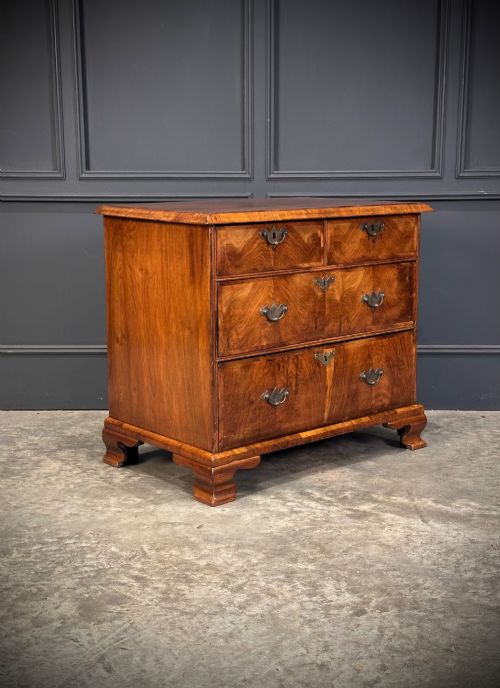
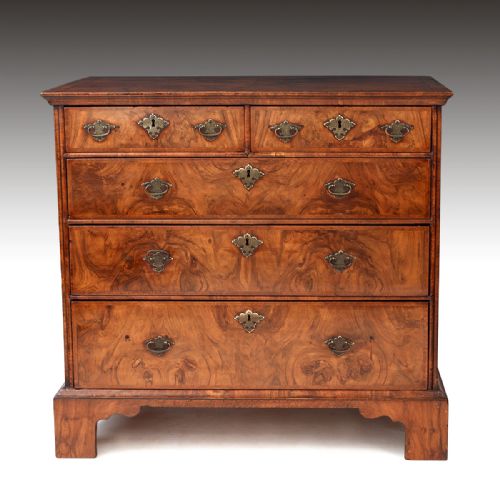
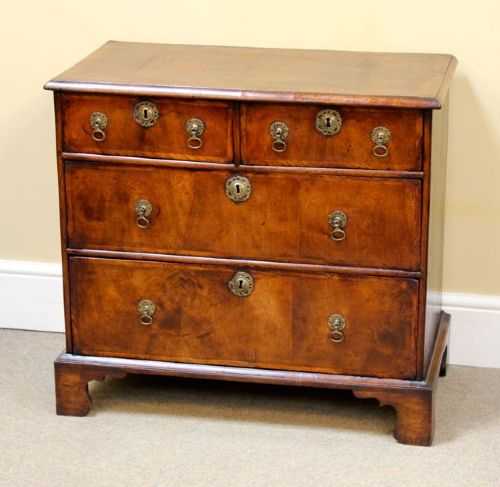
These brown walnut storage drawers bring warmth and disciplined storage to a room through dense grain and traditional joinery.
Brown Walnut Storage Drawers
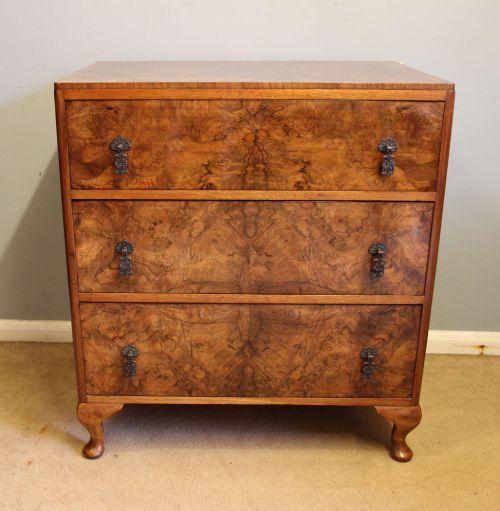
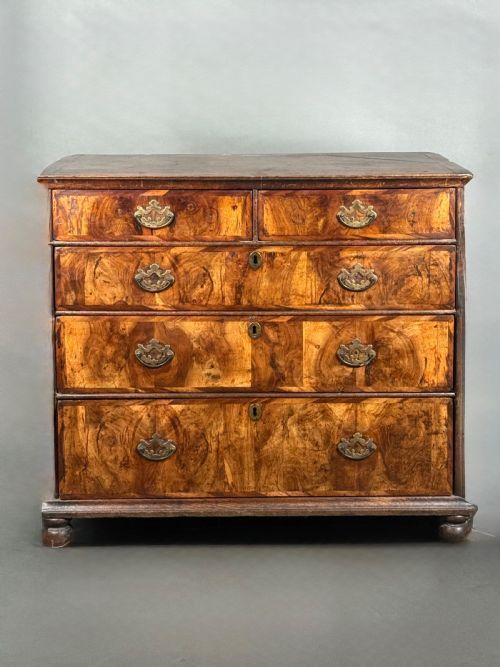
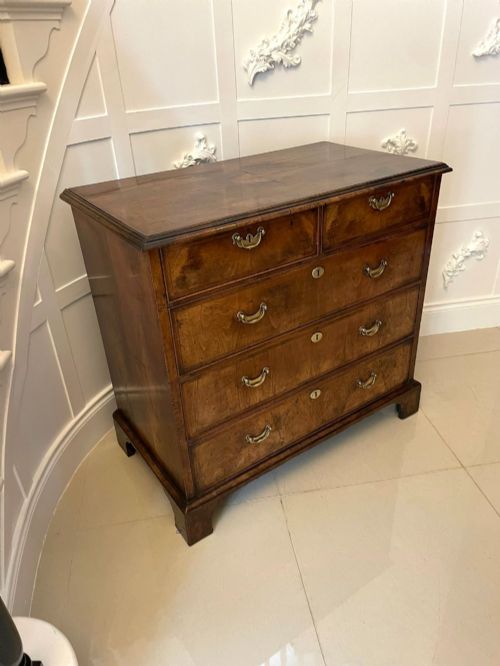
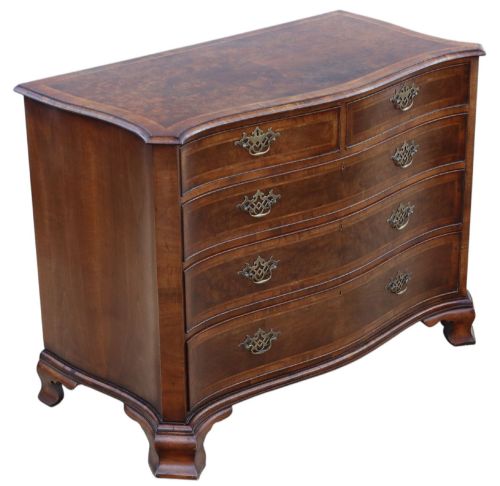
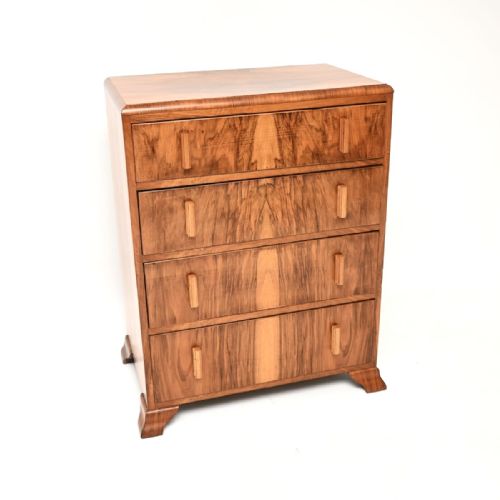
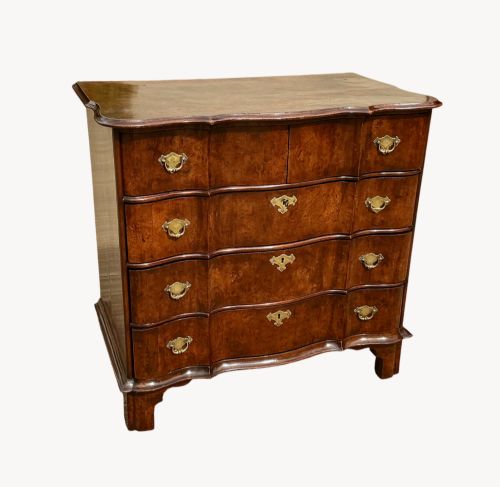
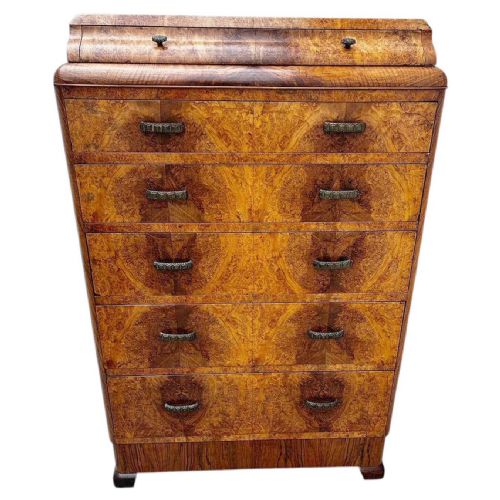
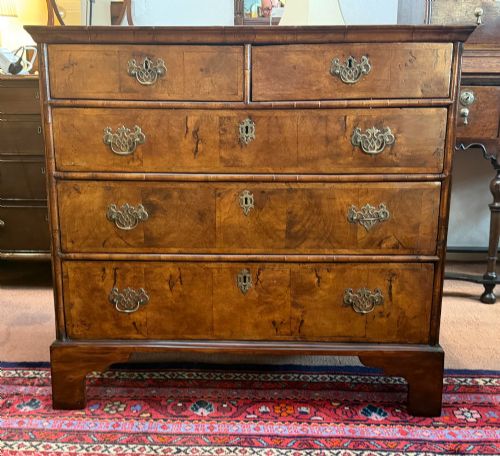
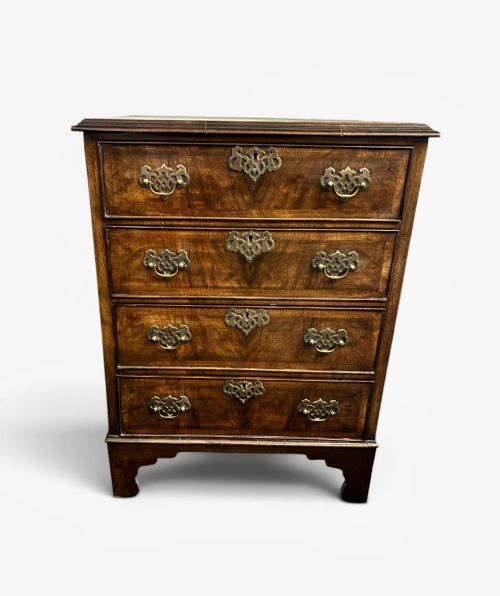
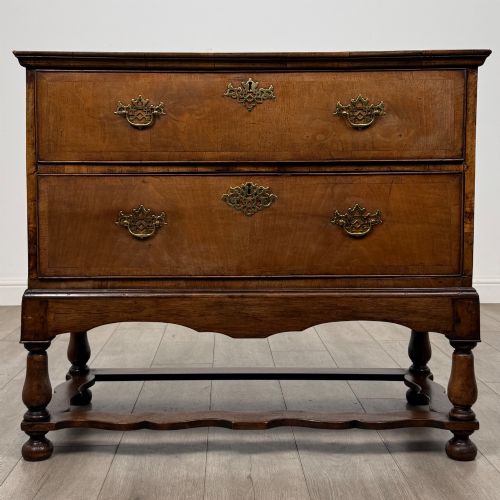
Brown walnut storage drawers encompass chest of drawers forms spanning from the late seventeenth century through the Art Deco era. The selection draws heavily upon eighteenth century Georgian examples alongside 1930s burr walnut pieces.
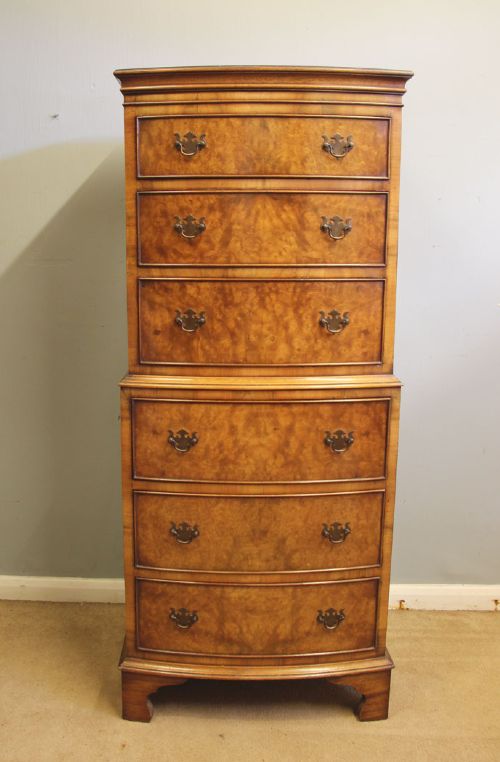
Forms range from compact bedside cabinets and tallboys to grand serpentine commodes and Wellington chests. Buyers find both British and Dutch origins represented across these historical periods.
How they were made
Cabinet makers utilised solid walnut, burr walnut, and figured walnut veneers applied over secondary woods such as oak and pine. Crossbanding and herringbone banding often frame the drawer fronts.
Brass handles and escutcheons punctuate the dark timber surfaces while internal drawer construction relies on traditional dovetailed joints.
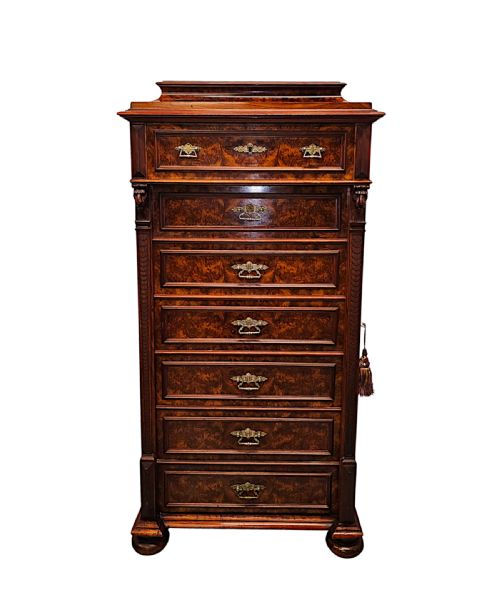
A secret side-locking pilaster on Wellington chests ensures your socks remain safe from inquisitive hands.
What varies in quality
The sophistication of the timber grain dictates visual impact, with figured and burr veneers offering intense pattern variation compared to plain walnut boards. Match of veneer across multiple drawers shows deliberate planning by the maker.
The integrity of the construction rests in the crispness of the featherbanding, the retention of original brass hardware, and the smooth movement of the dovetailed drawers within their carcase.
Jas Shoolbred
The Brown Walnut Storage Drawers Glossary
- Burr walnut
- A prized veneer taken from the warted growth of a walnut tree, creating swirling and mottled patterns across furniture surfaces. It adds intense visual texture to drawer fronts.
- Crossbanding
- A narrow strip of veneer laid perpendicularly to the surrounding grain along the edges of a drawer. This technique frames the primary timber.
- Tallboy
- A tall chest of drawers consisting of one chest stacked upon another, providing significant vertical storage capacity. Eighteenth-century examples often feature substantial proportions.
- Wellington chest
- A tall, narrow chest of drawers secured by a hinged locking side pilaster that fastens all drawers simultaneously. These pieces originated in the nineteenth century.
- Herringbone banding
- A decorative inlay pattern arranged in parallel V-shapes resembling a fish skeleton. Cabinet makers utilised this motif to border drawer faces during the Georgian period.
Brown Walnut Storage Drawers: Frequently Asked Questions
How do I date a walnut chest?
Examine the timber construction, drawer linings, and hardware styles. Secondary woods like oak and pine often indicate specific centuries.
Look closely at the veneer application and handle fixings to distinguish between an original eighteenth-century piece and a later revival version.
What is burr walnut?
Burr walnut is a specialised timber veneer cut from tree growths containing numerous dormant buds. This produces intricate, swirling grain patterns.
Cabinet makers used these figured veneers on prominent surfaces like drawer fronts to create striking visual movement.
Where were these chests used?
These storage pieces historically served bedrooms, dressing rooms, and formal parlours for linens and garments. Their structured drawers kept textiles organised.
Today, they adapt easily to modern hallways and living spaces as statement storage furniture.
How do I maintain walnut furniture?
Keep walnut chests away from direct sunlight and sudden temperature shifts to protect the delicate veneers from drying and splitting. Consistent indoor humidity preserves the finish.
Apply gentle beeswax periodically to nourish the timber and maintain the subtle sheen of the antique surface.