


George III Walnut Chest
A george iii walnut chest brings warmth and rich grain to a room through centuries of cabinet-making skill.
George III Walnut Chest
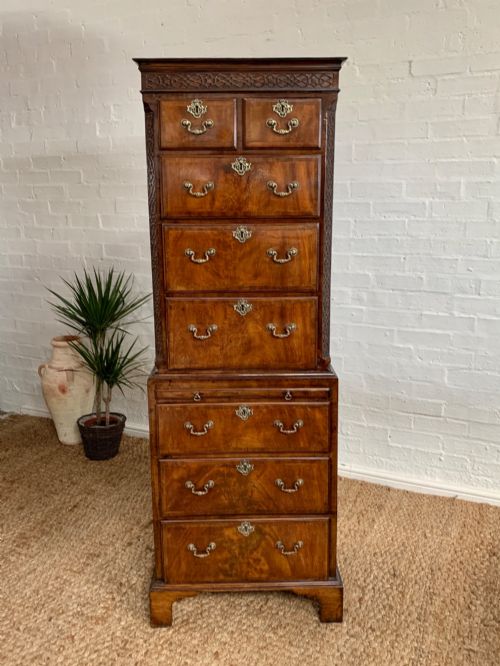
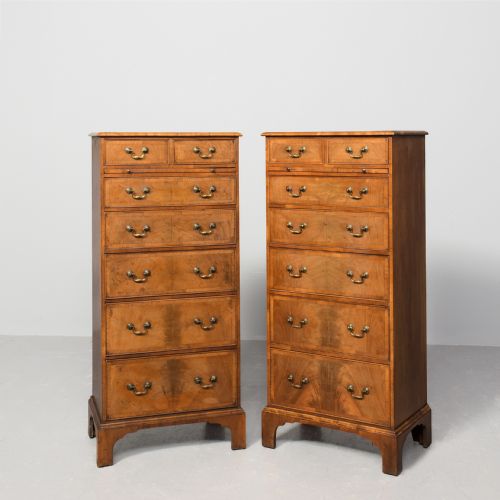
A george iii walnut chest is a sturdy domestic storage piece originating from the Georgian period, 18th century, and later 19th century or 1910 revivals. These pieces include chests of drawers, chests on stands, tallboys, chest on chests, bachelors chests, and bureau bookcases.
Buyers will find compact small chests, crossbanded examples, block-front designs, and Norfolk chests alongside larger wardrobes and linen presses. Walnut, burr walnut, and figured walnut dominate the selection, often complemented by oak and pine carcasses.
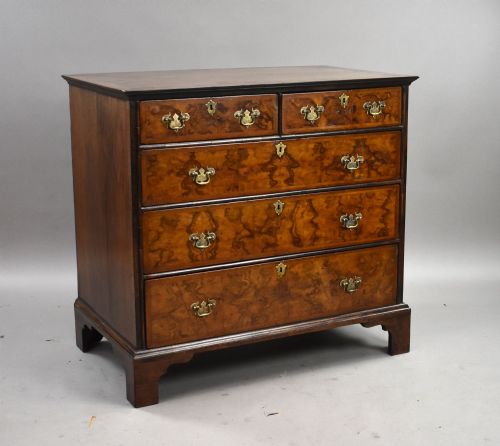
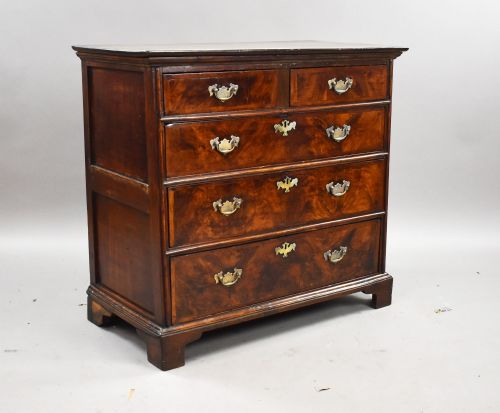
The version most commonly encountered on this page is the classic chest of drawers, built either in solid walnut or decorated with burr walnut veneer. Many pieces display detailed craftsmanship such as boxwood line inlay and brass hardware.
How they were made
Cabinet-makers constructed these pieces primarily from walnut, burr walnut veneer, and solid walnut timbers, supported internally by oak, pine, and elm carcasses. Selected sections often featured crossbanding to frame the rich grain patterns.
Decorative surface details relied upon boxwood line inlay and figured veneers carefully applied to drawer fronts and top panels. Solid brass handles and escutcheons secured the drawers and doors, completing the hardware assembly.
One neat-sized chest arrived with a secret sliding compartment designed to hide letters from prying family members.
What varies in quality
The distinction between tiers rests upon the choice of timber and the complexity of the cabinet work, such as the use of highly figured burr walnut against plain walnut boards. Figured grain patterns and crisp inlay work signal superior artisan investment.
Proportion and scale dictate desirability, with neat-sized pieces and matching stands commanding attention for their balanced visual weight. Original brass hardware and cleanly fitted drawer linings elevate the standing of an individual piece.
The George III Walnut Chest Glossary
- Burr walnut
- A prized timber harvested from walnut tree growths, featuring swirling, knotty grain patterns. Cabinet-makers sliced this wood into thin veneers for decorative surfaces.
- Crossbanding
- A border technique where thin strips of wood veneer are laid perpendicular to the grain of the central panel. This frames the top or drawer fronts of a chest.
- Tallboy
- A tall chest of drawers built in two stacked sections, providing generous vertical storage. It combines the capacity of a chest on chest with an elegant footprint.
- Bachelors chest
- A compact drawer unit featuring a fold-over top or a pull-out brushing slide. It served as a versatile dressing and writing surface for gentlemen.
- Line inlay
- Thin decorative threads of contrasting wood, such as boxwood, embedded into the primary surface. This technique outlines drawer edges and panels.
George III Walnut Chest: Frequently Asked Questions
What is a george iii walnut chest?
A george iii walnut chest is a wooden storage unit made during the Georgian era, featuring the characteristic proportions and timber choices of the period. These items were designed to hold clothing and household linens in domestic bedrooms and chambers.
Today, they serve as functional focal points in modern homes, offering deep drawers and striking wood grain that suits both traditional and contemporary interiors.
How do I tell an 18th century piece from a 1910 revival?
Original 18th century pieces display the natural wear, construction methods, and timber patination consistent with age. Cabinet-makers of that time utilised secondary woods like oak and pine in specific hand-cut configurations.
Revival pieces from 1910 or the 19th century often mimic the George III style precisely, but exhibit machine-sawn timber marks and different interior construction signatures under close inspection.
Where were these chests used historically?
These chests were placed primarily in bedrooms, dressing rooms, and private chambers of large country houses and town residences. They provided secure storage for garments, personal valuables, and household textiles.
Larger variations like chest on chests and linen presses occupied hallways or dressing chambers, where their scale added architectural presence to the room.
How do I care for walnut furniture?
Walnut furniture requires a stable indoor environment away from direct sunlight and sudden temperature shifts to protect the wood and veneer. Regular dusting with a soft, dry cloth preserves the natural lustre of the finish.
Applying occasional appropriate wax feeds the timber and prevents the burr walnut veneer from drying out or lifting over time.