

Brown Walnut Pot Cupboards
Brown walnut pot cupboards bring warmth and practical storage to a bedroom, offering compact proportions alongside rich timber grain.
Brown Walnut Pot Cupboards
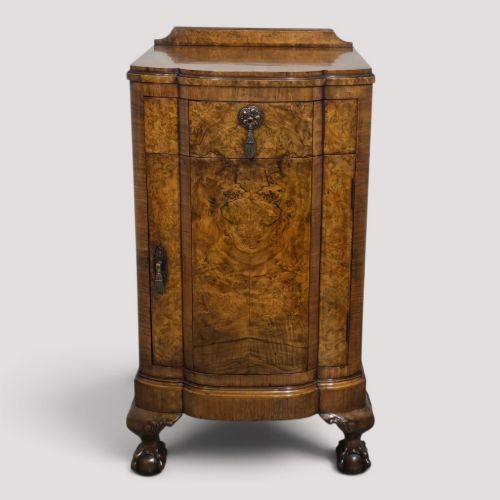
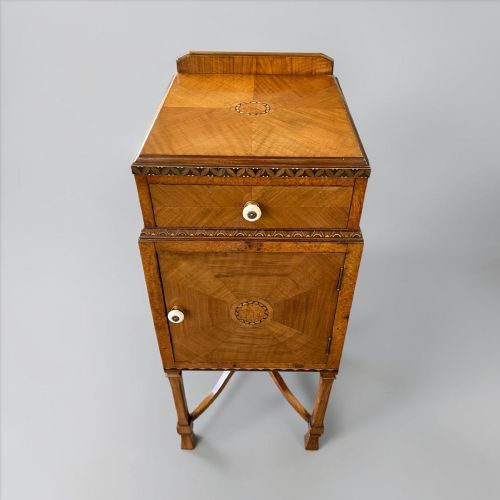
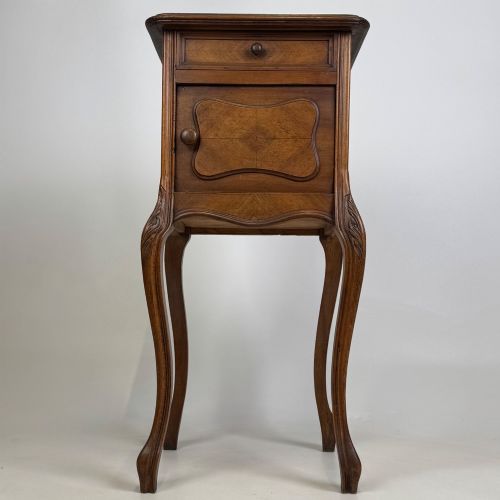
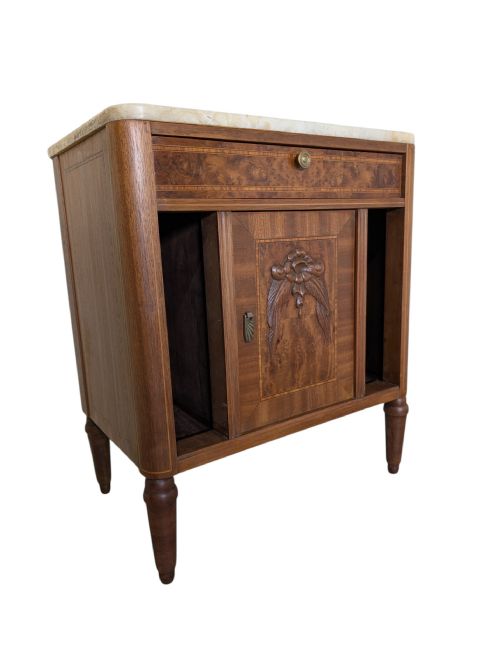
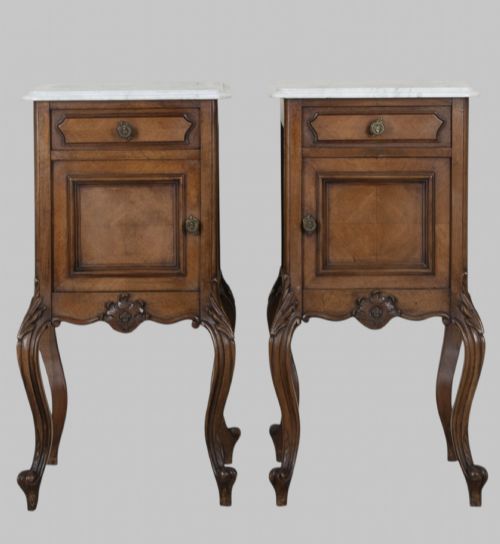
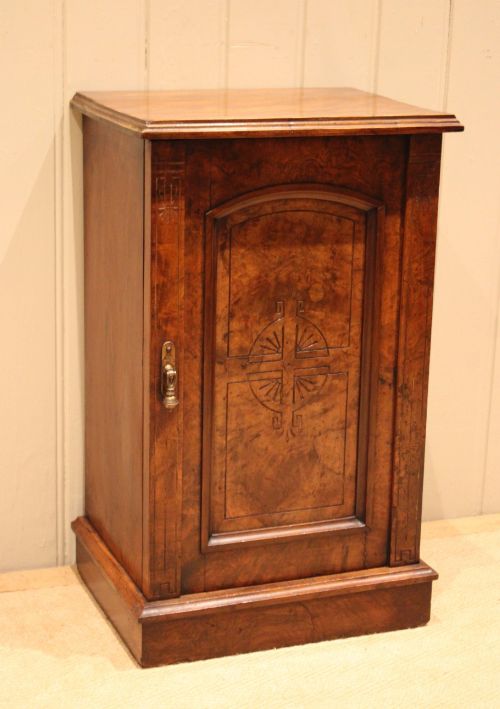
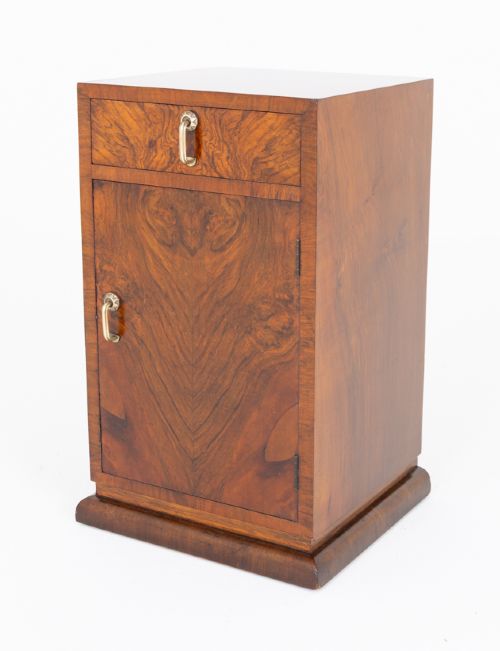
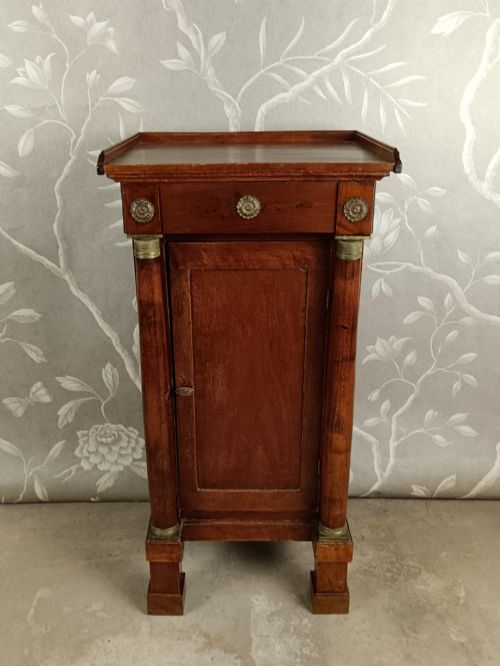
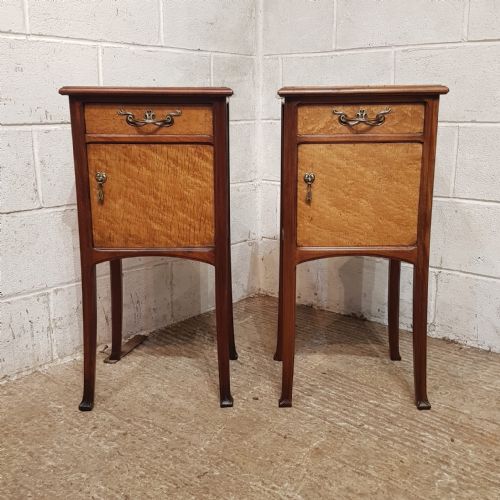
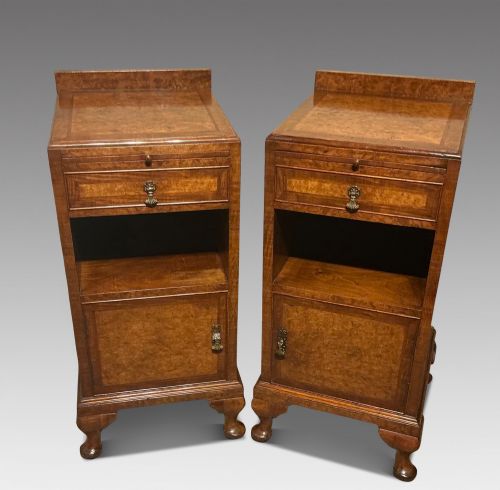
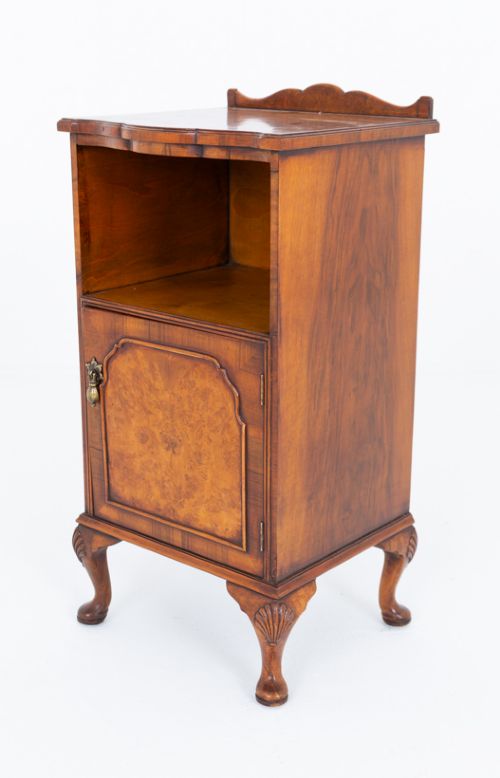
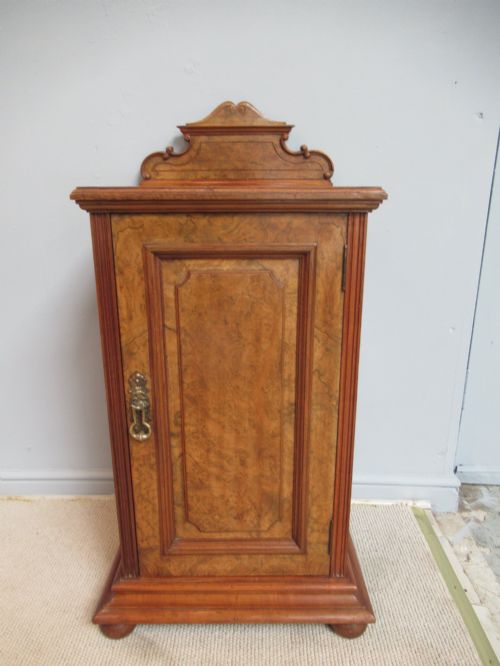
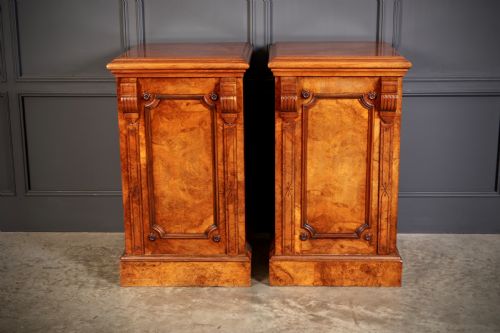
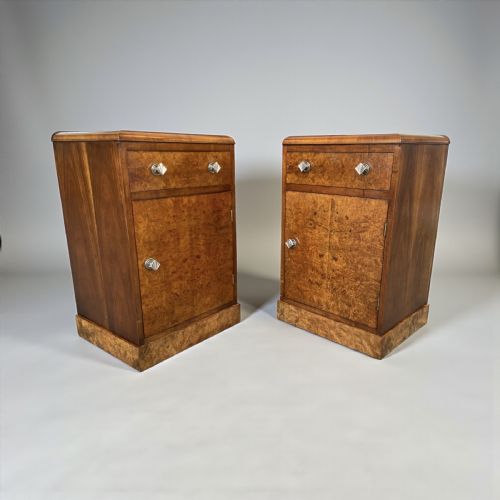
These brown walnut pot cupboards span periods from the mid-nineteenth century through the Edwardian era and into the Art Deco style of 1930. The selection includes bedside cabinets, nightstands, and pedestal cabinets designed to sit beside a bed or in a corner.
Most examples originate from English workshops or French provincial houses, reflecting varied regional tastes in interior furniture. Buyers frequently encounter single cabinets alongside matched pairs suitable for twin beds.
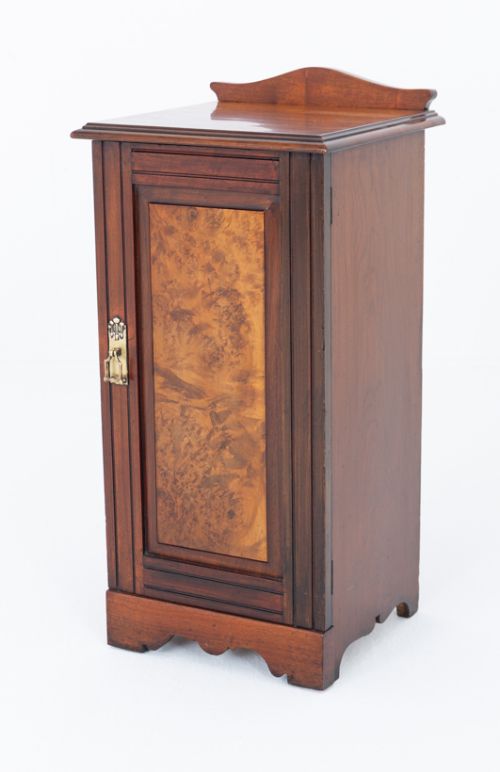
Forms range from simple rectangular cupboards with panelled doors to cylindrical pedestals and marble-topped night tables. Each piece serves the traditional function of housing a chamber pot or private bedside items while doubling as a small lamp table.
Materials and construction methods
Cabinet makers utilised solid walnut and decorative veneers, often selecting burr walnut or figured walnut for the primary surfaces to display lively, complex grain patterns. Brass hardware such as drop handles and hinges appears alongside carved wooden details and marquetry inlay.
Many nineteenth-century and Edwardian pieces incorporate inset marble tops designed to provide a durable, wipe-clean surface for water jugs and wash accessories. Structural elements combine solid timber carcases with veneered panels fixed to secondary woods.
The listings on this site encompass Victorian, Edwardian, and Art Deco periods, utilising both solid walnut and burr walnut veneer.
Evaluating craftsmanship and condition
Quality rests upon the selection of the timber veneer and the precision of the joinery in the door frames and drawer linings. Superior examples feature book-matched burr walnut veneers that create symmetrical patterns across the cabinet door.
Finer pieces distinguish themselves through crisp carved ornamentation, well-fitted marble slabs, and original brass fittings rather than later replacements. The integrity of the internal shelf and the smooth operation of the door or drawer determine daily usability.
The Brown Walnut Pot Cupboards Glossary
- Pot cupboard
- A small bedside cabinet originally built to enclose a chamber pot behind a single door. These pieces now serve commonly as general bedside tables.
- Burr walnut
- Timber harvested from walnut tree growths that produces highly figured, swirling grain patterns. Cabinet makers prized this wood for decorative veneering on prominent surfaces.
- Marquetry
- The art of applying pieces of veneer to a structure to form decorative patterns or pictures. Floral motifs frequently appear on Victorian examples.
- Tambour
- A flexible shutter made from narrow strips of wood glued to a canvas backing. This mechanism allows curved cabinet doors to slide smoothly around a track.
- Cylindrical
- A circular column form used for specific Victorian bedside pedestals. This shape maximises internal storage while softening room angles.
Brown Walnut Pot Cupboards: Frequently Asked Questions
What is a brown walnut pot cupboard used for today?
These cabinets function primarily as bedside tables supporting lamps, books, and small personal items. Their enclosed internal space provides discreet storage for modern bedroom clutter.
They also fit well in narrow hallways or reception rooms as small side tables where floor space is limited.
How do I date a brown walnut pot cupboard?
Dating relies on observing construction methods, hardware styles, and overall design characteristics. Victorian pieces often feature heavy carving and marble tops, whereas Edwardian and 1930s Art Deco examples tend to show cleaner lines and figured veneers.
Secondary wood types and interior construction details help confirm the period of manufacture.
Are pairs difficult to find?
Matched pairs appear frequently alongside single cabinets in traditional bedroom furniture. Finding a pair often involves looking at French provincial or English Edwardian listings where twin bedside tables were standard.
Slight variations in grain pattern are normal due to the natural characteristics of walnut timber.
How do I care for walnut veneer?
Walnut benefits from occasional polishing with a traditional beeswax to nourish the wood and maintain its deep brown colour. Direct sunlight should be avoided to prevent the veneer from fading over time.
Placing felt pads beneath items on marble tops protects the stone from scratching.