

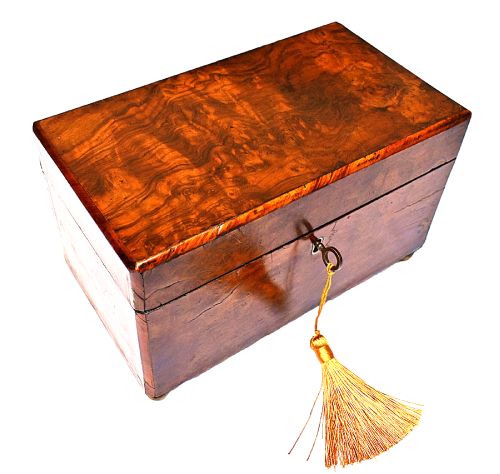
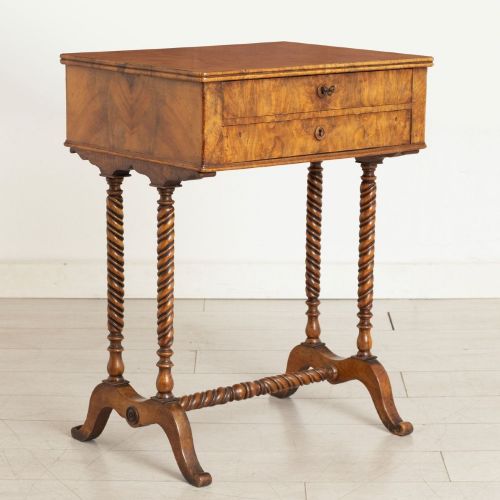

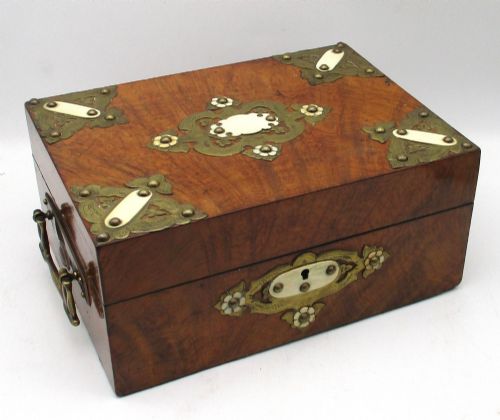


Brown Walnut Desk Box
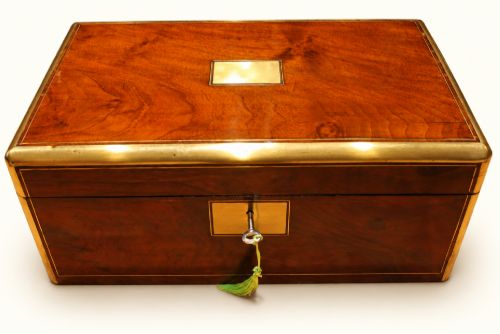
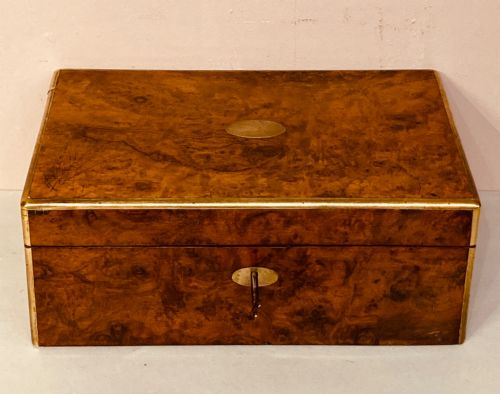
A brown walnut desk box is a practical table accessory for correspondence, most commonly found here as a Victorian writing slope or stationery box.
Brown Walnut Desk Box
A brown walnut desk box serves as a portable writing surface or desktop storage cabinet for letters, paper, and small writing implements. These pieces range from compact 18th-century table boxes to substantial 19th-century Victorian writing slopes and correspondence cases.
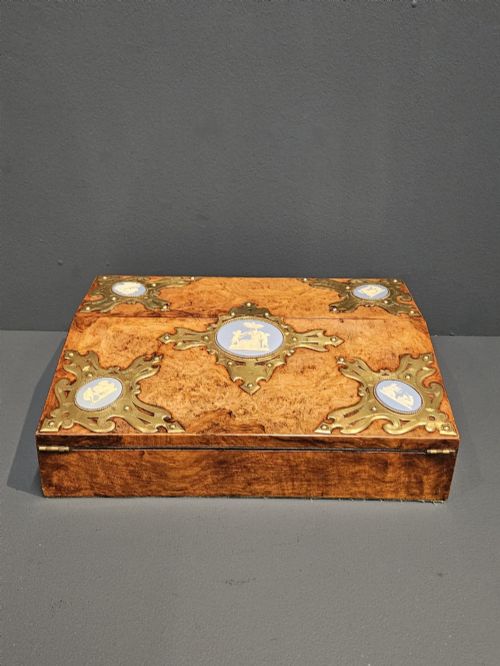
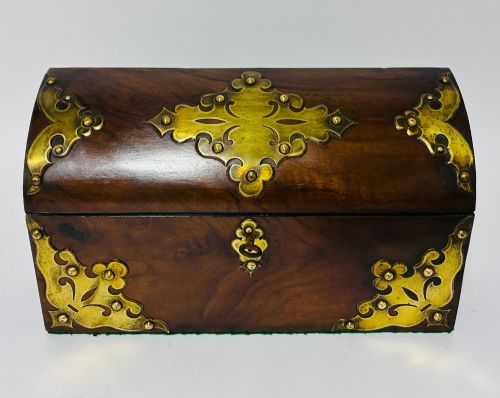
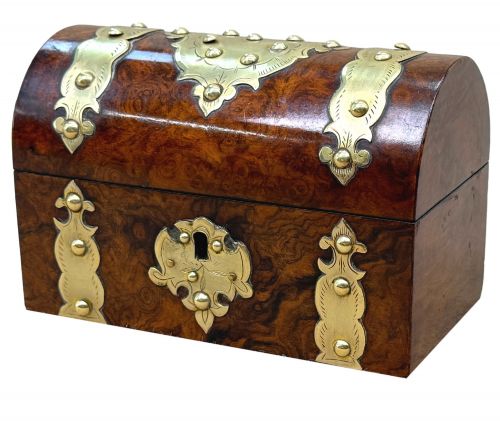
The version most frequently encountered on this page is the Victorian burr walnut slope or stationery cabinet, often fitted with internal compartments, secret drawers, and brass mounts. Alongside these sit Georgian and Regency examples, together with occasional Edwardian and Arts and Crafts iterations.
Beyond standard writing slopes, the selection includes related desk accessories and small chests originating from various periods, including Black Forest carved tobacco boxes and Italian presentation boxes.
Materials and construction
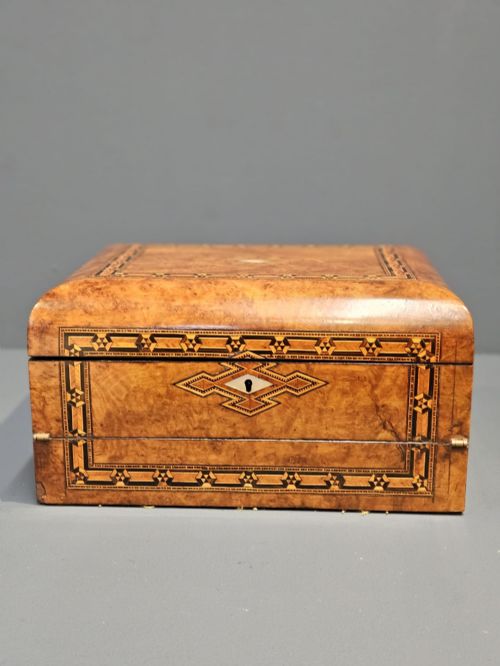
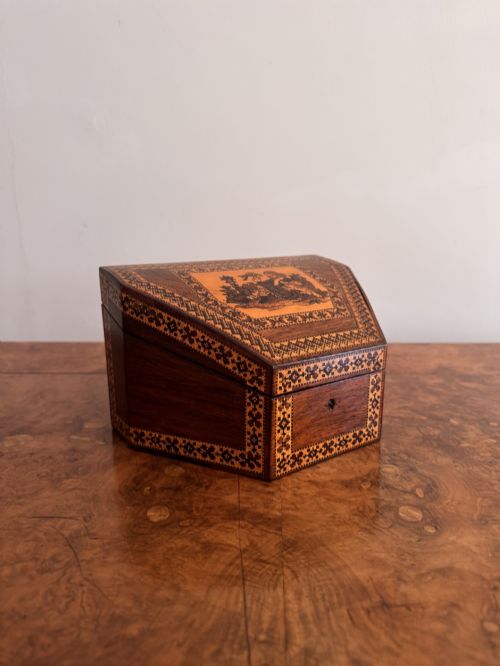
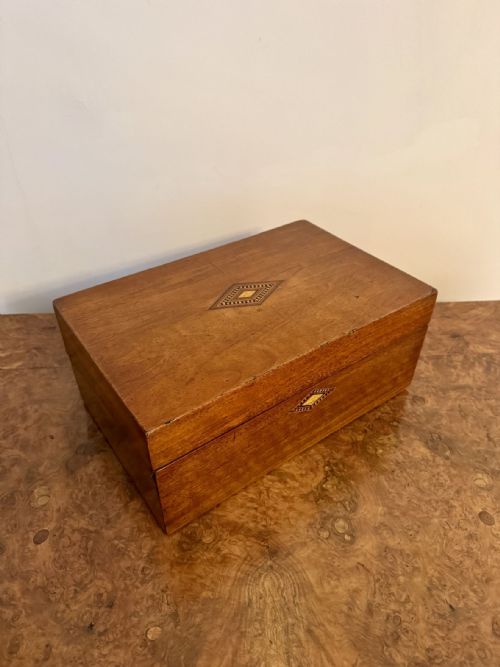
Makers utilised solid walnut and figured burr walnut veneers over secondary timbers, often applying marquetry inlay, parquetry, or Tunbridge ware mosaic patterns to the exterior surfaces. Boxwood, fruitwood, and other contrasting timbers form intricate geometric or pictorial motifs.
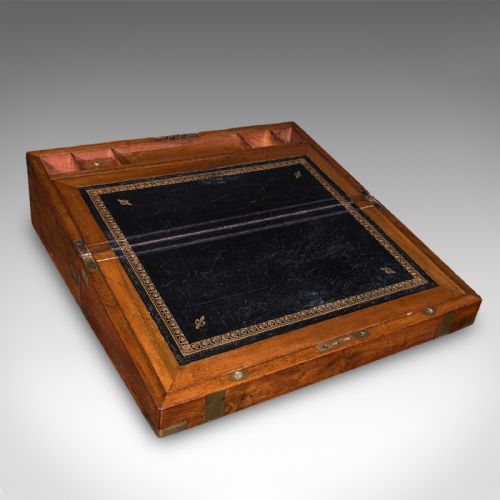
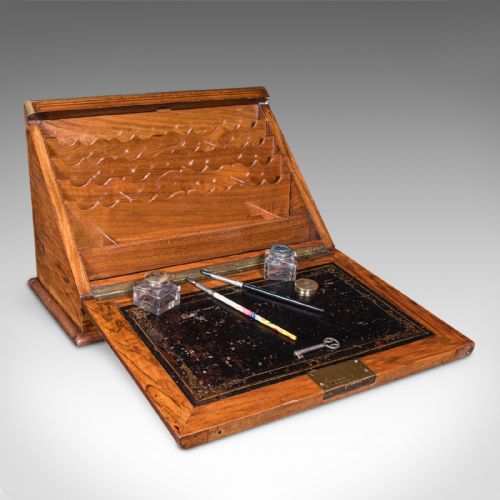
Brass hardware, including escutcheons, corner brackets, and campaign-style carrying handles, provides structural reinforcement and visual contrast to the dark timber. Interiors frequently incorporate fitted leather writing surfaces, glass inkwells, and specialised locking mechanisms such as Bramah locks.
Brown Walnut Desk Box Retail Price Guide 2026
Typical asking prices for brown walnut desk box among the pieces listed under this phrase on Sellingantiques today, from the lower quarter to the upper quarter. They describe what is for sale here now, not the wider market.
Listings feature walnut, burr walnut, fruitwood, and boxwood across periods spanning from the 18th century through the Edwardian era.
Markers of quality
The distinction between ordinary and superior examples lies in the selection of timber veneers and the precision of the cabinetwork. High-grade pieces display heavily figured burr walnut with book-matched grain patterns and meticulous marquetry or parquetry detailing.
Internal complexity and hardware specification further differentiate the standard production from the exceptional. Integrated secret drawers, robust brass mountings, and functional branded locks indicate superior workshop output.
Austin·Edmund Nye·Waring & Gillow
The Brown Walnut Desk Box Glossary
- Burr walnut
- A veneer sliced from the deformed growths or burrs of a walnut tree, yielding a swirling, highly figured grain pattern. This material was favoured by cabinetmakers for decorative box lids and slope fronts.
- Writing slope
- A portable box with a hinged sloping lid that opens to reveal a desk surface and internal compartments for stationery. When closed, it forms a compact rectangular case.
- Tunbridge ware
- A form of mosaic woodwork produced in Kent, incorporating thousands of tiny tinted wood blocks to create pictorial or geometric designs. These geometric mosaics frequently decorate Victorian boxes and stationery cabinets.
- Marquetry inlay
- The art of applying decorative pieces of veneer to a structural structure to form pictorial or ornamental designs. Makers utilised various contrasting woods to create floral or geometric panels.
- Stationery box
- An upright cabinet or desk accessory designed to hold writing paper, envelopes, and correspondence. These pieces often feature tiered compartments and drop-front mechanisms.
Brown Walnut Desk Box: Frequently Asked Questions
How were writing slopes used historically?
Writing slopes provided a portable writing desk before fitted studies and modern stationery became commonplace in every household. Users opened the hinged lid to reveal a slanted leather or velvet surface for writing letters.
Inside, dedicated compartments held folded paper, inkwells, stamps, and nibs, keeping all writing requirements together in one secure container.
How do I date a walnut desk box?
Dating relies on stylistic clues, construction methods, and hardware types found on the box. Georgian and Regency pieces typically exhibit cleaner architectural lines, while Victorian examples often feature exuberant burr walnut veneers and heavy brass mounts.
Interior fittings, lock stamps, and secondary woods also help determine the approximate period of manufacture.
Where should I place a desk box at home?
Desk boxes suit placement on side tables, chests of drawers, or dedicated writing desks where their decorative timber can be appreciated. Closed boxes protect contents from dust and light while adding traditional texture to a room.
Stationery boxes and writing slopes function effectively as surface storage for modern correspondence or small collections.