
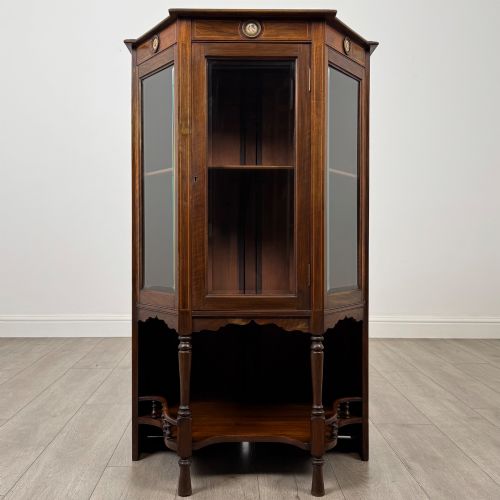
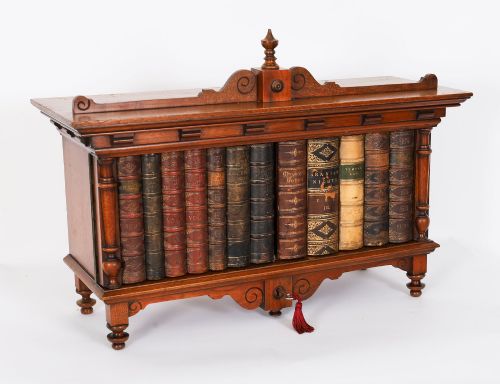
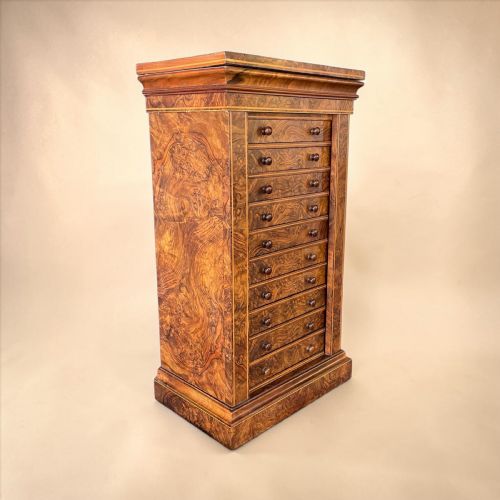
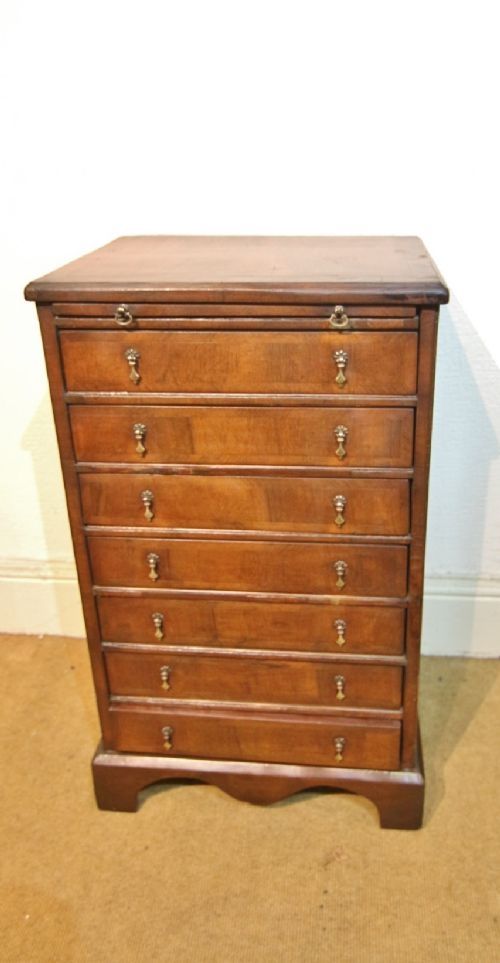

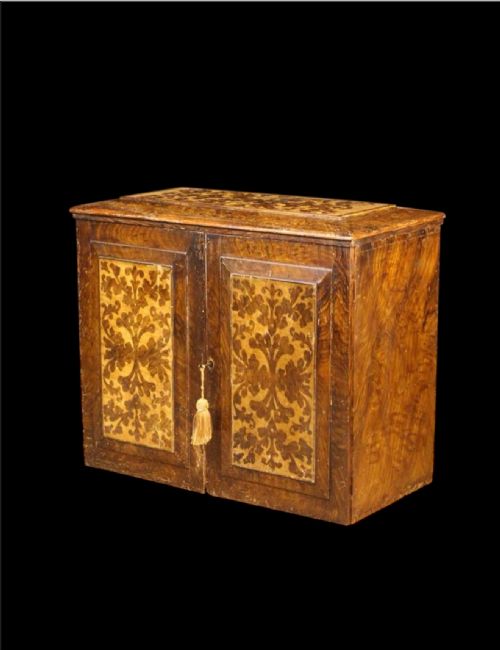


Brown Walnut Collectors Cabinet
A brown walnut collectors cabinet organises specimens or small treasures, offering secure storage wrapped in rich timber grain.
Brown Walnut Collectors Cabinet
A brown walnut collectors cabinet is primarily designed to hold small specimens, drawings, or valued objects in tightly fitted drawers. The pieces seen here span from the seventeenth century through the Edwardian era, crossing forms like Wellington chests, table-top cabinets, and elaborate cabinets on stands. Victorian and nineteenth-century examples dominate the selection, often taking the form of narrow drawer chests or specimen cabinets.
Buyers also encounter earlier seventeenth-century works involving oyster veneers and elaborate stands, alongside Edwardian and Georgian-style variations. Forms shift from miniature chests and folio cabinets to tabletop escritoires and bank chests with graduated drawers. Walnut and burr walnut serve as the defining timbers across these diverse domestic and estate storage pieces.
Indicators of quality
Quality rests heavily on the choice of timber and the intensity of the grain figure, particularly with burr walnut and oyster veneers. Master workshops achieved superior results through precise alignment of drawer runners and meticulous matching of timber patterns across multiple banks of drawers.
The integrity of original brass hardware, locking mechanisms, and secondary woods dictates the standing of an individual piece. Earlier seventeenth-century and baroque examples demonstrate intricate cabinetmaking standards that distinguish them from standard nineteenth-century production.
Tabernacle doors and secret compartments wait inside select tabletop escritoires for those who find the hidden release.
Whytock and Reid·Gillows of Lancaster
The Brown Walnut Collectors Cabinet Glossary
- Wellington chest
- A tall, narrow chest of drawers secured by a locking hinged side pilaster bar. This locking stile fastens all drawers simultaneously.
- Oyster veneer
- Slices cut transversely from small branches to create circular or oval patterns resembling oyster shells. This technique is typical of seventeenth-century veneering.
- Burr walnut
- Timber taken from a tree growth or wart, yielding complex, swirling grain patterns. It was favoured for high-status cabinet fronts.
- Specimen cabinet
- A piece built with numerous shallow drawers designed for holding natural history specimens or small collectables. Interiors usually feature plain or baize-lined compartments.
- Tabletop cabinet
- A small-scale storage piece intended to sit upon a desk, table, or chest. These miniature cabinets frequently incorporate internal drawers or doors.
Brown Walnut Collectors Cabinet: Frequently Asked Questions
What fits inside these cabinets?
The shallow drawers of a collectors cabinet suit small items like coins, stamps, minerals, or curated specimens. Deeper configurations accommodate documents, drawings, or jewellery.
Larger variations function as general storage or display pieces for drawing rooms and studies, holding assorted domestic objects.
How do I date a walnut cabinet?
Dating relies on observing construction methods, timber choice, and hardware styles alongside the overarching period characteristics. Seventeenth-century pieces often feature oyster veneers and stands, whereas Victorian examples lean toward Wellington chests and solid walnut banks of drawers.
Secondary woods and drawer dovetails offer further clues to the manufacturing decade, distinguishing earlier seventeenth-century works from later nineteenth-century adaptations.
Where should I place one?
Tabletop cabinets sit well on sturdy desks, side tables, or larger chests where their detailed grain remains visible. Floor-standing Wellington chests and cabinets on stands suit studies, drawing rooms, or hallways as focal storage units.
Keep wooden cabinets away from direct heat sources and strong sunlight to protect the walnut timber and delicate burr veneers from drying out.
How do I maintain the wood?
Protect the timber by dusting regularly with a soft, dry cloth and avoiding silicone-based polishes. Occasional application of suitable wax feeds the walnut grain and maintains the sheen of the vintage finish.
Maintain stable room humidity to prevent the solid walnut and veneered surfaces from splitting or warping over time.