


Brown Teak Side Table
A brown teak side table brings rich colonial craftsmanship and intricate carving into a modern room.
Brown Teak Side Table
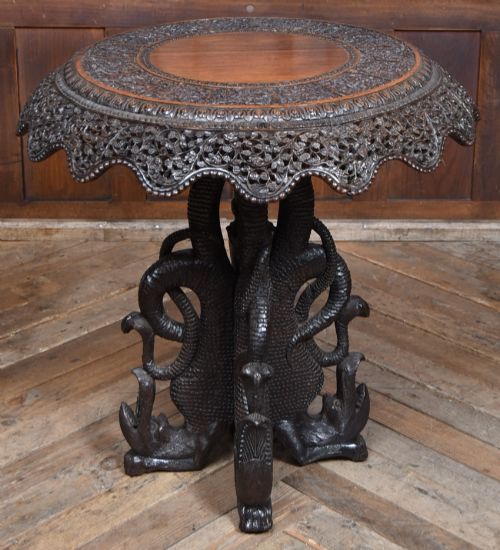
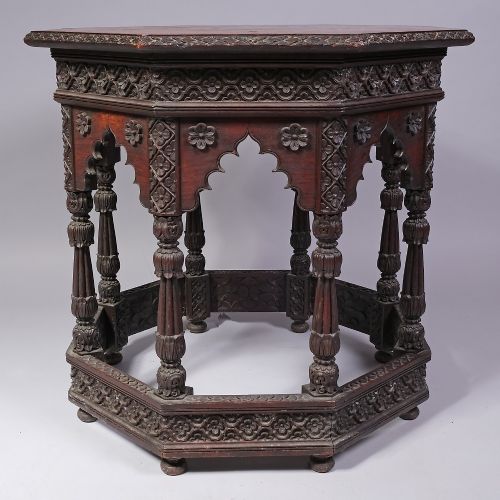
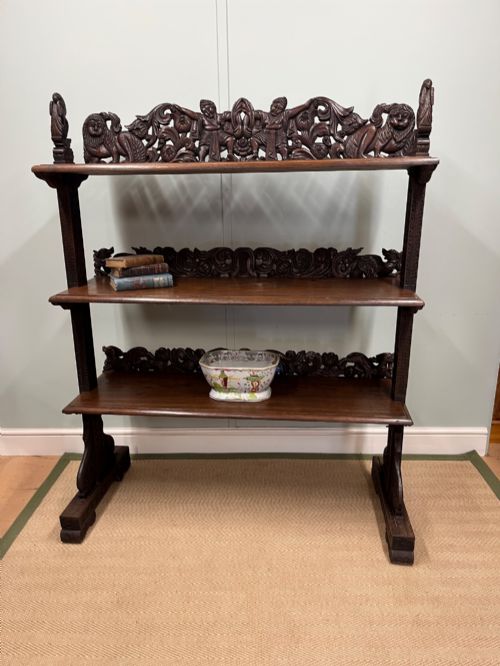
A brown teak side table encompasses heavily carved occasional, coffee, and lamp tables originating from nineteenth and early twentieth-century workshops. These pieces frequently showcase Anglo-Indian and Burmese designs, reflecting intricate regional craftsmanship that suited both colonial residences and European drawing rooms.
Beyond standard side tables, the selection includes tiered buffets, nests of tables, and console tables. These diverse forms provide practical surfaces while maintaining deep historical character through dense surface carving and contrasting inlay work.
Materials and construction methods
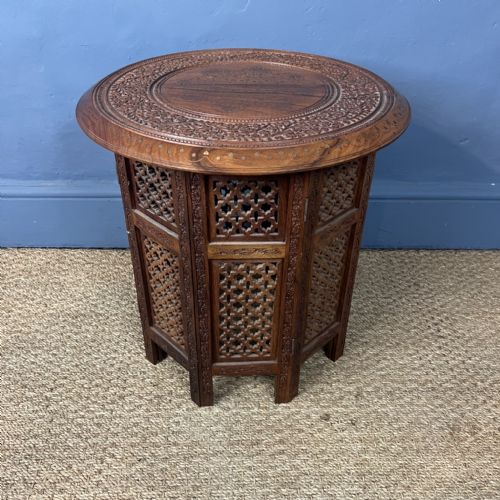
Construction relies heavily on durable teak and other regional hardwoods selected for their strength and rich grain. Artisans shaped these dense timbers using traditional hand tools, allowing for deep relief carving across table tops and folding bases.
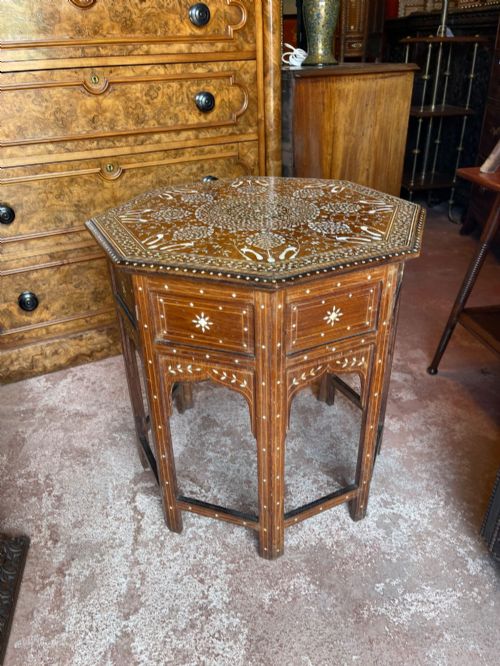
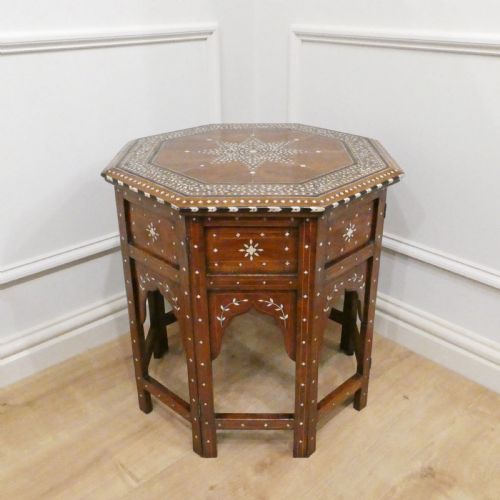
Surface decoration frequently incorporates contrasting materials such as bone, brass wire, and rosewood. These inlays are meticulously set into the wood to form complex botanical patterns and figurative scenes.
Several tables feature carved camels and elephants serving as structural supports.
Distinguishing quality in carved furniture
Quality rests primarily in the depth, crispness, and complexity of the hand carving. Pieces featuring deeply undercut foliage, clean figural details, and intact inlay work demonstrate superior artisan skill compared to simpler, shallower designs.
The precision of the joinery and the structural stability of folding or multi-tiered mechanisms also define the tier of a piece. Well-preserved surfaces with original rich patination indicate careful historical maintenance.
The Brown Teak Side Table Glossary
- Teak
- A durable tropical hardwood prized for its rich brown colour and resistance to wear. It provides a stable base for intricate hand carving.
- Hoshiarpur
- A North Indian city renowned for intricate woodwork. Tables from this region typically feature dense brass and bone inlay.
- Occasional table
- A small, movable table designed for specific, intermittent use in a reception room. These often double as lamp or coffee tables.
- Tip top table
- A table with a hinged top that pivots vertically for compact storage. This clever mechanism was popular in nineteenth-century occasional furniture.
- Bone inlay
- A decorative technique where small carved pieces of bone are set flush into the timber. It creates striking contrast against dark hardwood surfaces.
Brown Teak Side Table: Frequently Asked Questions
What is a brown teak side table?
A brown teak side table is a handcrafted piece of antique furniture originating mainly from nineteenth and early twentieth-century India and Burma. These tables are defined by dense surface carving and exotic timber.
They serve as practical accent surfaces in contemporary interiors while adding historical depth through traditional colonial and regional craftsmanship.
How do I identify a Hoshiarpur table?
Hoshiarpur tables are recognised by their intricate geometric and floral patterns created using bone and brass wire inlay. They frequently feature folding octagonal structures.
This specific North Indian style contrasts sharply with deeply carved Burmese tables, which rely entirely on relief woodwork rather than inlay.
Where were these tables made?
These tables were produced across the Indian subcontinent and Burma during the nineteenth and early twentieth centuries. Production centres included specialised workshops in regions such as Hoshiarpur and Bombay.
Many pieces were created specifically for export to British markets, blending local woodworking traditions with European furniture forms.
How do I care for a carved wooden table?
Maintain antique teak by dusting gently with a dry, soft cloth and avoiding harsh chemical polishes. Keep the timber away from direct heat sources to prevent splitting.
Occasional application of natural wax helps preserve the rich colour and protect the intricate carved recesses from accumulating dust.