

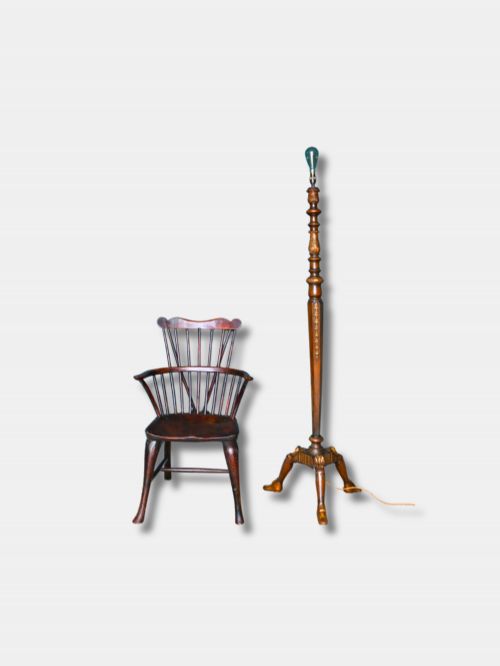


Brown Standard Lamp
A brown standard lamp grounds a room with vertical presence and warm illumination, offering a practical anchor for traditional and period seating areas.
Brown Standard Lamp
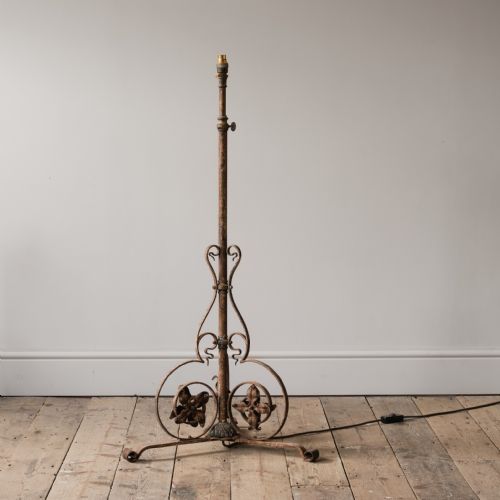
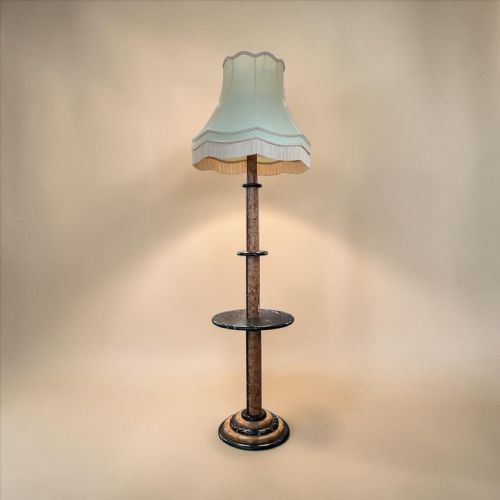
A brown standard lamp encompasses tall floor-standing lighting fixtures fashioned from timber and metal, ranging from nineteenth-century conversions to twentieth-century Art Deco designs. Buyers searching for a brown standard lamp encounter formats that include tripod bases, solid marble table combinations, and adjustable blacksmith-made poles.
Floor lamps sit alongside related furnishings like lamp tables, lantern stands, and floor candelabras, providing functional height and illumination. Pieces originate from various stylistic traditions, including English country, Chinese, and Gothic Revival aesthetics.
What varies in quality
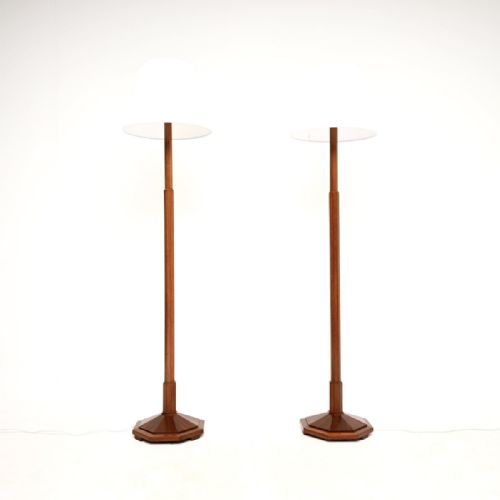
The refinement of timber selection and turning distinguishes superior examples, where figured walnut or rich mahogany displays deep grain patterns and precise joinery. Finishes applied to the wood demonstrate varying levels of care, from simple coatings to rich, polished surfaces that highlight the material.
Structural engineering and the integration of functional hardware set standards apart, particularly in adjustable mechanisms, tripod stability, and weighted bases that ensure safe vertical balance. Original metal components, such as gilt brass fittings and cast iron elements, exhibit varying degrees of crispness and durability in their casting and assembly.
Harry and Lou Epstein
The Brown Standard Lamp Glossary
- Standard lamp
- A tall floor-standing lighting fixture designed to illuminate a room from a vertical post. These pieces often incorporate tables or heavy bases for stability.
- Tripod base
- A three-legged support structure used on furniture and lamps to provide balanced floor contact. This configuration appears frequently on nineteenth-century and early twentieth-century wooden standards.
- Pole screen lamp conversion
- An antique screen repurposed into a lighting standard. This process adapts older vertical stands to hold electrical fittings.
- Art Deco
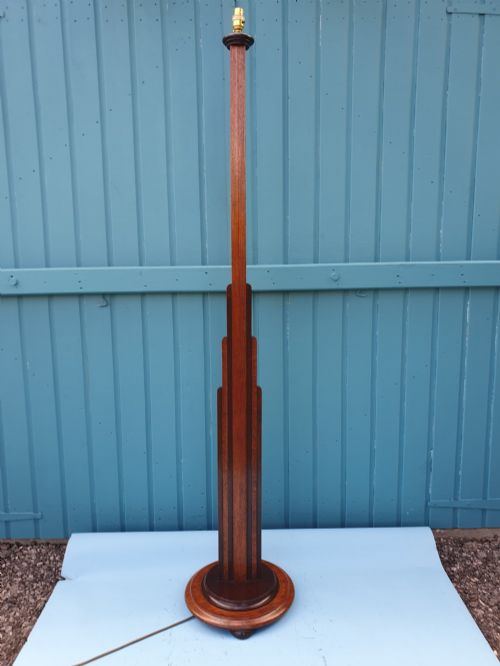
- A design style from the early twentieth century characterised by geometric shapes, streamlined forms, and skyscraper silhouettes. Oak and walnut floor lamps from this era display these distinct architectural lines.
Brown Standard Lamp: Frequently Asked Questions
How do I place a standard lamp in a room?
Position the piece beside a sofa or reading chair where the vertical height provides direct illumination without crowding the floor space. Pair it with complementary timber furniture to anchor seating arrangements.
Ensure the switch remains easily accessible from the seated position while allowing the timber grain and base design to remain visible within the room.
What periods do these lamps come from?
The available lighting spans from the nineteenth century through the 1940s, encompassing Victorian, Edwardian, and Art Deco eras. Each period brings distinct material choices and silhouette designs.
Earlier pieces often feature converted pole screens or blacksmith-made ironwork, whereas later decades favour streamlined walnut and oak constructions.
How do I identify Art Deco floor lamps?
Look for geometric stepped profiles, skyscraper motifs, and clean vertical lines executed in oak or walnut. These pieces reflect the modernist design shifts of the 1920s and 1930s.
Maker attributions, such as work by Harry and Lou Epstein, sometimes accompany these distinctive architectural silhouettes.
Are these lamps converted from other items?
Certain pieces begin life as functional objects like pole screens, gas light candelabras, or lanterns before receiving electrical fittings later in their lifespan. These conversions preserve older craftsmanship while adapting the object for modern use.
Examine the column and base construction to understand how the original form has been modified to house wiring.