
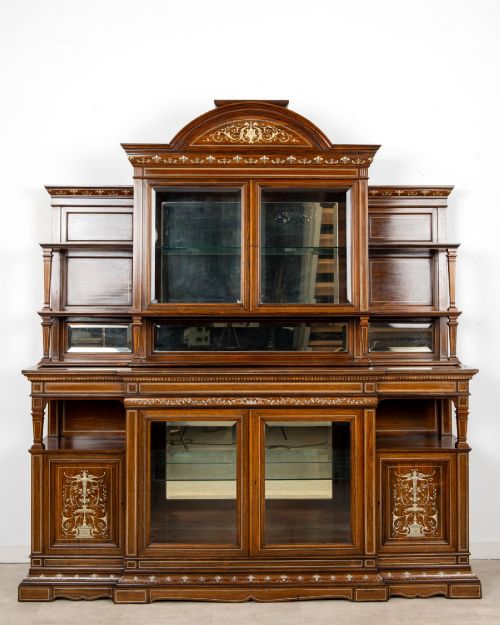
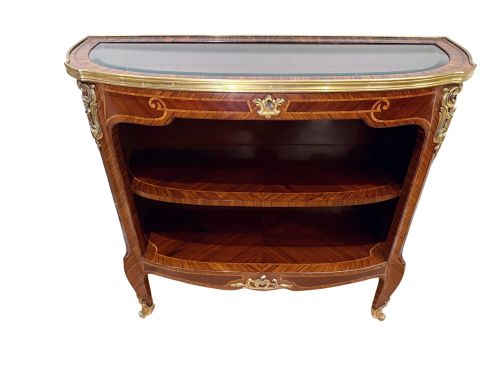
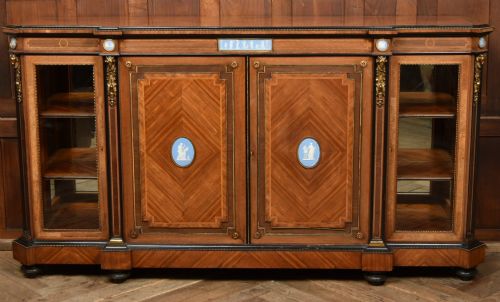
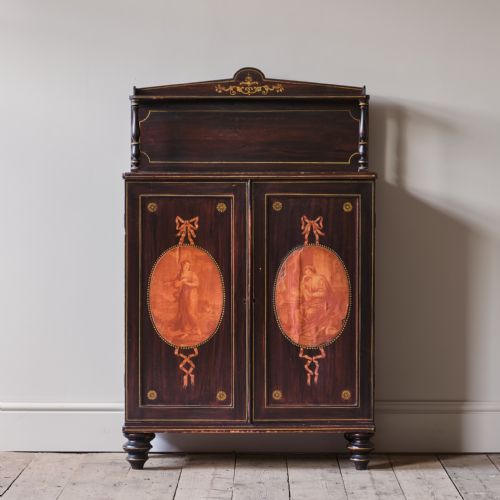

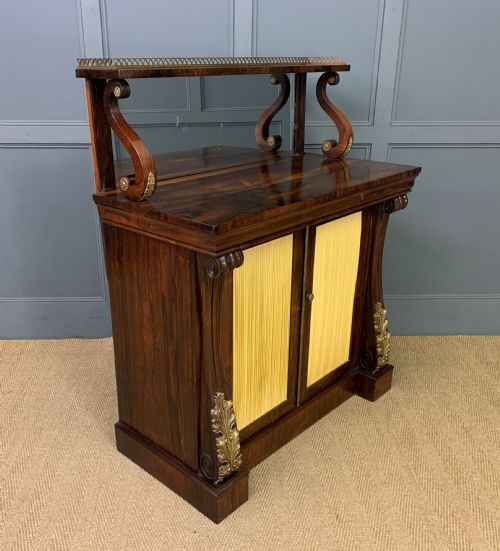


Brown Rosewood Credenza
A brown rosewood credenza brings deep grain and polished brass into a room, offering both display and concealed storage.
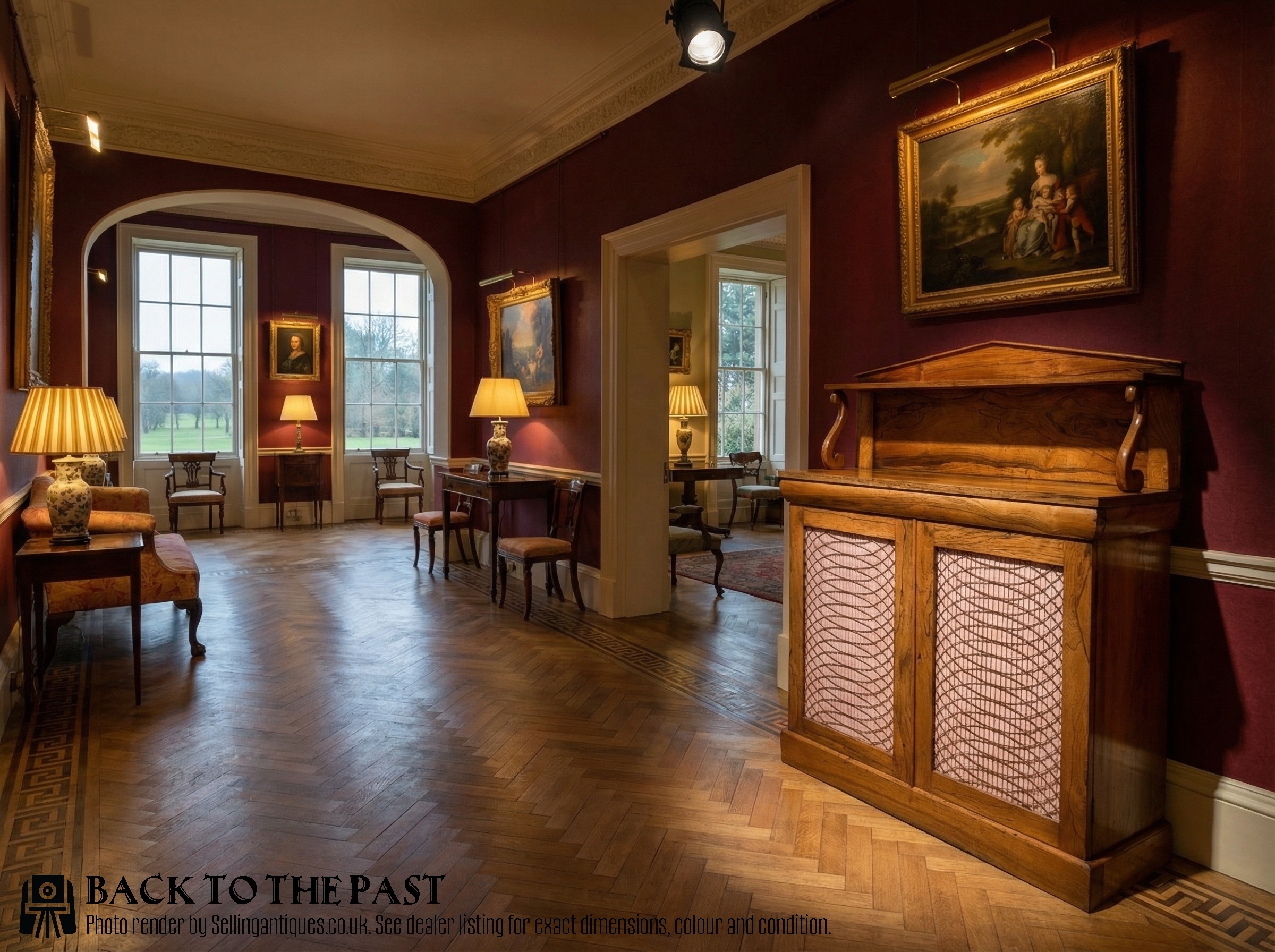
Brown Rosewood Credenza
When you search for a brown rosewood credenza, you encounter low cabinetry designed for formal living spaces, often taking the form of side cabinets, chiffoniers, or glazed display furniture. These items originate predominantly from the Regency and Victorian eras, alongside select revival pieces from the late nineteenth and early twentieth centuries.
The selection on this page leans heavily toward nineteenth-century examples, spanning simpler chiffoniers with brass mounts to grander breakfront cabinets featuring intricate marquetry. Makers of the period utilised rich timbers like rosewood and goncalo alves to create substantial furniture that anchored a dining room or parlour.
What varies in quality
The standard of timber selection and the precision of the marquetry define the upper tiers of these cabinets. Finer pieces display continuous grain matching across doors and drawers, accompanied by crisp cast brass mounts rather than simpler stamped metal.
Construction methods also separate standard production from high workshop output, visible in the tightness of the dovetailing and the weight of the glass used in display doors.
Brown Rosewood Credenza Retail Price Guide 2026
Typical asking prices for brown rosewood credenza among the pieces listed under this phrase on Sellingantiques today, from the lower quarter to the upper quarter. They describe what is for sale here now, not the wider market.
Listings span the Regency and Victorian periods, incorporating satinwood, glass, and brass mounts across diverse side cabinet forms.
Collinson and Lock·Edwards and Roberts
The Brown Rosewood Credenza Glossary
- Credenza
- A low dining or reception room cabinet, typically featuring central cupboards flanked by doors or open shelves.
- Chiffonier
- A compact sideboard or cabinet originating in the nineteenth century, frequently fitted with a shelf back or mirrored superstructure.
- Marquetry
- The art of applying decorative veneer pieces in wood, metal, or shell to form geometric or floral patterns on a furniture surface.
- Ormolu
- Gilded bronze or brass applied as decorative mounts, feet, and gallery rails on nineteenth-century cabinetry.
- Goncalo alves
- A dense exotic hardwood with striking dark brown figuring, utilised in high-status Regency cabinet making.
Brown Rosewood Credenza: Frequently Asked Questions
Where did people place a brown rosewood credenza?
These low cabinets typically stood against principal drawing room or dining room walls, serving as a surface for serving food or displaying decorative objects.
Their restrained height ensured they did not block windows or paintings while still offering substantial interior storage for silver and linen.
How do I care for rosewood furniture?
Rosewood requires stable humidity and protection from direct sunlight to prevent the deep brown tones from fading or the timber from splitting.
Dusting with a dry, soft cloth and applying occasional quality wax maintains the natural lustre without building up heavy residues.
What is the difference between a chiffonier and a credenza?
A chiffonier is generally smaller and often includes a raised shelf or mirrored back above the main surface, stemming from Regency and early Victorian forms.
A credenza is typically a longer, lower credenza unit with three or more doors designed specifically for formal display and storage.
How do I identify a Regency period piece?
Regency items often display classical restraint, featuring architectural mouldings, brass inlay, and restrained mahogany or rosewood veneers.
They rely on proportion and subtle timber grain rather than the heavy floral marquetry popular in later Victorian revival work.