

Brown Roll Top Desk
A brown roll top desk offers a private, enclosed writing space that hides clutter behind curved wooden slats.
Brown Roll Top Desk
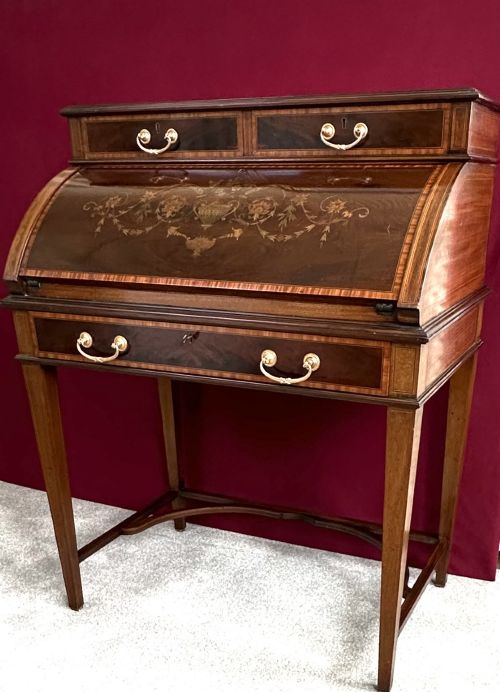
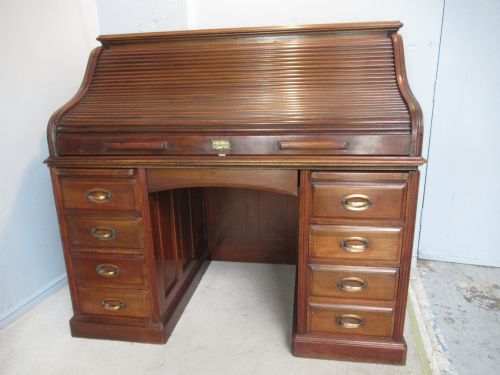
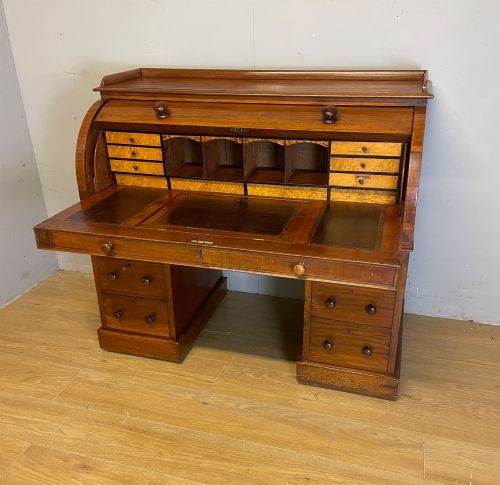
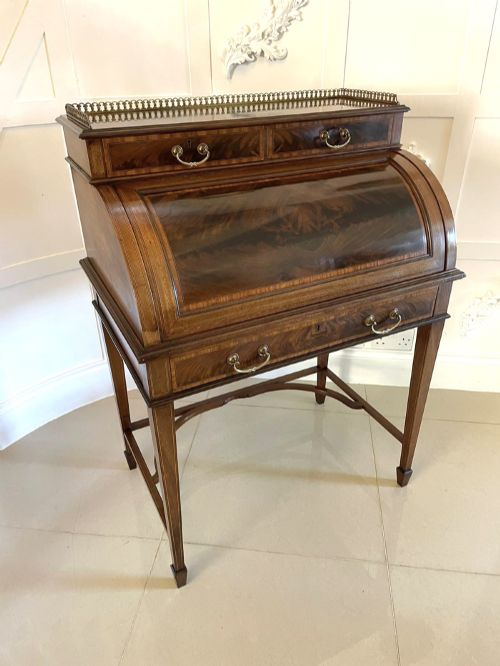
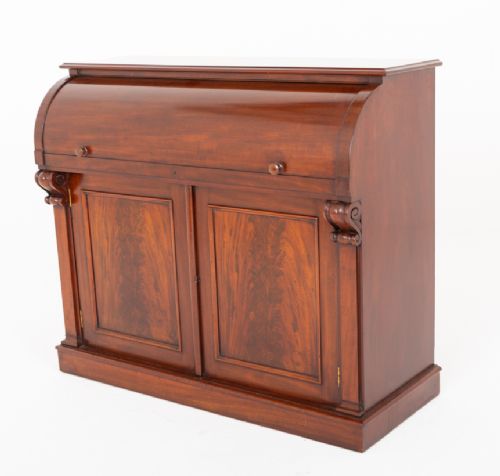
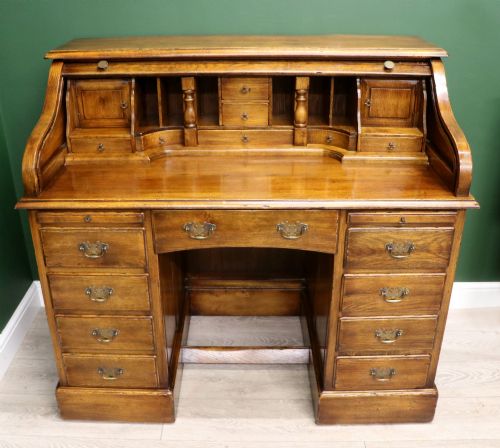
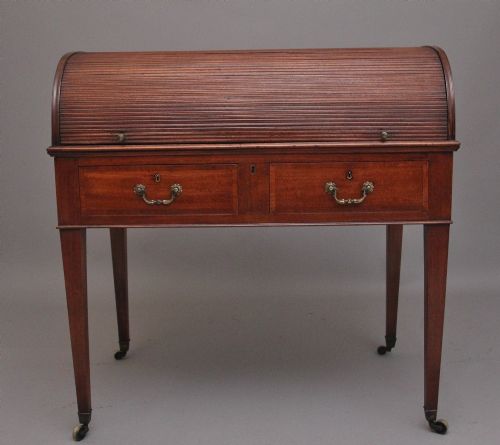
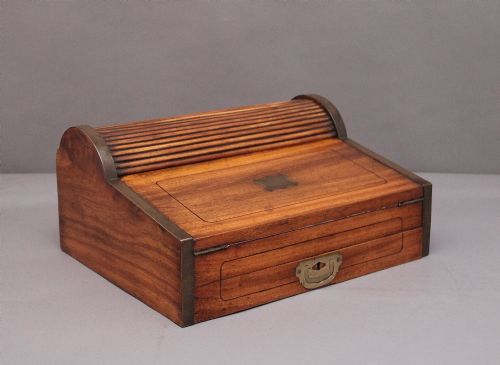
When searching for a brown roll top desk, buyers encounter forms that conceal the writing surface with a slatted wooden tambour or rigid cylinder. These workspace solutions appear most frequently in nineteenth century and Edwardian interpretations, constructed from dense hardwoods.
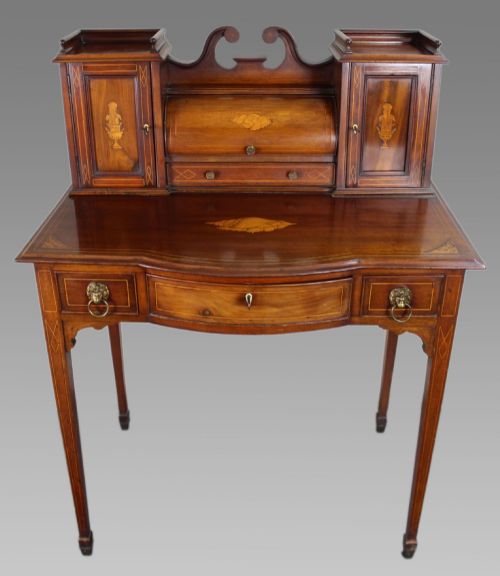
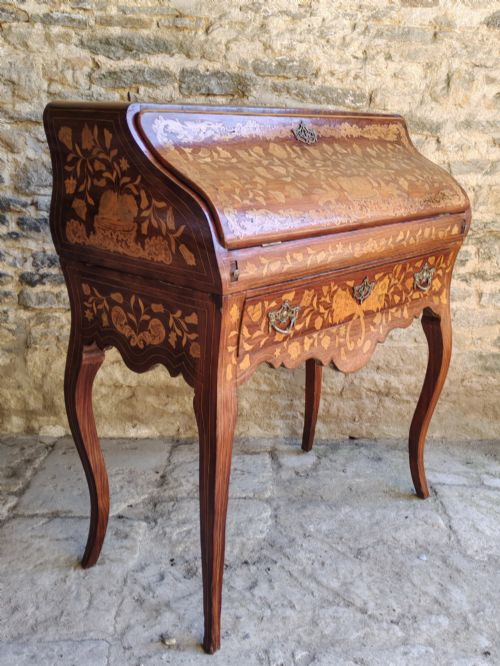
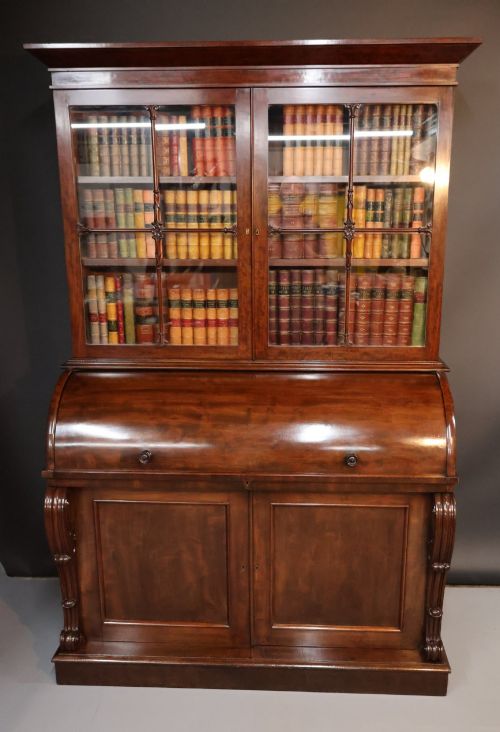
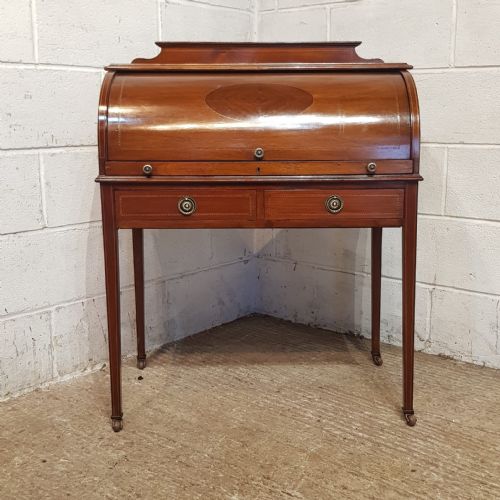
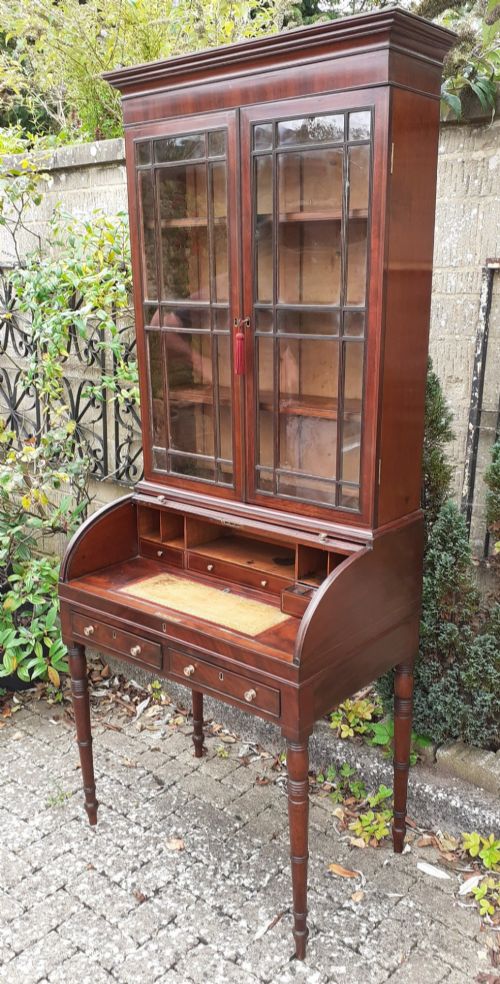
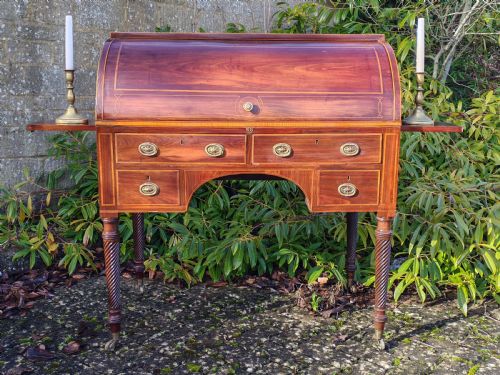
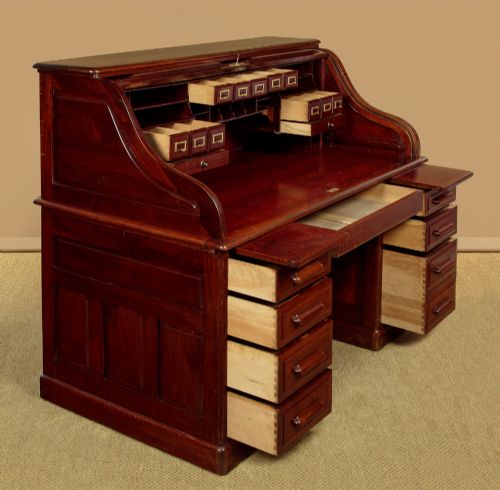
The selection ranges from compact ladies desks to large pedestal examples and tall bureau bookcases. Mahogany and walnut dominate the offerings, occasionally complemented by oak or fruitwood veneers and marquetry details.
Makers utilised various mechanisms to secure the writing surface, including tambour slats that track around a curve and solid rotating cylinders. These functional units served both domestic studies and commercial offices across Georgian, Victorian, and Edwardian periods.
How they were made
Cabinet makers built these desks using solid timbers and decorative veneers such as mahogany, walnut, satinwood, and oak. Interiors often incorporated smaller pigeonholes and drawers made from secondary woods, sometimes accented with brass hardware and leather writing inserts.
The defining tambour or cylinder mechanism relied on precise joinery, gluing individual wooden strips to canvas backing or forming curved solid panels that glided smoothly in recessed tracks. Carved details, marquetry inlay, and polished glass doors completed the architectural form.
Some desks hide secret compartments behind dummy pigeonholes, designed to guard love letters from curious housemaids.
What varies in quality
Quality reveals itself in the smoothness of the rolling mechanism and the precision of the timber matching across the cylinder. Superior examples display careful grain selection, robust internal drawer construction, and integrated locking systems that secure the entire workstation simultaneously.
The distinction between standard commercial output and exhibition pieces rests upon intricate marquetry, specialised woods like yew or camphor, and refined secondary detailing such as brass fittings or integrated bookcases.
Maple & Co. London·Tudor & Burrey Shrewsbury·Boston Chair Company of Massachusetts
The Brown Roll Top Desk Glossary
- Tambour
- A flexible shutter formed of narrow strips of wood glued to canvas, allowing the roll top to curve around a track. This mechanism conceals the desk interior when closed.
- Cylinder desk
- A writing table featuring a rigid, quarter-circle solid wooden lid that rotates backward into the body of the desk. It serves a similar enclosing function to the tambour.
- Bureau bookcase
- A tall furniture combination uniting a sloping or cylinder desk base with upper shelving enclosed by glazed or wooden doors. These units maximise storage in domestic interiors.
- Marquetry
- The art of applying decorative veneer pieces in wood, shell, or ivory to form pictorial patterns on furniture surfaces. Dutch examples frequently display elaborate floral designs.
- Pedestal desk
- A heavy freestanding writing table supported by two vertical stacks of drawers flanking a central kneehole. Roll top versions add an enclosed upper writing compartment to this pedestal base.
Brown Roll Top Desk: Frequently Asked Questions
Where were these desks placed?
These pieces traditionally served as private workstations in home studies, libraries, and administrative offices. Large pedestal versions occupied the centre of executive rooms, while smaller ladies desks stood against parlour walls.
Tall bureau bookcases combined writing functions with library storage, making them suitable for rooms where floor space was limited. Freestanding cylinder desks also appeared in grand drawing rooms for managing correspondence.
How do I clean the leather writing surface?
Maintain the leather insert by dusting it regularly with a dry, soft cloth to prevent abrasive particles from scratching the surface. Leather dressings or specialised balms help preserve suppleness and prevent cracking over time.
Avoid using harsh household detergents or excessive water, which can stain the hide and damage the surrounding mahogany or walnut timber. Test any cleaning product on a hidden corner before applying it to the main writing area.
How do I distinguish Victorian from Edwardian models?
Victorian examples often feature darker, heavier mahogany construction with deep polished finishes and substantial proportions. Ornamentation tends to be formal, reflecting traditional nineteenth-century revival styles.
Edwardian pieces frequently display lighter satinwood inlays, Sheraton Revival influences, or more compact proportions suited to smaller modern homes. The internal drawer layouts also reflect changing stationery requirements of the early twentieth century.