






Brown Pine Writing Table
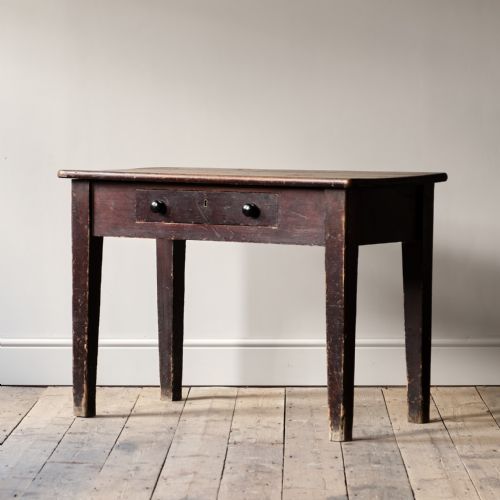
A brown pine writing table is a sturdy utilitarian desk built for daily use, offering honest timber grain and straightforward character.
Brown Pine Writing Table
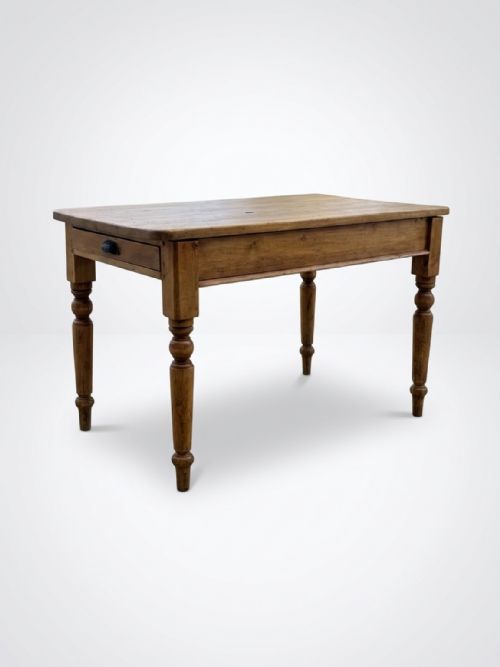
A brown pine writing table appears primarily in Victorian and Georgian incarnations, spanning side tables, estate desks, and ecclesiastical pieces. These utilitarian surfaces arrive in standard pine, dense pitch pine, and scraped or painted finishes, serving as hardworking writing desks and hall tables.
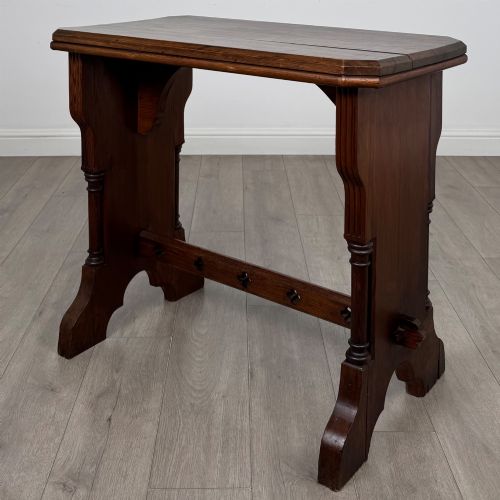
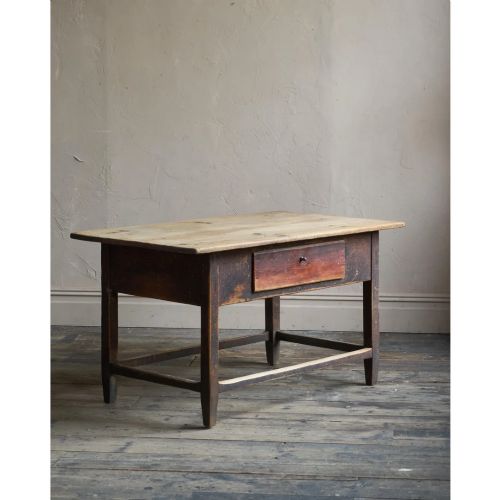
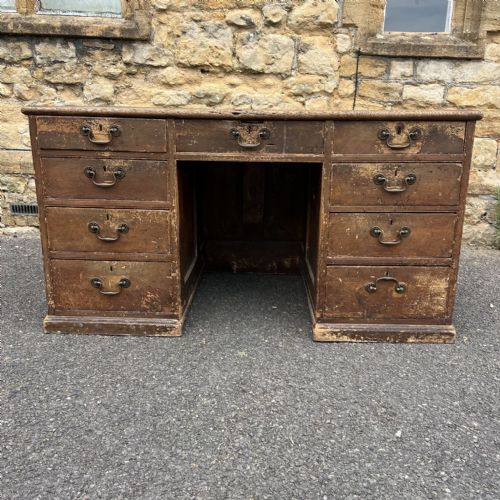
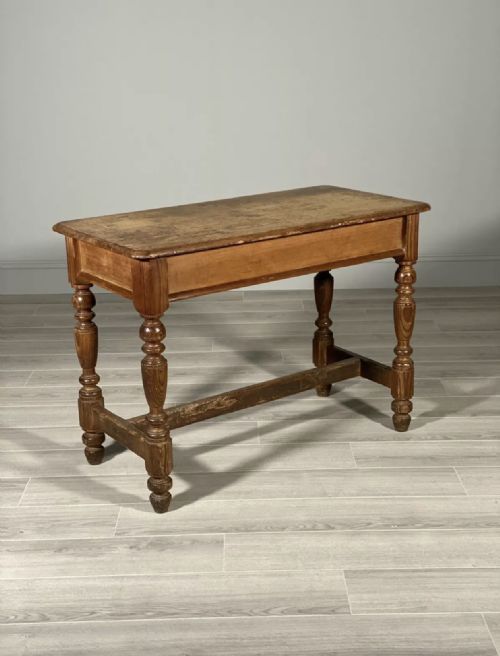
Most examples found here date from the nineteenth century, including Gothic Revival and rustic farmhouse variants with box stretchers or pedestal forms. Buyers encounter everything from simple church side tables to fitted kneehole desks utilising oak or brass alongside the primary softwood timber.
How they were made
Joiners constructed these pieces predominantly from solid pine and heavier pitch pine, sometimes combining oak structural elements for added rigidity. Surfaces were left natural, painted, or scraped to reveal earlier layers of historic pigment.
Hardware typically incorporates simple iron or brass fixtures, while stretcher bases and box stretchers provide structural stability for daily clerical work.
The selection here spans Georgian and Victorian eras, utilising standard pine, pitch pine, oak, and applied paint.
What varies in quality
Quality rests upon the density of the pine timber used, with tight-grained pitch pine and older Georgian stock commanding greater visual presence than softer utility wood. The integrity of original painted surfaces or historic scraped finishes elevates a piece above standard stripped examples.
Proportion and joinery detail dictate the distinction between vernacular workshop furniture and more deliberate ecclesiastical or estate commissions, particularly where Gothic stylistic elements are integrated into the framework.
The Brown Pine Writing Table Glossary
- Pitch pine
- A resinous North American pine species prized for its durability and prominent grain pattern. It yields a denser surface than standard softwoods.
- Box stretcher
- A system of horizontal wooden bars connecting all four legs near the base to strengthen the structure. It often doubles as a footrest on writing tables.
- Kneehole desk
- A freestanding desk featuring a central recess for the user's legs, flanked by pedestals of drawers or cupboards.
- Scraped pine
- Furniture surface treatment where later coats of paint are meticulously pared back to expose earlier historic decoration or bare timber beneath.
Brown Pine Writing Table: Frequently Asked Questions
How do I date an old pine desk?
Dating relies on examining construction marks, timber selection, hardware, and stylistic clues such as Gothic Revival motifs or Georgian proportions. Tool marks left by hand saws and planes differ markedly from later mass-produced machinery.
Paint layers and surface wear also provide chronological markers, though many utilitarian pine pieces received multiple coats of decoration over their working lives.
Are painted pine tables original?
Many nineteenth-century pine tables retain their original or early painted finishes, particularly Scandinavian and country pieces. Scraped pine surfaces reveal historical layers applied by past owners.
When evaluating paint, look for genuine wear patterns and integration into the wood pores rather than flat, modern applications designed to simulate age.
How should I care for a pine table?
Keep nineteenth-century pine writing tables away from direct heat sources and extreme humidity fluctuations to prevent timber splitting or warping. Maintain the wood using appropriate natural waxes rather than modern silicone polishes.
Allow the surface to breathe and accept that ongoing gentle use adds to the honest patina of a utilitarian softwood antique.