
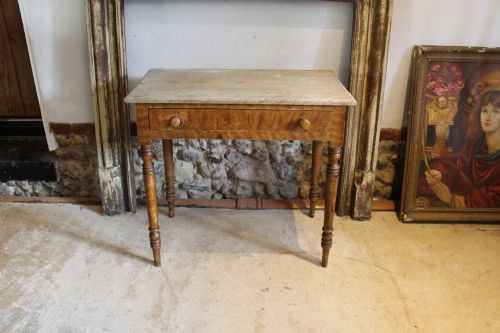
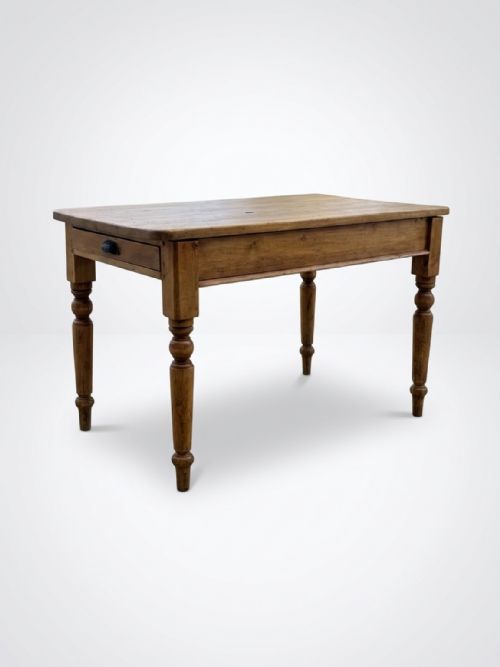
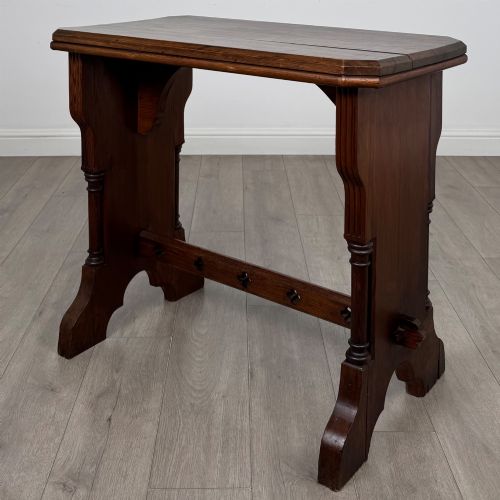
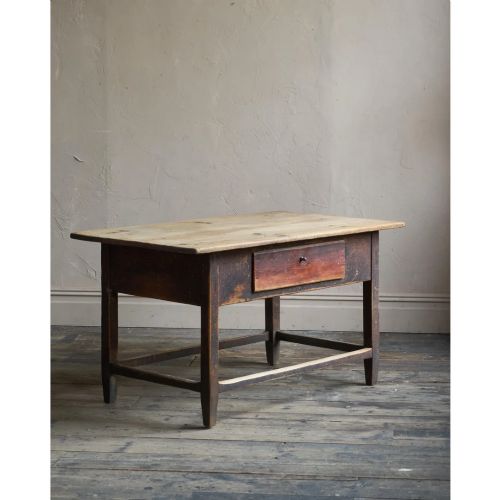
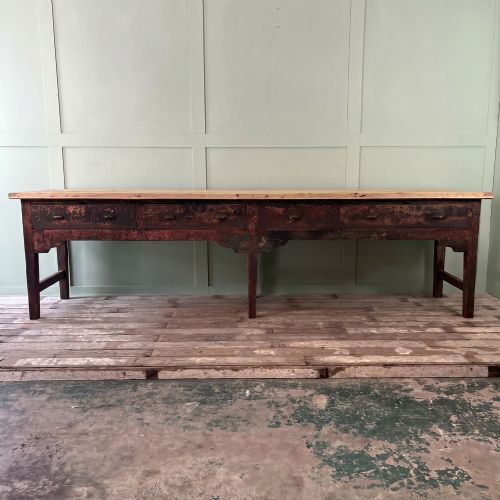
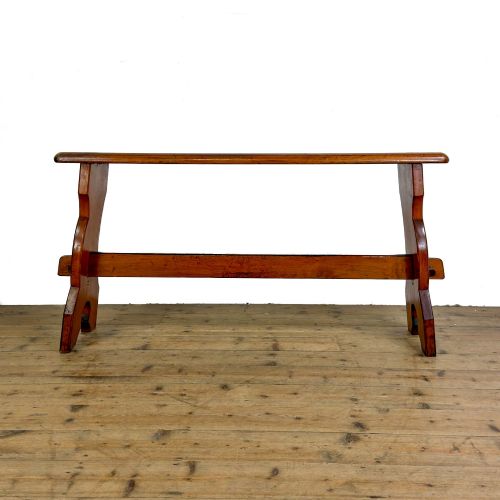
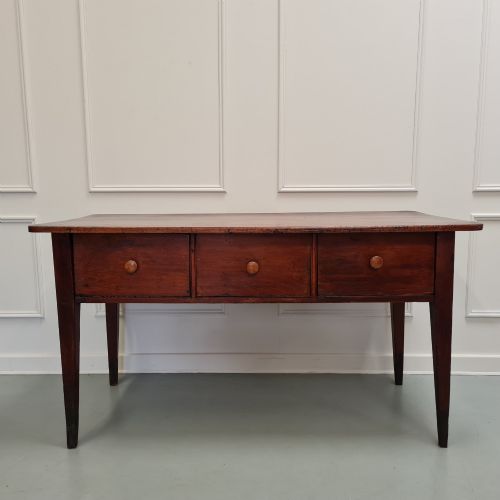
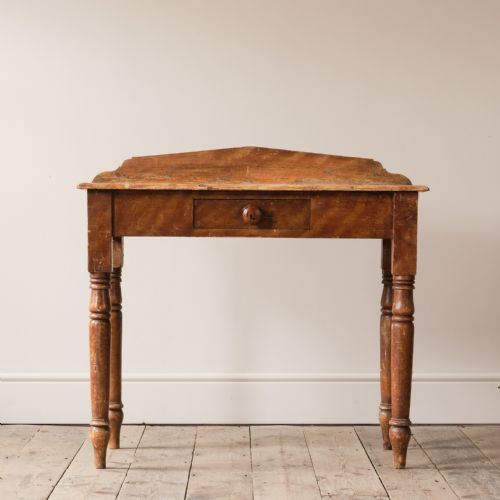




Brown Pine Console Table
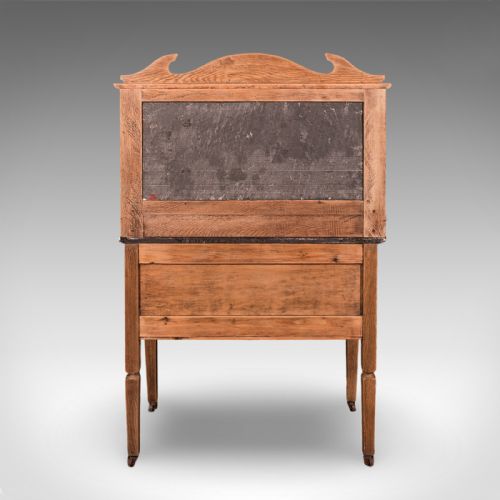
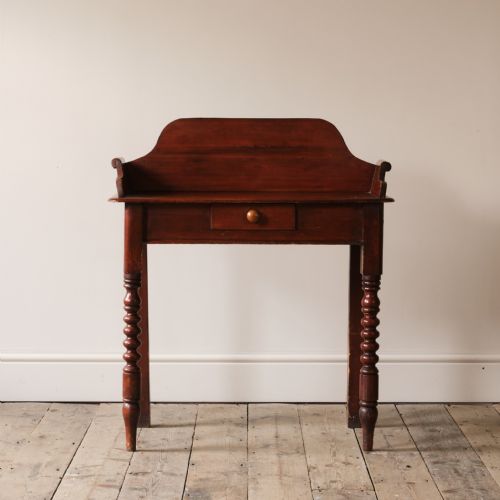
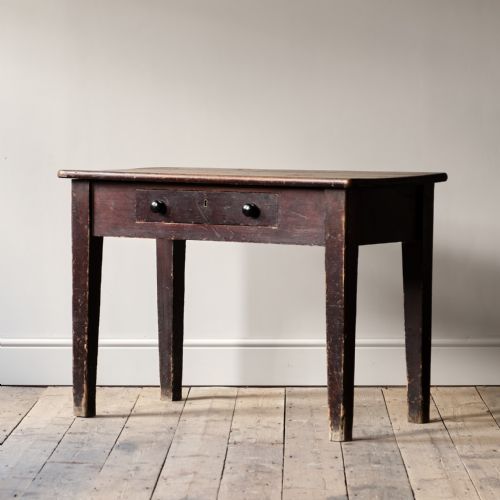
These brown pine console table examples bring utilitarian grain and painted surfaces into hallways, combining robust construction with practical timber proportions.
Brown Pine Console Table
A brown pine console table brings together functional forms from the Georgian, Victorian, and Edwardian eras, often appearing under related listings like side tables, serving tables, and washstands. These tables serve narrow spaces in hallways and kitchens, utilising solid timber planks and stretcher bases.
The versions met most frequently on this page span the nineteenth century, encompassing English country workshops and Scandinavian country styles. Pieces range from simple narrow pitch pine boards to ecclesiastical tables bearing traces of original paint and scumble glaze.
Materials and construction
Makers built these tables primarily from pine and pitch pine, occasionally incorporating fruitwood elements and iron hardware for structural support. Timber selection dictated the weight and durability of each piece, with dense pitch pine providing resilience in heavy-use environments.
Surfaces frequently display applied finishes such as scumble glaze, scraped paint, or original paint schemes that protect the soft wood underneath. Joinery relies on traditional methods suited to domestic and ecclesiastical furniture production during the nineteenth century.
The furniture forms include drop leaf tables, washstands, and organ benches alongside standard console and serving tables.
Quality factors
The distinction between tiers rests upon the preservation of original surfaces, such as untouched scumble glaze or early painted finishes that reveal the age of the timber. Tables retaining their authentic surface patination stand apart from those stripped down to raw wood.
Structural integrity and proportion also separate examples, where narrow freestanding forms with original box stretchers demonstrate better proportion for hallway placement. The presence of documented provenance or ecclesiastical origins adds further historical context to individual pieces.
The Brown Pine Console Table Glossary
- Scumble glaze
- A translucent or opaque decorative paint layer manipulated with tools to simulate wood grain or create textured patterns. This technique appears on nineteenth-century furniture to enhance plain pine surfaces.
- Pitch pine
- A durable, resinous variety of pine timber utilised for nineteenth-century furniture requiring extra strength. It displays a distinct linear grain pattern.
- Box stretcher
- A system of horizontal wooden rails connecting the lower legs of a table on all four sides. This framework provides rigidity to narrow console and serving tables.
- Ecclesiastical
- Design elements or furniture origins associated with churches and religious institutions. Such pieces often exhibit Gothic architectural details.
- Washstand
- A domestic item of furniture designed to hold a basin and jug for washing, sharing similar proportions to narrow side tables.
Brown Pine Console Table: Frequently Asked Questions
Where do I put a brown pine console table?
These narrow tables suit hallways, corridors, and passage spaces where depth is restricted. Their shallow profiles allow placement against walls without obstructing movement.
In kitchens or dining rooms, they function as serving tables or supplementary work surfaces. Their utilitarian origins mean they blend easily into functional domestic interiors.
How do I care for original painted pine?
Painted and scumble glazed surfaces require gentle cleaning with a dry or barely damp cloth. Avoid harsh chemical cleaners that can lift historic paint layers.
Keep timber furniture away from direct heat sources and strong sunlight to prevent warping and paint cracking. Maintaining stable room humidity preserves the underlying pine.
What is the difference between side and console tables?
Side tables typically feature four freestanding legs and balanced proportions intended for general placement around a room. Console tables are traditionally designed to stand flat against a wall.
In older pine furniture, these terms often overlap because makers constructed utilitarian tables for multiple domestic purposes. The primary indicator is the depth and stance of the frame.
How do I identify a Victorian pine table?
Victorian pine pieces frequently display straightforward construction methods, sometimes accompanied by Gothic revival details or ecclesiastical provenance. Materials range from standard soft pine to dense pitch pine.
Surface treatments like scumble glaze and original paint provide chronological clues pointing to the mid-to-late nineteenth century. Construction wear and tool marks help confirm the age of the timber.