

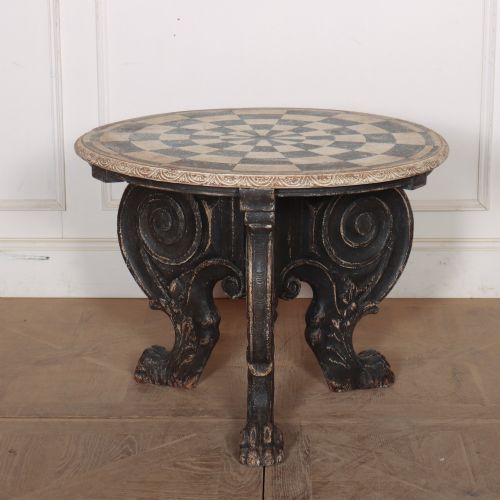


Gothic Revival Occasional Table
These gothic revival occasional table pieces bring medieval architectural forms into domestic rooms, offering solid timber construction and distinctive geometric carving for daily use.
Gothic Revival Occasional Table
When you search for a gothic revival occasional table, you encounter nineteenth-century and early twentieth-century designs influenced by medieval architecture, arts and crafts ideals, and aesthetic movement taste. These smaller furnishings function as side tables, lamp tables, and centre tables rather than large dining surfaces.
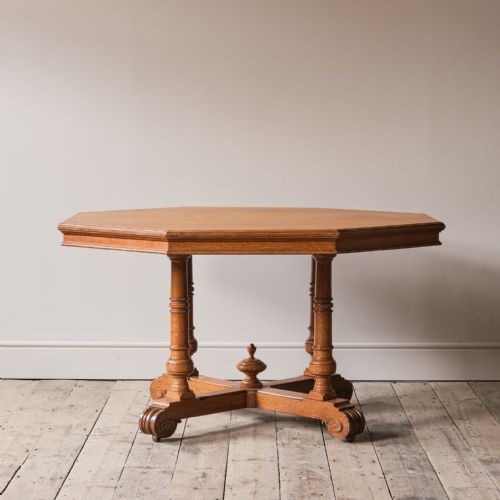
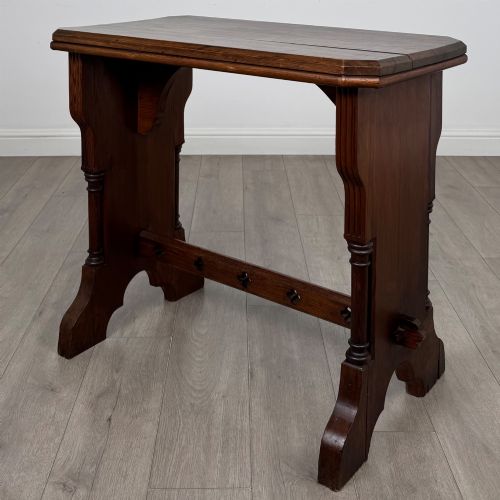
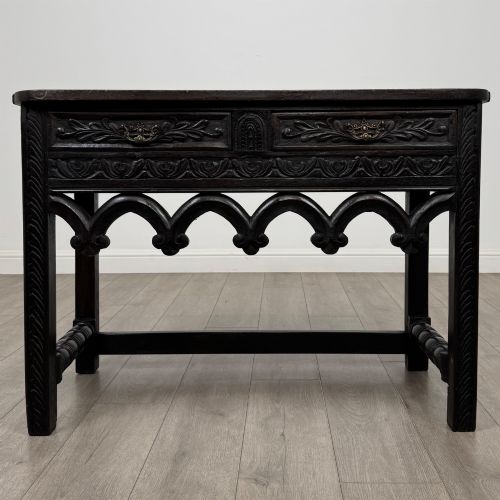
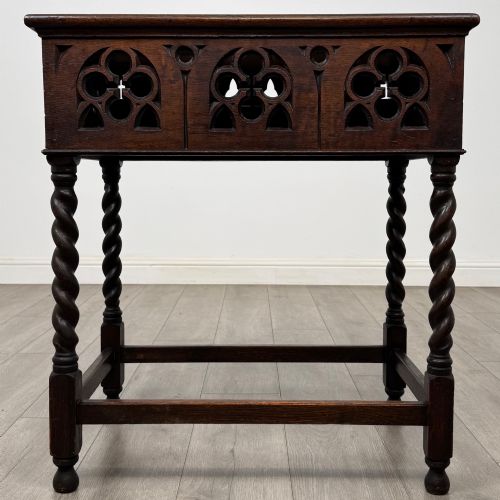
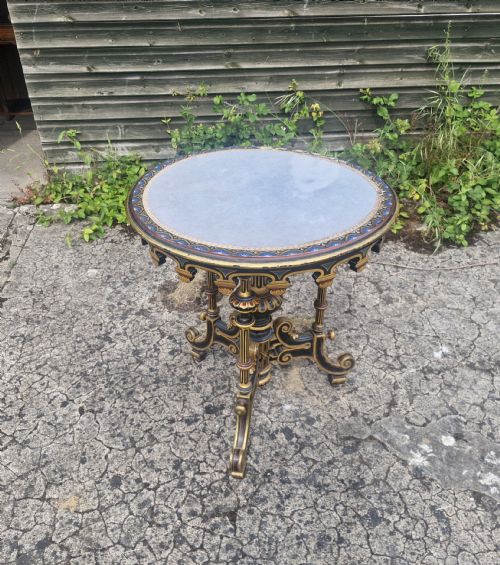
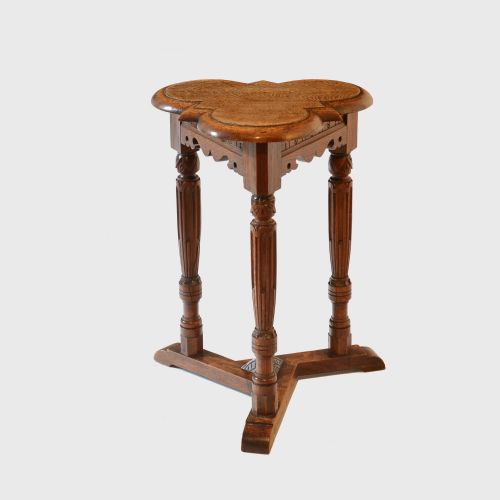
The version you are most likely to meet on this page is a carved oak piece from the Victorian period, frequently displaying geometric trefoil or clover leaf shapes. Pitch pine, walnut, and mahogany examples also appear alongside painted wood and marble-topped variants.
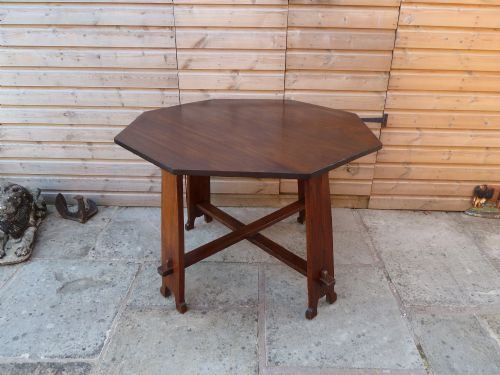
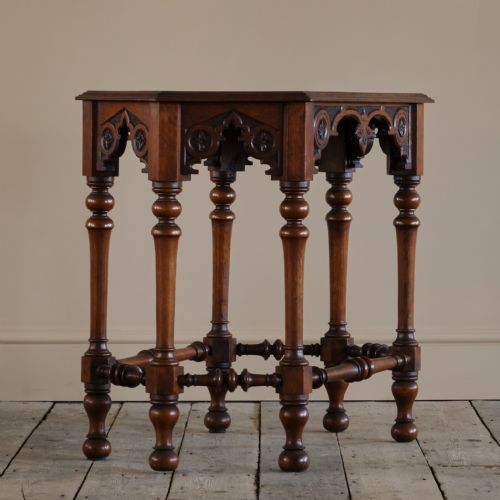
Origins stretch from English workshops to French, German, and Italian makers, encompassing diverse expressions from strict gothic reform to eclectic domestic revivals. The selection includes octagonal, round, and rectangular formats designed for the Victorian parlour or drawing room.
Judging quality
Quality rests upon the crispness of the timber carving, the depth and precision of architectural motifs like trefoils and tracery, and the selection of figured woods. Superior examples demonstrate harmonious proportions and uncompromised structural integrity.
Secondary pieces show simpler turned legs and minimal decoration, whereas finer works integrate specialised motifs such as zodiac carvings or complex inlaid details. The weight of the timber and the tightness of the joinery distinguish ordinary utility items from superior parlour furnishings.
Tarot parlour tables invite you to foretell your guests' futures while resting a teacup on solid oak.
Baillie Scott·A.W.N. Pugin
The Gothic Revival Occasional Table Glossary
- Gothic Revival
- An architectural and decorative style drawing inspiration from medieval forms, pointed arches, and heavy structural timbers. It dominated nineteenth-century design through ecclesiastical and domestic commissions.
- Trefoil
- A graphic ornament composed of three rounded lobes arranged in a clover-leaf shape. This motif frequently appears carved into nineteenth-century table tops and structural supports.
- Centre Table
- A freestanding table designed to stand away from walls in the middle of a room. These pieces typically feature finished surfaces on all sides.
- Occasional Table
- A light, movable small table used for specific tasks such as holding a lamp or books. They became widely popular in Victorian parlours for flexible domestic arrangements.
- Ebonised
- Wood finished with a dark stain or polish to imitate expensive ebony. This treatment was particularly favoured during the aesthetic movement.
Gothic Revival Occasional Table: Frequently Asked Questions
What is a gothic revival occasional table?
A small nineteenth-century timber table influenced by medieval architecture, featuring carved details like trefoils or pointed arches. These versatile items served Victorian households as side or lamp tables.
They combine architectural motifs with practical domestic scales, often utilising solid oak, pitch pine, or walnut.
How do I date an oak side table?
Dating relies on stylistic shifts between strict gothic revival, arts and crafts simplicity, and aesthetic movement ebonised finishes. Construction methods and wood selection also help isolate Victorian periods from Edwardian examples.
Examine the hardware, joinery tightness, and surface wear to corroborate the era indicated by the design characteristics.
Where were these tables used originally?
Victorians placed them in parlours, drawing rooms, and studies to hold reading materials, lamps, or decorative objects. Their portable nature allowed flexible placement wherever a small surface was needed.
Centre tables stood proudly in the middle of rooms, while side tables hugged walls or sat beside seating.
What woods are typical for these tables?
Oak is the predominant timber found in these listings, ranging from honey-coloured oak to dark ebonised surfaces. Pitch pine, walnut, and mahogany also feature prominently.
Some examples incorporate contrasting materials like marble tops, ceramic tiles, brass accents, or velvet inserts.