






Brown Pastoral Landscape Painting
A brown pastoral landscape painting captures rural life through cattle, sheep, and agrarian scenes rendered in oil and watercolour.
Brown Pastoral Landscape Painting
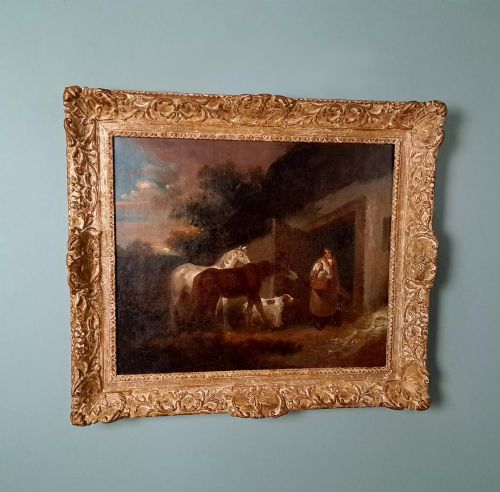
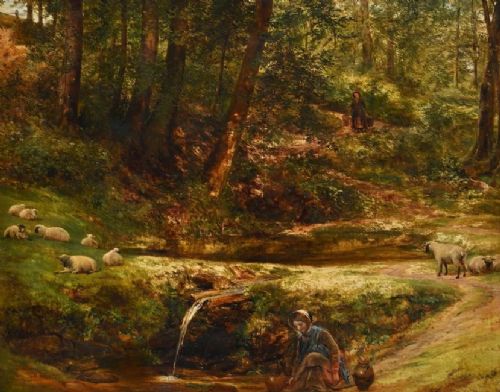
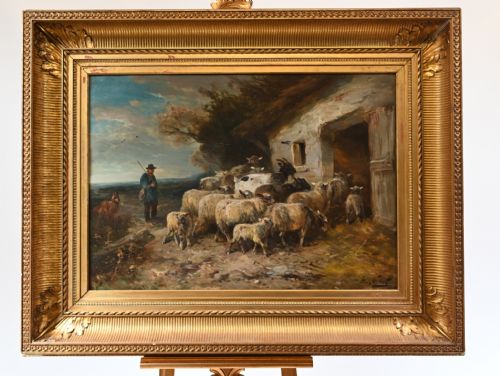
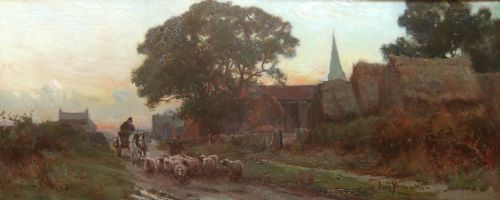
A brown pastoral landscape painting depicts rural scenes populated by farm animals, figures, and rustic cottages set within British and European countryside settings. These artworks emerge predominantly from the eighteenth, nineteenth, and early twentieth centuries, reflecting Victorian, Edwardian, and realist artistic traditions.
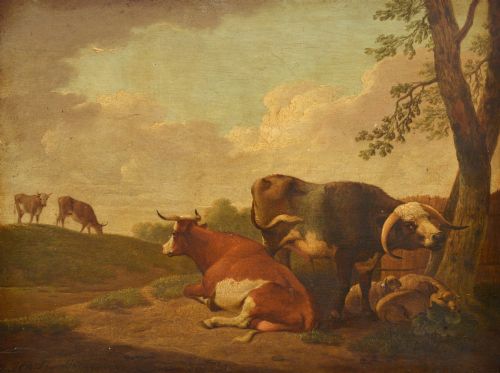
Buyers will most frequently encounter works executed in oil on canvas or wood panel, alongside watercolours on paper. The compositions typically focus on agricultural life, featuring cattle, sheep, carthorses, and farm labourers resting or working near rivers and woodland.
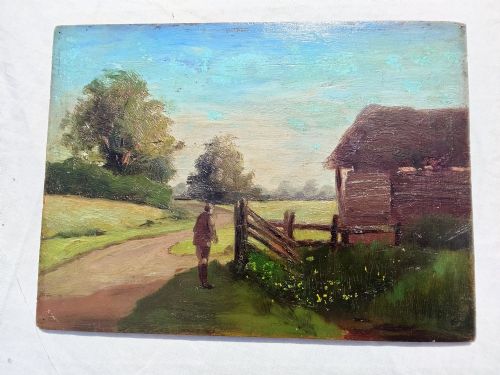
The visual character relies heavily on earthy brown and green tones, capturing the quiet atmosphere of the countryside at eventide or during harvest time. Such pieces serve as traditional wall art that brings historical rural scenery into domestic interiors.
Materials and technique
Artists applied oil paint or watercolour onto prepared supports including woven canvas, wooden boards, wood panels, and paper. Wooden panels and boards provided a rigid foundation particularly favoured for cabinet-sized works and early compositions.
Brushes of varying stiffness allowed painters to blend pigments for soft atmospheric skies while applying firmer strokes to render textured foliage, livestock coats, and weathered cottage walls. Many works retain their original wood framing, occasionally protected beneath glass.
Watercolour paintings on paper utilised washes and fine line work to capture the luminosity of rural rivers and valleys, whilst oil paintings built up rich layers of pigment to achieve deep, enduring brown and amber hues.
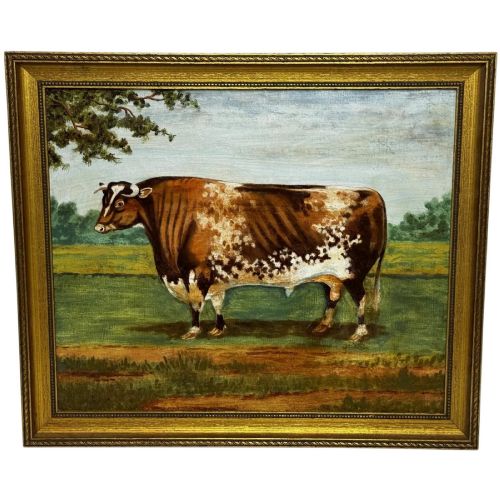
Several canvases prominently feature prized shorthorn bulls and border collies acting as the undisputed masters of the landscape.
Judging the works
Quality rests upon the artist's ability to render anatomical accuracy in livestock and natural movement in human figures against the surrounding topography. Stronger compositions balance the rustic elements within a coherent spatial depth rather than relying on formulaic woodland backgrounds.
The handling of light and atmospheric tone distinguishes accomplished practitioners from routine school copyists, particularly in the depiction of shifting weather or the soft glow of eventide. Pigment stability and the preservation of the original paint surface without extensive overpainting dictate the enduring visual strength of each canvas or panel.
Tom Campbell·Hendrik Willem Schweickhardt·Richard Redgrave·Henry Schouten·John Emms·Owen Bowen·Henry Charles Fox·John Sanderson Wells·James William Booth·Ernest Pile Bucknall·Samuel Joseph Clark·William Sydney Cooper·John Linnell·Robert Finley McIntyre·Alfred Grey·Pierre Emmanuel Dielmans·Florence Hess·Harold Lawes·Arthur Winter Shaw·William Manners·Julius Caesar Ibbetson·Edmund George Warren
The Brown Pastoral Landscape Painting Glossary
- Oil Paint
- Pigment suspended in a drying oil, usually linseed, allowing for rich colour depth and slow blending times. It became the dominant medium for durable landscape works on canvas and wood.
- Watercolour
- A paint consisting of water-soluble pigments applied to paper, valued for translucent washes and luminous effects. It was frequently utilised for lighter rural sketches and detailed countryside views.
- Wood Panel
- A flat wooden support used instead of canvas for painting, providing a rigid surface popular in earlier centuries. Artists often ground the wood before applying oil pigments.
- British Impressionism
- A late nineteenth and early twentieth century painting style focusing on natural light, loose brushwork, and everyday rural subjects. It influenced how artists recorded British pastoral scenes outdoors.
- English School
- A classification for artists working within England whose shared stylistic approaches defined national traditions. These painters frequently recorded regional topography and rural domestic life.
Brown Pastoral Landscape Painting: Frequently Asked Questions
What periods do these paintings come from?
The listed works span from the eighteenth century through the Victorian and Edwardian eras up to the mid-twentieth century. This covers distinct periods of realism and British impressionism.
Earlier eighteenth-century pieces often reflect classical Dutch and English school influences, while nineteenth-century works focus closely on Victorian pastoral scenes and rural labour.
How should I hang an oil painting?
Oil paintings on canvas or wood panel require secure wall fixings suited to the weight of the frame. Hang them away from direct sunlight and damp environments to protect the paint layer.
Maintaining a stable room temperature prevents the wood panels and canvas supports from expanding or contracting excessively over time.
What is the difference between oil and watercolour?
Oil paint utilises a drying oil binder, resulting in thick, opaque layers that can be reworked and display deep texture. Watercolour employs water-soluble pigment on paper, creating translucent effects.
Watercolours are typically framed behind glass to protect the paper surface, whereas many oil paintings on canvas remain unglazed.
How do I identify a Victorian pastoral scene?
Victorian pastoral paintings typically feature domestic livestock such as shorthorn bulls, sheep, or cart horses integrated into recognizable British countryside settings. Figures often include shepherds, milkmaids, or labourers engaged in daily farm tasks.
These works emphasise an idealized, sentimental view of rural life, rendered in warm brown, green, and amber palettes.