

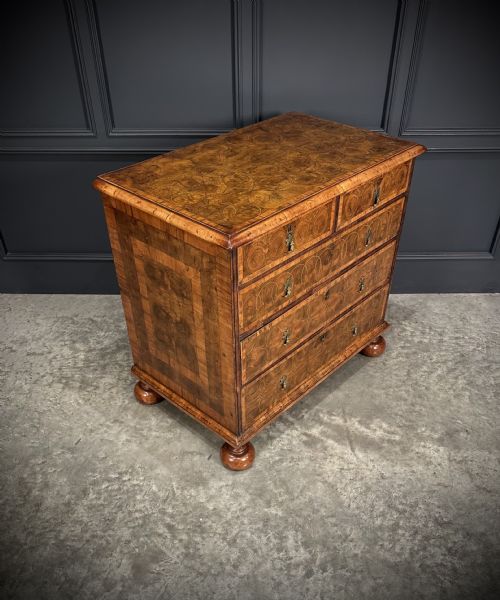


Brown Oyster Veneer Chest
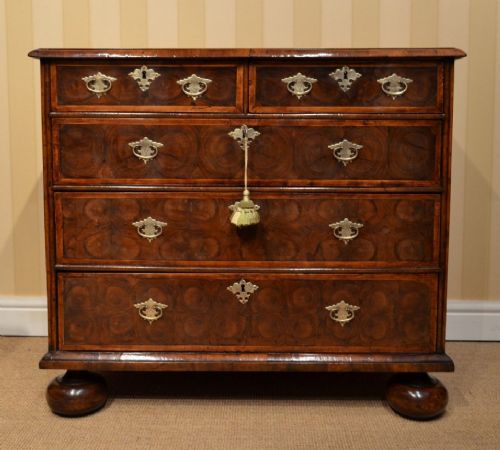
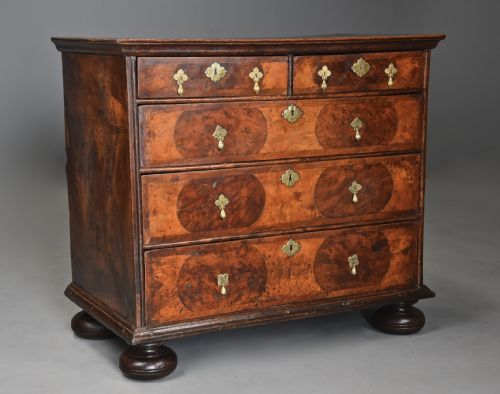
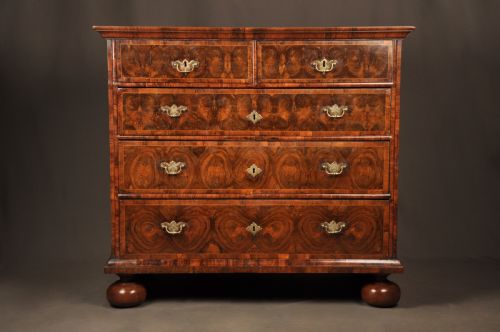
A brown oyster veneer chest brings together intricate circular timber work and the rich walnut, olive or laburnum tones of the seventeenth century.
Brown Oyster Veneer Chest
A brown oyster veneer chest is an English storage piece defined by circular cross-sections of branch wood arranged in decorative surface patterns. When searching for a brown oyster veneer chest, buyers encounter seventeenth-century forms from the William and Mary period alongside later revivals from the twentieth century.
The inventory demonstrates that these pieces appear primarily as chests of drawers, chests on stand, and specialised cabinets or boxes. Walnut, olive, and laburnum dominate the seventeenth-century examples, whilst later twentieth-century interpretations utilise similar timbers.
Most items emerge from the William and Mary era, featuring distinct walnut and kingwood veneers that display the natural grain rings of the timber. Cabinets on stand and chest of drawers formats provide the principal shapes for these historic surfaces.
Materials and construction methods
Cabinetmakers created oyster veneer by slicing small branches diagonally to produce oval and circular sections of wood grain. These thin roundels were laid down in geometric arrangements across the primary surfaces of walnut, oak, and kingwood carcasses.
Boxwood and other contrasting timbers occasionally provided stringing or inlay work to frame the clustered roundels. Brass drawer pulls and escutcheons completed the construction on seventeenth-century and revival pieces alike.
Materials recorded across the available selection include walnut, olivewood, laburnum, kingwood, oak, boxwood, and brass.
Judging the quality of oyster veneer
Quality rests in the precision of the veneer layout and the preservation of the original timber surface. Pieces with tight, uniform circular clusters demonstrate superior cabinetmaking compared to irregular or mismatched patterns.
The choice of secondary woods and the depth of the patina distinguish seventeenth-century originals from later twentieth-century revivals. Intact stands on chests on stand and well-figured olive or laburnum surfaces elevate the standing of an individual piece.
The Brown Oyster Veneer Chest Glossary
- Oyster veneer
- Cross-cut slices of small branches or roots arranged in patterns resembling oyster shells. This technique flourished during the late seventeenth century on English furniture.
- Chest on stand
- A tall storage form consisting of an upper chest section raised upon a separate support frame with legs. These pieces frequently incorporate drawers within both the upper and lower portions.
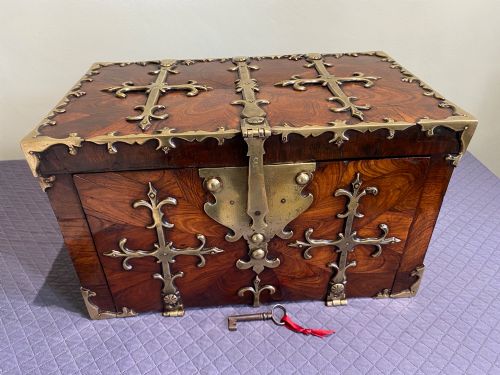
- Coffre forte
- A strong box or reinforced chest designed for securing valuables. These compact pieces often display elaborate exterior veneering.
- Marquetry
- The art of applying decorative pieces of veneer to a structure to form intricate designs. Seventeenth-century examples combine walnut and other timbers in elaborate surface patterns.
Brown Oyster Veneer Chest: Frequently Asked Questions
How do I date a brown oyster veneer chest?
Dating relies upon examining the timber species, carcass construction, and underlying secondary woods such as oak. Seventeenth-century pieces typically show hand-cut boards and period brass hardware.
Twentieth-century revivals utilise similar laburnum and walnut veneers but display modern internal fixings and machine-cut elements. Comparing the backing boards and drawer linings clarifies the exact period.
What is the difference between a chest and a chest on stand?
A standard chest of drawers sits directly on the floor with short feet or a moulded base. These units focus purely on drawer storage within a single carcass.
A chest on stand elevates the main storage body upon a distinct base frame, often with four or six legs joined by stretchers. This raised form provides a lighter visual silhouette and frequently includes an extra drawer in the stand itself.
Which woods were used for oyster veneer?
Cabinetmakers primarily selected walnut, olive, and laburnum for their distinct growth rings and rich brown tones. Kingwood also appears on high-status seventeenth-century pieces.
Branches from these hardwood trees were sliced across the grain to produce the characteristic oval roundels. Boxwood was occasionally used alongside these timbers for contrasting inlay details.
How should I care for an antique oyster veneer surface?
Protect the timber by maintaining stable humidity and temperature levels away from direct heat sources and sunlight. Gentle dusting with a dry lint-free cloth preserves the aged patina.
Avoid modern silicone polishes and harsh chemical cleaners that can penetrate the historic veneer joints. Application of a traditional beeswax feed periodically helps nourish the dry historic wood.