

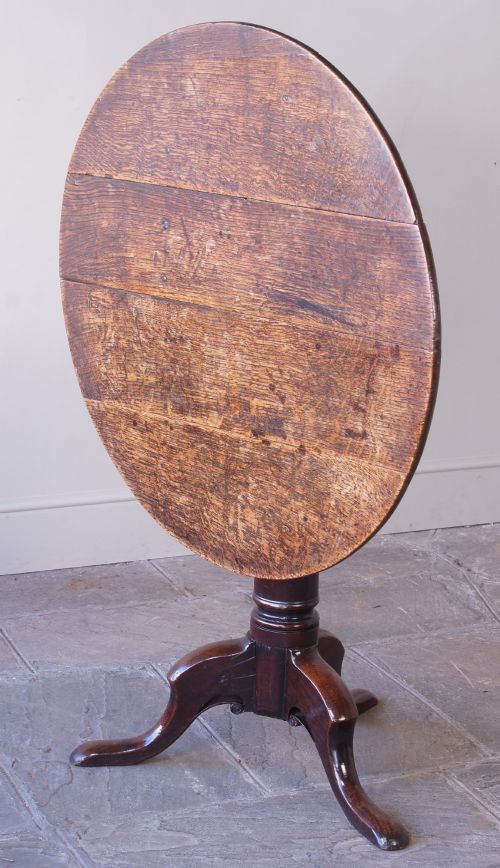
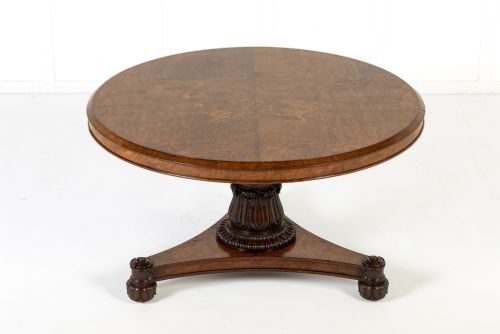
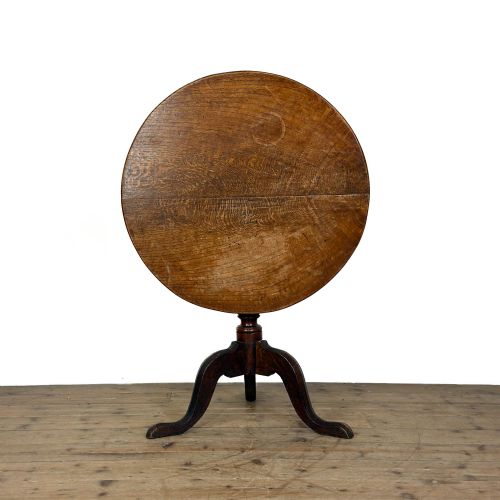
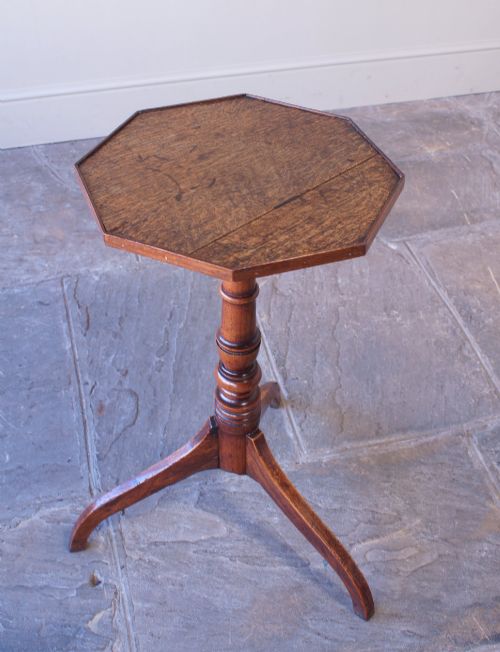




Brown Oak Tilt Top
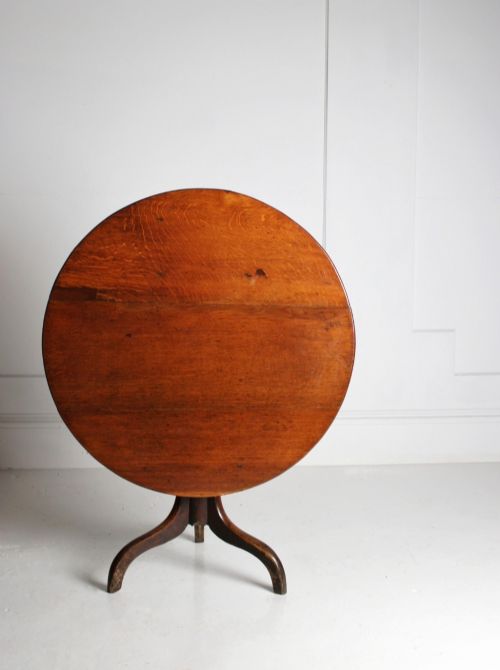
A brown oak tilt top table brings centuries of practical engineering into a modern room, folding flat against a wall when floor space matters.
Brown Oak Tilt Top
When searching for a brown oak tilt top table, a buyer explores versatile occasional, tripod, and snaptop furniture designed for compact domestic spaces. These pieces appear across Georgian, Victorian, and nineteenth-century periods, showing the enduring utility of a surface that pivots out of the way.
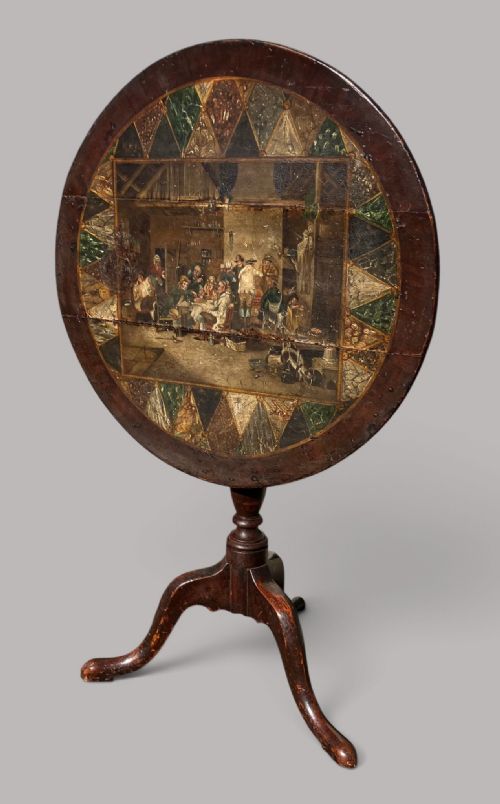
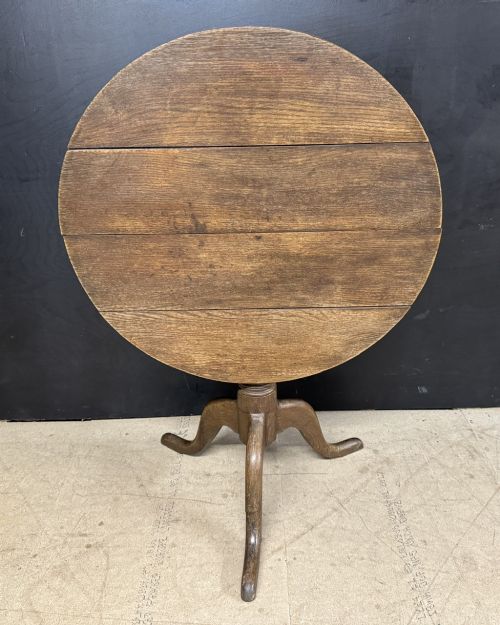
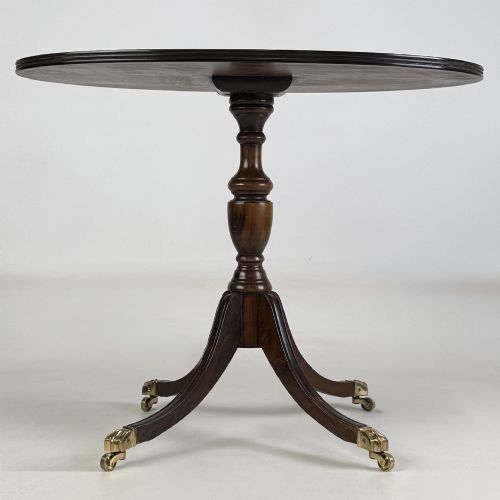
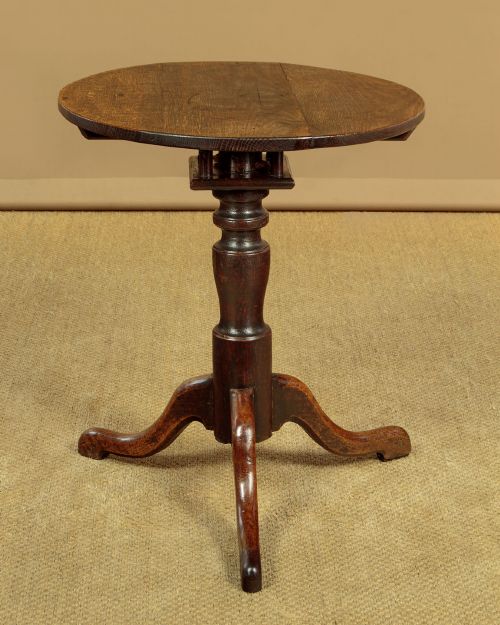
The version most commonly met on this page is the tripod occasional table, originating in the eighteenth and nineteenth centuries. These tables combine sturdy oak timbers with pedestal bases, often featuring birdcage mechanisms that allow the top to both rotate and tilt.
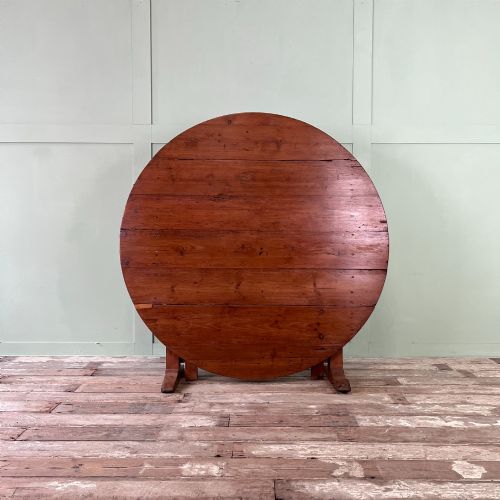
Beyond standard tripod designs, the selection broadens into French provincial folding vendange tables, Scottish parlour drinking tables, and occasional furniture utilising pollard or burr oak veneers. Each variant serves a distinct domestic role, from wine harvesting to fireside reading.
Quality factors in construction and finish
The distinction between standard examples and finer pieces lies in the choice of timber and the sophistication of the turning. Figures in pollard oak or burr oak veneer demand greater skill in selection and application than plain conversion timber.
Mechanism precision separates masterwork from utility pieces, seen in how snugly the birdcage or pivot catch holds the top horizontal. The alignment of the tripod legs and the integrity of the original block dictate lasting balance.
Brown Oak Tilt Top Retail Price Guide 2026
Typical asking prices for brown oak tilt top among the pieces listed under this phrase on Sellingantiques today, from the lower quarter to the upper quarter. They describe what is for sale here now, not the wider market.
Materials documented across the inventory include solid oak, burr oak veneer, pollard oak, cherry, brass, and iron hardware.
The Brown Oak Tilt Top Glossary
- Tilt top
- A table mechanism featuring a hinged underside allowing the tabletop to pivot into a vertical position for storage. This device saved valuable floor space in period rooms.
- Tripod table
- A small freestanding table supported by a central pillar resting on three legs. This configuration prevented rocking on uneven historical floors.
- Birdcage
- A timber framework fitted beneath a tabletop that enables the surface to both rotate horizontally and tilt vertically. It represents a more complex and desirable engineering solution.
- Snaptop
- An alternative period descriptor for a tilt top table, referencing the spring catch or latch that secures the horizontal surface. The term appears frequently in eighteenth-century contexts.
- Vendange table
- A folding French provincial table traditionally utilised during grape harvests. These examples frequently pair oak bases with cherry or fruitwood tops.
Brown Oak Tilt Top: Frequently Asked Questions
How do I operate the tilt mechanism?
Release the wooden catch or brass pin situated beneath the table surface, allowing the top to pivot smoothly on its central hinge.
Ensure you support the weight of the timber with one hand while operating the release mechanism to prevent sudden movement.
Where were these tables used originally?
These tables served as versatile occasional furniture in drawing rooms, parlours, and country houses for dining, reading, or drinking.
Because the tops folded flat, servants stored them against perimeter walls when rooms required open space for entertaining.
How do I distinguish a Georgian example?
Georgian pieces typically display restrained proportions, finely turned central pillars, and elegant pad or snake feet on the tripod base.
Examination of the underside often reveals pegged tenons, hand-cut joinery, and patinated oak timbers consistent with eighteenth-century workshops.
Can I use a tilt top table daily?
These tables adapt easily to modern living, functioning effectively as bedside surfaces, lamp tables, or compact tea desks.
Their pivoting design remains as practical today for saving space as it was centuries ago in crowded domestic interiors.