

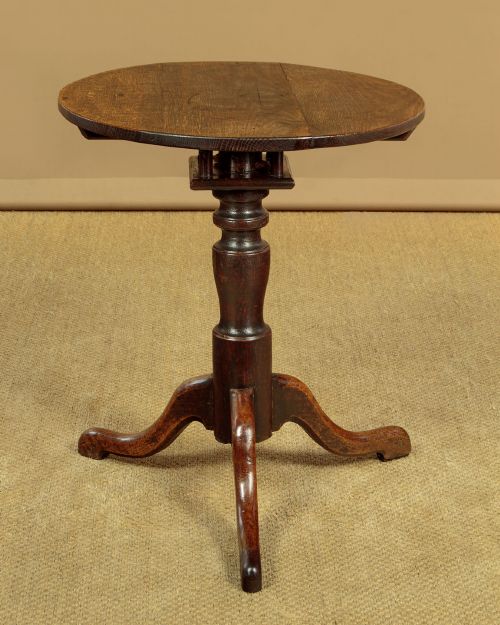


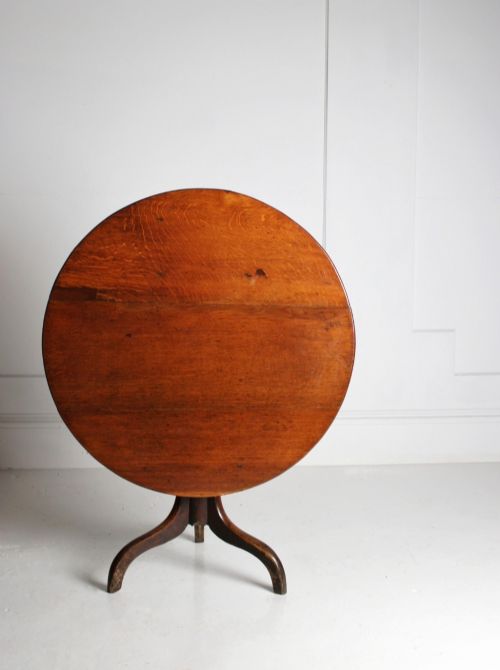


Brown Oak Tilt Top Table
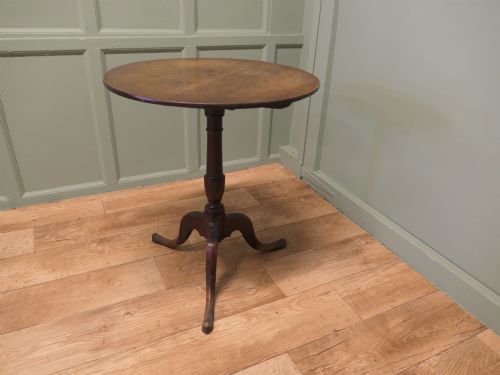
A brown oak tilt top table is a practical British and continental antique designed to fold flat and save floor space when not in service.
Brown Oak Tilt Top Table
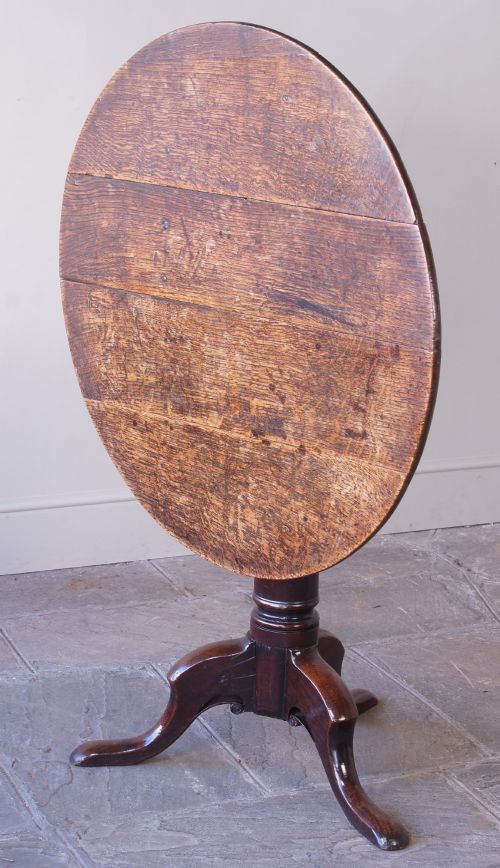
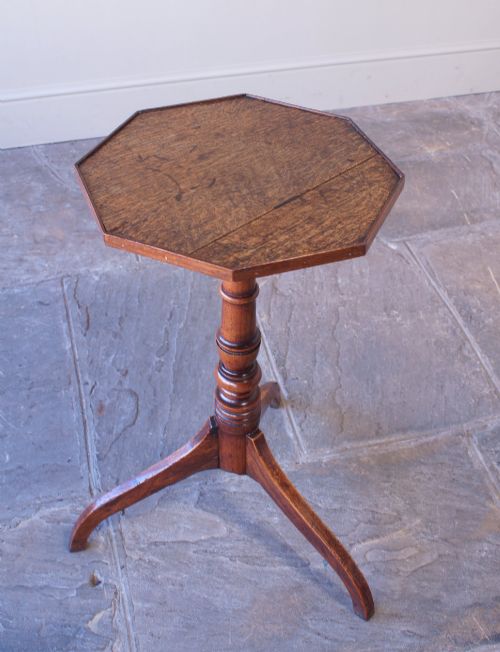
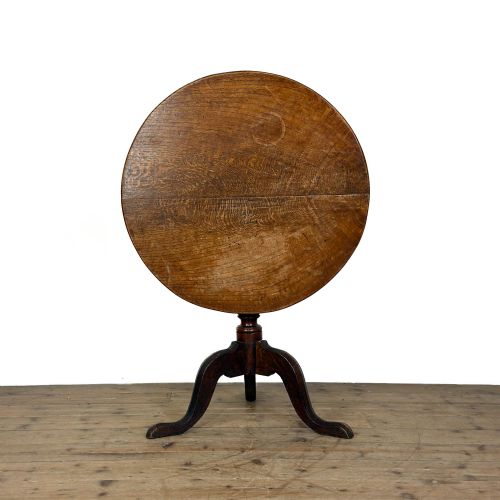
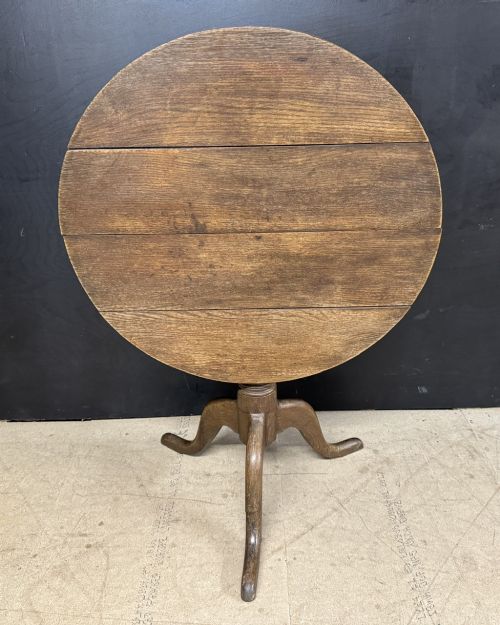
When you search for a brown oak tilt top table, you encounter tripod tables, occasional tables, and supper tables originating from the eighteenth, nineteenth, and twentieth centuries. These pieces feature circular or oval tops mounted on pivoting mechanisms that allow the surface to rotate vertically against the pedestal stem.
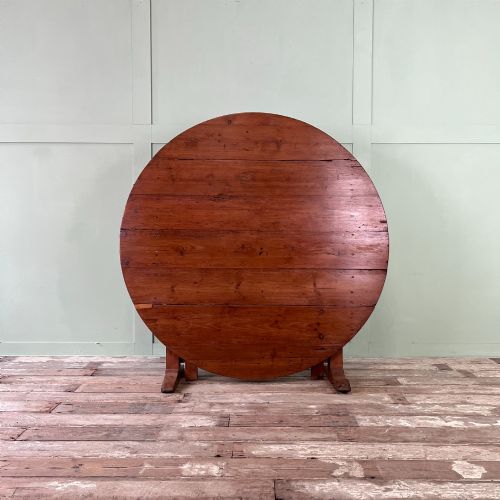
The most common versions on this page date from the Georgian and Victorian periods, often taking the form of tripod tables with turned columns and cabriole or straight legs. Alongside standard English examples, you will find continental variants such as French vendange tables combining oak with cherry.
Beyond standard occasional tables, the selection includes related forms that share tilting mechanisms or folding construction, including monks benches, coaching tables, and parlour drinking tables. These diverse formats reflect how makers adapted the tilting mechanism for various domestic uses over successive centuries.
How they were made
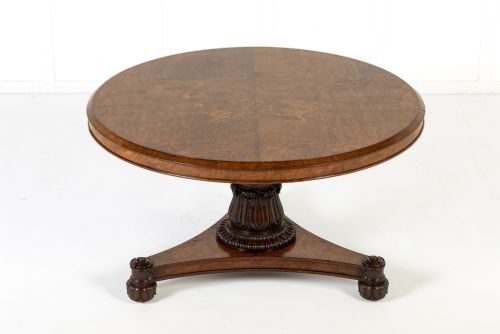
Cabinet makers constructed these tables primarily from solid timber and veneers, utilising oak alongside pollard oak, burr oak, and occasional insertions of cherry, ebony, and brass. The structural framework relies on sturdy pedestals supported by tripod legs or central columns.
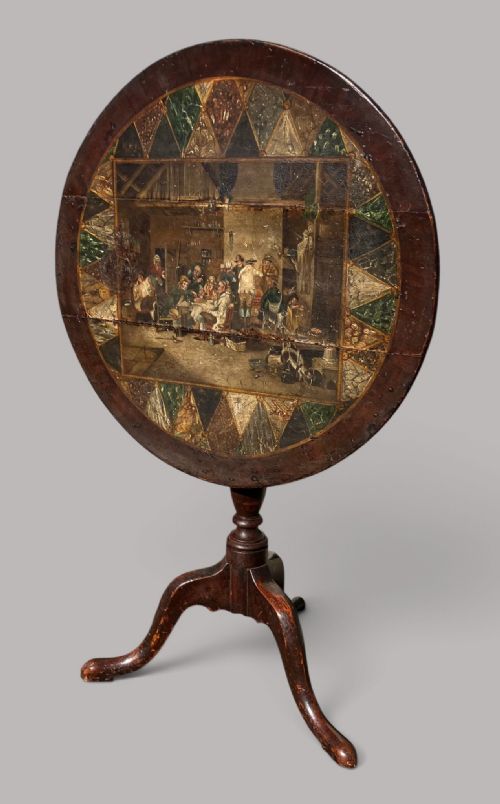
The defining mechanical feature is the birdcage or block pivot, allowing the top to tilt ninety degrees via wooden catches or brass fixings. Surface decoration varies from plain polished timber to parquetry, zodiac carvings, and inlaid geometric banding.
Brown Oak Tilt Top Table Retail Price Guide 2026
Typical asking prices for brown oak tilt top table among the pieces listed under this phrase on Sellingantiques today, from the lower quarter to the upper quarter. They describe what is for sale here now, not the wider market.
The furniture spans the Georgian, Victorian, Regency, and Art Deco periods.
What varies in quality
Quality rests in the selection of timber figures, where burr, pollard, and figured oak display superior grain movement compared to plain planks. The crispness of turning on the central pedestal and the smoothness of the tilting mechanism further distinguish finer examples from standard vernacular pieces.
Construction details such as dovetailed battens, original brass catches, and well-fitted birdcage pivots indicate higher workshop standards. Proportion and stability in the tripod base dictate whether a table stands firmly without rock when loaded.
The Brown Oak Tilt Top Table Glossary
- Tilt top table
- A table with a hinged top that rotates to a vertical position for storage against a wall. This space-saving design became popular in British homes during the eighteenth century.
- Tripod table
- A small freestanding table supported by a central pillar resting on three legs. They frequently feature tilting tops and served various domestic functions.
- Birdcage
- A revolving wooden frame situated beneath the tabletop that allows the surface to both rotate horizontally and tilt vertically. It represents a superior mechanism found on finer Georgian tables.
- Pollard oak
- Oak timber taken from trees that were pollarded, producing dense clusters of branches that create highly decorative, mottled grain patterns. Cabinet makers utilised this timber for elite Regency and Georgian furniture.
- Vendange table
- A French folding table traditionally utilised during grape harvests. These pieces frequently pair oak frames with cherry tops and collapsible bases.
Brown Oak Tilt Top Table: Frequently Asked Questions
What is a tilt top table used for?
These tables served flexible roles in historic homes as tea tables, supper tables, or occasional surfaces for parlours and drawing rooms.
The tilting mechanism allowed servants to fold the tops flat and store them against the perimeter of a room when floor space was needed for other activities.
How do I spot a Georgian tilt top table?
Georgian examples typically feature elegant turned central pedestals, tripod bases with pad or snake feet, and sometimes internal birdcage mechanisms.
Makers of this era focused on balanced proportions and structural restraint, avoiding excessive carving in favour of clean architectural lines.
Are these tables stable when tilted?
Original tables rely on snug wooden latches, brass hooks, or weighted catches to secure the top in both horizontal and vertical positions.
A properly adjusted mechanism holds the tabletop firmly upright without leaning or slipping.
What is pollard oak?
Pollard oak is a decorative timber harvested from trees whose upper branches were cut back to encourage dense, knotty growth.
This pruning creates a swirling, heavily figured grain pattern highly prized by nineteenth-century cabinet makers.
Can I use a tilt top table daily?
These pieces suit everyday domestic use as bedside surfaces, lamp tables, or small dining accompaniments in modern rooms.
Their original folding function remains fully operational on most surviving examples, offering practical versatility for contemporary living spaces.