





Brown Oak Tavern Stool
These brown oak tavern stool examples are hardy English country seats built for heavy daily use, prized for their rich grain and honest construction.
Brown Oak Tavern Stool
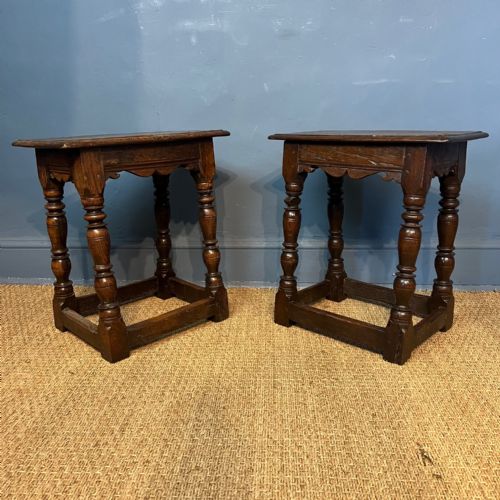
When you search for a brown oak tavern stool, you are looking at sturdy wooden seating designed for public houses, inns, and domestic country interiors across several centuries. The selections range from early Charles II joint stools to 19th-century bar stools, pub stools, and low side tables.
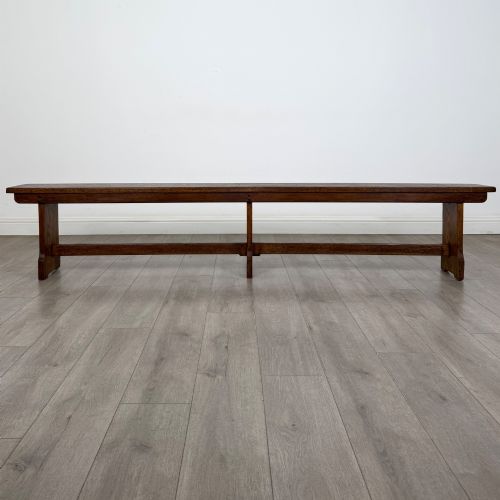
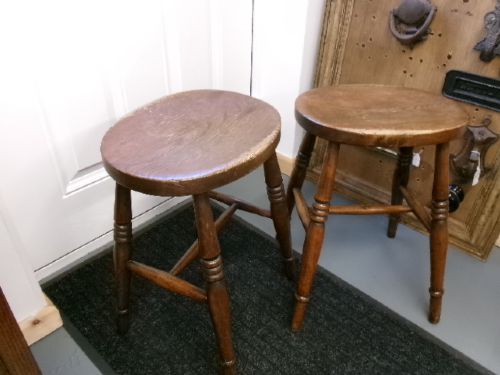
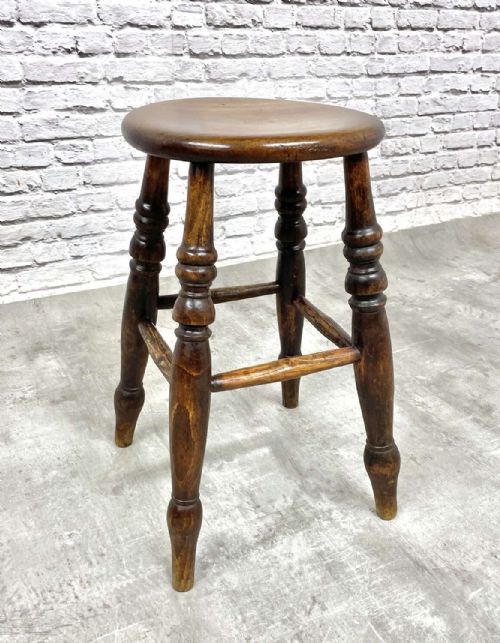
You are most likely to meet 19th-century pub and tavern stools on this page, alongside vernacular variants like three-legged country stools, Windsor stools, and long tavern benches. These pieces often feature simple turned legs or sturdy stretchers built to withstand the rigours of a busy taproom.
The forms encompass oval dished tops, rectangular seats, and low side tables that served dual purposes in period settings. Their origins lie in English country craftsmanship, utilising local timbers shaped by jobbing carpenters and regional makers.
How they were made
Makers utilised native hardwoods such as oak, elm, beech, ash, and sycamore, selecting timber for strength and durability rather than mere show. Seats were frequently carved into an oval dished shape or fashioned from solid planks to offer comfort without upholstery.
Construction relied on traditional joinery methods, including pegged mortise and tenon joints in earlier periods and robust turned underframing. Legs were often splayed for stability on uneven flagstone floors, secured with stretchers to prevent wobbling under heavy use.
Brown Oak Tavern Stool Retail Price Guide 2026
Typical asking prices for brown oak tavern stool among the pieces listed under this phrase on Sellingantiques today, from the lower quarter to the upper quarter. They describe what is for sale here now, not the wider market.
Listings feature periods spanning from the 17th century through the Georgian era to the 19th century, constructed in oak, elm, ash, and sycamore.
What varies in quality
Quality in these pieces rests upon the integrity of the timber selection and the retention of original surface patination. Examples with deep, honest wear and untouched grain show superior character compared to those stripped or overly restored.
The proportion and balance of the turned legs and underframing dictate the visual success of the piece. Sturdiness in the jointwork and minimal replacement of structural parts elevate an individual stool within its period.
The Brown Oak Tavern Stool Glossary
- Joint stool
- A low wooden seat constructed with mortise and tenon joints pegged together, typical of the 17th century. These early forms set the structural standard for later tavern seating.
- Dished top
- A seat surface hollowed out into a shallow concave bowl shape to accommodate the sitter. This ergonomic shaping is common on turned tavern and pub stools.
- Windsor stool
- A heavy country stool featuring turned legs inserted directly into a thick solid wooden seat. They share the robust construction methods of traditional Windsor chairs.
- Stretchers
- The horizontal wooden rails connecting the legs of a stool near the floor to add rigidity. They frequently double as footrests on taller bar and tavern designs.
- Vernacular
- Objects made by local artisans following regional traditions rather than high-style metropolitan fashions. This term describes the unpretentious character of country oak and elm furniture.
Brown Oak Tavern Stool: Frequently Asked Questions
How were tavern stools used?
Tavern stools served patrons seated at high counters, tables, or hearths in busy public houses and inns. Their compact footprint allowed them to be tucked away easily when not in use.
Beyond public houses, similar low stools and benches functioned as auxiliary seating or side tables in country houses and clerks' offices.
How do I live with one?
Living with these pieces involves placing them where their robust timber and historic surface can be appreciated without excessive moisture or direct heat. They function effectively as standalone seats, plant stands, or bedside surfaces.
Their neutral wood tones and compact scale allow them to integrate easily into both modern and traditional interiors.
How do I tell periods apart?
Earlier pieces from the 17th century display rectilinear frames, pegged joints, and formal turnings characteristic of Charles II designs. Later 19th-century examples tend toward simpler turned legs, dished elm or sycamore tops, and taller bar stool proportions.
Examining the tool marks, timber shrinkage, and wear patterns helps distinguish Georgian country variants from later Victorian vernacular interpretations.