


Pair Oak Stools
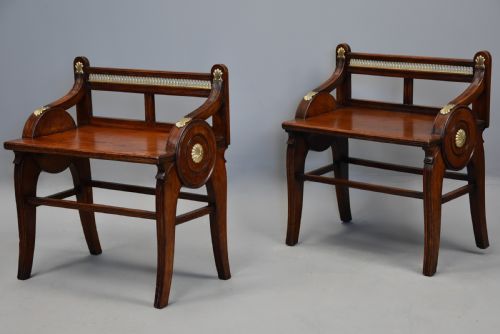
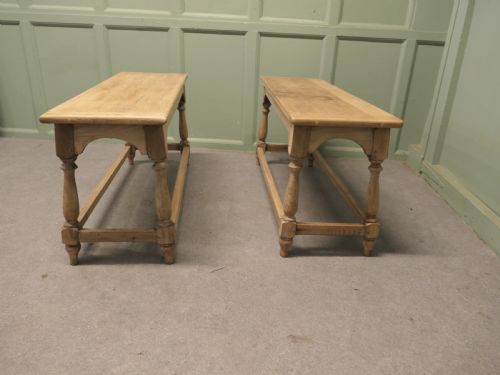
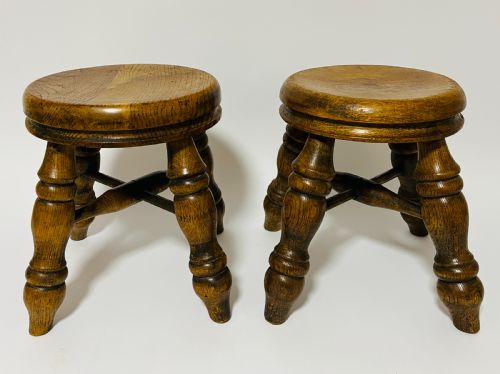
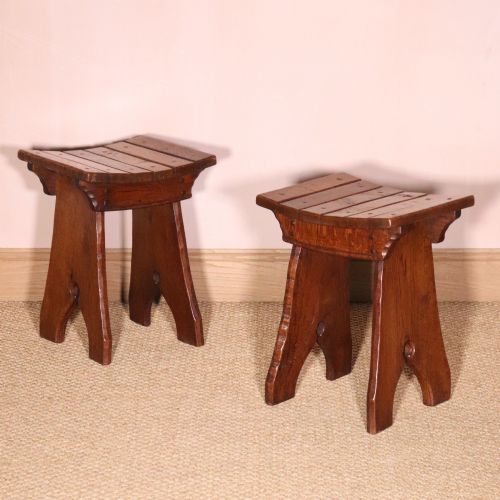
Pair oak stools bring sturdy traditional character to a room, offering practical seating shaped by centuries of country and revival craft.
Pair Oak Stools
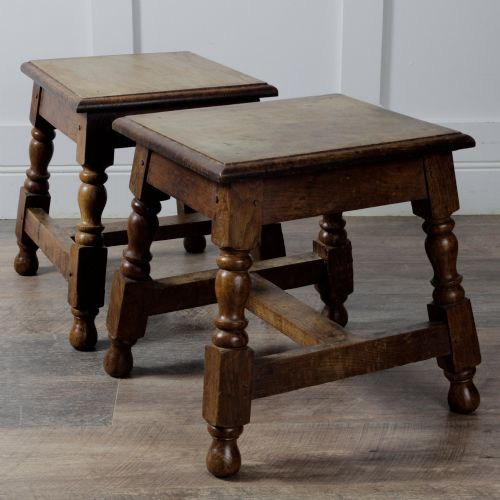
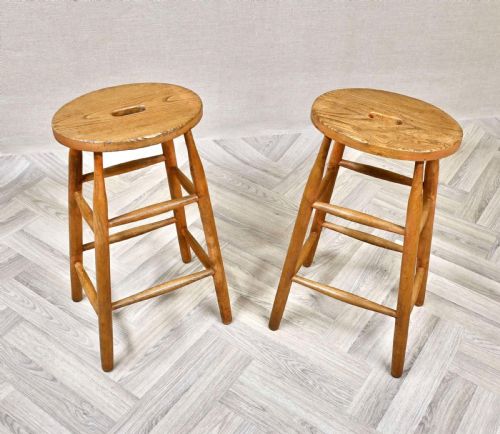
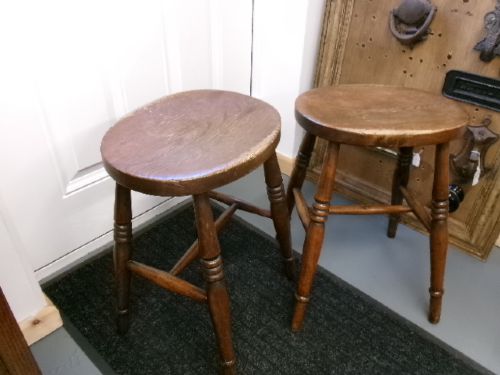
When you search for pair oak stools, you encounter sturdy seating forms rooted in domestic and utilitarian history. The selections span compact joint stools, tall bar formats, and low foot stools designed for daily use.
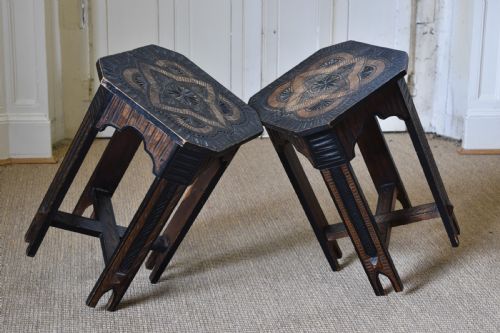
You meet examples influenced by the Arts and Crafts movement, Gothic revivalism, and 17th-century vernacular traditions. Many items double as side tables or occasional stands due to their flat, stable timber tops.
The options range from austere rustic country pieces to decorative carved iterations. Most surviving matches date from the late nineteenth century through the early decades of the twentieth century.
What varies in quality
The standard of timber selection and the precision of the joinery set examples apart. Heavier scantlings of wood and tighter peg joints denote careful workshop production over mass output.
Design integrity separates simpler utility items from ambitious revival pieces. Hand-carving depth and the retention of original surface patination dictate the desirability of an item.
The inventory combines traditional oak alongside alternative timbers including yew wood, elm, and stained hardwood.
James Shoolbred And Co·Jack Grimble
The Pair Oak Stools Glossary
- Joint stool
- A low wooden stool constructed with mortise and tenon joints rather than turned legs driven into a seat slab. These sturdy pieces often served multiple household duties.
- Rush seat
- A woven seating surface made from dried marsh grasses twisted into cords. This traditional method provides a flexible yet durable platform.
- Arts and Crafts
- A design movement prioritising handcraftsmanship and simple vernacular forms over industrial mass production. Pieces from this tradition often celebrate honest construction.
- Bobbin turned
- A style of leg or stretcher lathe-turned to resemble a series of wooden reels or bobbins strung together. It adds decorative rhythm to otherwise plain frames.
Pair Oak Stools: Frequently Asked Questions
How were pair oak stools used historically?
These items served primarily as portable seating around domestic tables or by hearths. Their robust construction allowed them to double as small side tables or steps when needed.
In larger houses, longer variants functioned as window seats or hallway benches for removing boots. Their utilitarian nature meant they moved freely from room to room according to household demands.
How do I spot a 17th-century style piece?
Revival examples from the Victorian and Edwardian eras emulate earlier construction methods using pegged joints and dark finishes. Look closely at the tool marks and timber shrinkage to judge age accurately.
True period items display authentic wear patterns and hand-riven wood grain rather than uniform machine processing. Revival makers frequently adopted Jacobean motifs like turned legs and geometric panels.
Are these stools suitable for daily seating?
Solid timber frames and pegged joints provide exceptional structural stability for everyday use. Rush or wooden seats withstand regular weight without losing their integrity.
Consider adding simple pads if you plan to sit for extended periods on un-upholstered tops. Their compact footprint also makes them easy to tuck beneath consoles when not in use.
What maintenance do antique oak stools need?
Keep wooden surfaces nourished by applying natural beeswax periodically to protect the grain. Avoid placing them near direct heat sources that might cause timber to split.
Rush or cane seating benefits from gentle dusting and protection from excessive moisture. Treating the timber with care preserves the historic patination accumulated over decades.