


Brown Oak Tabletop Chest
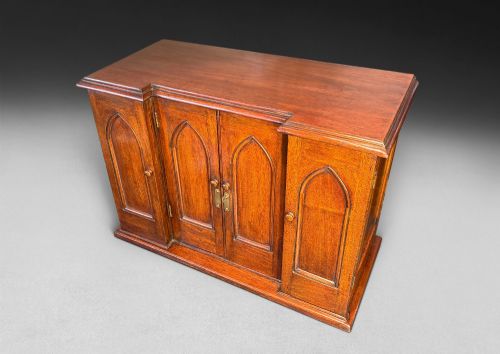
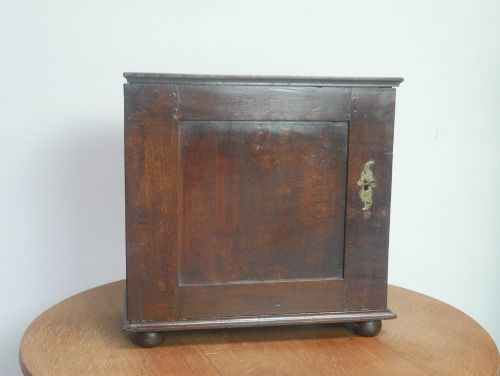
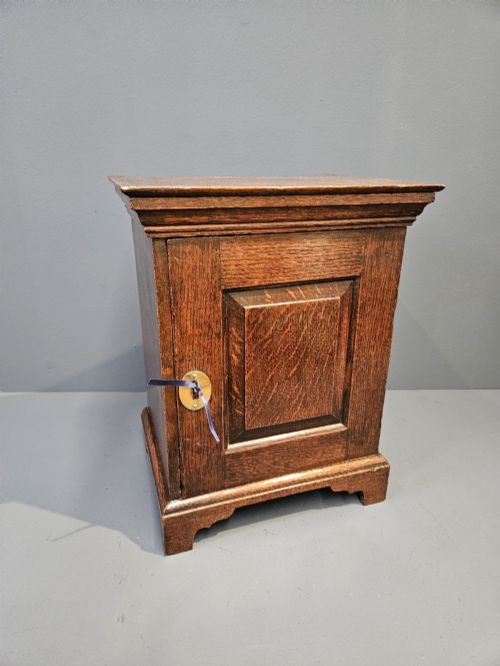
These brown oak tabletop chest examples are sturdy miniature forms in native timber designed to sit on surfaces and store small valuables.
Brown Oak Tabletop Chest
A brown oak tabletop chest takes the form of a miniature case piece, ranging from spice cupboards and collectors cabinets to small coffers and drawer units. Buyers looking for a brown oak tabletop chest will encounter pieces spanning the eighteenth, nineteenth, and early twentieth centuries, including Georgian and Edwardian examples. These compact objects were built for domestic interiors to house documents, spice, or small collections close at hand.
The selection includes regional pieces such as the Welsh coffor bach alongside French commodes and armoires scaled down for the desk or table. Forms vary from simple lidded boxes to multi-drawer collector chests and architectural miniature court cupboards. Each piece displays the functional design of full-sized furniture translated into a portable scale.
Materials and construction methods
Construction relies heavily on solid oak, frequently chosen for its rich figuring and durability, accented with brass drawer pulls, escutcheons, and hinges. Certain examples incorporate ebonised wood details or glass panels to frame specific contents like collections or documents. The joinery follows traditional cabinet-making practices suited to miniature dimensions.
Surfaces demonstrate the natural grain of English and continental timber, finished to highlight the depth of the wood. Metalwork fixtures are functional, securing doors, lids, and drawers while adding tonal contrast to the brown oak bodies.
The selection spans from 1700s spice cupboards to 1930s watchmaker cabinets, demonstrating centuries of miniature woodworking.
Assessing quality in miniature furniture
Quality rests in the proportion and fidelity to full-scale architectural styles, whether the piece follows Gothic Revival lines or clean Georgian proportions. Finer examples display carefully selected figured oak grain across drawer fronts and panels, showing consideration for visual rhythm.
The integrity of the internal configuration, from closely fitted small drawers in a spice cupboard to working locks and original brass hardware, elevates a piece. Superior execution is visible in the neatness of the miniature dovetail joints and the preservation of original timber surfaces.
The Brown Oak Tabletop Chest Glossary
- Coffor Bach
- A Welsh miniature coffer, typically constructed in oak during the eighteenth century to serve as a dowry chest or keepsake box.
- Spice Cupboard
- A small wall-hung or tabletop cabinet containing multiple tiny drawers intended originally for valuable culinary spices and herbs.
- Collectors Cabinet
- A specialised piece featuring numerous shallow drawers designed to hold specimens, coins, or small natural history items.
Brown Oak Tabletop Chest: Frequently Asked Questions
What were tabletop chests used for?
Tabletop chests served as secure repositories for documents, correspondence, spices, and small personal valuables in domestic and commercial settings.
Their compact size allowed them to sit on desks, tables, or sideboards where contents remained easily accessible to the owner.
How do I date an oak chest?
Dating relies on observing construction techniques, hardware style, and timber characteristics compared against known historical periods.
Early pieces often feature hand-cut joinery and period-specific brasses, while later nineteenth and twentieth-century examples display different handling of the oak.
Are these pieces made of solid oak?
The pieces listed utilise solid oak timber for their primary structures, panels, and drawer frames.
Some examples also incorporate complementary materials like brass hardware, glass, or ebonised wood details for contrast.
Where were miniature coffers made?
Miniature coffers, particularly the traditional coffor bach, were produced regionally in Wales during the eighteenth century.
Other scaled-down cabinets and chests originated across Britain and France, reflecting local furniture traditions of their respective periods.