

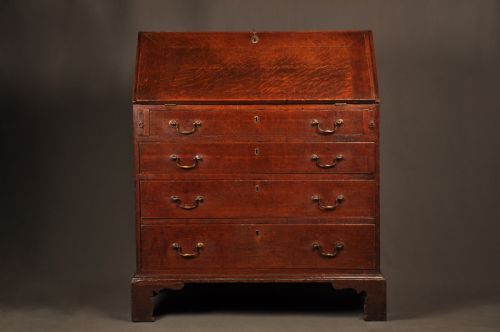

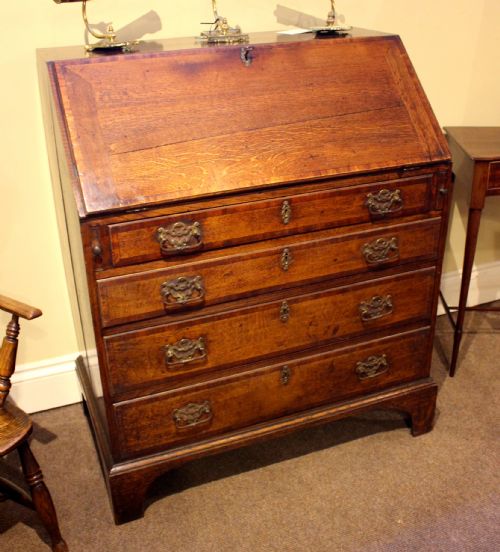
Brown Oak Secretary
A brown oak secretary offers rich timber grain and practical workspace, uniting writing slopes and storage in traditional forms.
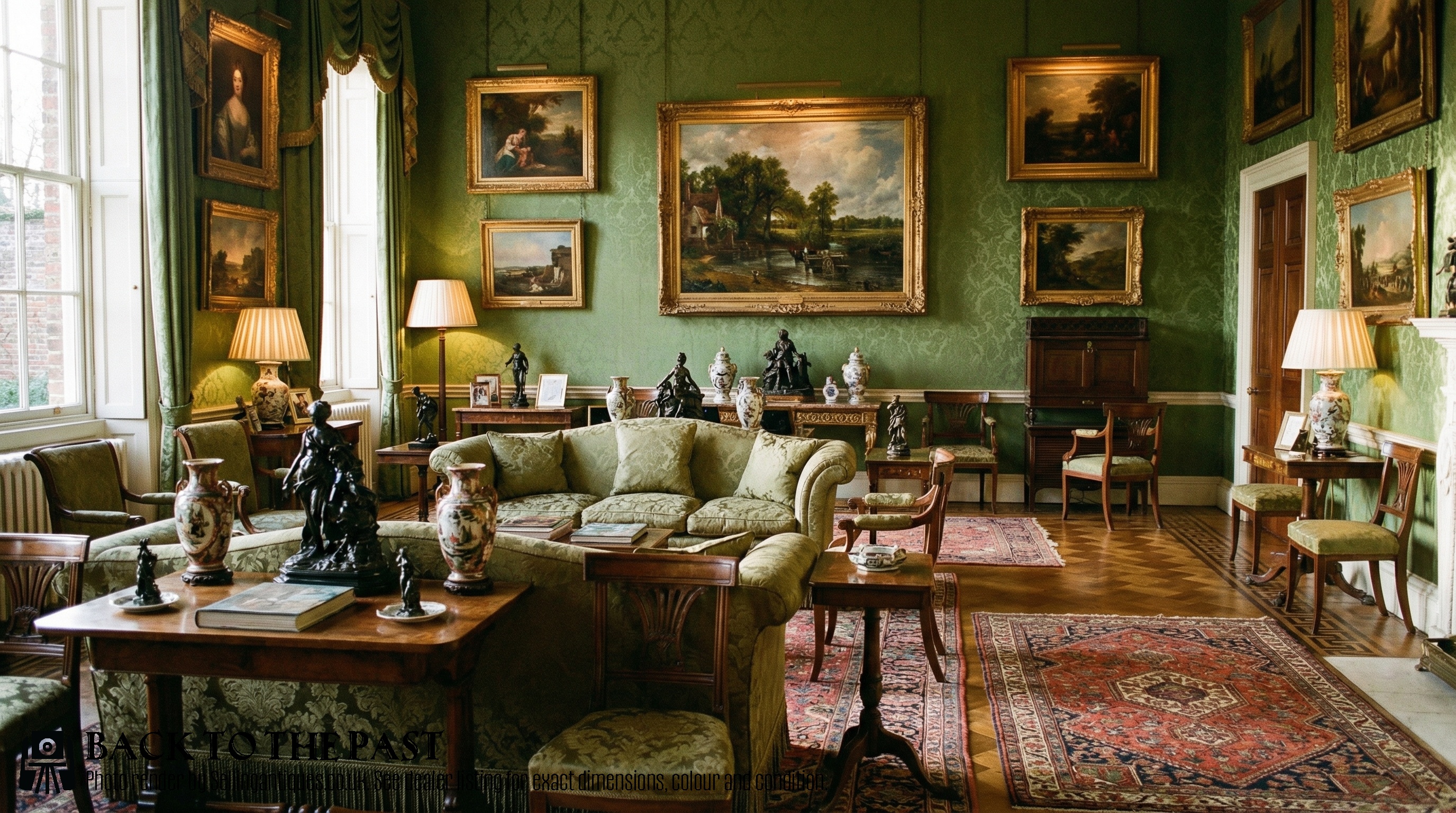
Brown Oak Secretary
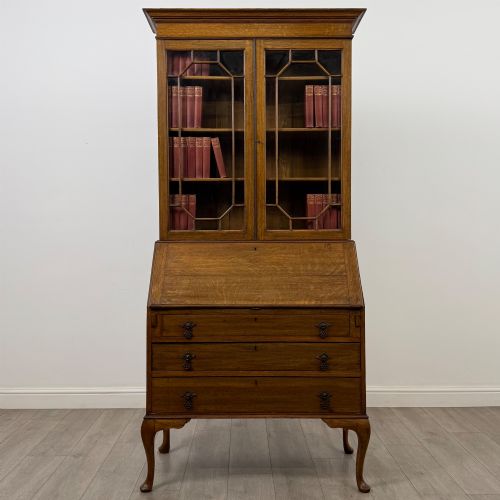
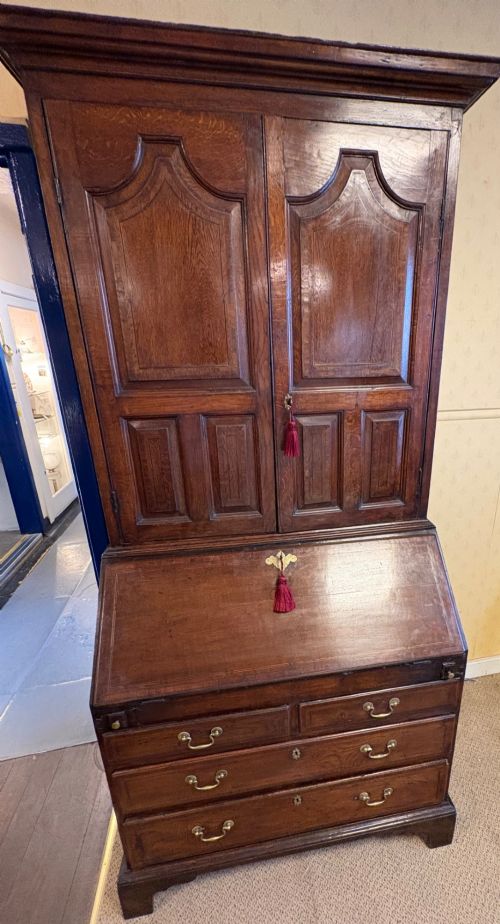
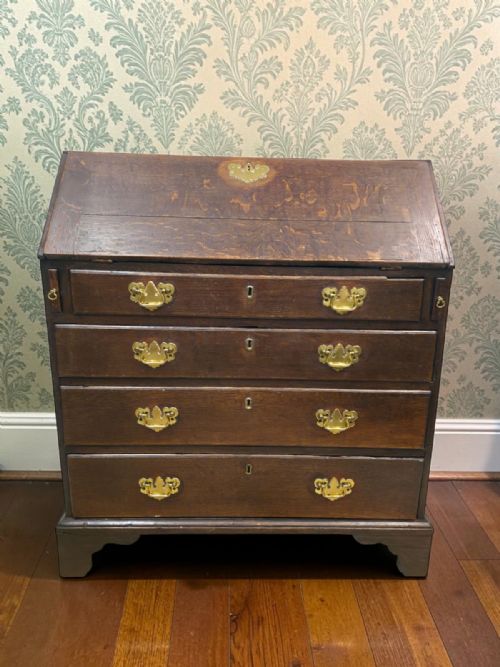
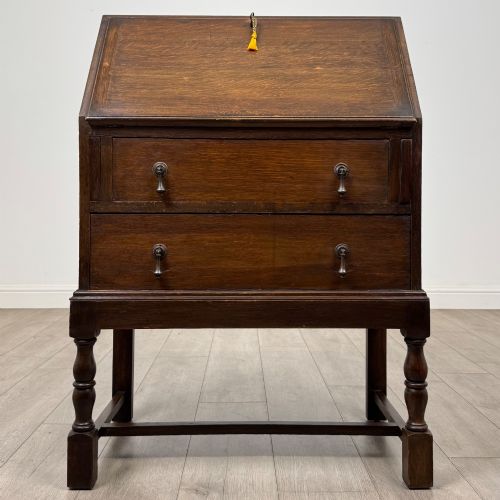
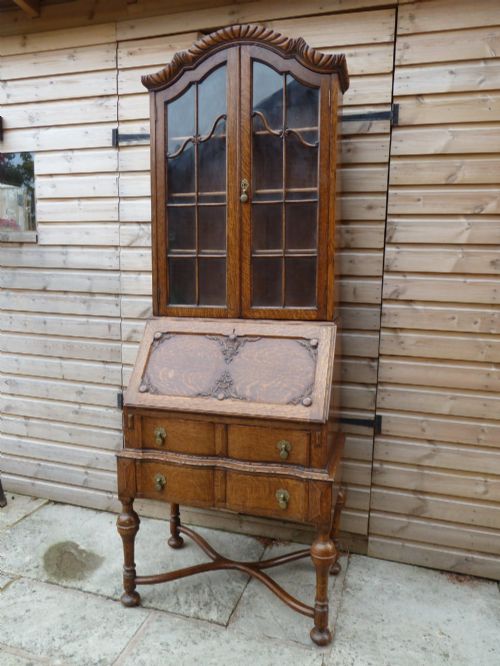
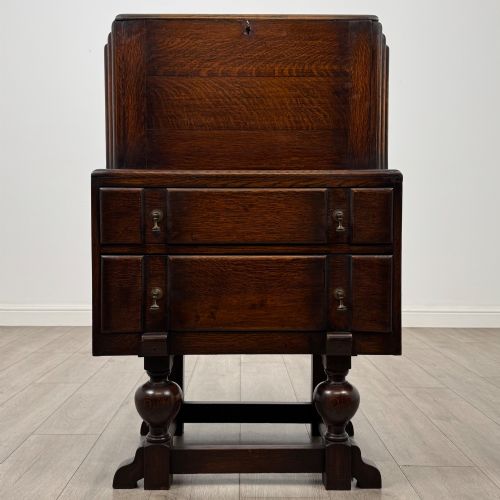
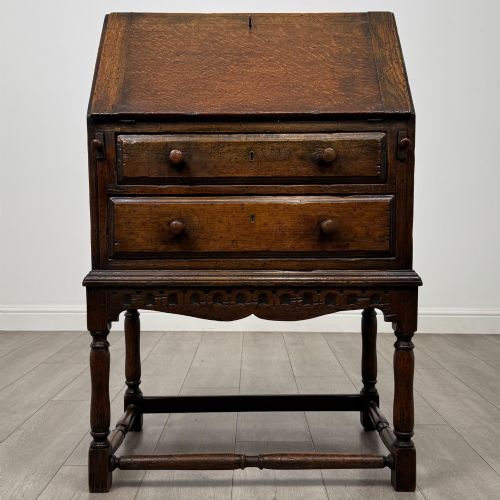
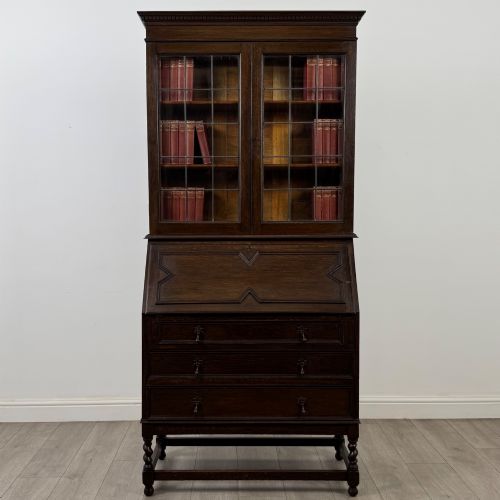
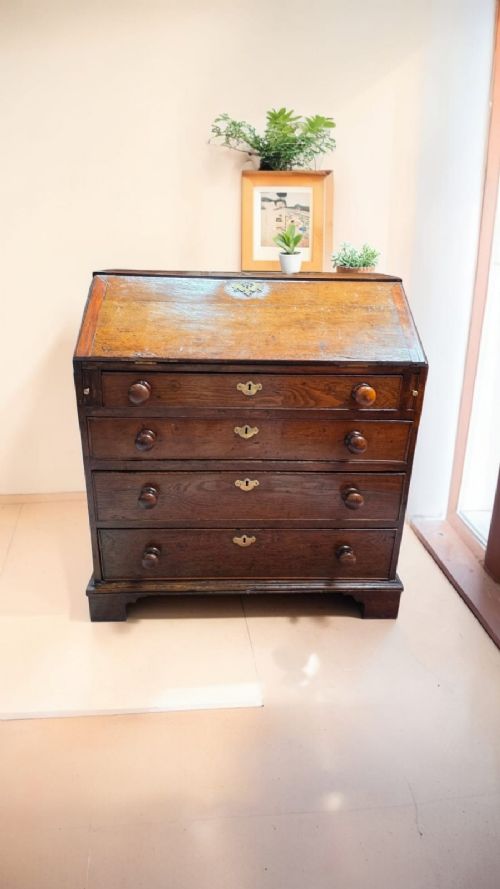
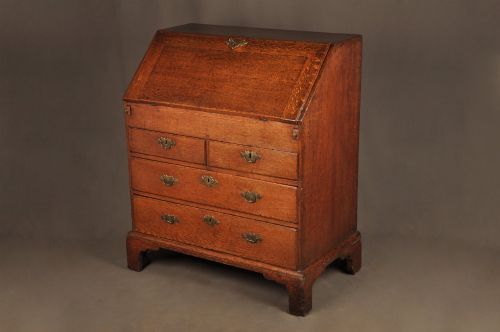
A brown oak secretary is a practical writing cabinet designed to conceal private correspondence behind a sloping fall front or drop-down writing flap. These pieces often incorporate fitted interior drawers and pigeonholes, sometimes extending upward into a glazed bookcase section.
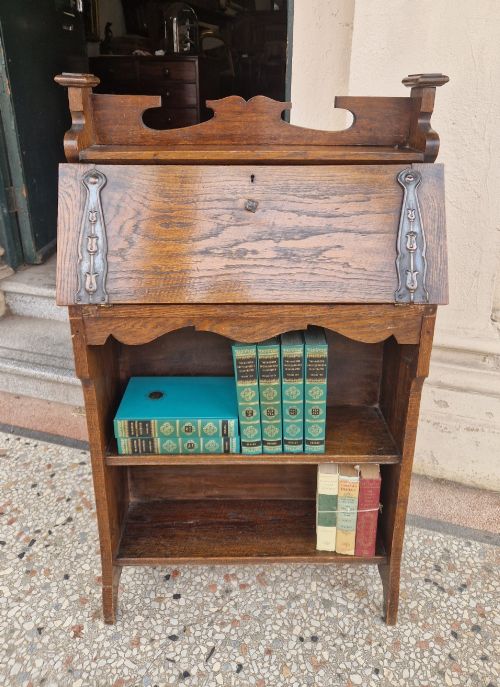
The selections span distinct historical periods from the seventeenth and eighteenth centuries through the Victorian, Edwardian, and Arts and Crafts eras. Buyers encounter both compact writing desks on stands and large bureau bookcases built for domestic studies.
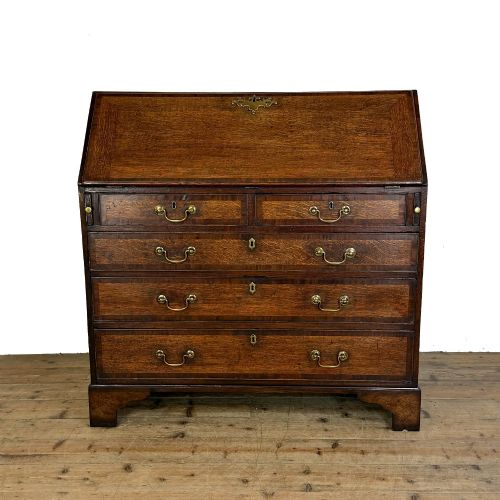
Makers utilised resilient native timber to create solid furniture alongside veneered examples featuring cross banding in contrasting woods. Common formatting spans simple fall-front desks to elaborate cabinets bearing Morris and Co or Liberty of London designs.
Materials and construction methods
Cabinet makers relied primarily on solid oak and oak veneers, occasionally combining these with mahogany or applying brass hardware and glass panels to upper bookcase doors. Interiors frequently housed small drawers, pigeonholes, and leather or fabric writing surfaces.
Joinery methods involved traditional hand-cut dovetailing for drawer construction and sturdy framing to support the heavy weight of fall fronts. Surfaces were finished to highlight the deep, warm tones and distinctive figuring inherent in mature timber.
Keep watch for secret compartments tucked behind tiny drawers, designed to guard private letters from curious eyes.
Judging execution and refinement
The calibre of a brown oak secretary rests upon the depth of timber grain, the precision of interior joinery, and the preservation of original brass handles and escutcheons. Pieces featuring stepped interiors, secret compartments, or cross-banded mahogany details demonstrate higher craftsmanship.
Proportion and structural balance distinguish superior workshop output from utilitarian items. Finer examples retain patinated surfaces and unaltered fitted writing compartments that reflect the standards of their period.
Morris and Co·George W Jack·Robert Mouseman Thompson·Harris Lebus·Liberty of London
The Brown Oak Secretary Glossary
- Fall front
- The hinged writing flap on a bureau that drops down to form a horizontal desk surface. It conceals the interior pigeonholes and small drawers when closed.
- Bureau bookcase
- A dual-purpose piece featuring a lower writing desk combined with an upper shelving or cabinet section. Glass doors frequently protect the upper compartment.
- Cross banding
- A decorative border technique where thin strips of veneer are laid with the grain running perpendicular to the surrounding panel. This adds visual contrast to the timber surface.
- Secretaire
- A cabinet or chest of drawers containing a pull-out writing drawer with a drop front. It serves a similar function to a bureau.
- Pigeonhole
- A small, open compartment within the interior of a desk used for sorting letters and papers. These compartments are often arranged in tiered rows.
Brown Oak Secretary: Frequently Asked Questions
How do I use a secretary desk?
Lower the hinged fall front to reveal the writing surface and interior compartments. Store stationery and writing implements inside the fitted drawers.
Close the fall front when finished to keep the desktop tidy and protect your papers from dust.
Where were these desks placed?
These cabinets traditionally stood in private studies, libraries, or withdrawing rooms where correspondence took place. Their compact footprint also suited smaller parlours and bedrooms.
Today they function effectively as home office desks or statement storage pieces in living spaces.
How do I distinguish eighteenth-century pieces?
Examine the drawer construction for hand-cut dovetails and inspect the timber for the deep, natural patina acquired over centuries. Earlier models often feature stepped drawer arrangements and solid oak construction.
Later revival styles from the Victorian and Edwardian periods replicate these forms but utilise machine-cut elements or different interior layouts.
How do I care for brown oak?
Maintain the timber by keeping the piece away from direct heat sources and strong sunlight, which can dry out or fade the wood. Apply appropriate wax polish occasionally to preserve the finish.
Avoid excessive moisture on leather or fabric writing inserts during routine cleaning.