
Brown Oak Plant Stand
These brown oak plant stand pieces combine timber and upright form to hold greenery, offering sturdy display surfaces for domestic interiors.
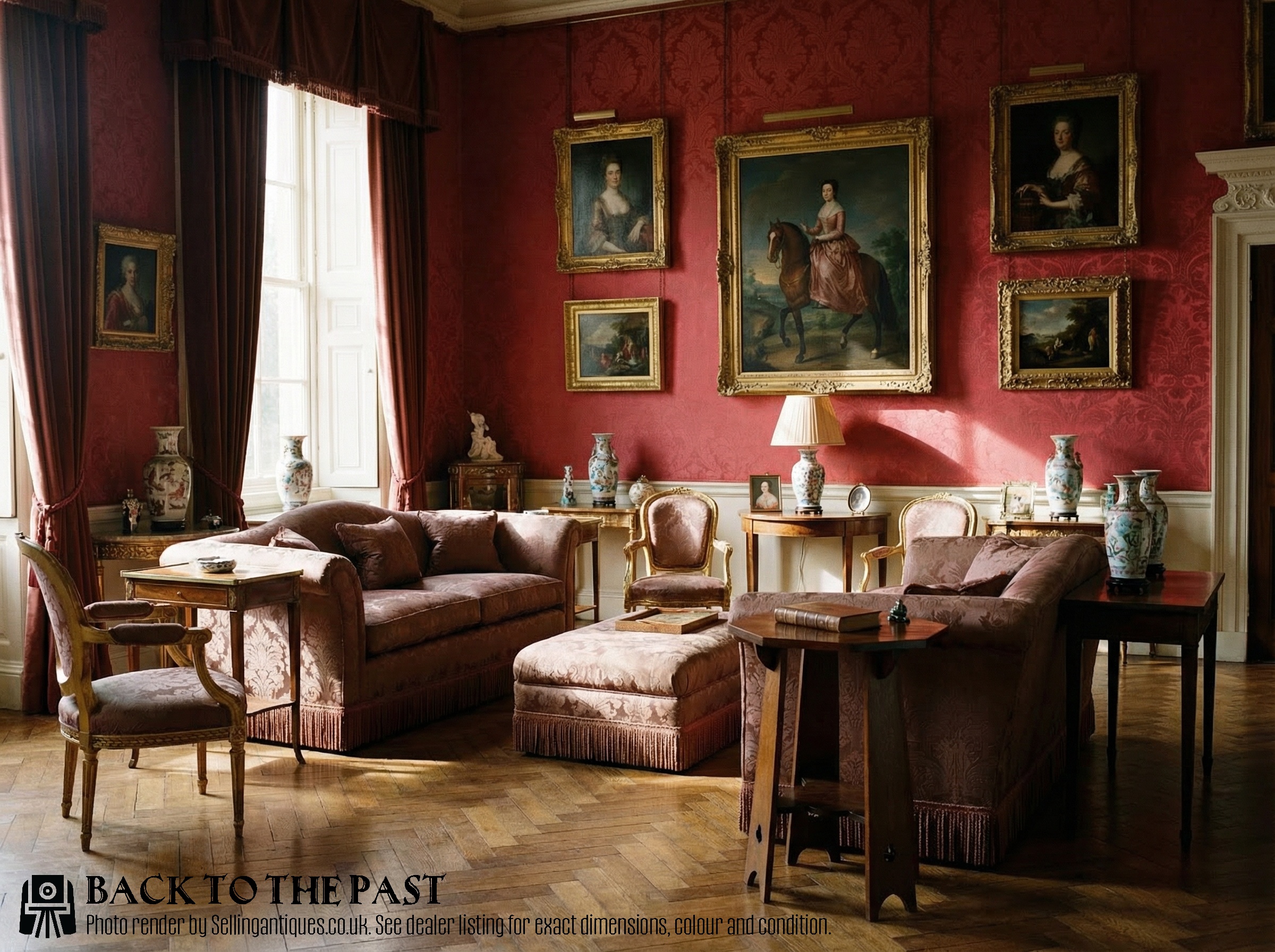
Brown Oak Plant Stand
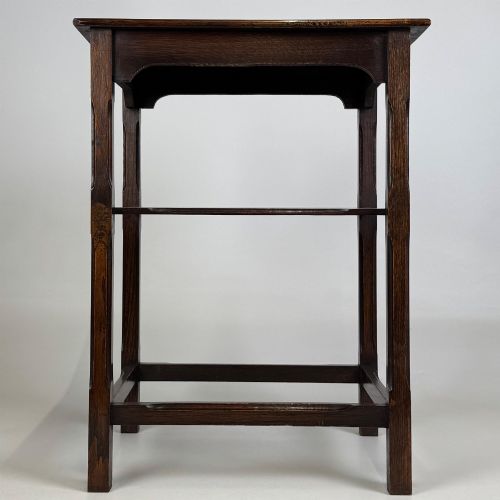
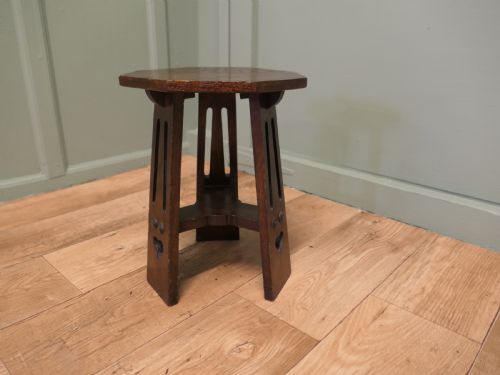
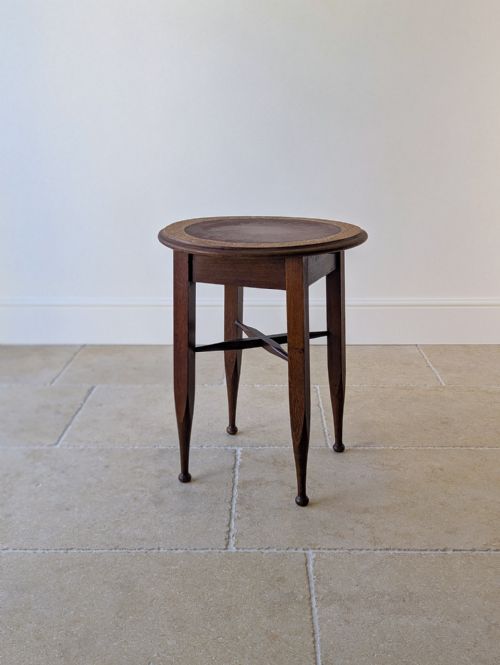
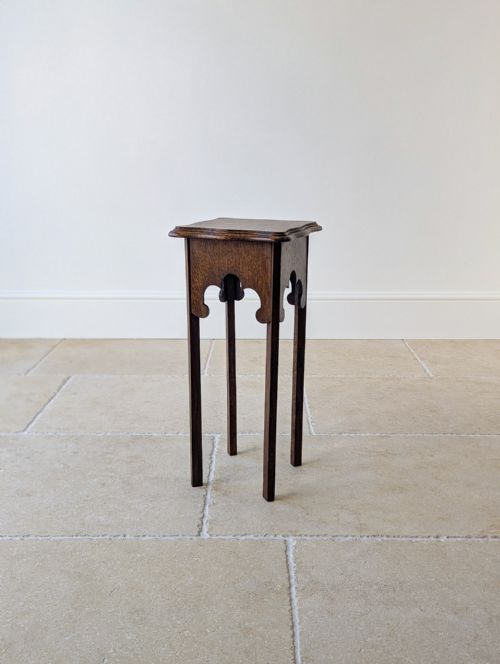
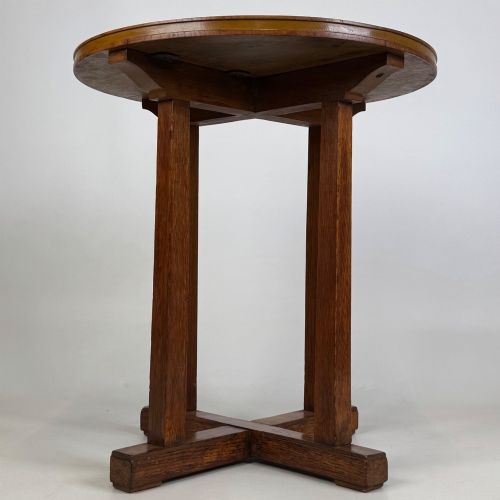
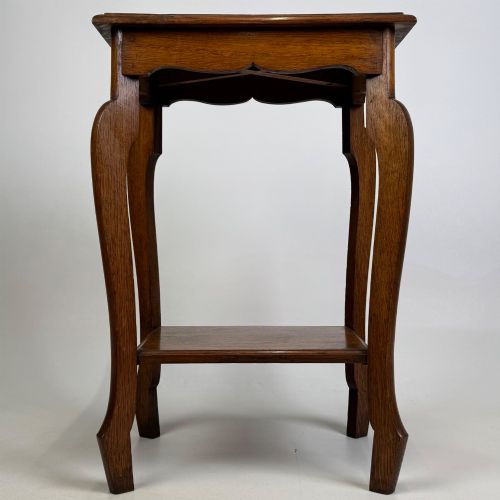
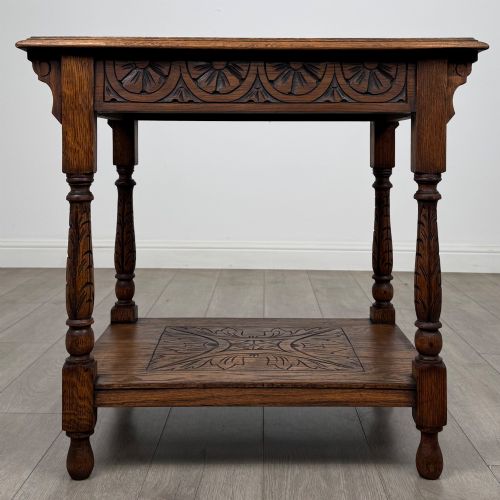
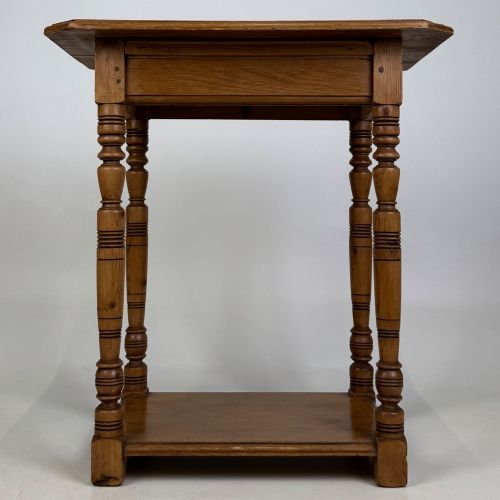
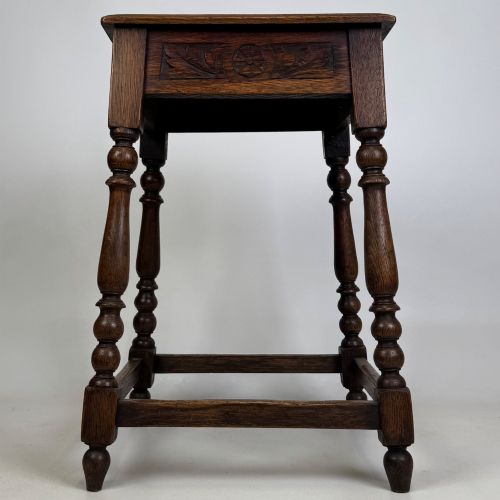
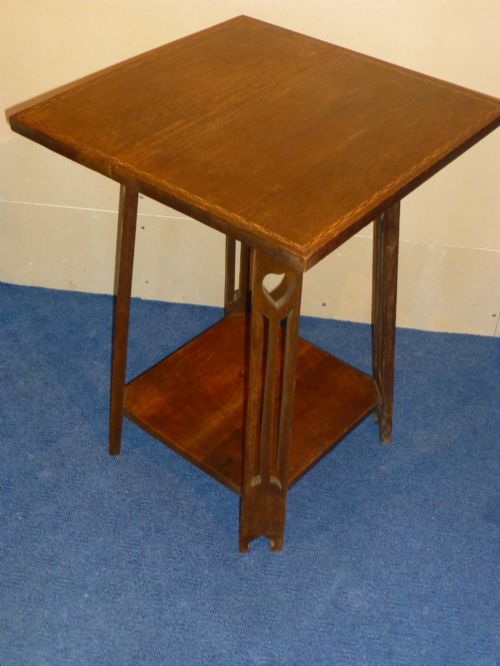
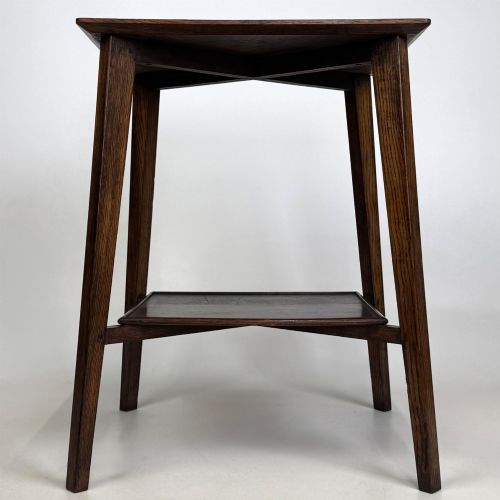
A brown oak plant stand provides an elevated surface for botanical displays within a room, utilising various forms from simple columns to multi-tiered tables. The selection ranges across the Victorian, Edwardian, and Art Deco periods, encompassing designs like the Arts and Crafts movement and Jacobean Revival.
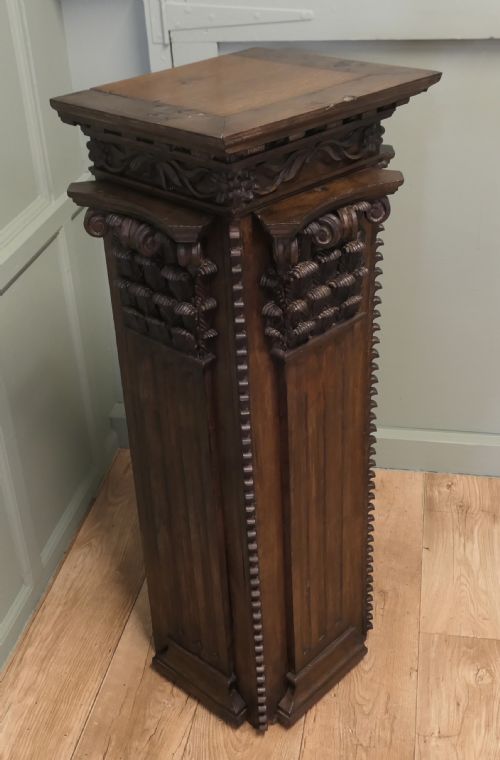
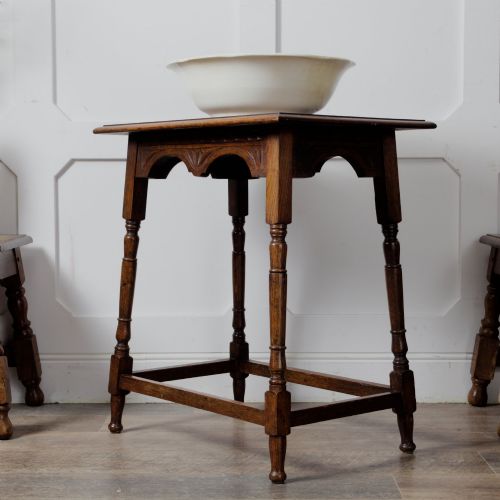
Buyers frequently encounter Edwardian and 19th-century examples fashioned as side tables, occasional tables, or pedestal columns. These items often double as lamp tables or small display pedestals, constructed primarily from oak with occasional ceramic tile or brass additions.
How they were made
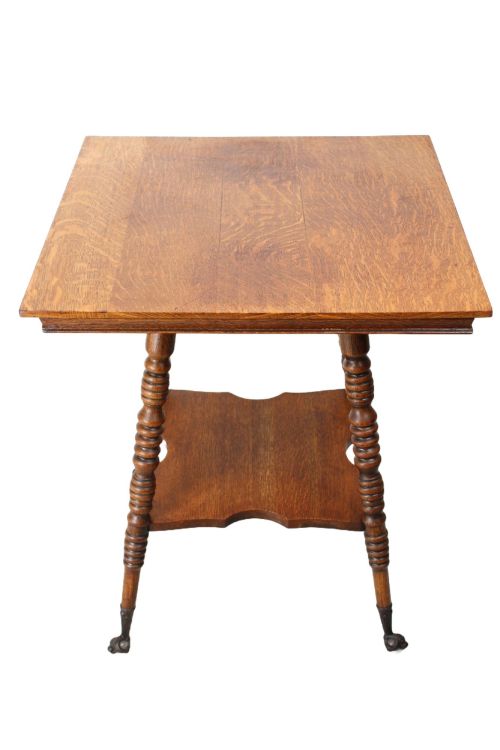
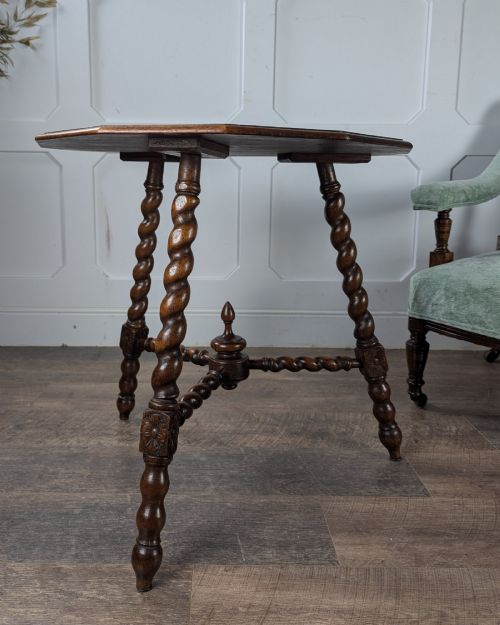
Maker construction relies heavily on solid oak and carved timber, utilising techniques such as barley twist turnings and jointed frames. Workshops applied wood inlay, chequered patterns, and specimen wood selections to decorate surfaces.
Selected pieces incorporate ceramic tiles featuring art nouveau designs or brass details alongside carved ornamentation. Limed finishes and triangular or clover-shaped tops demonstrate the variety of carpentry methods employed.
Listings span from the 18th century to the 1930s, featuring oak, ceramic tile, brass, and wood inlay across various side tables and pedestals.
What varies in quality
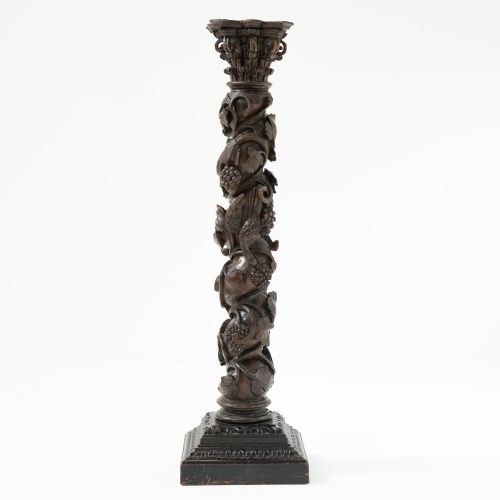
The standard of execution depends on the depth and crispness of the carved details, such as Solomonic columns or organic foliage motifs. Superior examples display precise joinery and well-integrated inlaid timber work rather than plain assembly.
Design attribution to specific movements, such as the Glasgow School or makers associated with Liberty and Co, influences the character of the piece. The choice of materials, including specialised ceramic tile inserts and balanced proportions, distinguishes finer specimens.
Liberty and Co·William Birch·Baillie Scott·Hubert Simpson of Kendal
The Brown Oak Plant Stand Glossary
- Arts and Crafts
- A design movement prioritising handcraftsmanship and simple forms. This style appears frequently across the oak plant stands on this page.
- Barley Twist
- A spiral wooden turning resembling twisted rope. Makers carved this shape into table legs and support columns.
- Solid Oak
- Timber cut entirely from the oak tree rather than veneered onto a secondary wood. It forms the primary structural material for these stands.
- Inlaid Timber
- Pieces of contrasting wood fitted flush into the surface to create decorative patterns. Chequered designs represent a common application of this technique.
- Pedestal Column
- A tall, narrow support structure designed to elevate objects or plants. Examples include carved wooden shafts and solomonic columns.
Brown Oak Plant Stand: Frequently Asked Questions
What periods do these plant stands come from?
The listings span the Victorian and Edwardian eras, extending into the 1920s and 1930s with Art Deco examples.
Most pieces date from the late 19th century through the early decades of the 20th century.
How were these stands used originally?
Households utilised them to display potted plants, lamps, and decorative objects in principal rooms.
Their compact footprints allowed them to sit in corners, beside seating, or in hallways.
What materials appear on these stands?
Oak forms the primary material, appearing as solid wood, carved oak, and limed oak.
Some pieces incorporate ceramic tiles, specimen wood inlay, and brass elements.
How do I identify an Arts and Crafts stand?
Arts and Crafts pieces show honest construction methods, straightforward forms, and occasional inlaid timber decoration.
They frequently feature unpretentious oak surfaces and geometric or naturalistic motifs.