
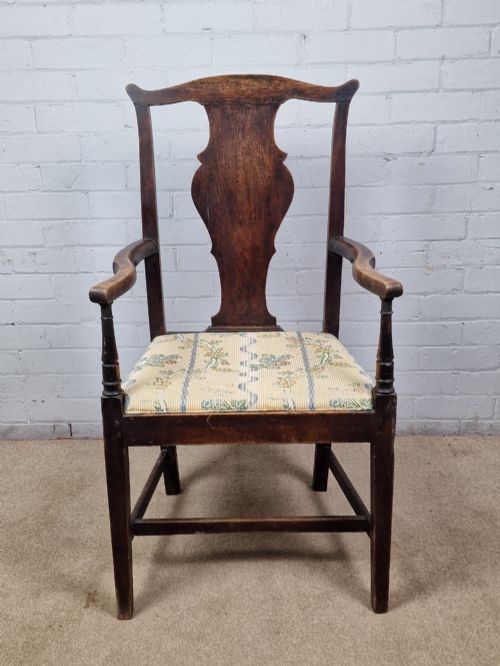
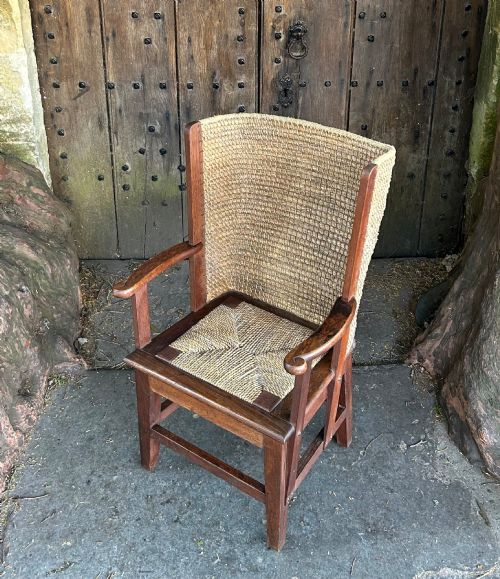
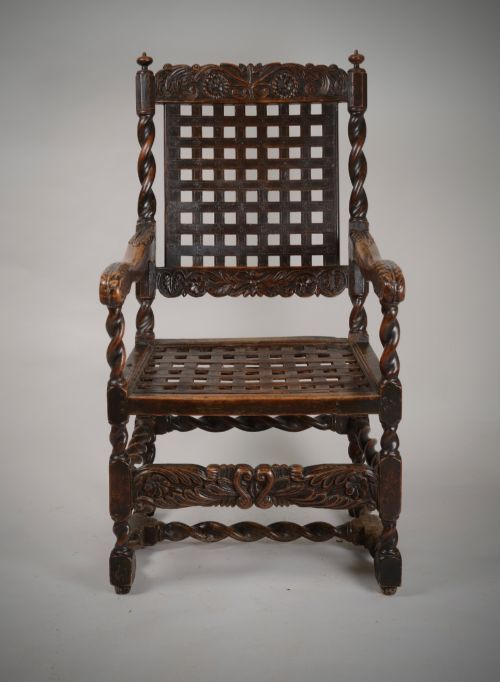
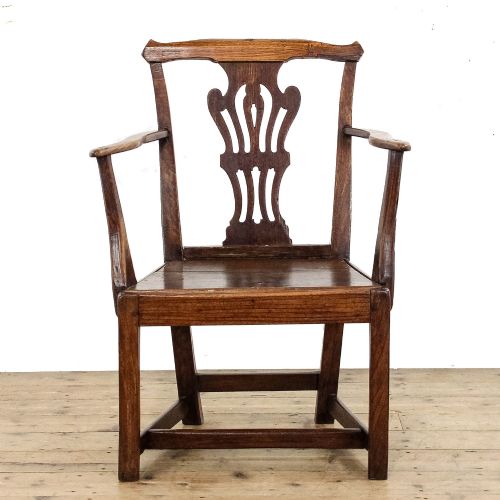
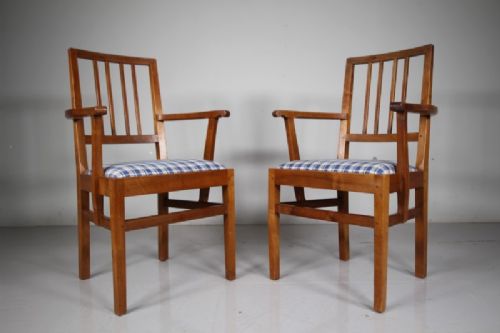
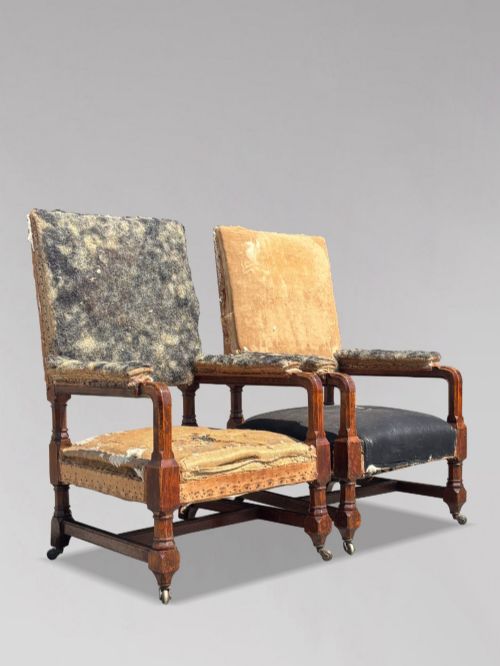
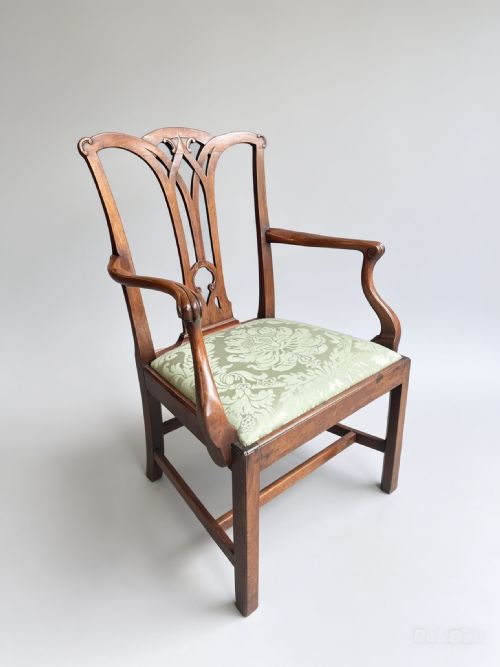
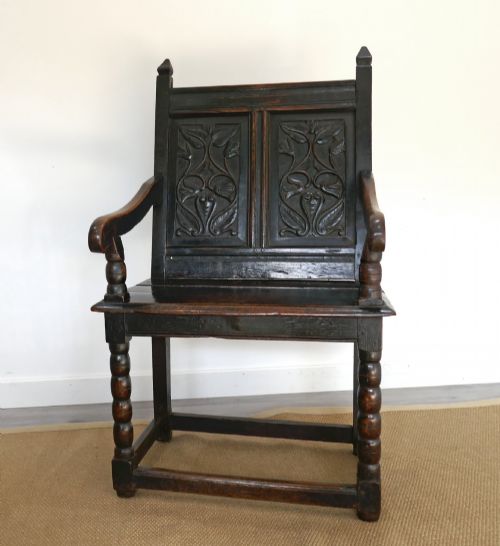




Brown Oak Open Armchair
A brown oak open armchair offers honest timber and sturdy joinery, grounding a room with centuries of practical craftsmanship.
Brown Oak Open Armchair
A brown oak open armchair brings together robust seating forms built from sturdy oak timber over several centuries. Buyers searching for a brown oak open armchair encounter heavy wainscot constructions alongside lighter spindleback and country designs.
The selection ranges from seventeenth-century provincial pieces to later revival pieces and twentieth-century studio designs. Dining chairs and desk chairs also appear alongside larger master armchairs.
Regional variations span English country workshops, Welsh origins, and Lancashire or Cheshire regional forms. These seating pieces served domestic and functional roles in historic interiors.
What varies in quality
The integrity of the timber frame and the depth of surface patination set examples apart. Crispness in hand-carved ornamentation and original joinery without excessive modern intervention dictate the standing of a piece.
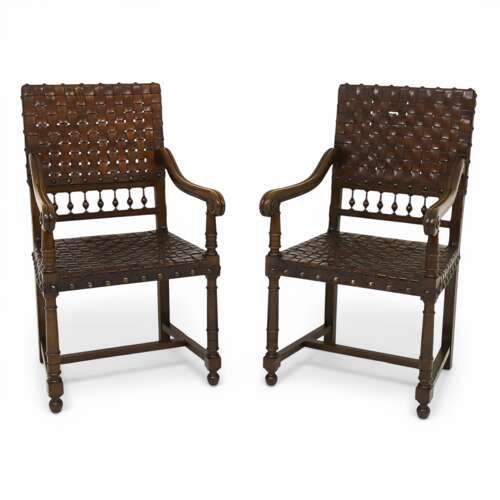
The survival of original supporting elements, such as woven leather seats or rush squabs, distinguishes finer survivals from heavily altered examples.
Listings span periods from the 17th century through the Georgian era to 1930, utilising oak alongside leather, rush, and velvet.
Edward Barnsley·Dicon Nance·St Ives Studio·James Shoolbred·Bruce James Talbert·Gillows
The Brown Oak Open Armchair Glossary
- Wainscot
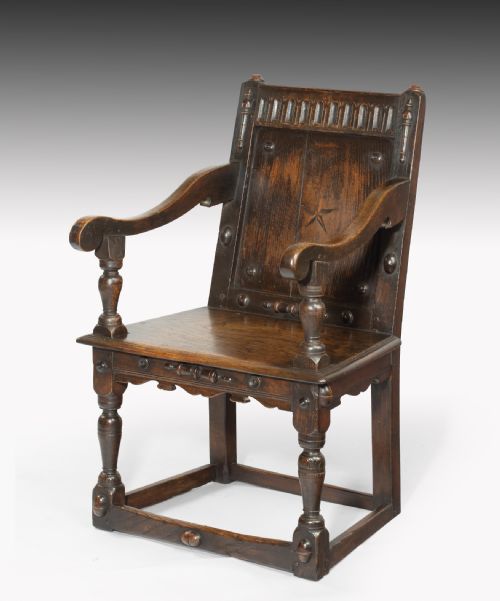
- A heavy wooden armchair dating predominantly to the seventeenth century, featuring panelled backs and solid armrests. These pieces originated in prosperous vernacular households.
- Bobbin turned
- A method of turning wood on a lathe to create a series of rounded, spool-like shapes along stretcher bars or legs. This decorative turning is typical of seventeenth and nineteenth-century styles.
- Bergere
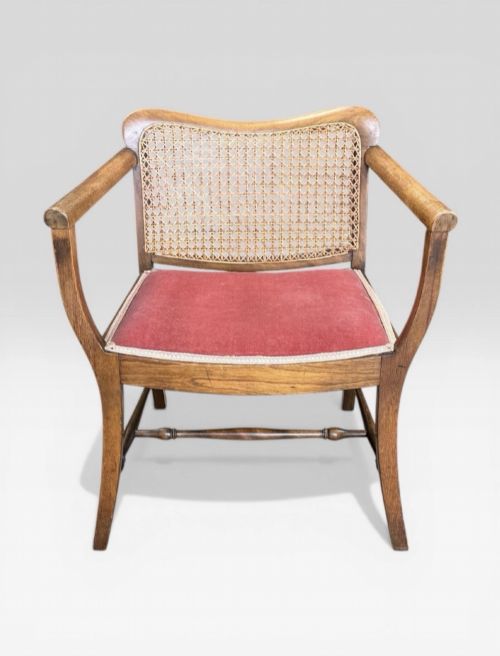
- An enclosed or open upholstered armchair with a cane or wicker panelled back and sides. Such seats often include loose squab cushions for comfort.
- Spindleback
- A chair style characterised by thin, turned vertical wooden rods fitted into the back rail. This lighter construction became common in country and vernacular furniture.
- Shepherds crook
- An armchair featuring curved, continuous wooden armrests resembling a traditional shepherd staff. These functional seats often provided shelter from draughts in country dwellings.
Brown Oak Open Armchair: Frequently Asked Questions
What is a wainscot chair?
A wainscot chair is a heavy wooden armchair built with panelled backs, solid arms, and a timber seat. These pieces date largely to the seventeenth century and reflect vernacular joinery traditions.
Such chairs served as principal seats of authority within households before lighter upholstered seating became widespread.
How do I identify seventeenth century oak?
Seventeenth-century oak displays dense grain patterns, darker patination accumulated through age, and traditional pegged joinery. Tool marks and hand-planed surfaces often remain visible on the underside and back panels.
Later revival pieces attempt to mimic these characteristics but typically reveal machine-cut marks or modern fixings upon closer inspection.
Were these chairs used at desks?
Certain oak armchairs served specific desk or writing functions, particularly larger desk chairs produced during the nineteenth century. These forms offered sturdy support for reading and administrative tasks.
Lower seating heights and open arms allowed users to manoeuvre comfortably around writing surfaces and tables.
How do I care for leather seats?
Leather seat panels require gentle cleaning with a soft, dry cloth and occasional treatment with appropriate conservation balms to prevent drying. Avoiding direct sunlight and excessive heat preserves the natural hide.
Keeping the underlying wooden frame clean helps maintain the overall stability of the armchair.