

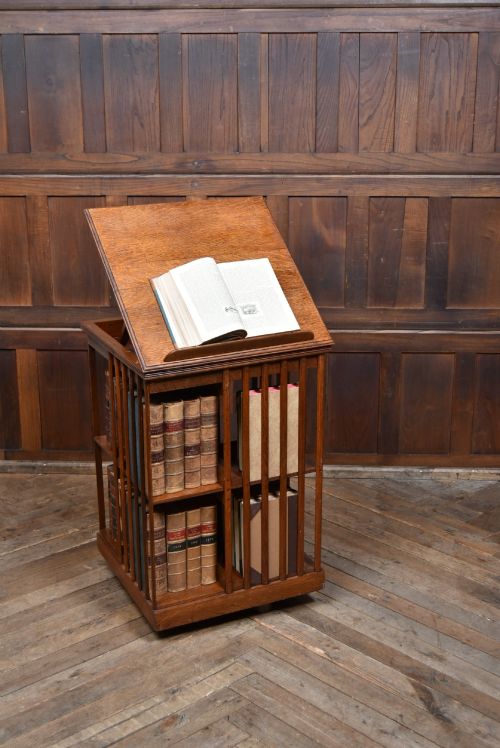
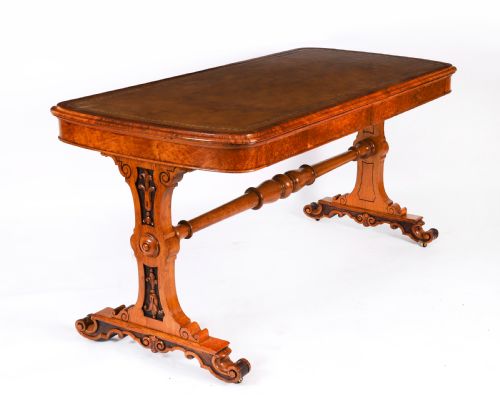
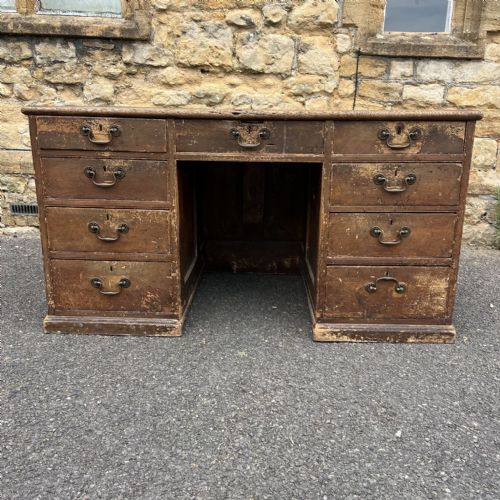
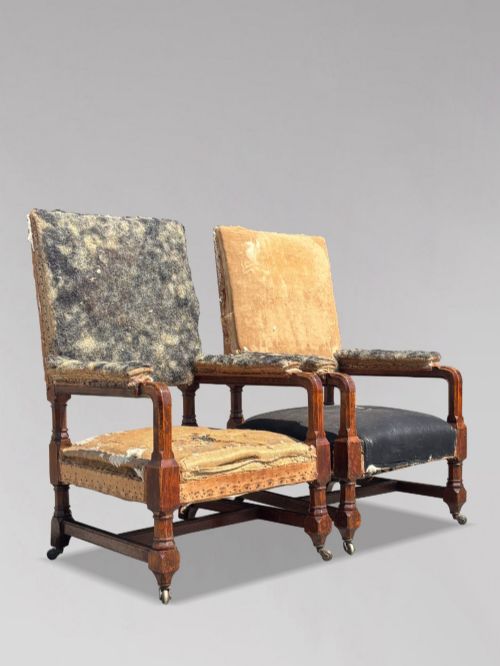
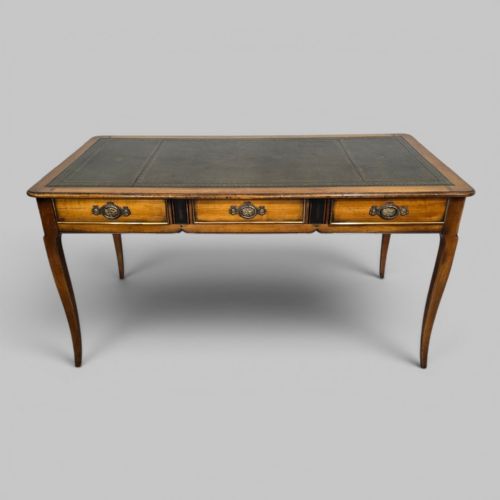
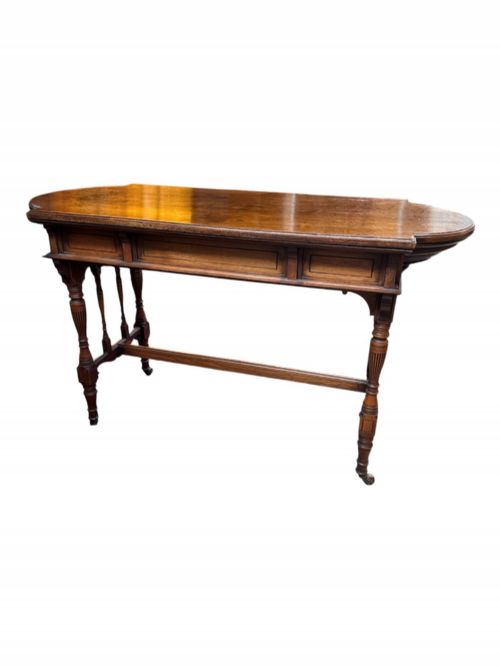
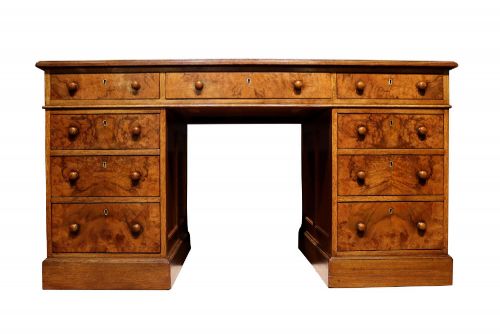
Brown Oak Library Desk
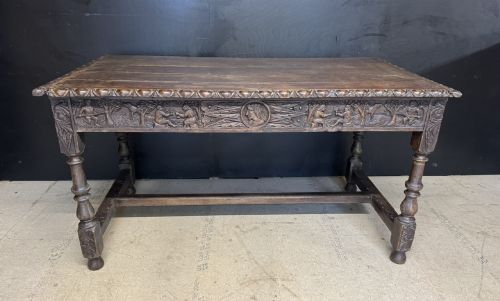
A brown oak library desk brings rich grain and solid proportions to a study, offering a robust workspace rooted in nineteenth and early twentieth century craftsmanship.
Brown Oak Library Desk
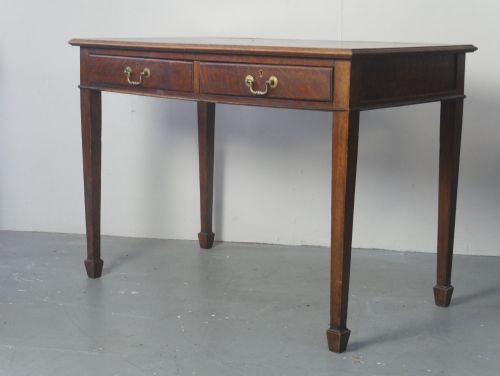
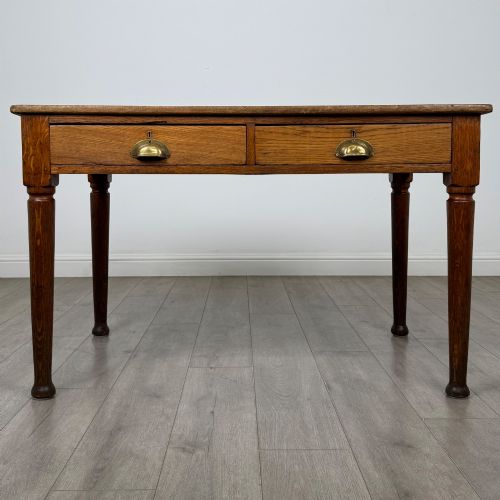
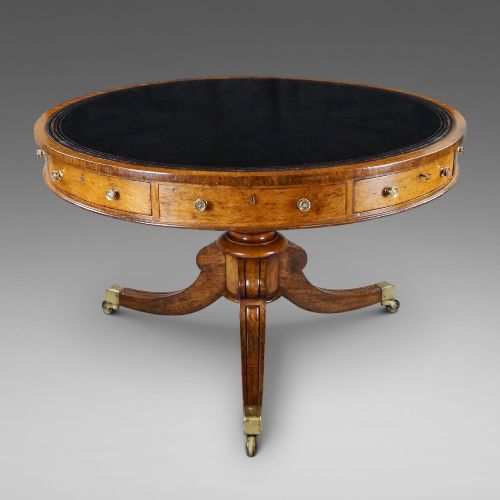
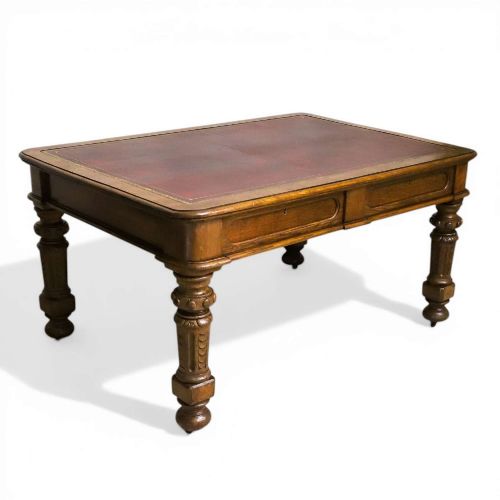
A brown oak library desk represents a sturdy staple of nineteenth and early twentieth century study furniture, encompassing pedestal forms, partners desks, and writing tables. When searching for a brown oak library desk, buyers encounter robust timbers shaped during the Victorian, Edwardian, and Regency periods.
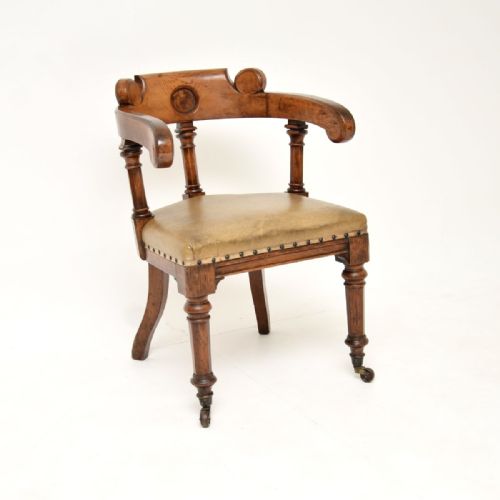
The pieces on this page span writing tables, pedestal desks, and partners desks, frequently accompanied by matching armchairs and swivel chairs. These items originate from workshops utilising heavy oak timber, often enhanced by decorative carving or specialised finishes.
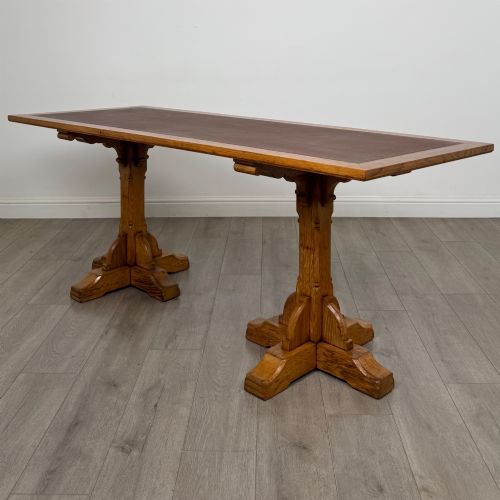
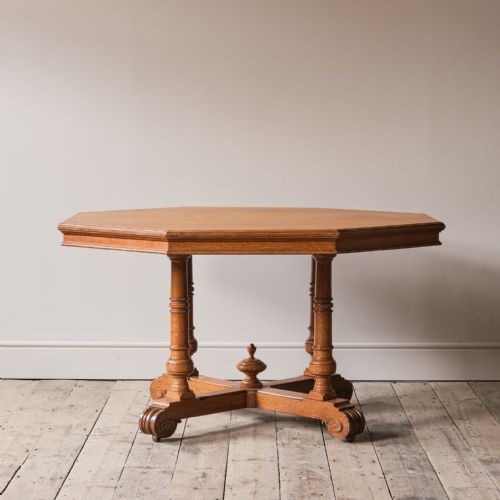
Victorian and Edwardian examples dominate the selection, showing distinct revival styles including Gothic, Jacobean, and Arts and Crafts influences. Each brown oak library desk reflects the functional demands of historic libraries and studies through fitted drawers and expansive writing surfaces.
Distinctions in craftsmanship and condition
Quality separates through the depth of timber figure, such as pollard or burr grain, and the crispness of hand-carved details like lions' heads or Gothic tracery. Finer examples display meticulous attention to joint construction and balanced proportions across large partners desks.
The integrity of the original leather writing surface and the matching quality of associated desk chairs influence the overall standard of a piece. Maker attributions, such as Gillows or T Wilson, elevate a brown oak library desk through documented construction and superior hardware.
Listings feature oak, pollard oak, burr oak, and mahogany alongside leather, brass, and metal across Victorian, Edwardian, and Regency periods.
Gillows·Gillow and Co·Bruce James Talbert·T Wilson
The Brown Oak Library Desk Glossary
- Partners desk
- A large double-sided desk designed for two people to work opposite one another, featuring drawers on both faces.
- Pedestal desk
- A heavy freestanding desk supported by two banks of drawers rather than simple legs.
- Pollard oak
- Oak timber harvested from trees that were pollarded, yielding a densely knotted and rippled grain pattern highly prized for decorative veneers.
- Smokers bow
- A nineteenth century low-backed Windsor armchair often used at desks, featuring a curved captain's rail.
- Gothic Revival
- An architectural and decorative style popular in the nineteenth century featuring pointed arches, tracery, and heavy carving.
Brown Oak Library Desk: Frequently Asked Questions
What is a brown oak library desk?
A brown oak library desk is a heavy nineteenth or early twentieth century writing table or pedestal desk made from figured oak timber. These pieces were built for studies and libraries, offering substantial workspace and functional drawers.
They appear in various revival styles, including Gothic and Arts and Crafts, reflecting the heavy proportions and architectural details popular during the Victorian and Edwardian eras.
How do I date a library desk?
Dating relies on architectural style, construction techniques, and materials recorded in the piece. Victorian and Edwardian examples often feature specific revival motifs, while Regency pieces show cleaner lines and pollard oak veneers.
Examining internal drawer construction, secondary woods like pine, and hardware styles helps narrow the period of manufacture between the early nineteenth and early twentieth centuries.
What is a partners desk?
A partners desk is a large double-sided desk built with drawers and cupboards accessible from both the front and the back. This configuration allowed two people to work face-to-face in a shared library or office setting.
These imposing pieces typically rest on twin pedestals and represent some of the most substantial writing furniture produced in the nineteenth century.
How do I care for antique oak furniture?
Caring for antique oak involves keeping the timber away from direct heat sources and sudden humidity changes to prevent splitting. Regular dusting with a dry cloth maintains the finish without building up heavy wax residues.
Leather writing surfaces benefit from specialised leather dressings applied sparingly to keep the material supple and prevent cracking over time.