



Brown Oak Cricket Table
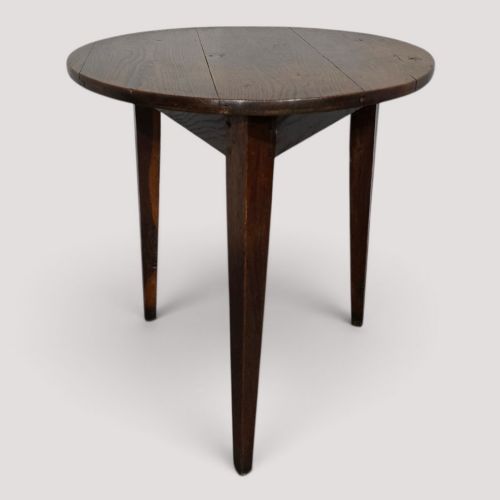
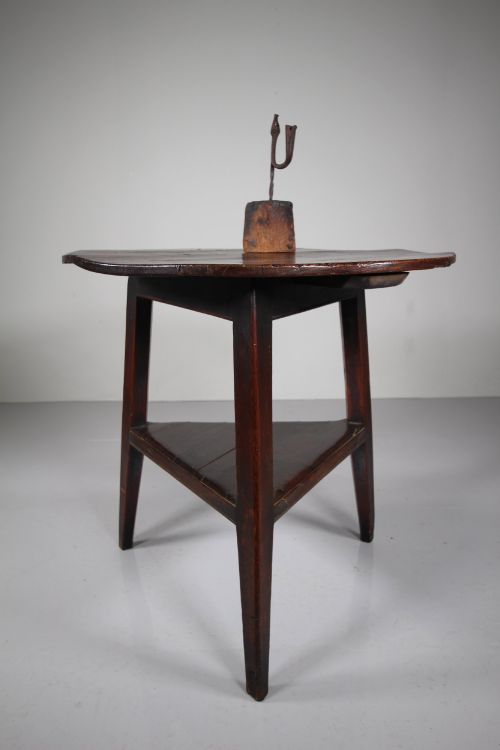
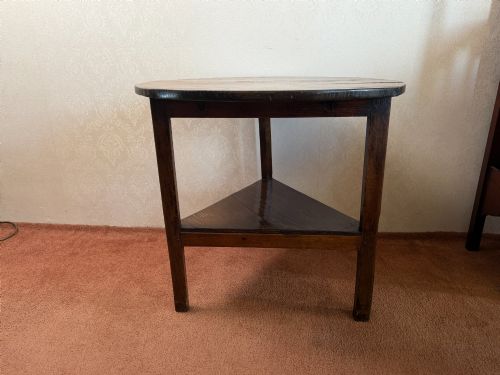
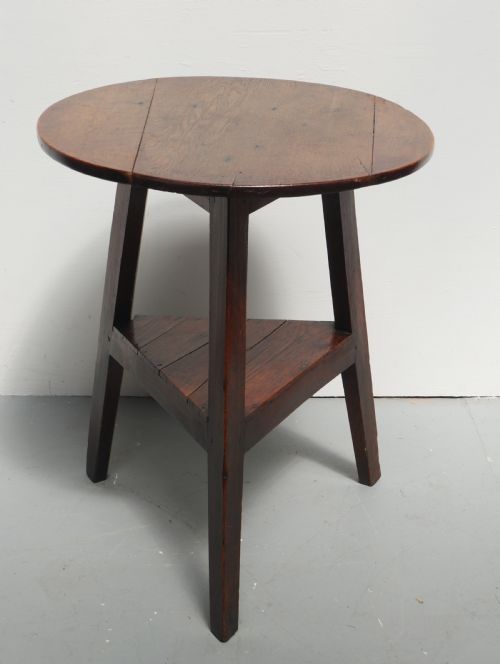
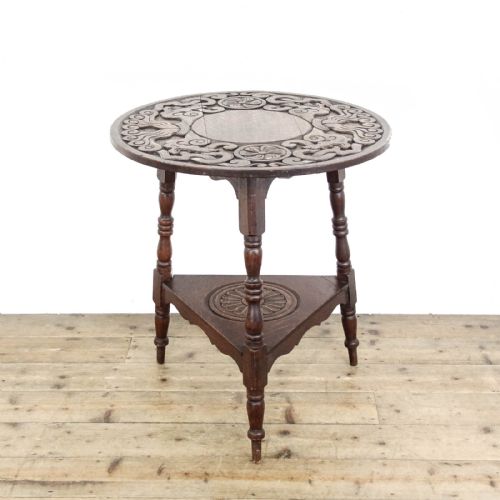
A brown oak cricket table brings sturdy, three-legged vernacular utility into a room with genuine antique character.
Brown Oak Cricket Table
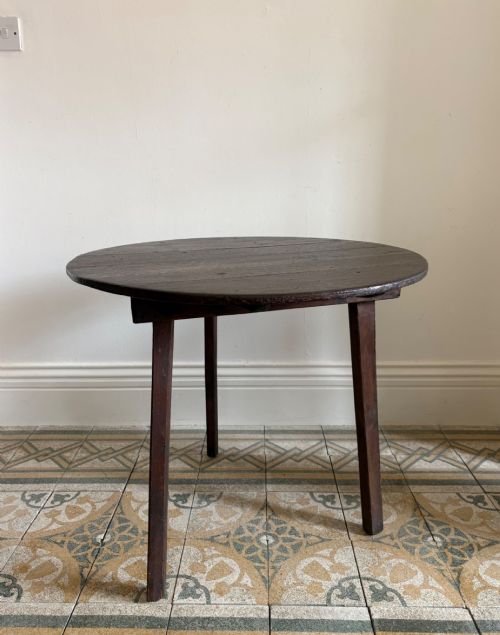
A brown oak cricket table provides a compact, circular surface supported by three splayed legs designed for stability on uneven floors. These tables emerge primarily from eighteenth and nineteenth-century English and Welsh vernacular traditions, utilising local timber to meet everyday domestic needs.
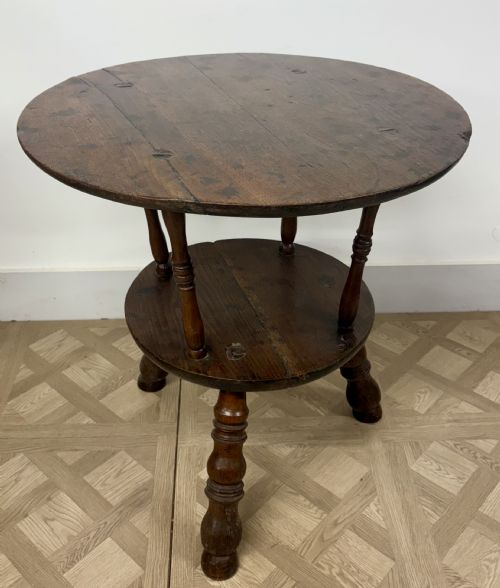
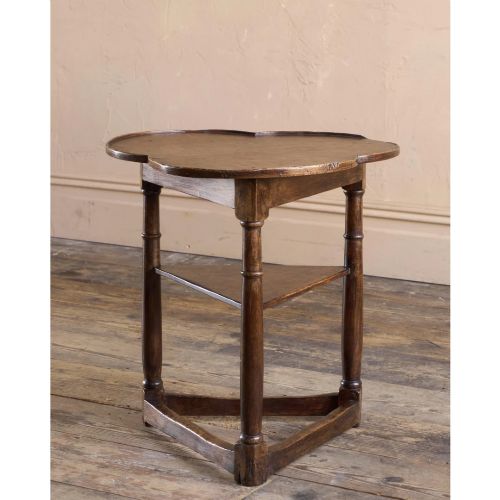
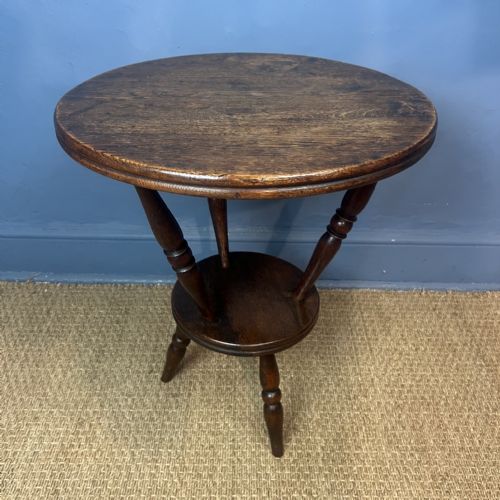
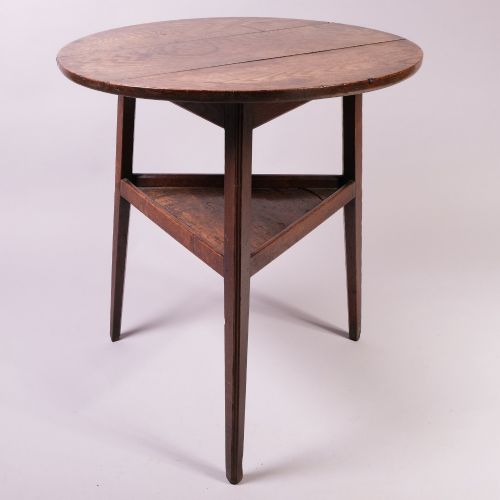
Most examples encountered here date from the Georgian period and the eighteenth century, featuring plank tops, sometimes with additional lower tiers for storage. Regional variations appear in shapes such as trefoil or octagonal designs, alongside occasional hybrids incorporating ash, elm, or pine.
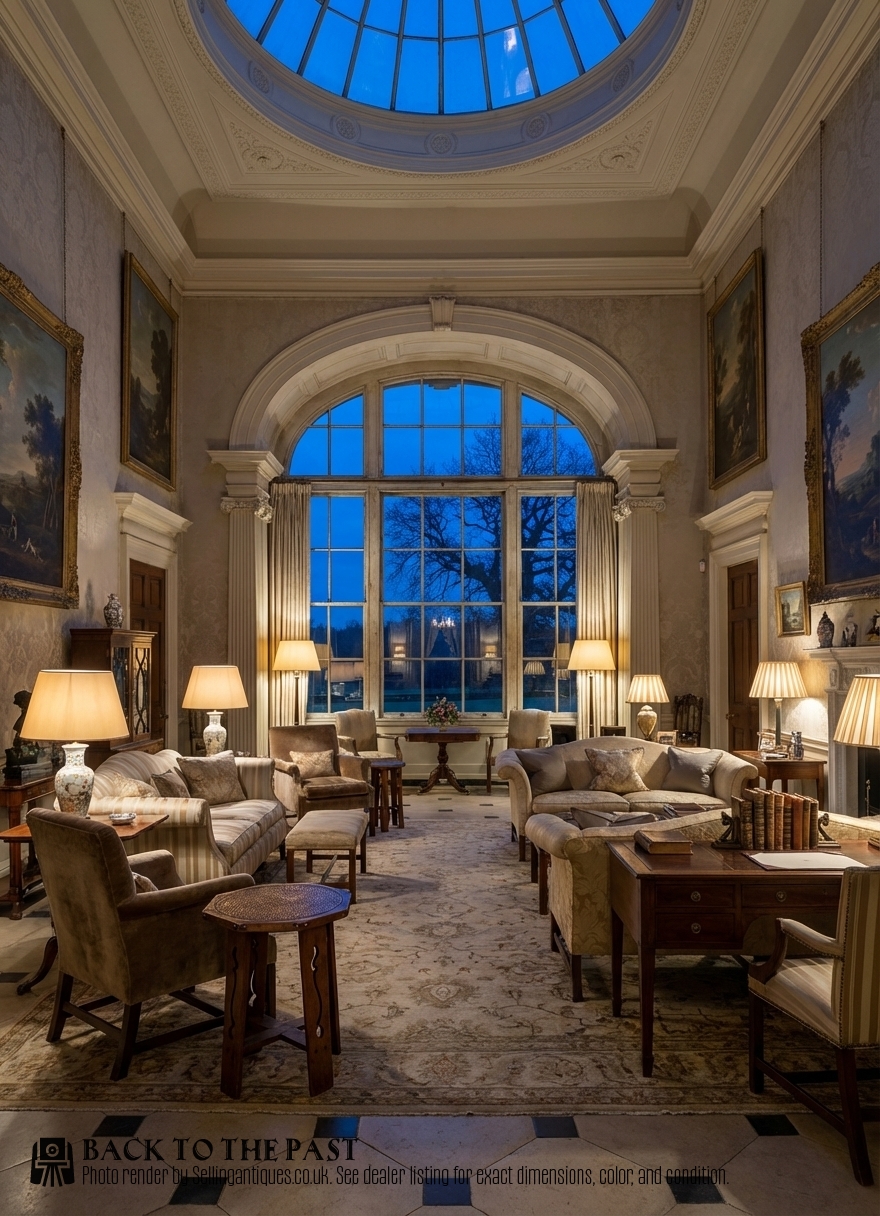
The form suits modern interiors as an occasional or side table, offering rustic presence without dominating a space. Buyers select these pieces for their honest construction and the rich patination built up over centuries of daily use.
Materials and construction methods
Makers relied on native hardwoods, predominantly oak, supplemented by ash, elm, and fruitwood for legs and structural supports. Tops were fashioned from thick timber planks, joined securely to withstand heavy household demands.
Joinery techniques prioritised simple durability, often utilising through-tenons and pegging to anchor the three splayed legs firmly into the underside of the top. Secondary timbers such as pine occasionally appear in the base construction of later nineteenth-century pieces.
Certain tables feature ingenious two-tier designs, proving that historic carpenters loved extra shelf space just as much as we do.
Distinguishing quality in vernacular tables
Quality rests in the integrity of the timber and the balance of the proportions, particularly the degree and symmetry of the leg splay. Tables retaining their original surface patination and uncompromised structural joints stand apart from heavily restored examples.
The Brown Oak Cricket Table Glossary
- Cricket table
- A small, three-legged circular table of traditional English or Welsh origin. The three legs ensure stability on flagstone floors.
- Vernacular
- Everyday furniture built by local craftsmen using regional styles and native materials rather than adhering to formal London fashions.
- Trefoil top
- A table surface shaped with three lobes or rounded points, echoing the clover leaf form. This geometry appears on specific eighteenth-century examples.
- Patina
- The deep sheen and surface warmth acquired by timber through decades of handling, polishing, and natural ageing.
- Splayed legs
- Legs angled outwards from the centre to provide a wider, more stable base. This is a defining structural feature of the form.
Brown Oak Cricket Table: Frequently Asked Questions
What is a cricket table used for?
These pieces functioned as versatile small tables for eating, writing, or holding household items beside a hearth.
Today they serve effectively as side tables, lamp stands, or display surfaces in living spaces.
Why are they called cricket tables?
The name derives from the three splayed legs resembling the traditional three-legged milking stool or perhaps the wickets of the game.
Historical records link the term to simple, three-legged domestic tables common in English households.
How do I date an old cricket table?
Dating relies on assessing tool marks, timber shrinkage, construction joints, and the depth of the surface patination.
Eighteenth-century versions typically display hand-sawn plank tops and pegged joints, whereas nineteenth-century examples may incorporate machine-cut elements or secondary woods like pine.
Are all cricket tables made of oak?
While oak remains the primary timber, makers utilised whatever native wood was locally available.
Listings frequently feature ash, elm, fruitwood, and pine alongside oak, often mixed within the same table.