

Brown Nightstand Cabinet
These brown nightstand cabinet pieces are compact bedside storage items that bring practical timber warmth and period character to a bedroom.
Brown Nightstand Cabinet
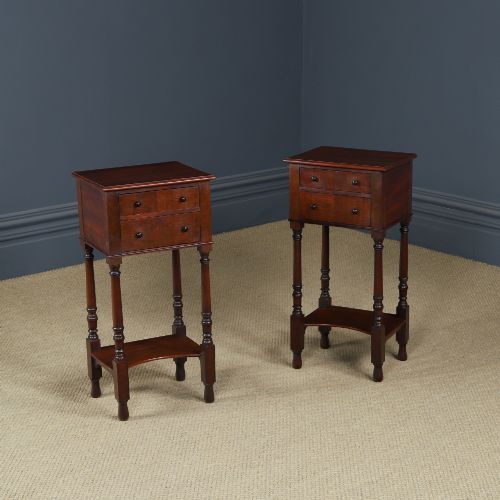
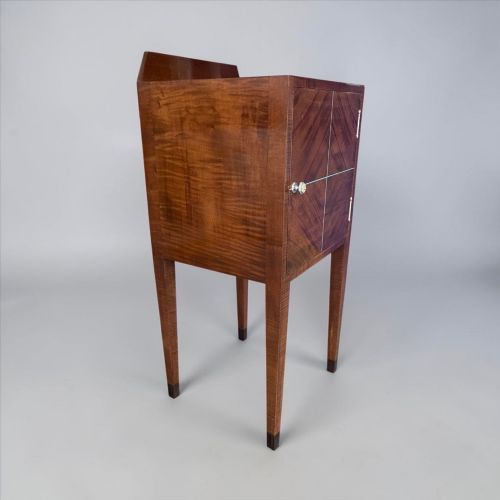
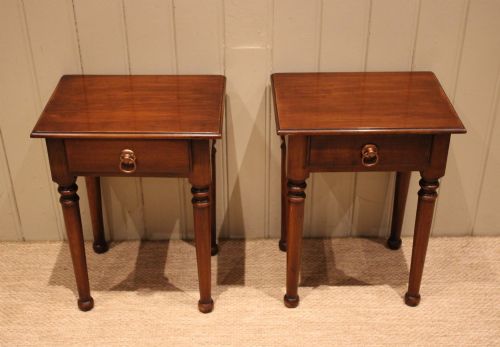
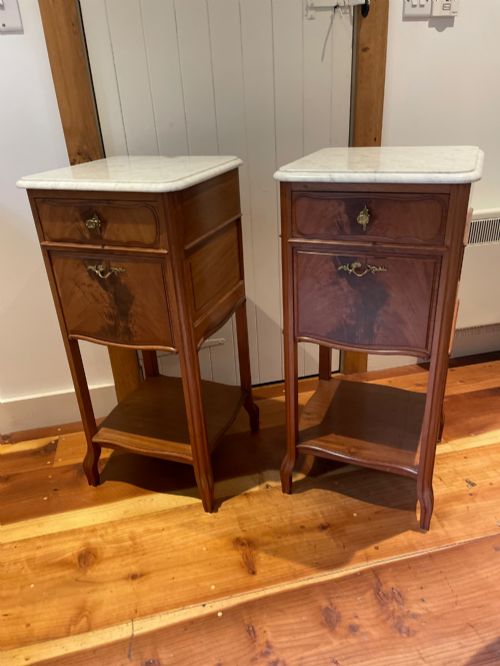
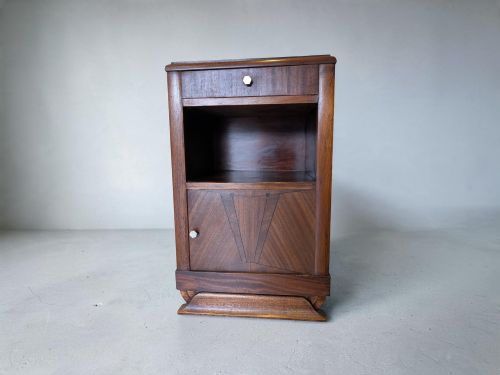
A brown nightstand cabinet serves as a bedside storage unit, holding nighttime essentials behind closed doors or within drawers while anchoring the bedroom layout. The pieces seen here span from the Georgian period through the Victorian and Edwardian eras up to the 1930s, encompassing bedside tables, bedside cabinets, and bedside chests.
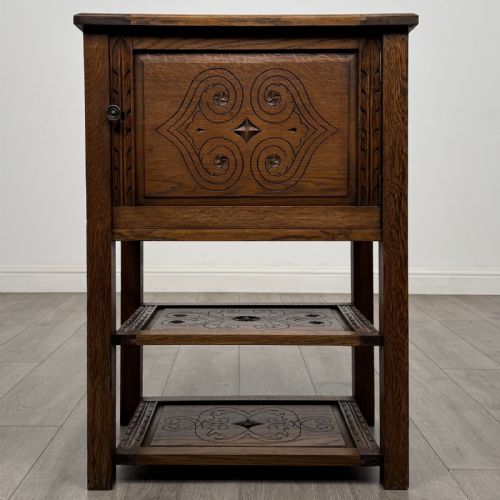
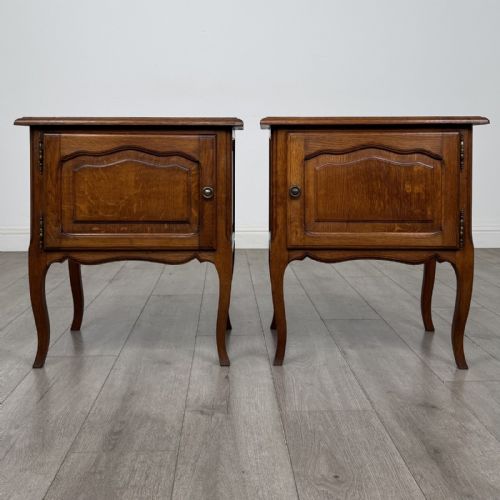
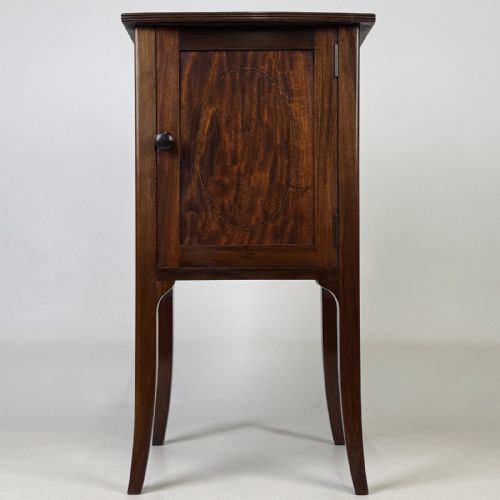
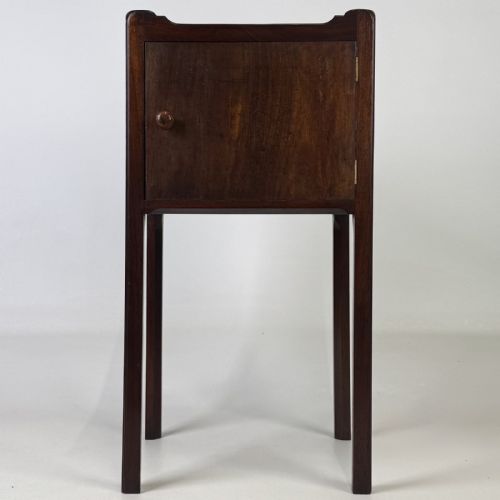
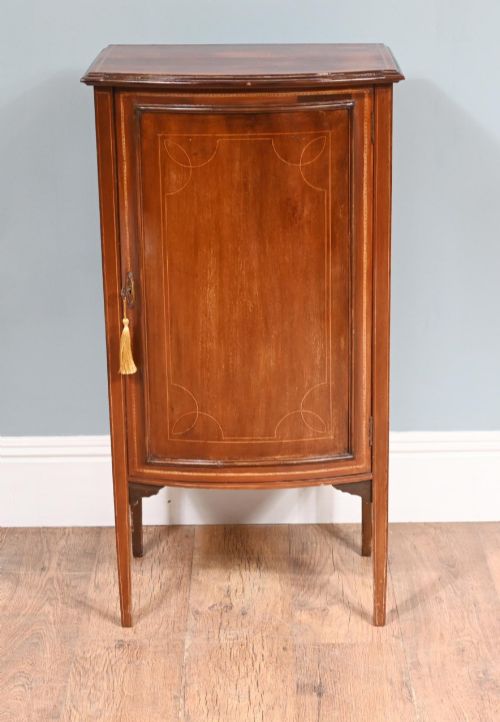
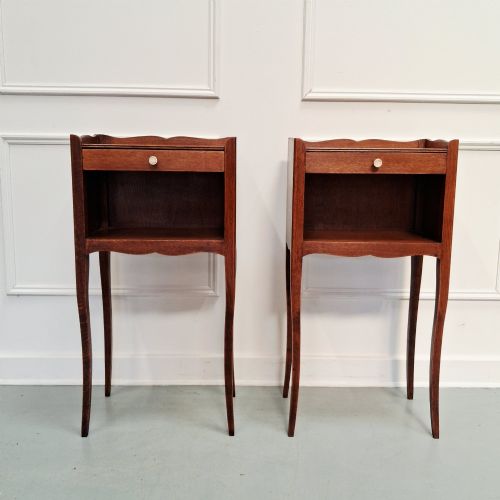
The version most commonly met on this page is the nineteenth-century or Edwardian mahogany bedside cupboard, often built with a single door or small drawers. Alongside these sit French cherry and oak variants from around nineteen-thirty, as well as Georgian tray top pot cupboards and occasional tables.
Makers and designers referenced in the broader group include specific attribution to the manner of Gillows alongside various regional cabinet makers working in mahogany, walnut, and oak. These forms range from simple utilitarian pot cupboards to elaborate marquetry-inlaid pairs designed for formal bedrooms.
Materials and construction methods
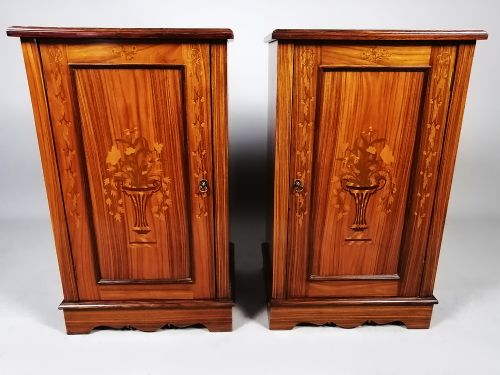
Solid timbers such as mahogany, oak, walnut, and rosewood form the structural core of these cabinets, frequently paired with wood veneers including flame mahogany and kingwood. Cabinet makers utilised traditional joinery techniques, dovetailing drawer boxes and applying intricate marquetry or inlay work for decorative effect on door panels and tops.
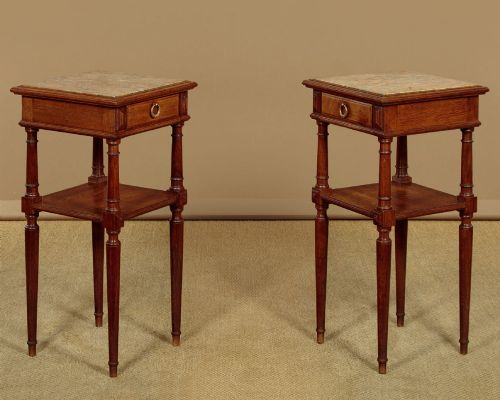
Selected pieces incorporate contrasting brass hardware, handles, and hinges, while French and Victorian variants frequently feature fitted marble tops designed to handle heavy daily use. The application of French polish or natural wax finishes enhances the rich brown tones and grain patterns inherent in the hardwoods.
Brown Nightstand Cabinet Retail Price Guide 2026
Typical asking prices for brown nightstand cabinet among the pieces listed under this phrase on Sellingantiques today, from the lower quarter to the upper quarter. They describe what is for sale here now, not the wider market.
Listings span multiple eras from the Georgian period to nineteen-thirty, uniting mahogany, oak, and walnut across various bedside cabinet forms.
Distinguishing quality across periods
Quality in a brown nightstand cabinet rests primarily on the selection of timber, the precision of the joinery, and the integrity of the original surfaces. Superior examples display carefully matched veneer grains, tight dovetail joints, and substantial timber thickness rather than thin secondary woods.
Gillows
The Brown Nightstand Cabinet Glossary
- Pot cupboard
- A small bedside cabinet originally designed to house a chamber pot behind a single door. These pieces often feature enclosed upper compartments and served as standard bedroom furniture before indoor plumbing.
- Tray top
- A raised rim surrounding the upper surface of a table or cabinet. This design prevents small items from rolling off the edge.
- Marquetry
- The art of applying decorative veneer pieces to a structure to form geometric or pictorial designs. Cabinet makers used contrasting coloured woods to achieve intricate patterns.
- Burr walnut
- Timber harvested from the distorted growth growths of a walnut tree, yielding highly figured grain patterns. It provides a decorative surface on Victorian bedside chests.
- Bow front
- A convex, curved cabinet front that projects outward in an arc. This style became popular during the Georgian and Edwardian periods to soften room angles.
Brown Nightstand Cabinet: Frequently Asked Questions
What is a brown nightstand cabinet used for?
These cabinets provide bedside storage for lamps, books, and personal items while concealing private utility behind small doors or drawers.
Their compact footprints make them suitable as side tables or lamp stands in sitting rooms as well as bedrooms.
How do I identify a Georgian nightstand?
Georgian pieces typically feature solid mahogany construction, restrained classical proportions, and occasionally tray tops designed to contain spills.
They rely on clean joinery and subtle wood grain rather than heavy applied decoration.
Are these cabinets sold as pairs?
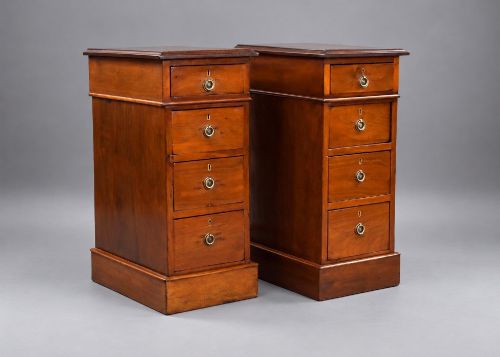
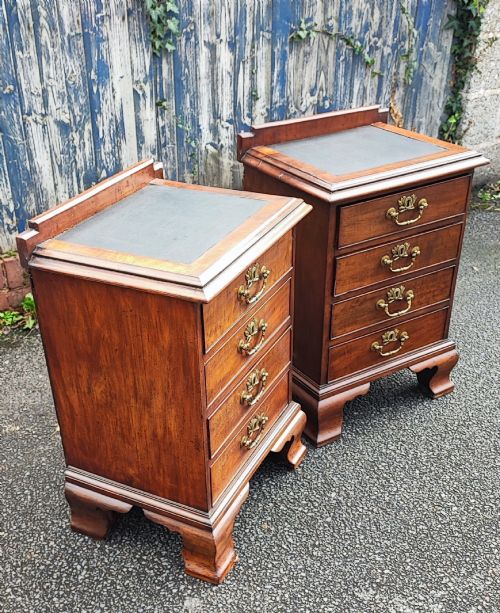
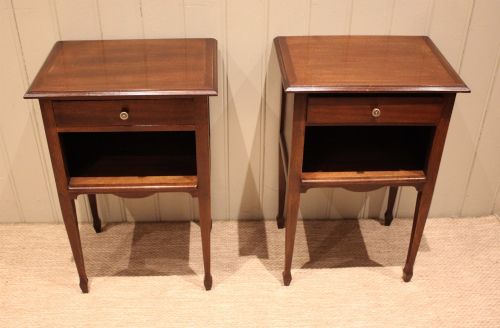
Many listings on this page consist of matched or identical pairs intended to flank a bed symmetrically.
Single cabinets also appear frequently for tighter spaces or eclectic room arrangements.
What maintenance do wood veneers require?
Polished wood surfaces benefit from occasional light waxing and protection from direct sunlight and excessive moisture.
Keeping marble tops clean and dry preserves the surrounding timber framework.