
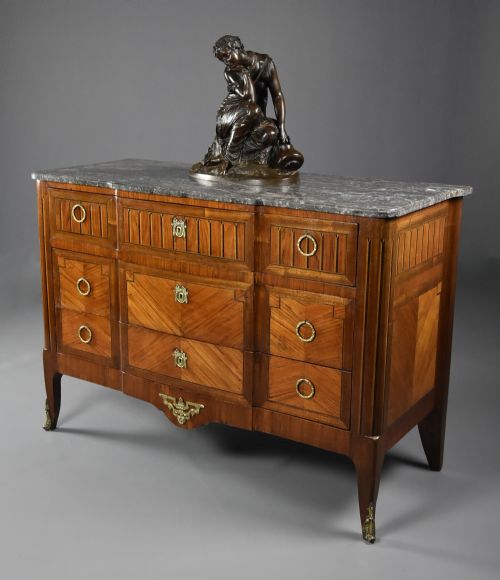


Brown Marble Sideboard
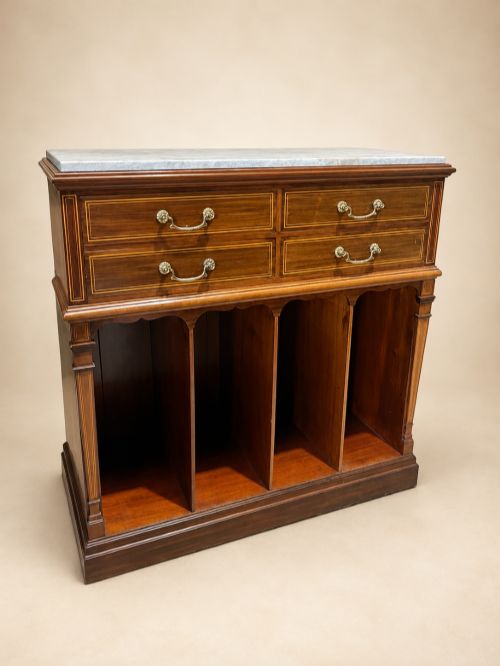
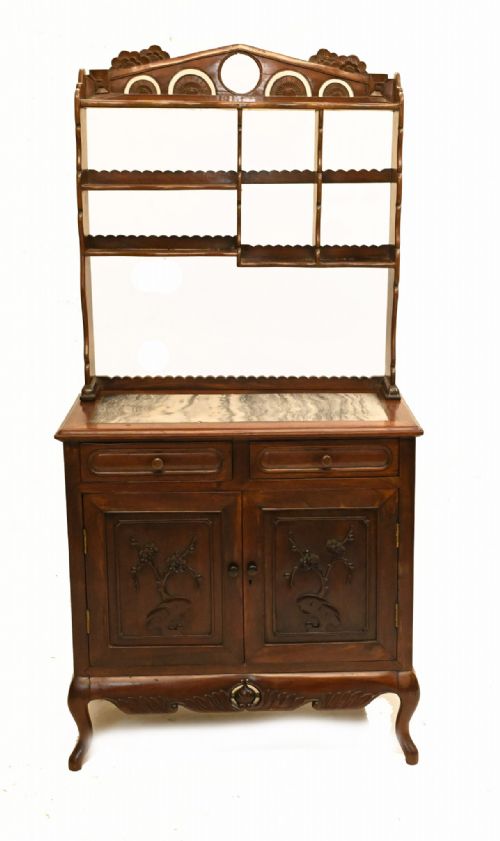
A brown marble sideboard brings solid stone counters and rich timber storage together, offering a durable surface suited to dining rooms and hallways.
Brown Marble Sideboard
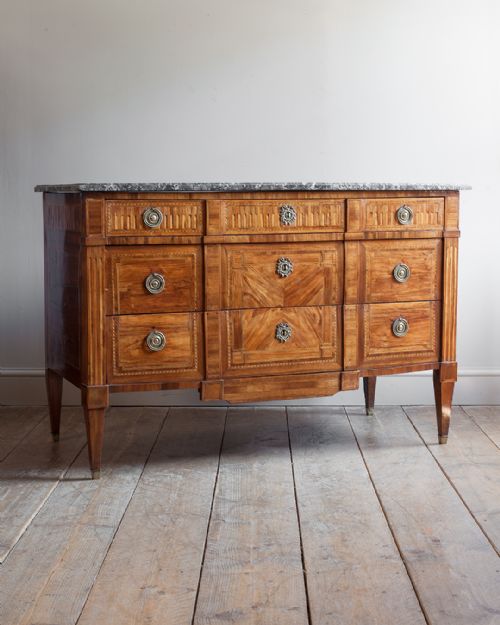
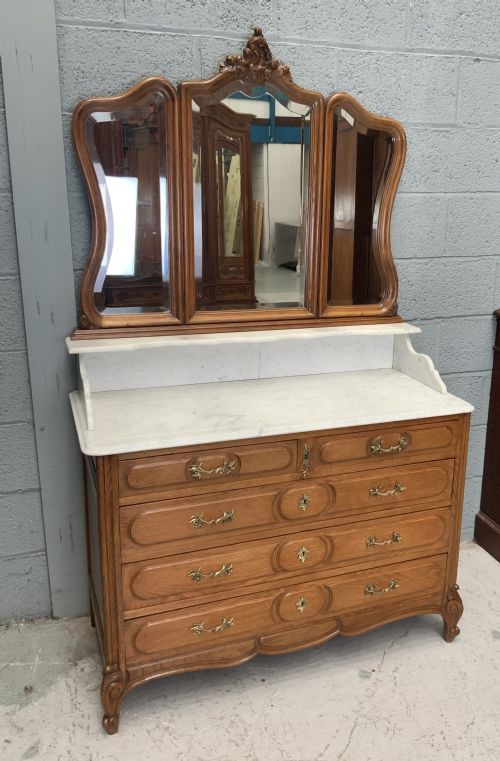
A brown marble sideboard combines heavy stone tops with wooden carcases, spanning periods from the eighteenth century through the Art Deco era. The selection draws heavily on continental workshops, particularly French commodes, sideboards, and washstands featuring fitted marble slabs.
Makers utilised woods such as mahogany, walnut, kingwood, and oak for the main body of the furniture. These items range from formal Louis XVI styles to simpler Arts and Crafts or Edwardian washstands.
Buyers encounter serpentine fronts, breakfront layouts, and straightforward rectangular cabinets. Each piece merges functional storage cupboards or drawers with a cool, polished stone upper surface.
How they were made
Cabinet makers constructed the frames using native and exotic timbers, frequently applying veneers of kingwood, tulipwood, or walnut over sturdy oak or pine carcases. Marquetry and inlay techniques added geometric or floral patterns to drawer fronts and side panels.
The heavy marble slabs were cut, shaped to follow the contours of the wooden top, and polished by hand to a smooth finish. Brass, ormolu, and bronze mounts often secured corners, framing keyholes and structural joints.
One unexpected display cabinet carries hand-painted vineyard signs for Chateauneuf-du-Pape, ready for a wine enthusiast.
What varies in quality
The distinction between standard items and exceptional examples lies in the precision of the timber marquetry and the choice of stone. Superior pieces feature tightly figured veneers, seamless grain matching, and well-fitted marble tops with complex edge profiling.
Hand-chased ormolu mounts and original brass hardware elevate a cabinet above simpler production pieces. The interior construction, including hand-cut dovetails in the drawers, signals the level of joinery skill applied.
Gillows·Germain Landrin·Alexandre Kelety
The Brown Marble Sideboard Glossary
- Commode
- A low chest of drawers or cabinet, often fitted with a marble top and associated with French design traditions.
- Ormolu
- Gilded bronze used for decorative mounts and feet on high-status furniture of the eighteenth and nineteenth centuries.
- Marquetry
- The art of applying pieces of veneer to a structure to form decorative patterns and pictures.
- Serpentine
- A curved furniture front characterised by a convex centre flanked by concave ends.
- Kingwood
- A dense, heavily figured timber utilised for fine cabinetmaking and decorative veneers.
Brown Marble Sideboard: Frequently Asked Questions
How do I clean a brown marble top?
Wipe the surface regularly with a soft damp cloth using plain warm water. Avoid acidic cleaners or vinegar, which etch polished stone.
Dry the marble thoroughly afterwards to prevent water spotting. Apply a specialised stone sealer periodically to protect against stains.
Can I use a washstand as a sideboard?
Many antique washstands share similar dimensions with smaller sideboards and serve well in dining spaces. The marble top handles serving dishes and drinks without damage.
Check the internal shelf depth to ensure it accommodates your tableware. Tiled splashbacks on certain washstand models can be removed or kept as a decorative feature.
What periods do these sideboards come from?
The pieces span from the eighteenth century through the Victorian era and into the Art Deco period of the 1920s and 1930s. French provincial and Louis XVI revival designs appear frequently among the listings.
Construction details and wood selections help indicate the precise decade of manufacture. Earlier examples often feature hand-cut dovetails and solid timber carcases.
Are the marble tops original to the furniture?
Most marble slabs on these cabinets are period originals fitted specifically to the wooden base. Slight irregularities in the underside matching the carcase help confirm authenticity.
Replacements occur when earlier stone suffered terminal cracking over decades of heavy use. Examine the fit along the wooden rebate for signs of alteration.