

Brown Mahogany Wall Cabinet
A brown mahogany wall cabinet is a hanging storage piece that brings dark timber warmth and period character to domestic rooms.
Brown Mahogany Wall Cabinet
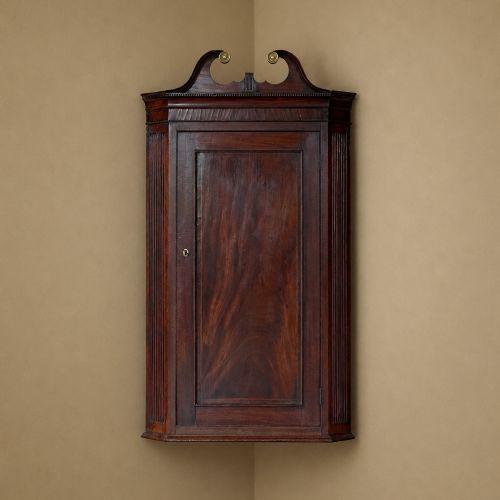
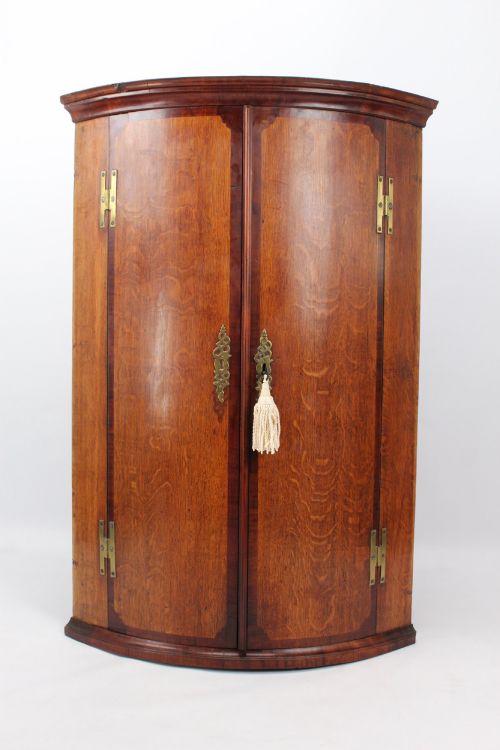
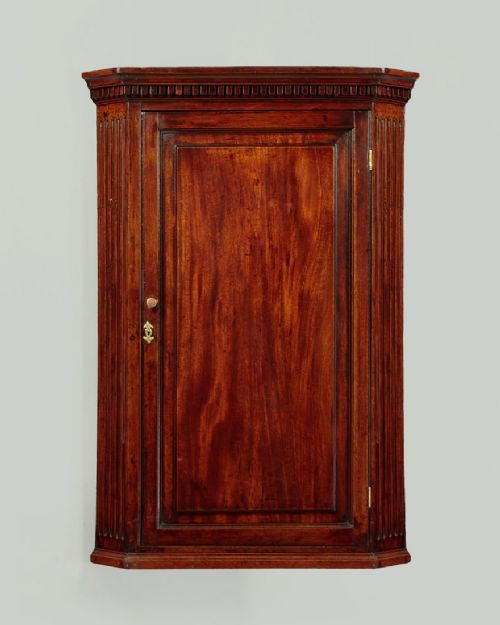
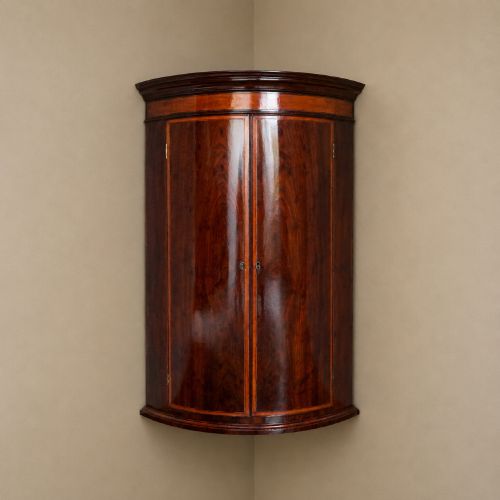
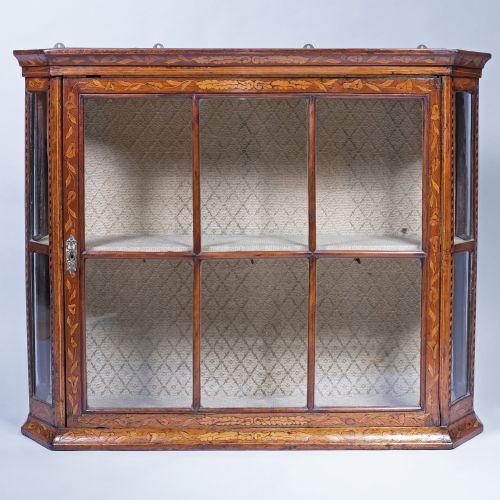
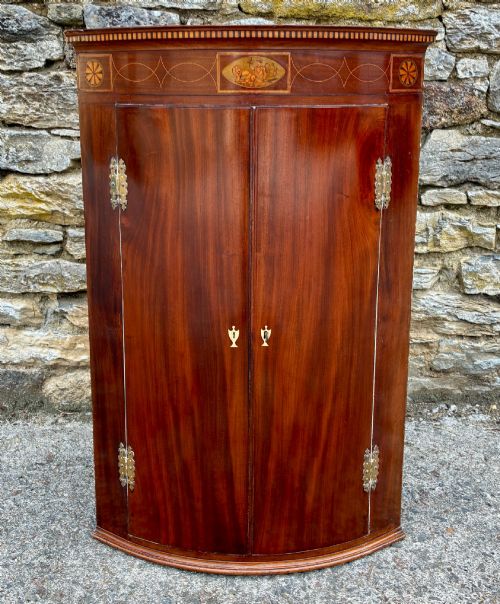
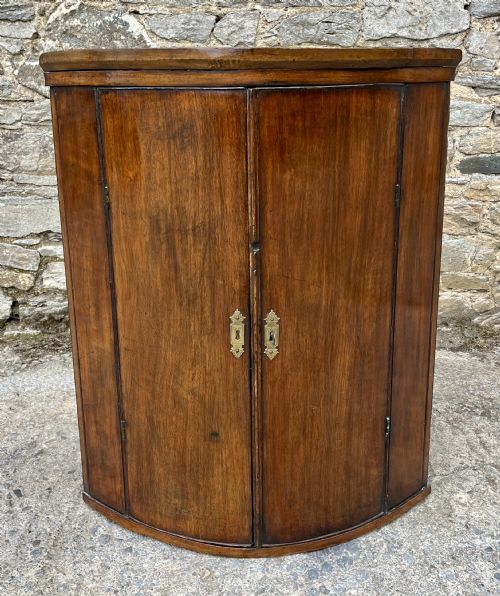
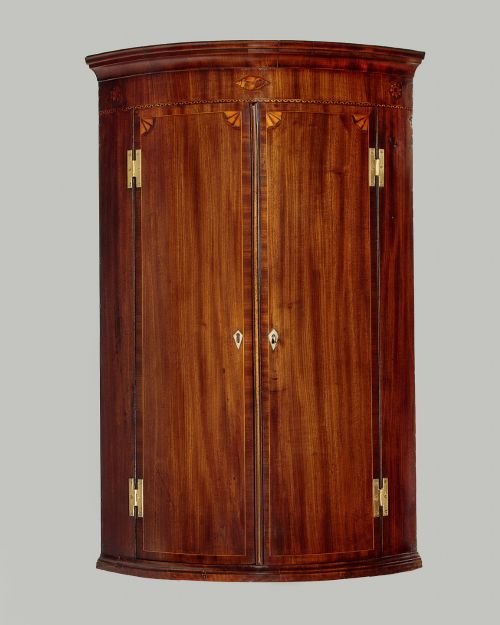
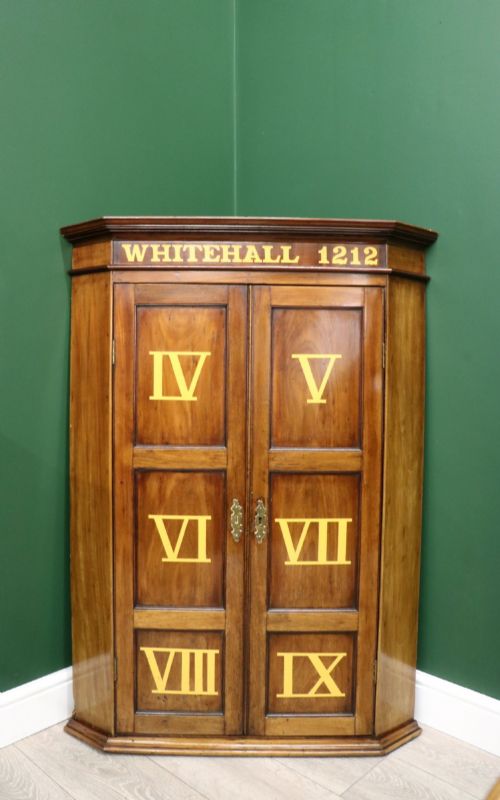
A brown mahogany wall cabinet encompasses various hanging wall-mounted storage pieces designed to fit corners or flat surfaces. Buyers searching for a brown mahogany wall cabinet will frequently encounter corner cupboards, glazed display units, and small wall shelves from the Georgian and Edwardian eras.
The material palette centres primarily on mahogany, often paired with oak, satinwood, and brass hardware. These pieces served practical storage and display functions in domestic spaces, ranging from simple hanging cupboards to detailed inlaid display cabinets.
Materials and construction
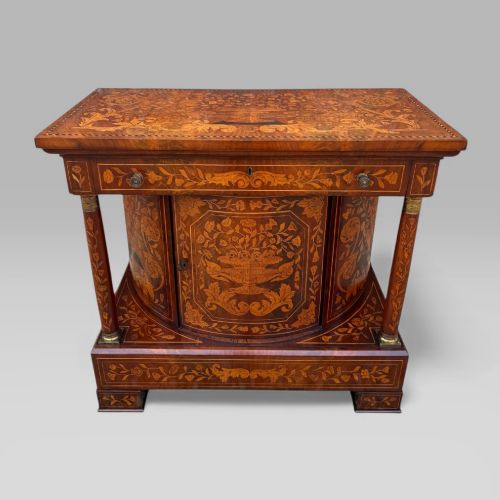
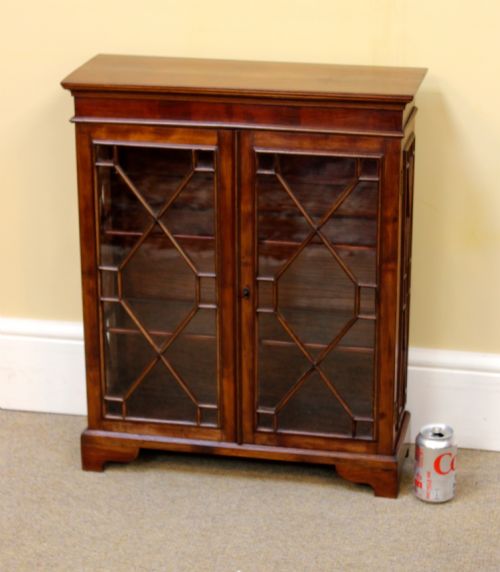
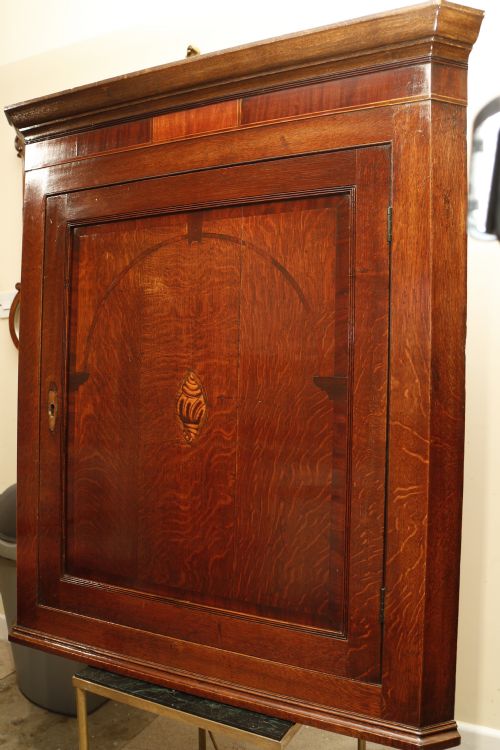
Carpenters constructed these cabinets using solid mahogany and oak, frequently employing crossbanding, marquetry inlay, and boxwood stringing to decorate the timber surfaces. Glazed doors utilised fitted glass panels, while brass hinges, escutcheons, and locking keys provided functional security for the interior shelves.
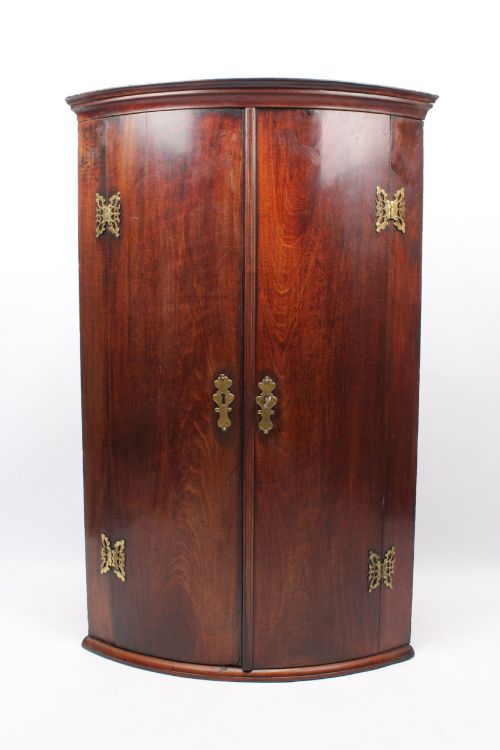
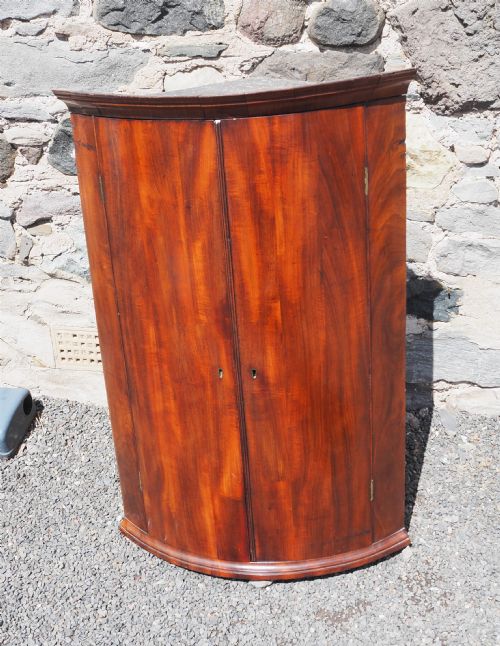
Cabinetmakers shaped timber into bow fronts and flat-backed wall configurations designed to mount securely onto room walls. The application of inlay work, such as satinwood and marquetry details, enhanced the visual depth of the dark mahogany grain.
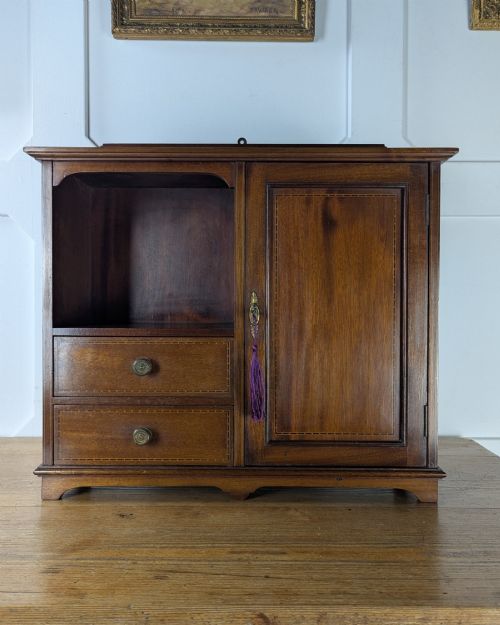
Listings feature items constructed from mahogany, oak, satinwood, and boxwood, incorporating glass panels and brass hardware.
Judging quality and character
Quality in these wall cabinets rests upon the choice of timber figure, such as plum pudding mahogany, and the precision of the inlay work. Finer examples display balanced proportions, crisp joinery, and well-executed decorative marquetry rather than plain surfaces.
The sophistication of the brass hardware, the clarity of the glazed glass panels, and the originality of the locking mechanisms further distinguish higher grade pieces. Subtle variations in the richness of the polished mahogany finish separate standard workshop output from superior cabinetmaking.
The Brown Mahogany Wall Cabinet Glossary
- Bow front
- A convex curved cabinet front that projects outward from the corners. This curved design softens room angles and provides additional interior depth.
- Crossbanding
- A narrow strip of veneer laid across the grain of the primary timber to form a decorative border. It frames the panel edges of cabinet doors.
- Marquetry inlay
- Elaborate patterns formed by fitting contrasting veneers into the timber surface. It introduces pictorial or geometric ornamentation to the cabinet exterior.
- Escutcheon
- A protective plate surrounding the keyhole of a cabinet door. It shields the surrounding wood from wear caused by the insertion of the key.
- Plum pudding mahogany
- A highly figured tropical timber exhibiting mottled circular markings resembling the fruit in a traditional pudding. Cabinetmakers reserved this distinctive grain for prominent surfaces.
Brown Mahogany Wall Cabinet: Frequently Asked Questions
Where should I hang a corner cabinet?
These wall-mounted pieces fit neatly into unutilised room junctions, making them ideal for dining spaces or hallways where floor area is restricted.
Ensure the mounting wall is structurally sound to support the weight of the solid timber construction and its stored contents.
How do I identify a Georgian piece?
Examine the timber selection, construction methods, and hardware style to determine the period of origin. Georgian examples frequently feature hand-cut dovetails and deep mahogany patination.
Look for architectural cornices and authentic brass escutcheons that align with eighteenth-century cabinetmaking traditions.
Are the cabinet doors usually lockable?
Many surviving wall cupboards retain their original functional brass locks and matching working keys. These mechanisms allowed owners to secure valuable glassware or household items.
Keys often turn brass levers that engage directly with internal catches fitted inside the doorframe.
What is the difference between glazed and solid doors?
Glazed doors incorporate glass panes designed for the display of ceramics, glassware, or small collections. They keep contents visible while protecting them from dust.
Solid wood doors conceal the interior storage space entirely, offering a uniform timber surface across the front of the cabinet.