

Brown Mahogany Tiered Stand
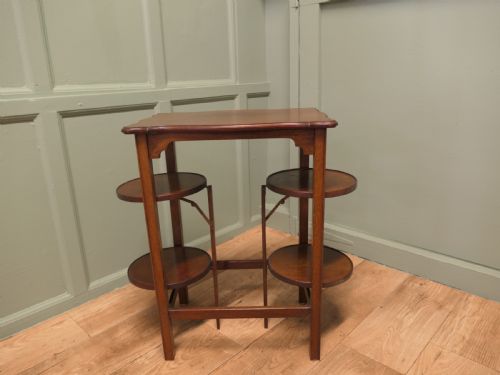
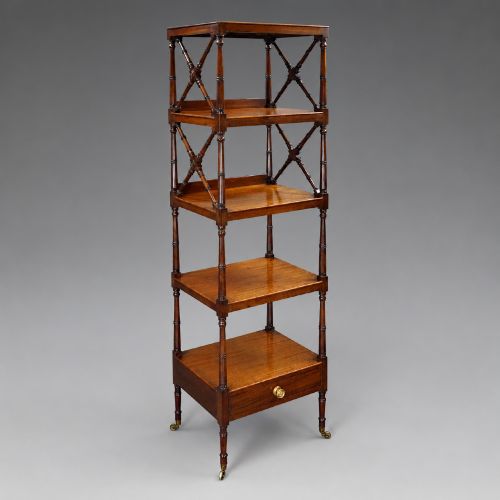
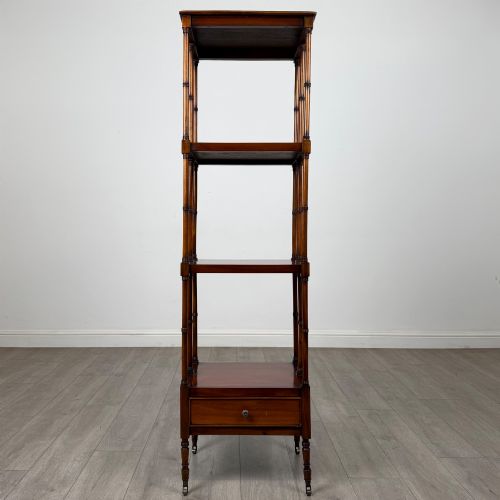
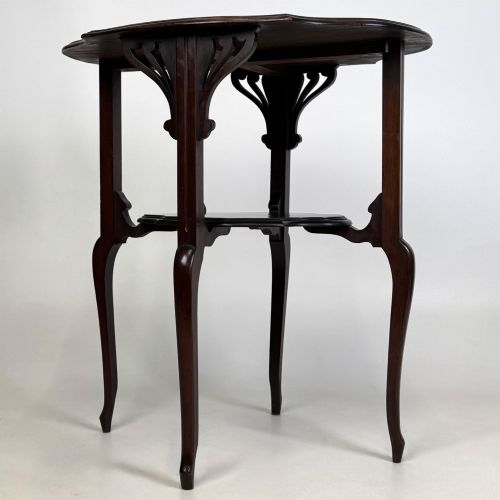
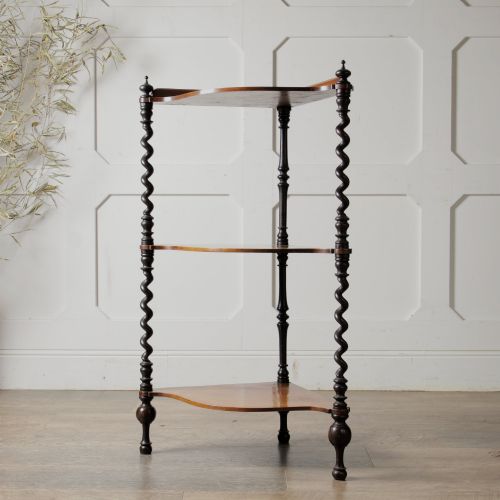
A brown mahogany tiered stand brings functional levels to a room, offering useful surfaces for display or service in compact footprints.
Brown Mahogany Tiered Stand
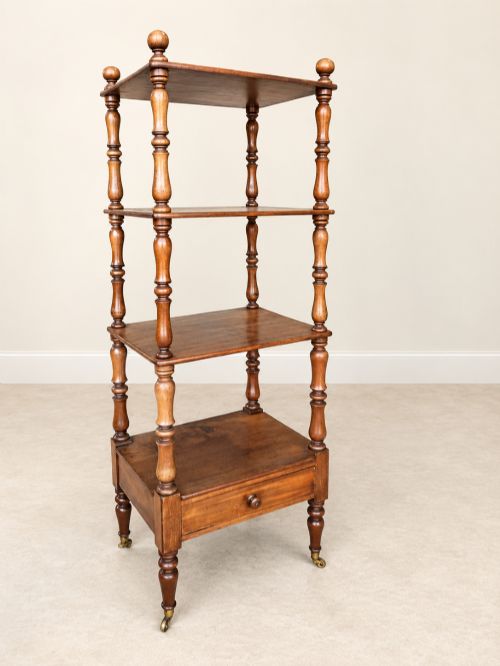
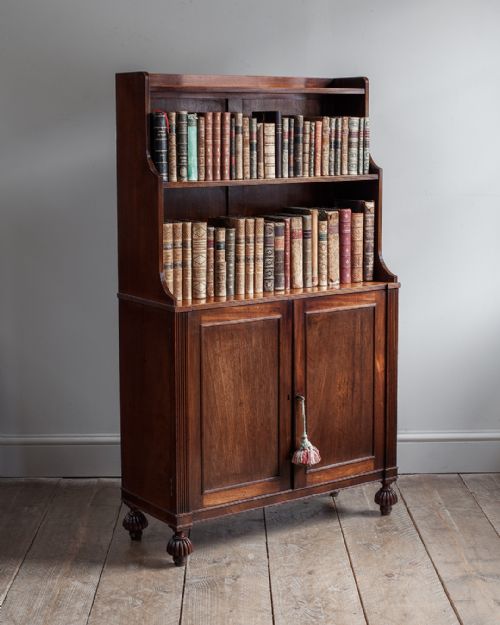
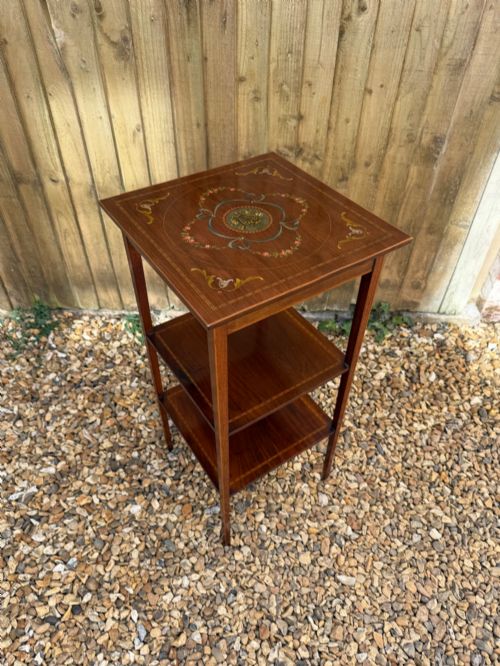
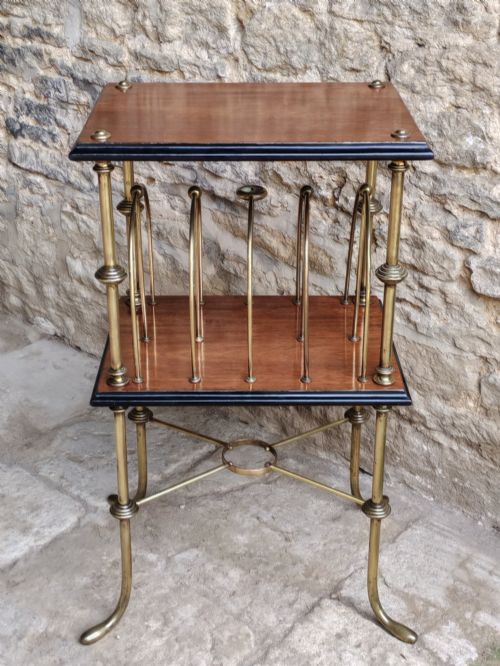
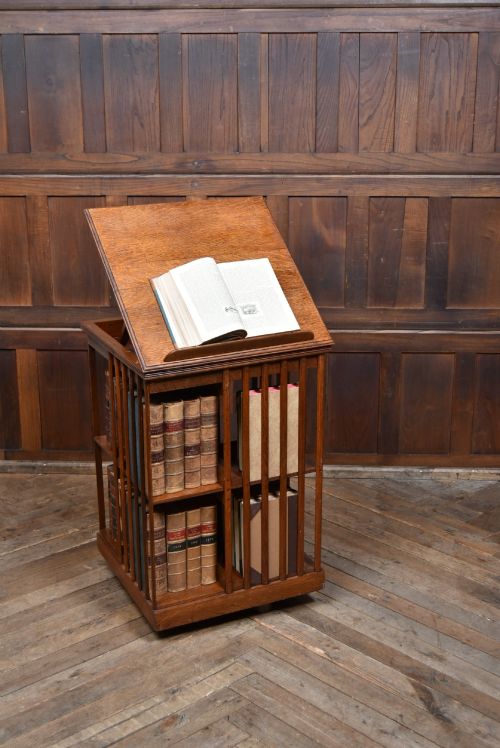
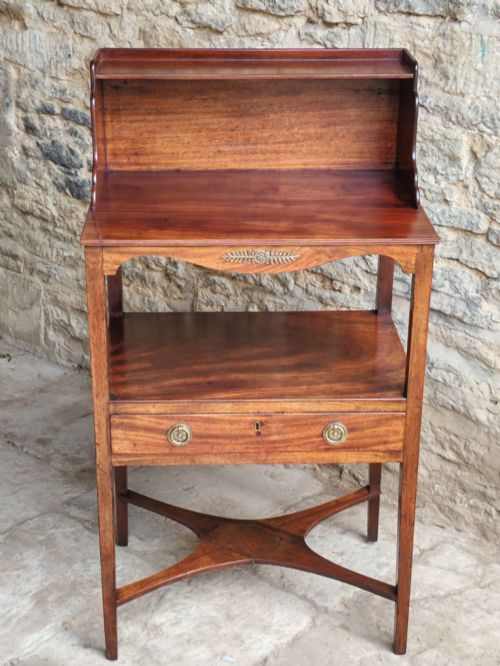
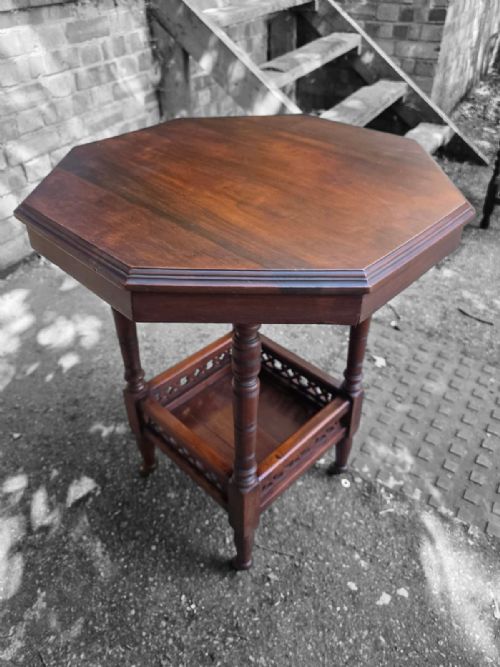
When you search for a brown mahogany tiered stand, you encounter multi-level furnishings designed for holding books, lamps, or serving items across several surfaces. The pieces on this page span Georgian, Regency, Victorian, and Edwardian periods, taking the form of dumb waiters, whatnots, bookcases, and occasional tables.
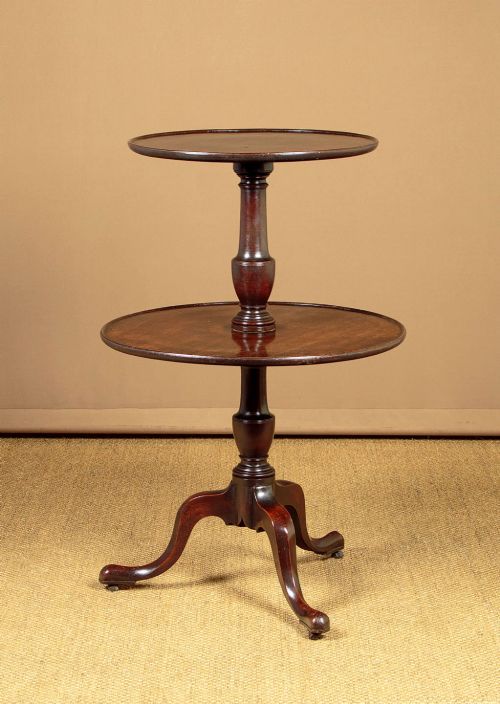
You are most likely to meet Edwardian and Victorian multi-tier tables or revolving bookcases, alongside earlier Georgian and Regency dumb waiters and tripod stands. These items served dining rooms, libraries, and parlours, providing distinct tiers to organise objects without crowding a floor plan.
Materials and construction methods
Cabinet makers utilised solid mahogany and flame mahogany veneers, sometimes incorporating boxwood inlay for decorative contrast on shelves and tabletops. Structural stability on heavier multi-tier items often relied on turned columns and sturdy tripod bases.
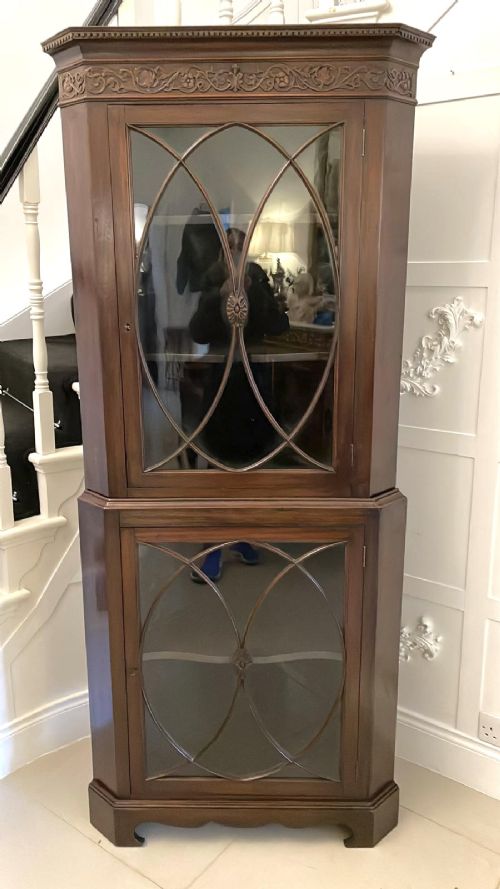
Higher tier supports frequently integrated brass castors for mobility, while glazed doors or astragal bars appeared on enclosed sections. Joinery techniques ensured that multiple shelves remained rigid under weight, balancing utility with refined timber grains.
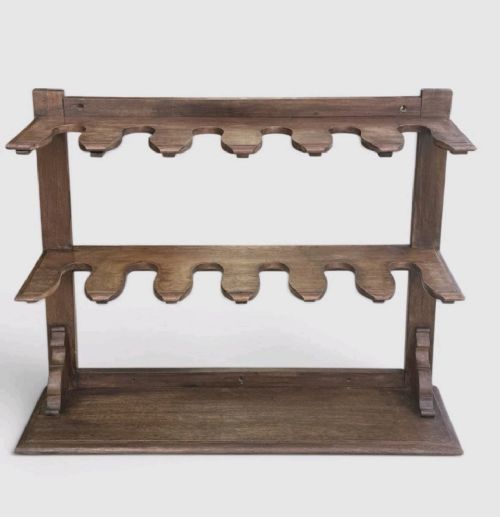
A hallway shoe stand disguised as a boot rack proves Victorians had precise opinions on footwear storage.
Distinctions in quality
Quality rests in the selection of timber figures, where rich flame mahogany grain and crisp boxwood stringing elevate a piece above plain stock. Superior examples display refined turning on columns and precise joinery that keeps multiple tiers level and steady.
The refinement of original brass hardware, such as castors and handles, separates standard utility items from finer workshop productions. Proportion and balance across the tiers dictate whether a multi-level stand feels purposeful or heavy in an interior.
W. Turner Lord & Co
The Brown Mahogany Tiered Stand Glossary
- Dumb waiter
- A tiered serving stand used in dining rooms to hold dishes and utensils without servant intervention. They often feature graduating circular trays on a central pillar.
- Astragal
- Moulding used to hold panes of glass in a door or bookcase front. It creates a grid pattern that lightened the appearance of heavy cabinetry.
- Inlay
- A technique where pieces of contrasting wood, such as boxwood, are inserted into recessed cavities on the mahogany surface to form decorative patterns.
Brown Mahogany Tiered Stand: Frequently Asked Questions
What is a tiered mahogany stand used for?
These pieces provide multiple surfaces for lamps, books, and decorative items within domestic spaces. Historically, specific forms like dumb waiters served food in dining rooms.
Today, they function well in corners or beside seating, offering vertical storage and display without occupying excessive floor space.
How do I identify a Georgian tiered stand?
Georgian and Regency versions typically exhibit heavier timber framing, simpler structural lines, and traditional tripod bases or central pillars.
Cabinet makers in this era focused on robust proportions and practical utility, often creating dumb waiters with graduating circular tiers.
Are Edwardian tiered stands inlaid?
Many Edwardian pieces feature decorative boxwood inlay and lighter frames compared to their heavier Victorian predecessors. Sheraton Revival influences became popular during this period.
Such items frequently take the form of cake stands, occasional tables, or revolving bookcases with delicate stringing.
How do I live with a multi-tier table?
Place them beside armchairs or in empty corners where the vertical levels can hold daily items or small lamps. Their open design keeps rooms feeling airy.
Ensure heavy items sit on the lower tiers to maintain stability, especially on pieces fitted with original castors.