


Brown Mahogany Swivel Chair
These brown mahogany swivel chair examples combine swivel mechanisms with timber and leather, offering both steady support and simple movement at a desk.
Brown Mahogany Swivel Chair
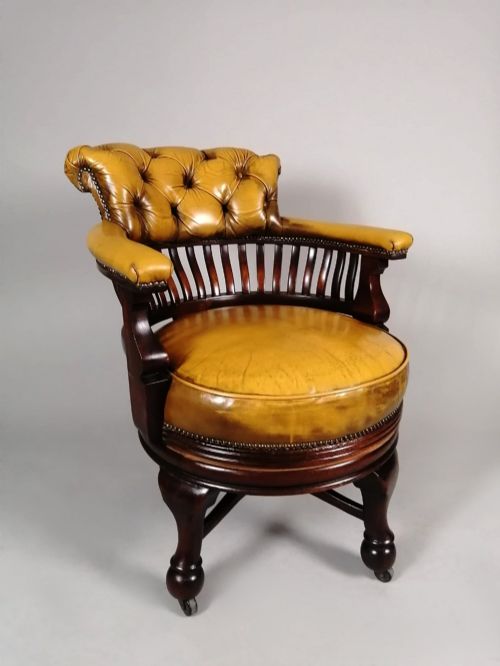
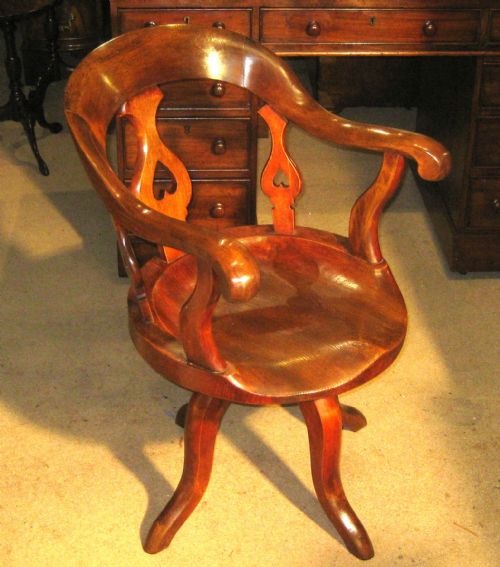
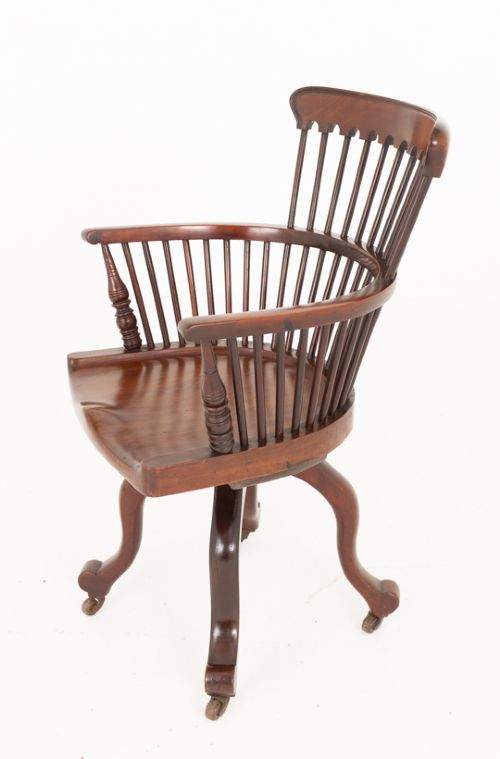
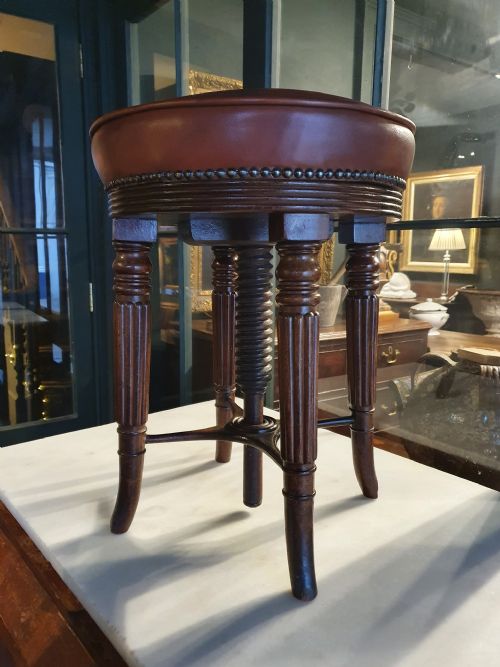
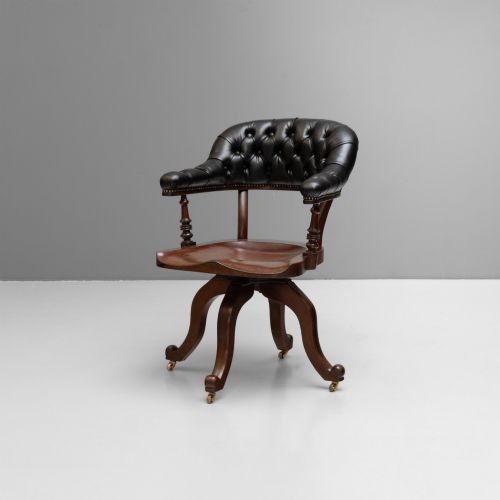
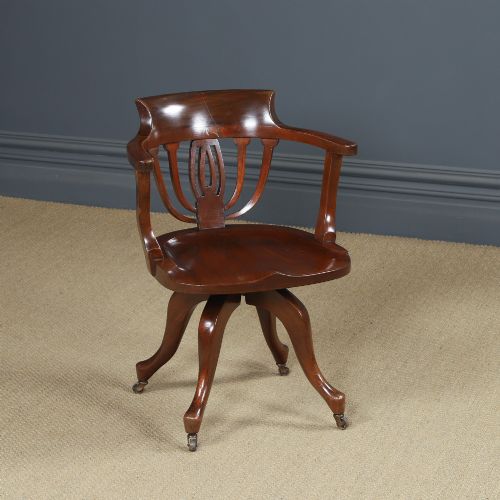
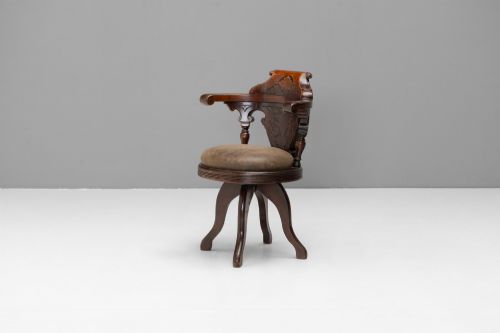
A brown mahogany swivel chair primarily takes the form of a revolving desk chair, office arm chair, or piano stool originating from the nineteenth and early twentieth centuries. These pieces appear across Victorian, Edwardian, Regency, and Arts and Crafts styles, reflecting the practical seating needs of past libraries, offices, and studies.
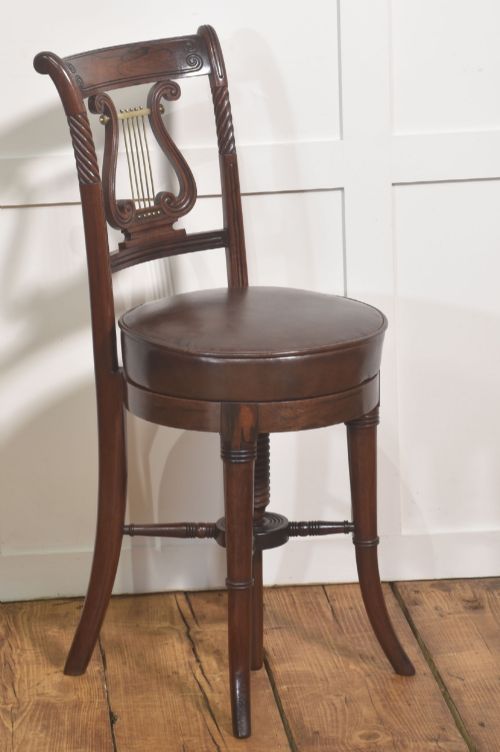
The most common version met on this page is the nineteenth-century revolving desk chair, often featuring a solid mahogany frame and a leather-upholstered seat. Alongside these desk models, buyers encounter piano stools and dressing table chairs equipped with height-adjustable swivel actions.
How they were made
Makers built these pieces primarily using solid mahogany, frequently pairing the rich timber with brass hardware, cast iron mechanisms, and leather upholstery. Some examples incorporate fabric or velvet coverings, alongside satinwood inlay or iron components to support the revolving action.
Construction methods focus on combining a sturdy wooden base with a central pivot that allows the upper seat to turn freely. Height adjustment mechanisms utilise threaded metal spindles or screws concealed beneath the revolving seat.
Listings span the nineteenth and early twentieth centuries, featuring Victorian, Edwardian, and Regency periods alongside Arts and Crafts designs.
What varies in quality
The sophistication of the revolving mechanism and the presence of fine decorative details set certain pieces apart. Solid mahogany frames with precise brass inlay or complex adjustable spindles demonstrate greater craftsmanship than simpler domestic variants.
The grade of the secondary materials, such as supple leather upholstery and durable cast iron or brass underframes, dictates the overall resilience and finish of the seating.
SHOOLBRED·James Shoolbred·George Bartholomew and Co·Maple and Co
The Brown Mahogany Swivel Chair Glossary
- Revolving desk chair
- A seating form designed to turn on a central axis, allowing the sitter to pivot while seated at a workspace. These pieces usually feature a supportive wooden backrest and an upholstered seat.
- Mahogany
- A durable tropical hardwood valued for its deep reddish-brown colour and fine grain. It serves as the primary structural timber for the majority of these chairs.
- Swivel mechanism
- The internal hardware, often composed of brass or iron, that permits the upper portion of the chair to rotate independently of the base.
- Piano stool
- A seat designed for keyboard players, frequently featuring a revolving top or adjustable height screw mechanism. These pieces share similar turning mechanics with office desk chairs.
Brown Mahogany Swivel Chair: Frequently Asked Questions
How do I operate the height adjustment?
Many of these chairs adjust in height by manually spinning the seat clockwise or anticlockwise on a central threaded metal spindle.
This action raises or lowers the upper frame relative to the fixed base, allowing the user to set a comfortable working level.
Were these chairs used only in offices?
While many examples served in nineteenth-century offices and studies, others functioned as dressing table chairs or piano stools.
Musical households utilised revolving piano stools for adjustable seating comfort during long practice sessions.
How do I distinguish Regency from Victorian examples?
Regency pieces often display classical lines, sometimes incorporating brass inlay and formal proportions typical of the early nineteenth century.
Victorian and later nineteenth-century versions tend towards heavier office forms with robust wooden frames and revolving desk mechanisms.
What maintenance do the swivel mechanisms need?
The moving metal and wooden parts benefit from occasional inspection to ensure the pivot turns smoothly without excessive wobble.
Applying a light lubricant to the central screw or spindle helps preserve the turning action over time.