
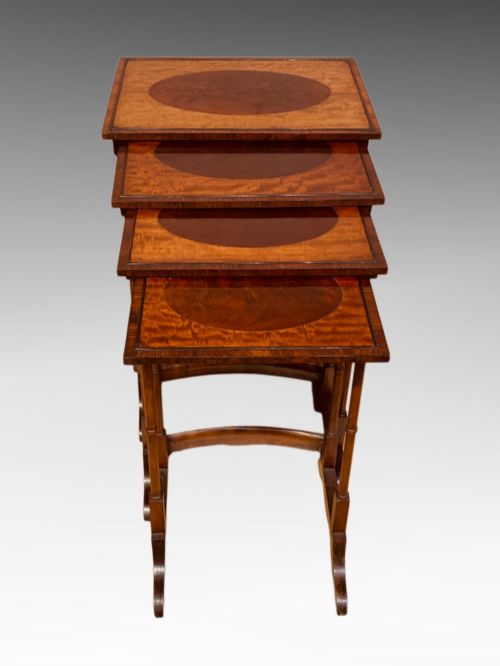
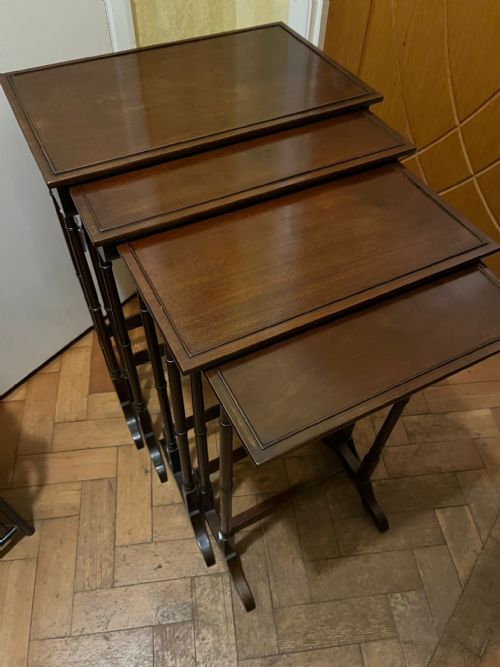
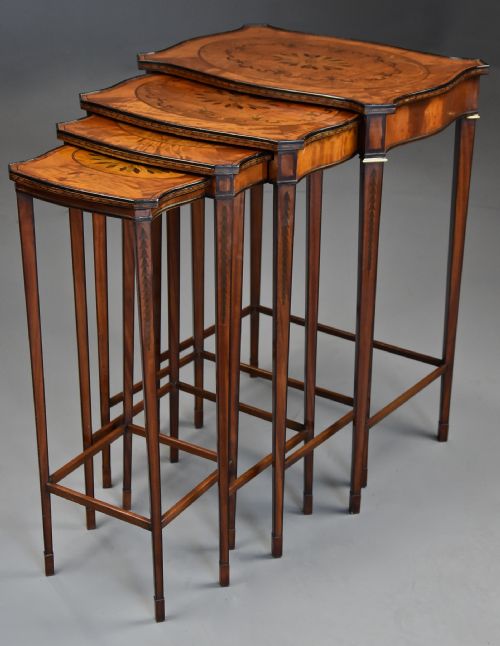


Brown Mahogany Stacking Tables
Brown mahogany stacking tables offer clever space-saving utility, sliding neatly together when floor space matters and separating easily for tea or entertaining.
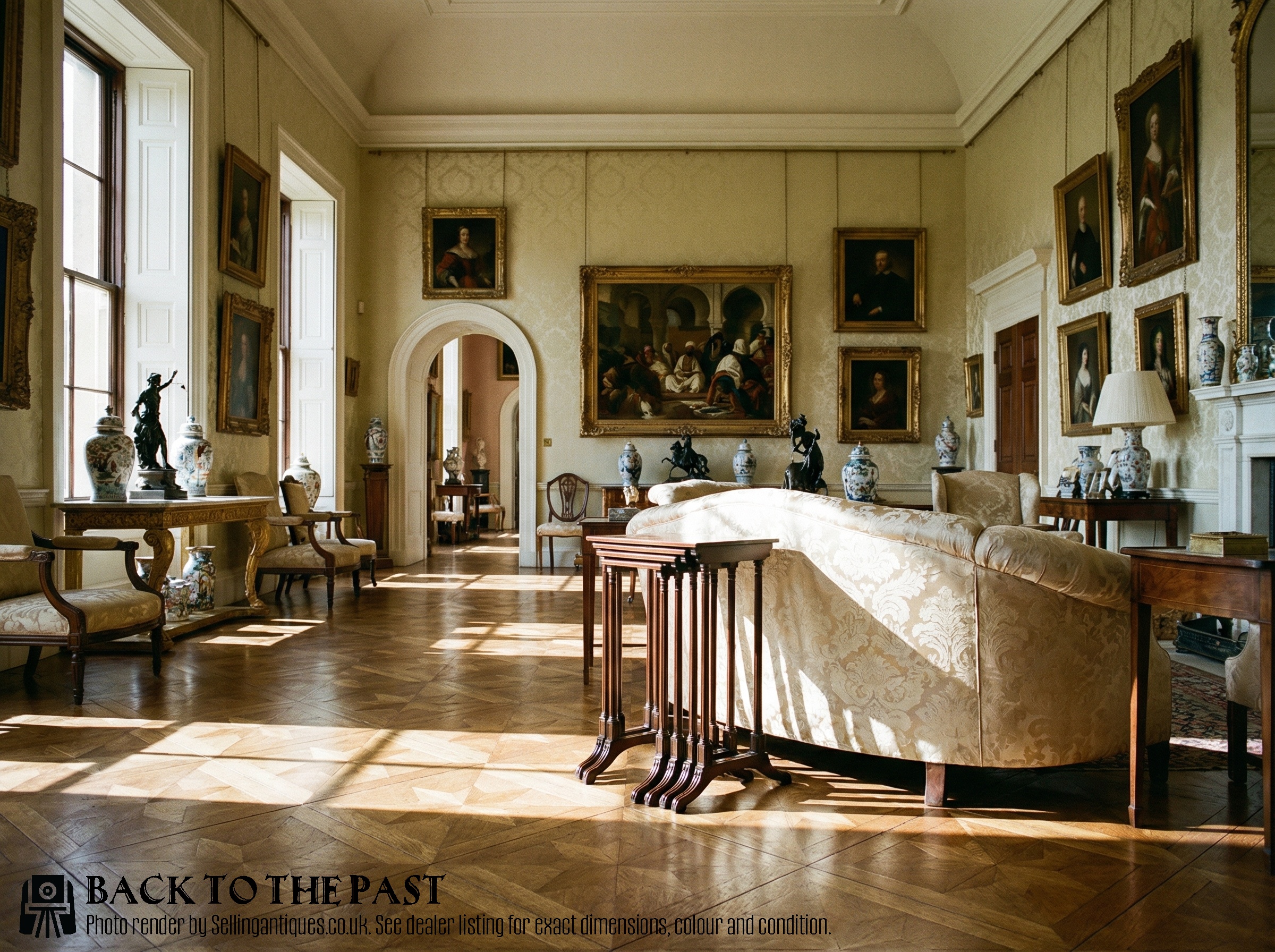
Brown Mahogany Stacking Tables
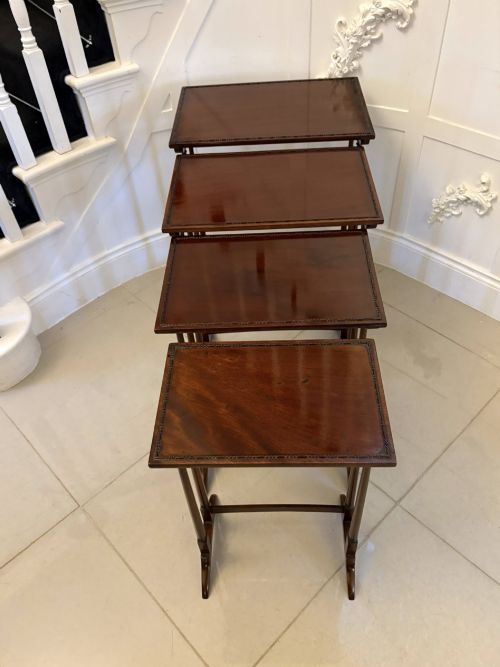
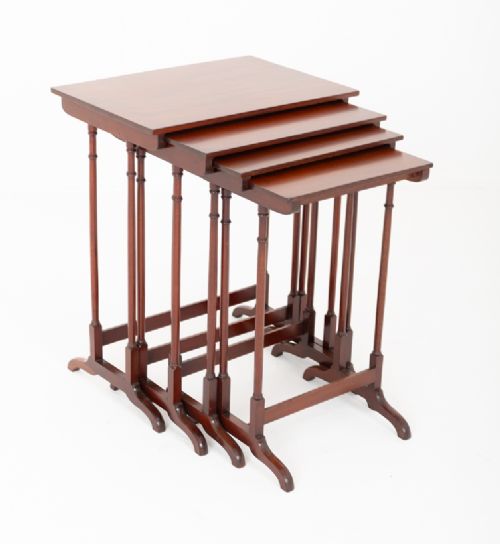
Brown mahogany stacking tables, commonly referred to as nests of tables or quartetto sets, comprise multiple graduated tables designed to fit one beneath another. You will most frequently encounter Edwardian and nineteenth-century examples on this page, reflecting a period when adaptable furniture gained immense popularity.
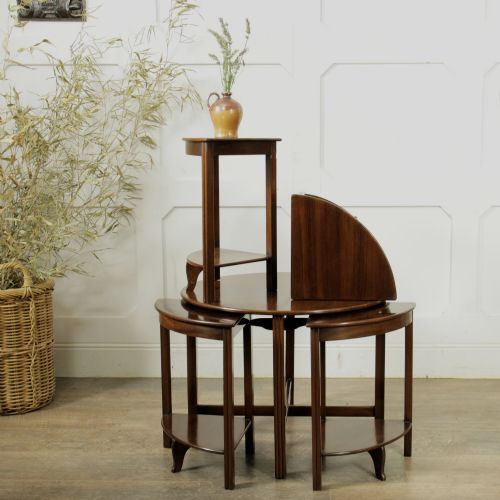
The configurations vary from sets of three or four occasional pieces to circular or serpentine forms. Makers often shaped these items to serve as side or coffee tables, ensuring they remained practical for daily use without dominating a room.
Most pieces date from the Victorian and Edwardian eras, utilising rich timbers and traditional silhouettes. The search phrase covers both strict nests and related quartetto formats designed for versatile placement.
Materials and Construction
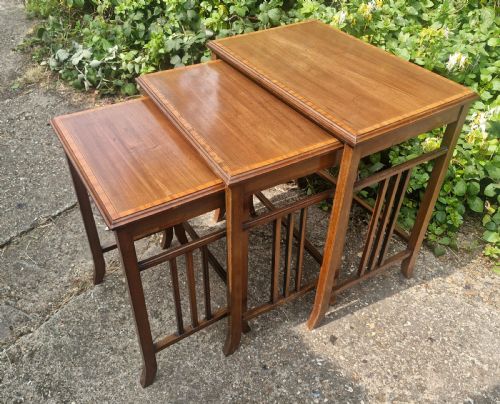
Cabinet makers relied primarily on solid mahogany and figured veneers, often incorporating contrasting timbers such as satinwood, boxwood, and rosewood for decorative inlay work. Some specialised examples introduce subtle details like embossed leather tops or delicate brass stringing.
The structural integrity relies on slender turned or tapered legs that support graduated frames without adding unnecessary bulk. Joinery techniques from the nineteenth and early twentieth centuries ensure each smaller table slides smoothly into the recess of the one above.
Some Edwardian sets include a tiny fifth circular table that hides quietly in the centre like a shy nesting doll.
Judging Quality and Craftsmanship
Excellence in these sets shows through the crispness of the inlay work and the consistency of the mahogany grain across all graduated surfaces. Superior pieces maintain structural stability in the smallest table, avoiding any wobble when resting on its own four legs.
Finer examples demonstrate refined proportions and thoughtful timber selection, such as figured mahogany or detailed satinwood banding, rather than plain construction. The precision with which the tables nest together indicates the original maker's skill.
The Brown Mahogany Stacking Tables Glossary
- Quartetto
- A matching set of four small tables designed to stack within one another. This traditional term appears frequently in nineteenth-century and Edwardian descriptions.
- Nest of tables
- A group of graduated occasional tables that slide together to occupy the floor space of a single piece. They provide flexible surface area for domestic use.
- Satinwood inlay
- A contrasting light-coloured exotic wood set into the darker mahogany surface in decorative bands or motifs. It adds visual refinement to Edwardian furniture.
- Serpentine form
- A gently curving edge design shaped like a horizontal 'S'. This contour softens the profile of table tops.
Brown Mahogany Stacking Tables: Frequently Asked Questions
What is a quartetto nest of tables?
A quartetto nest specifically consists of four graduated tables designed to slide neatly one beneath another. The term derives from musical terminology denoting a group of four.
Cabinet makers utilised this format extensively during the Victorian and Edwardian periods to maximise utility in compact drawing rooms.
How were stacking tables used originally?
These pieces served primarily as occasional furniture for serving tea, holding books, or writing letters. Servants or hosts could easily separate the tables around a room when guests arrived.
Once entertaining concluded, the smaller tables stacked back into the main frame to clear the floor space.
How do I distinguish Edwardian nests from Victorian ones?
Edwardian examples tend to feature lighter wood tones, delicate satinwood or boxwood inlay, and slender tapered legs influenced by Sheraton revival styles. Victorian versions often display darker, heavier figured mahogany with simpler structural lines.
Examining the underside and the interior grain helps confirm the period of construction.
Are these tables sturdy enough for daily use?
Quality nests constructed from solid mahogany handle regular daily placement quite well. The smaller tables possess lighter frames, so they suit holding cups or books rather than heavy loads.
Placing them on even flooring prevents unnecessary strain on the slender joints.