


Antique Salon Tables
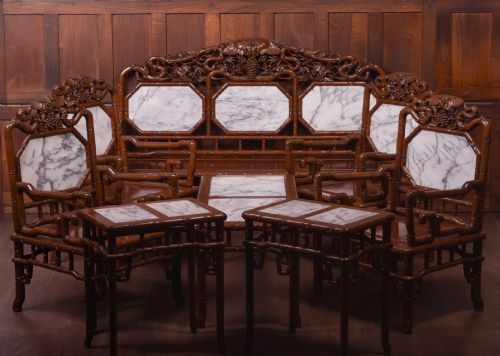
These antique salon tables bring formal French and British display into domestic spaces through refined timber and marble.
Antique Salon Tables
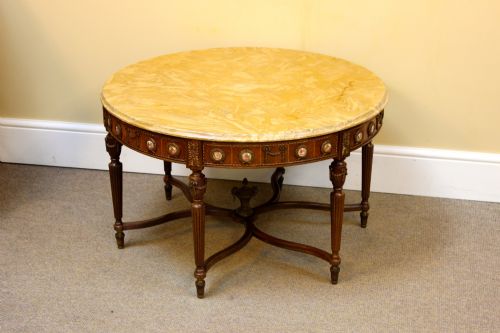
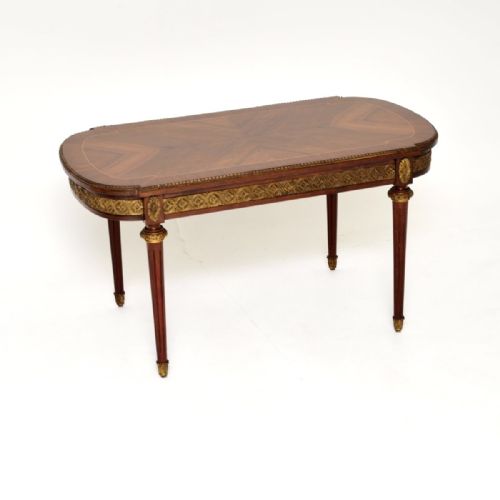
When you search for antique salon tables, you are looking at domestic furniture designed for entertaining and display in principal rooms. These pieces include centre tables, occasional tables, and low coffee tables that anchor a room.
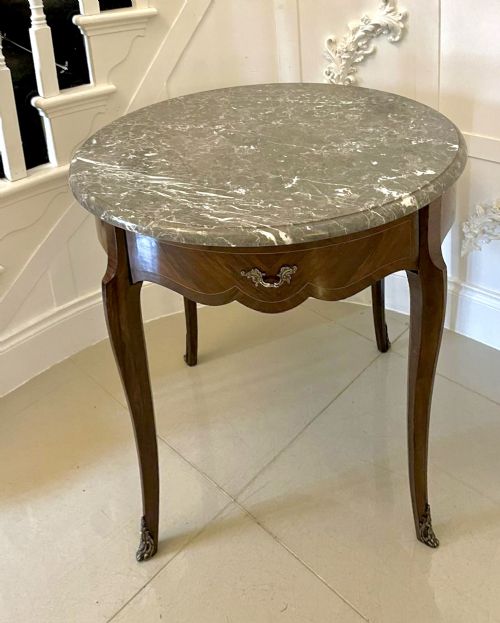
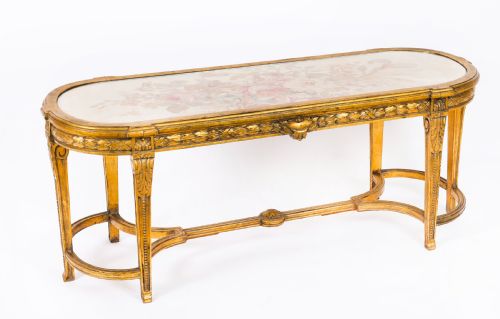
You are most likely to meet pieces originating from the nineteenth century, alongside Edwardian and early twentieth-century revivals. The forms span freestanding centre tables with marble tops and low coffee tables built for the salon.
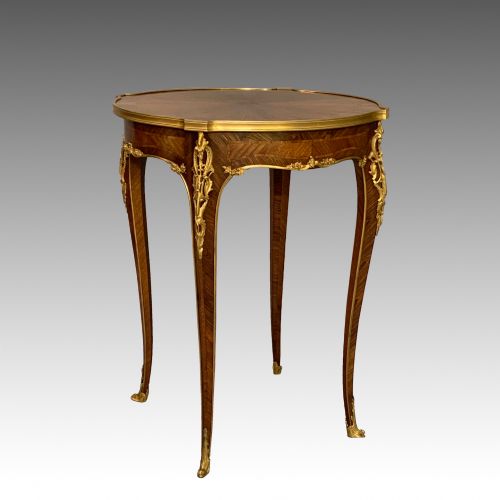
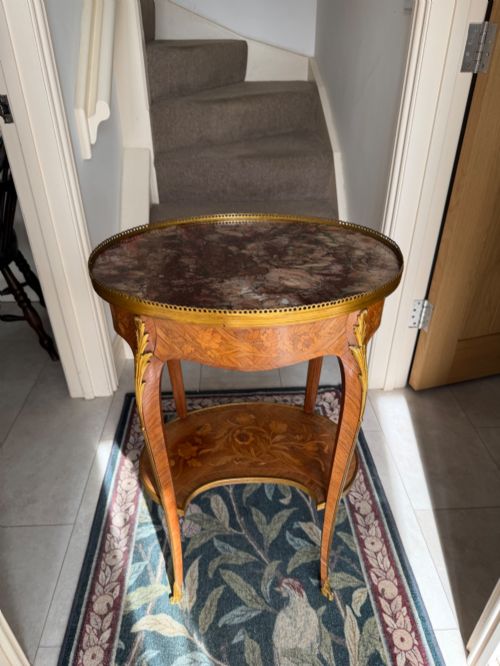
The materials and styles lean heavily towards French design, notably Louis XV and Louis XVI revivals, utilising rich marquetry and polished timbers. They functioned as both practical surfaces and status objects in historic reception rooms.
How they were made
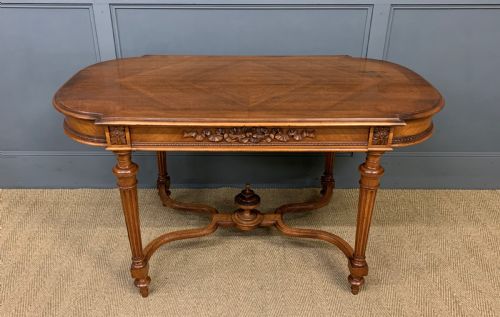
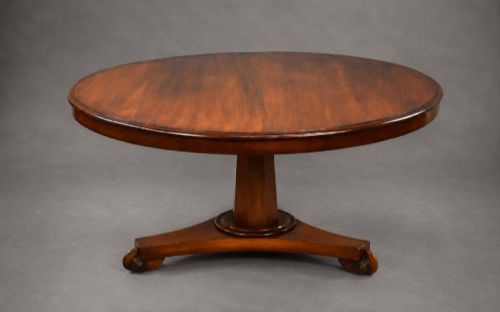
The makers built these tables using substantial timber carcasses of mahogany, walnut, and kingwood, often enhanced with intricate marquetry and inlay. Cabinetmakers selected these woods for their grain and stability, applying polished finishes that highlighted the natural patterns.
Giltwood, ormolu mounts, and brass detailing provide the metallic enrichment characteristic of these styles. Marble tops frequently complete the tables, resting securely on fitted wooden frames to supply a durable, cool surface.
Structural elements rely on traditional joinery, with carved details rendered in walnut, mahogany, and giltwood. Workshops applied surface treatments like French polish to protect the timber while intensifying the colour.
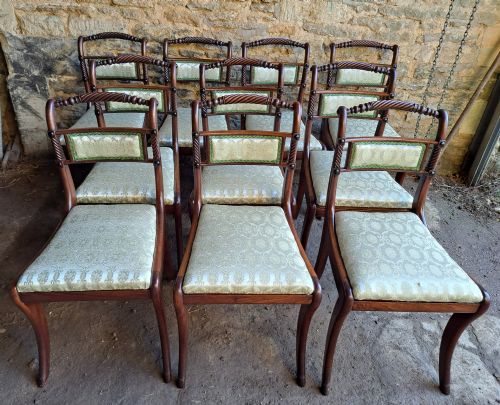
Listings feature nineteen-century and early twentieth-century pieces, spanning Regency, Victorian, and Edwardian periods.
What varies in quality
The refinement of the carving and the precision of the marquetry inlay separate the standard production from the exceptional work. Finer examples display crisply cast ormolu mounts and hand-carved giltwood details that integrate seamlessly with the timber structure.
The selection of materials dictates the standing of the piece, with choice cuts of figured kingwood, walnut, and mahogany commanding attention. Integrated marble slabs and heavy bronze mounts further distinguish the more ambitious commissions.
Joseph-Emmanuel Zwiener·F. Linke·John Tesch·Auguste Moreau·Charles Octave Levy
The Antique Salon Tables Glossary
- Ormolu
- Gilded bronze mounts applied to furniture. This technique provides decorative metallic highlights against dark timbers.
- Marquetry
- Fitted wood veneers forming decorative patterns. Craftsmen cut contrasting timbers to create pictorial or geometric designs.
- Giltwood
- Timber carved and coated with gold leaf. This finish creates a bright, reflective surface popular in formal reception rooms.
- Kingwood
- A dense, richly figured exotic timber. It appears frequently in fine French marquetry and inlay work.
Antique Salon Tables: Frequently Asked Questions
What is an antique salon table?
An antique salon table is a formal piece of furniture designed for reception rooms, serving as a centre table or a display surface.
These tables reflect historic French and British interior design, incorporating materials like mahogany, marble, and giltwood.
How do I style a salon table?
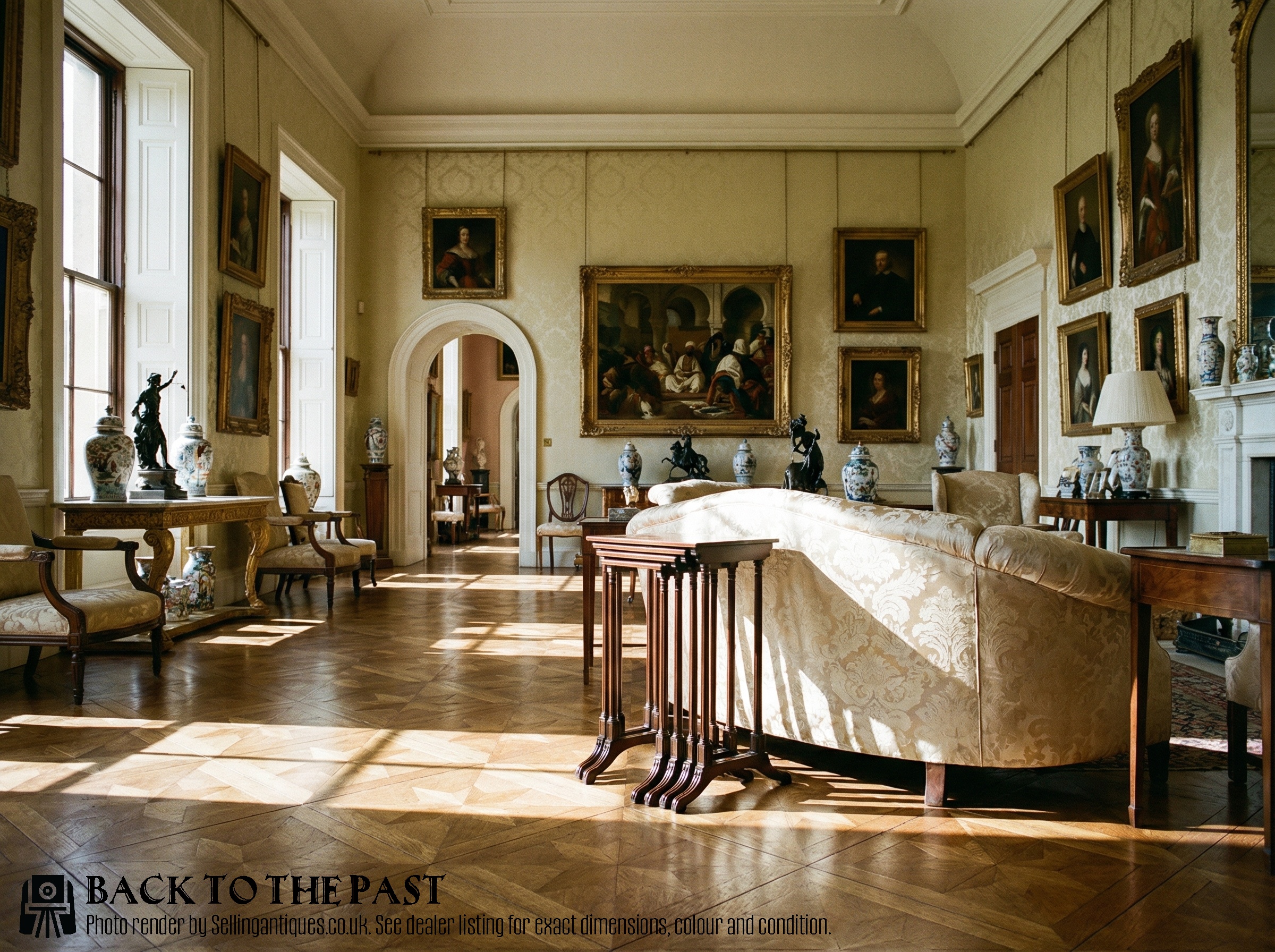
You can use a salon table as a central island in a room or place it against a wall as an occasional surface.
Pairing the table with matching seating or placing decorative porcelain upon it maintains the traditional aesthetic of the piece.
How do I identify the period?
Dating relies on stylistic clues like Louis XV or Regency revival motifs, alongside construction methods and material choices.
Nineteenth-century examples often feature heavier ormolu mounts and distinct timber grains compared to later revivals.