


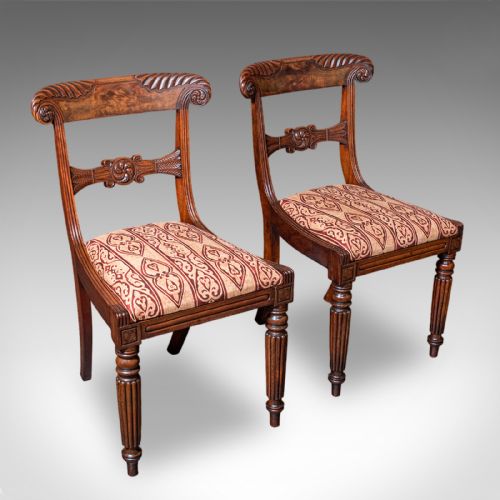
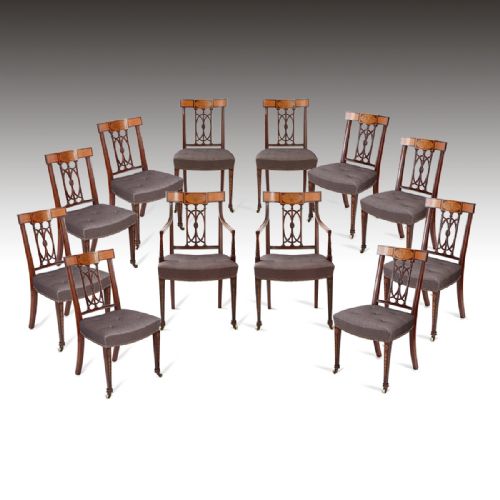
Brown Mahogany Seat
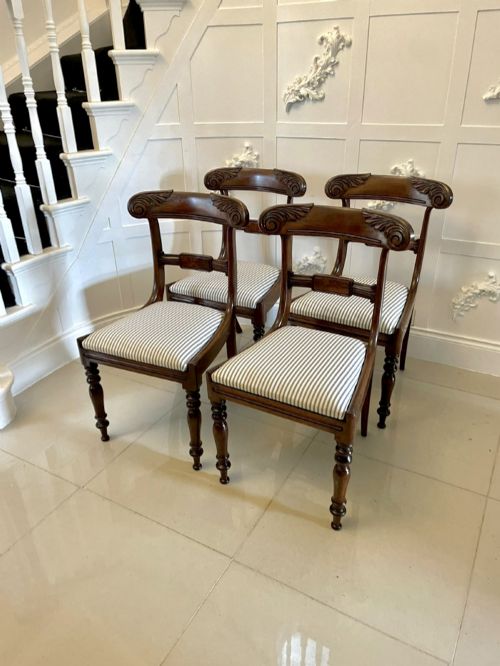
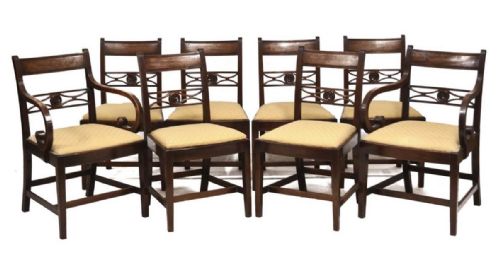
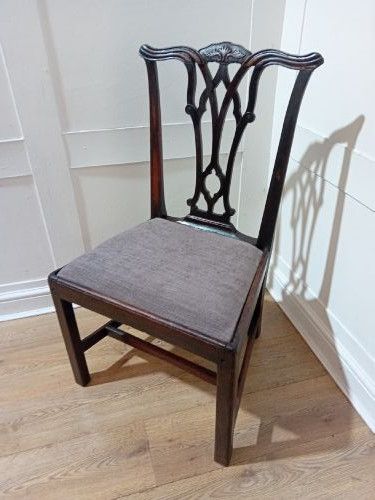
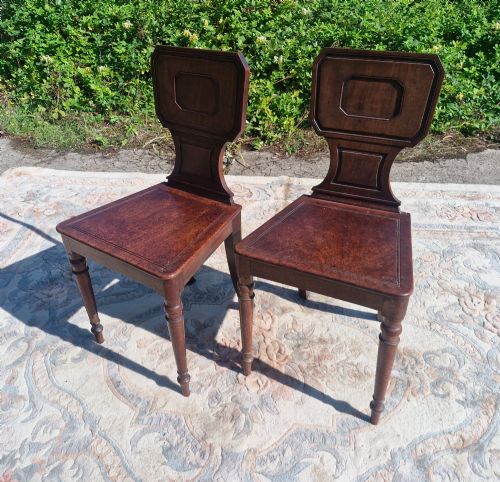
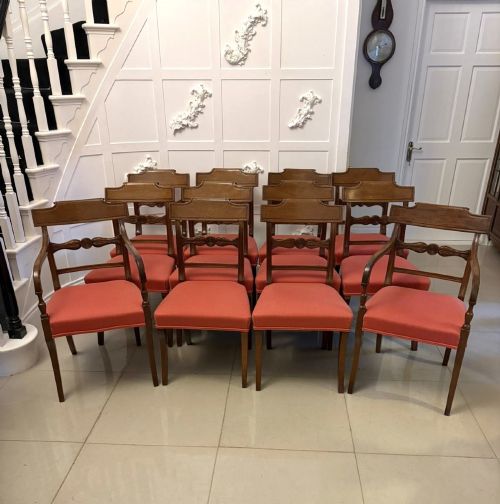
Brown mahogany seat encompasses everything from a single George III hall chair to a full set of Regency dining chairs.
Brown Mahogany Seat
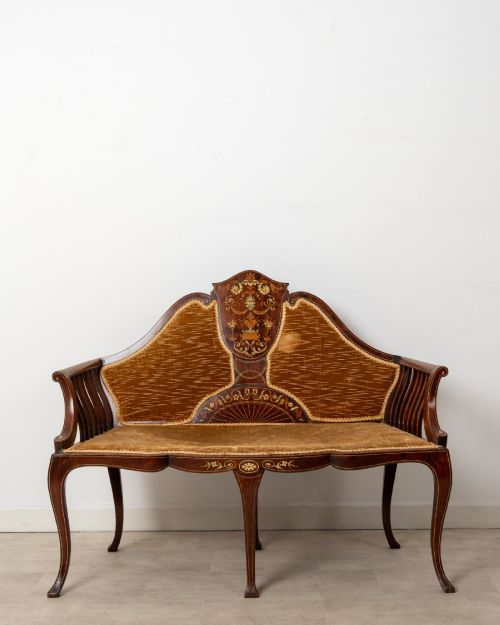
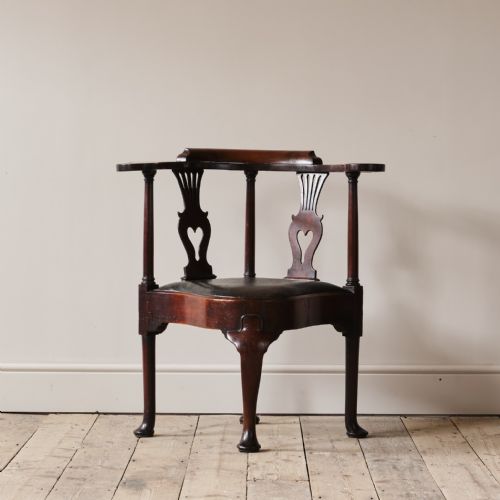
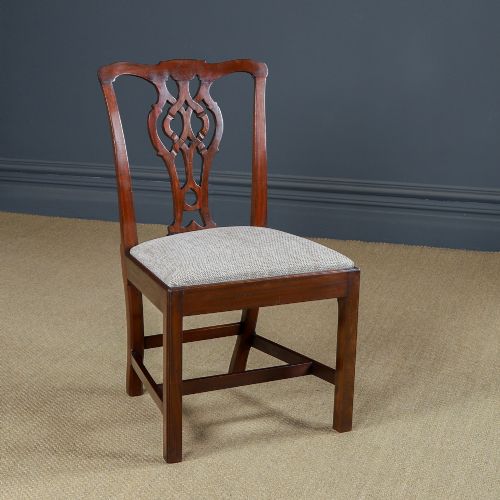
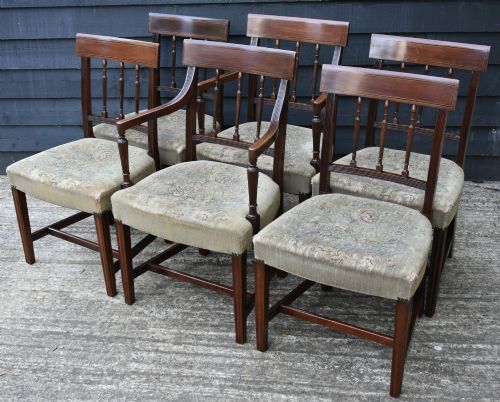
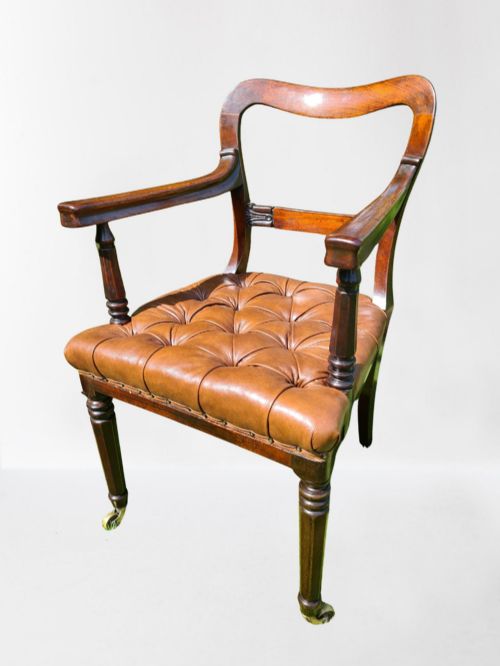
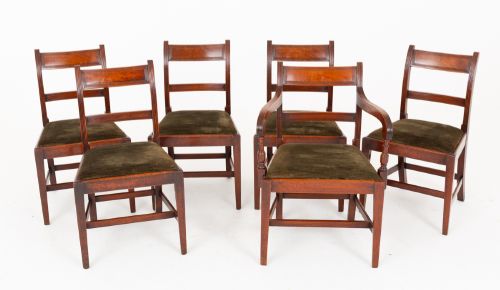
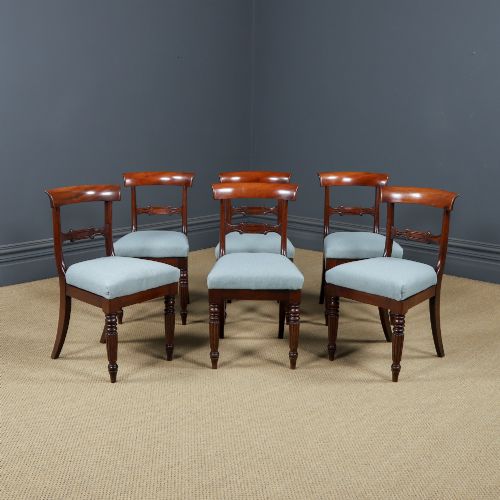
A brown mahogany seat typically takes the form of dining chairs, armchairs, hall chairs, stools, side chairs, or sofas and settees. The pieces span periods including Georgian, Regency, Victorian, Edwardian, and the 18th, 19th, and early 20th centuries.
The most common sightings on this page are sets of dining chairs and single hall chairs dating from the Georgian and Regency eras, alongside later Victorian and Edwardian examples.
Materials and Technique
Construction relies primarily on solid mahogany wood, frequently paired with secondary woods and decorative elements such as satinwood inlay, brass fittings, and carved details like bar backs or shield backs.
Seats are upholstered in various materials including fabric, leather, upholstery fabric, and velvet, depending on the specific period and function of the piece.
Several chairs retain nineteenth-century horsehair stuffing that still rusts quietly when someone sits down too fast.
Craftsmanship and Proportion
Quality rests in the crispness of the timber carving, the integrity of the frame construction, and the fidelity of style periods such as Chippendale, Hepplewhite, or Sheraton.
Matching sets display consistency across all chairs, whereas lesser examples show mismatched elements or heavy later alterations to the timber and upholstery.
Warings
The Brown Mahogany Seat Glossary
- Mahogany
- A durable hardwood prized for its rich brown tone and stable grain, forming the primary structure of these seats.
- Carver
- An armchair, often part of a dining set, designed with elbow rests for the head of the table.
- Hall chair
- A rigid wooden seat, usually without arms, historically placed in entrance halls and bearing carved family crests or shields.
- Bar back
- A chair design featuring a horizontal horizontal top rail resembling the shape of a pub bar.
Brown Mahogany Seat: Frequently Asked Questions
How do I spot a George III dining chair?
Look for characteristic timber patination, classical proportions, and specific back designs such as shield backs or pierced splats.
Examine the joinery beneath the seat rails for traditional pegged construction typical of the eighteenth century.
What is the difference between a carver and a side chair?
A carver includes armrests and was traditionally built wider to accommodate the head of the dining table.
Side chairs lack arms and were made in larger quantities to fit neatly along the sides of the table.
Were hall chairs meant for comfortable sitting?
Hall chairs were designed for brief waiting periods in entrance halls and reception areas rather than long hours of relaxation.
They feature rigid wooden seats and upright wooden backs that emphasise heraldic display over cushioning.
How do I care for mahogany and leather upholstery?
Keep mahogany timber away from direct heat sources and apply appropriate beeswax polish to nourish the wood surface.
Treat leather seats with dedicated leather creams to prevent drying and cracking over time.