




Brown Mahogany Rolltop Desk
A brown mahogany rolltop desk offers a clever enclosed workspace with a sliding tambour or cylinder, combining rich timber with practical pigeonholes.
Brown Mahogany Rolltop Desk
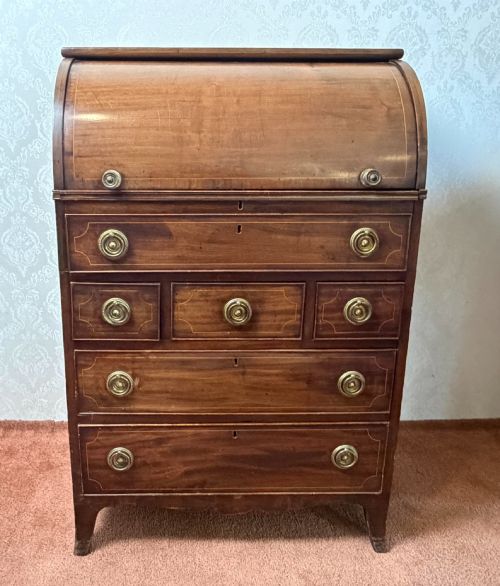
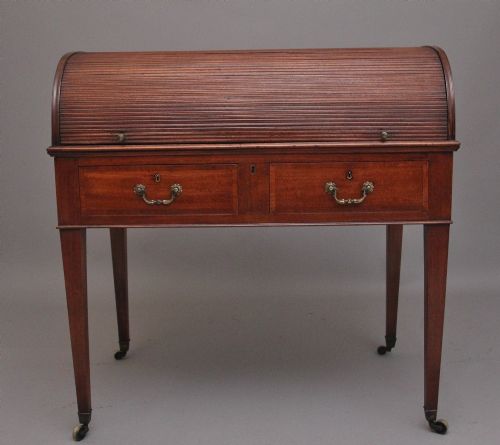
A brown mahogany rolltop desk provides a private working surface by using a flexible slatted shutter or curved cylinder to conceal the interior papers and drawers. These writing pieces appear across several distinct historical eras, ranging from the Georgian period through the Victorian and Edwardian epochs.
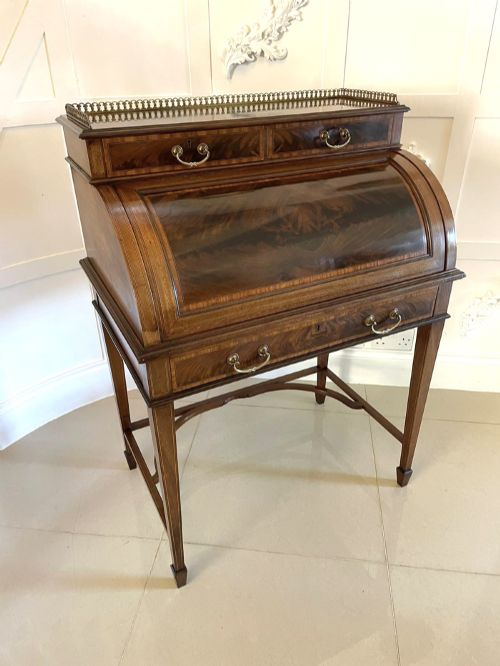
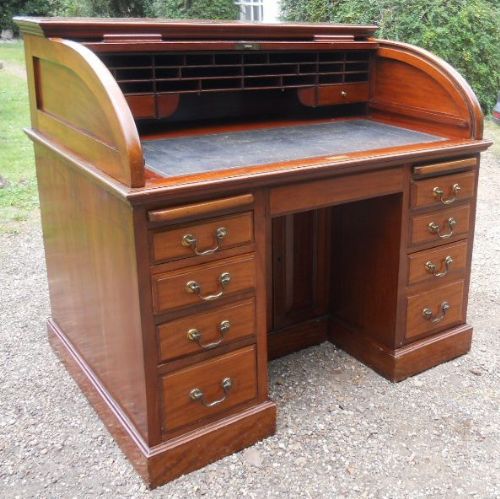
The versions most frequently encountered on this page date from the Edwardian era and the nineteenth century, often featuring inlaid details such as boxwood. Formats vary from small freestanding items to large pedestal and kneehole arrangements designed for substantial studies.
Cabinet makers utilised rich mahogany timber as the primary structural body, frequently pairing it with satinwood interiors or brass mounts. Such desks serve both as functional office furniture and as formal display pieces within a traditional interior.
How they were made
Craftsmen built these desks using solid mahogany and carefully selected veneers applied to secondary framing timbers. The curved rolltop or cylinder mechanism required precise carpentry so that the wooden slats slide smoothly within internal tracks.
Many examples incorporate delicate boxwood inlay and contrasting satinwood interior fittings to add visual interest to the writing compartment. Brass handles, key escutcheons, and occasional ormolu mounts complete the construction of these refined writing tables.
Some desks hide secret drawers behind pigeonholes, designed for stashing love letters or spare house keys away from curious eyes.
What varies in quality
The standard of timber selection and the precision of the joinery mark the difference between standard production and superior craftsmanship. Finer pieces demonstrate seamless operation of the tambour or cylinder mechanism alongside crisp, well-defined inlay work.
Internal arrangement complexity also distinguishes better examples, with fitted pigeonholes, secret drawers, and secondary wood quality showing the maker's original investment of time and skill.
Maple & Co. London
The Brown Mahogany Rolltop Desk Glossary
- Rolltop desk
- A writing table with a flexible wooden shutter that pulls down over the desk surface to conceal the pigeonholes and drawers. This mechanism protects the contents while keeping paperwork out of sight.
- Cylinder desk
- A writing desk featuring a solid curved quarter-circle lid that slides backward into the body of the cabinet to open. It offers a smooth, continuous wooden curve rather than flexible slats.
- Tambour
- A series of narrow wooden strips glued to a fabric or leather backing to form a flexible shutter. This allows the cover to bend around tight curves within the desk frame.
- Kneehole desk
- A configuration featuring a central recess for the user's legs, flanked by pedestals of drawers on either side. This layout provides substantial storage capacity while maintaining a formal silhouette.
- Inlay
- A technique where contrasting materials such as boxwood or satinwood are inserted into recesses cut into the mahogany surface. It creates flat decorative patterns and borders across the exterior.
Brown Mahogany Rolltop Desk: Frequently Asked Questions
What is the difference between a cylinder desk and a rolltop?
A cylinder desk uses a solid, curved piece of wood that rotates on a pivot track into the body of the furniture. In contrast, a rolltop uses multiple small slats attached to a flexible backing fabric.
Both styles serve the same purpose of concealing the workspace, but cylinder versions generally represent a more continuous line of solid timber construction.
How do I care for a mahogany rolltop mechanism?
Keep the internal tracks clean and free from dust so the wooden slats or cylinder slide without catching. Apply appropriate furniture wax sparingly to maintain the exterior mahogany finish.
Avoid placing these desks in areas with fluctuating humidity to prevent the wood from expanding and sticking within the runner grooves.
Are these desks suitable for modern daily work?
These desks provide ample surface area and numerous internal compartments for organising stationery and correspondence. The enclosed rolltop allows you to hide a laptop and papers at the end of the day.
Users should check the internal writing height and kneehole dimensions to ensure comfortable seating with modern office chairs.
How do I identify an Edwardian mahogany desk?
Edwardian examples often feature lighter framing, subtle boxwood inlay, and a refined delicacy derived from eighteenth-century revivals. They frequently employ mahogany veneers over sturdy oak or pine secondary woods.
Construction details and hardware styles from this period typically align with mass-production techniques that improved domestic furniture standards around nineteen hundred.