


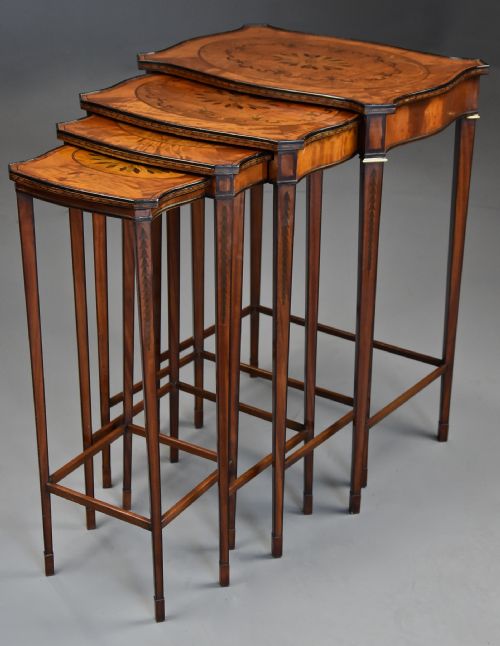


Brown Mahogany Nesting Tables
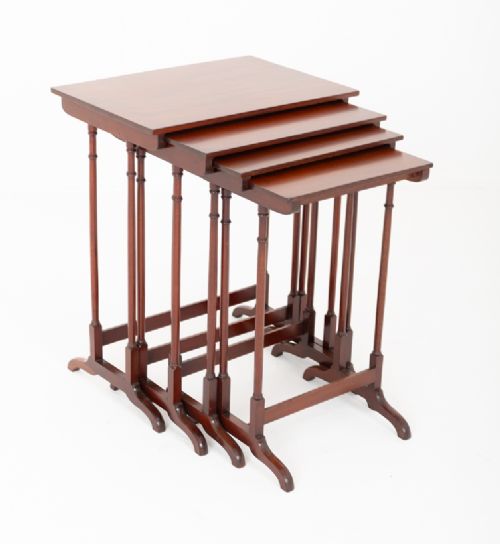
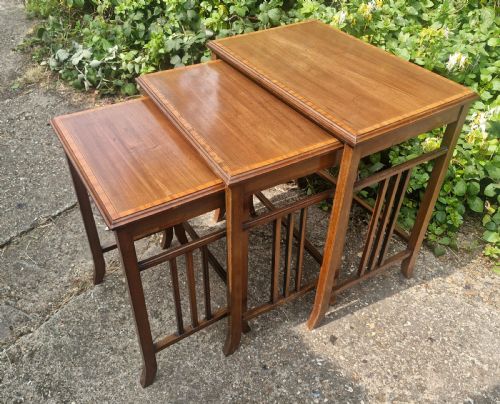
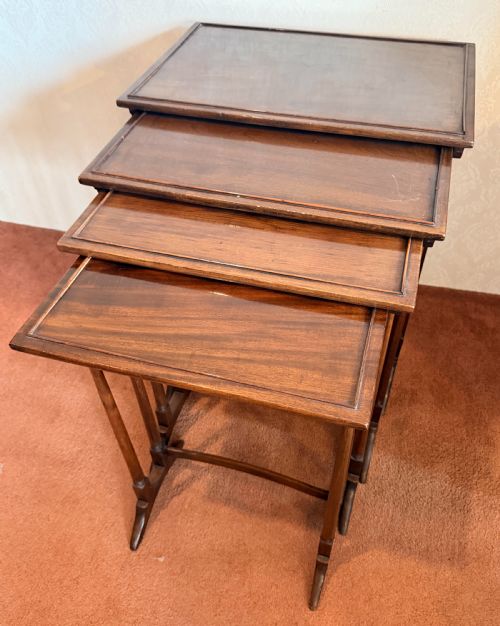
Brown mahogany nesting tables offer brilliant space-saving utility, stacking neatly when unused and separating into multiple individual surfaces for tea or display.
Brown Mahogany Nesting Tables
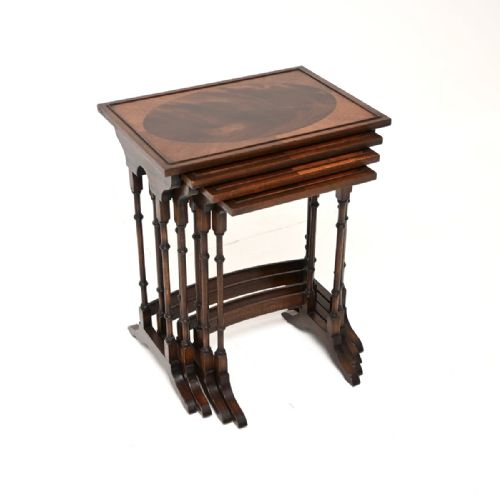
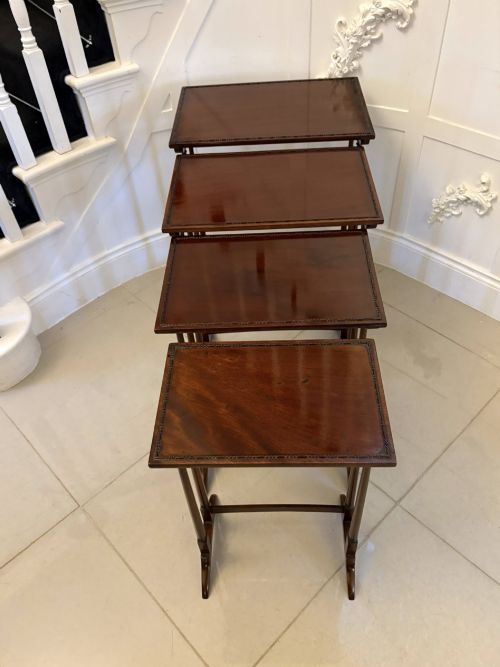
When searching for brown mahogany nesting tables, you encounter sets of graduated occasional tables designed to slide beneath one another in a compact column. The evidence shows these pieces predominantly in Edwardian and Victorian periods, alongside Georgian style and Regency revival interpretations.
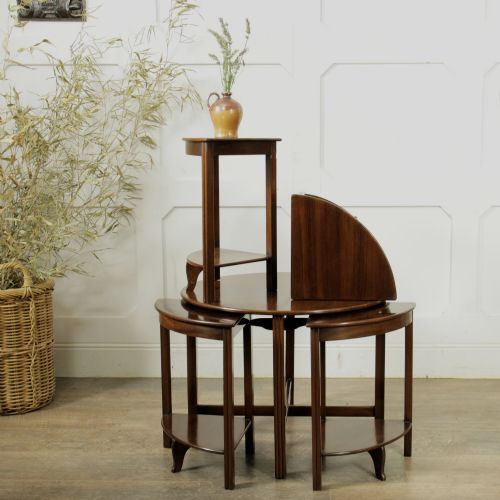
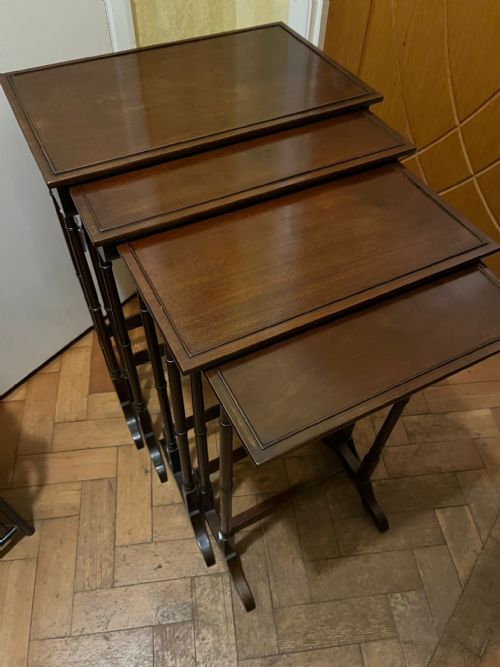
Sets commonly comprise three or four tables, though rarer five-table circular configurations and occasional pairs also appear. Formats range from rectangular and serpentine shapes to oval and circular tops, frequently functioning as occasional or side tables.
How they were made
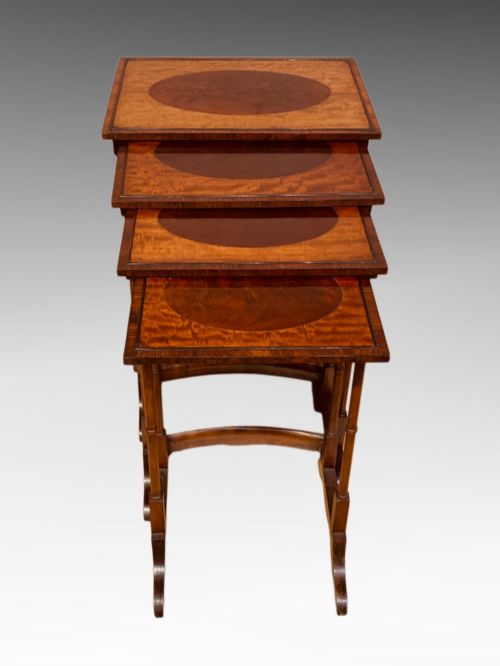
Cabinetmakers utilised solid mahogany and mahogany veneer for the primary structure, applying contrasting satinwood, boxwood, and rosewood inlay for decorative detail. Certain examples incorporate specialised touches such as yew veneer tops, embossed leather panels, and French brass inlay.
Construction relies on precise scaling so that each smaller table clears the frame and legs of the one above it. Tables exhibit shaped tops, slender supports, and occasionally serpentine forms characteristic of Sheraton revival aesthetics.
Listings span the nineteenth century through the nineteen-thirties, with Edwardian and Victorian pieces dominating the selection alongside Georgian style revivals.
What varies in quality
Quality rests in the crispness of the cabinetwork and the precision of the graduated sizing, ensuring the stack slides together flush without binding. Superior examples display figured mahogany grain and meticulous satinwood or boxwood stringing.
Finer sets maintain structural rigidity across all tiers despite the slender legs required for nesting. Lesser pieces show heavier proportions and simpler, unfigured timber without decorative inlay.
The Brown Mahogany Nesting Tables Glossary
- Quartetto
- A set of four nesting tables. This term appears frequently in Edwardian cataloguing for matching sets of four.
- Veneer
- A thin layer of figured wood applied to a base timber. Examples show yew veneer utilised on table tops.
- Inlay
- Contrasting woods such as satinwood and boxwood embedded into the mahogany surface. This technique creates geometric or floral borders.
- Serpentine
- A gently undulating curved line found on table edges. This profile appears on select Edwardian occasional tables.
Brown Mahogany Nesting Tables: Frequently Asked Questions
How many tables come in a set?
Sets typically contain three or four tables designed to slide together. Certain Edwardian configurations feature five circular tables.
Larger sets graduate smoothly in height and width to fit entirely beneath the largest top.
What is a quartetto table?
A quartetto is a matched set of four occasional tables designed to nest together. The term is common in Edwardian listings.
Each table diminishes in size to fit compactly inside the framework of the preceding one.
Are these tables solid mahogany?
Pieces utilise a combination of solid mahogany and mahogany veneers over secondary timbers. Selected examples also feature figured mahogany and specialised top veneers.
Inlay work incorporates contrasting woods like satinwood and boxwood into the primary mahogany structure.
Where were nesting tables used?
These tables served as versatile occasional furniture in drawing rooms and parlours. They provided extra surface space for tea or writing without cluttering the room.
When not in use, the smaller tables stacked away into a single compact footprint.