
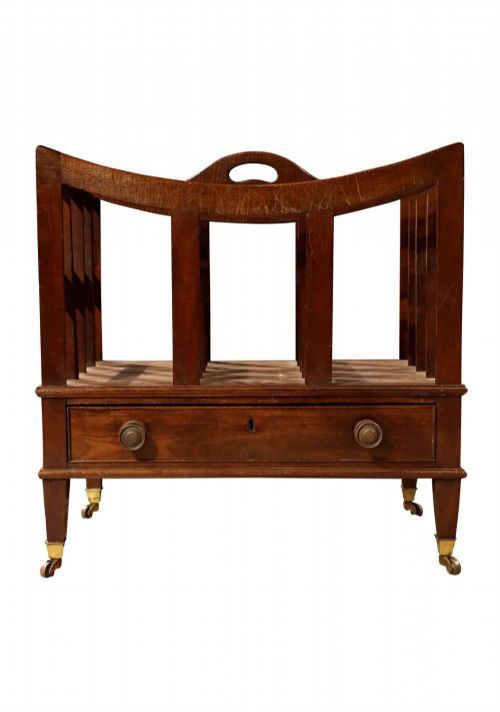


Brown Mahogany Music Cabinet
A brown mahogany music cabinet stores folios and sheets securely while bringing rich timber tone into a sitting room.
Brown Mahogany Music Cabinet
A brown mahogany music cabinet is a dedicated piece of furniture designed to hold sheet music, folios and scores within a domestic interior. These items primarily date from the Edwardian era and the nineteenth century, reflecting the popularity of home piano playing and musical entertainment during those periods.
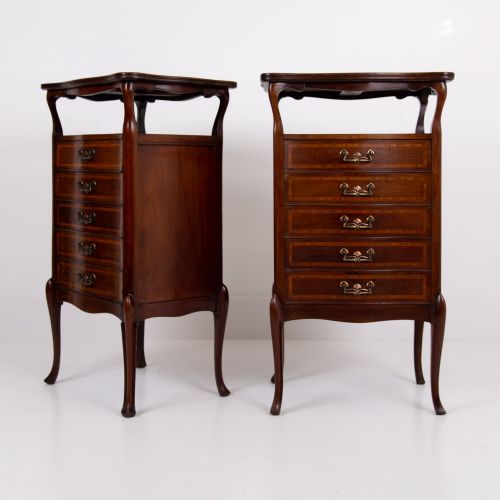
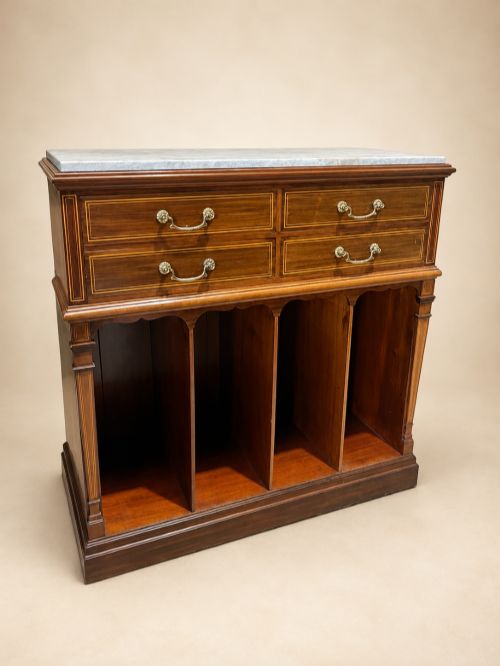
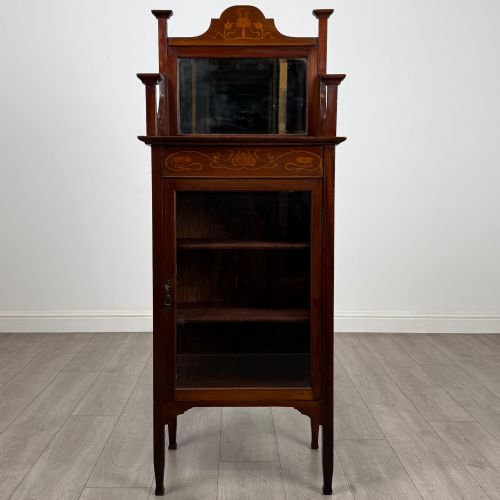
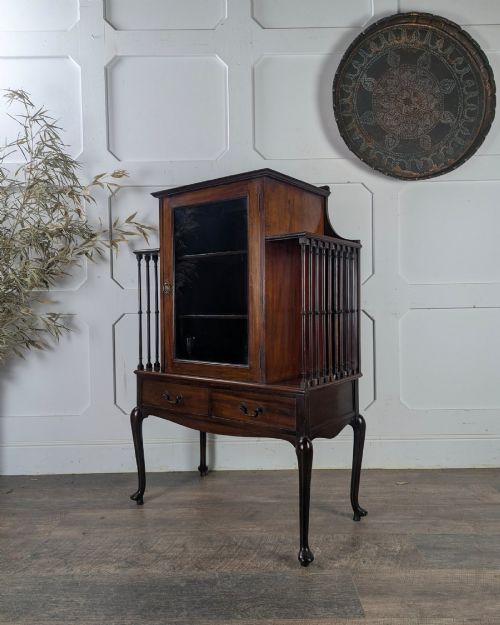
The pieces appearing on this page span several distinct forms, including fall-front cupboards, multi-drawer filing units and open canterburys. Edwardian examples frequently feature inlaid satinwood details and multiple shallow drawers, whilst Victorian variants tend to employ heavier timber grains and marquetry.
Originating largely from British workshops, these cabinets combine practical internal shelving with refined exterior timber surfaces. Buyers encounter everything from narrow upright cupboards to low bedside formats adapted for paper storage.
Materials and construction
Cabinetmakers utilised solid mahogany and mahogany veneers over secondary timbers, often accentuating the facades with contrasting satinwood inlay, boxwood stringing and marquetry. These wooden structures frequently incorporate brass handles, hinges and original castors to support daily use.
Internal partitions and drop-front mechanisms required precise carpentry to accommodate standard sheet music sizes without damaging paper edges. Glass panels, mirror backs and marble tops appear on select hybrid display formats within the selection.
Sheet music was once folded horizontally in half by careless pianists, creating mysterious crease lines inside surviving Edwardian folios.
Assessing craftsmanship and finish
The distinction between standard utility pieces and finer workshop output rests upon the crispness of the inlay work and the selection of the mahogany grain. Cabinets displaying balanced proportions, tight dovetail joints on the drawers and well-figured timber represent the higher end of the range.
Hardware originality, such as matching brass pulls and functioning locks with keys, elevates an example above those altered or stripped of their original mountings over time.
Keeble London·J C Loudon
The Brown Mahogany Music Cabinet Glossary
- Canterbury
- A low stand with partitioned vertical sections designed for holding sheet music, folios or magazines. This form often includes a single lower drawer for smaller items.
- Fall-front
- A hinged door that drops forward to reveal internal compartments or document shelves. It provides easy access to stacked music sheets without requiring a traditional side-hinged door.
- Satinwood inlay
- A contrasting light-coloured timber embedded into the darker mahogany surface in geometric or floral motifs. It is particularly characteristic of Edwardian cabinetwork.
- Marquetry
- Elaborate decorative patterns formed by fitting together pieces of various coloured veneers into the timber surface. Victorian examples utilise this technique for floral or scroll motifs.
- Etagere
- A set of open shelves supported by slender pillars, used for displaying ornaments or holding books. Some variants incorporate enclosed cabinet space beneath the open tiers.
Brown Mahogany Music Cabinet: Frequently Asked Questions
What is a brown mahogany music cabinet used for?
These cabinets were built to organise and store unbound sheet music, songbooks and musical folios near a piano or parlour instrument. The internal drawers and drop-front compartments kept paper flat and protected from dust.
Today, they function equally well as bedside tables, narrow hallway storage or designated units for modern paperwork and artists' supplies.
How do I date an Edwardian music cabinet?
Edwardian pieces, generally dating between nineteen hundred and nineteen ten, typically feature lighter proportions, satinwood stringing and delicate inlaid motifs. They often rely on factory production methods while retaining traditional hand-finished dovetails.
Earlier Victorian pieces from the nineteenth century display heavier timber dimensions, deeper polish tones and more robust marquetry or turned feet.
What is the difference between a music cabinet and a canterbury?
A music cabinet is an enclosed piece of furniture featuring doors, a fall-front or multiple horizontal drawers designed to conceal paper contents. It often includes a flat top surface suitable for decorative items.
A canterbury is an open rack featuring vertical partitions or slats intended for upright folio storage, frequently mounted on castors for mobility around a room.
How do I care for mahogany furniture?
Mahogany requires stable room humidity and protection from direct sunlight to prevent the timber from fading or drying out over decades of use. Regular dusting with a dry, soft cloth maintains the natural lustre of the polished surface.
Avoid placing damp items or hot cups directly on the top surface, especially on pieces featuring delicate inlaid veneers.