


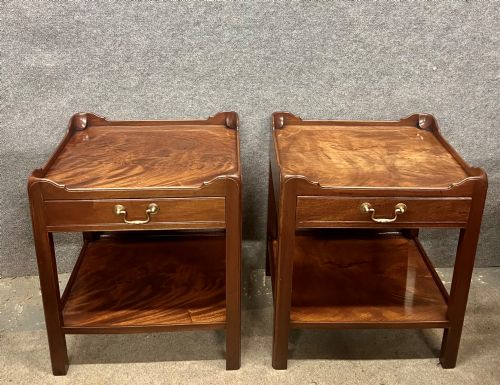
Brown Mahogany End Table
A brown mahogany end table brings warmth and rich grain to a room, ranging from Georgian drop-leaf forms to Edwardian inlaid occasional pieces.
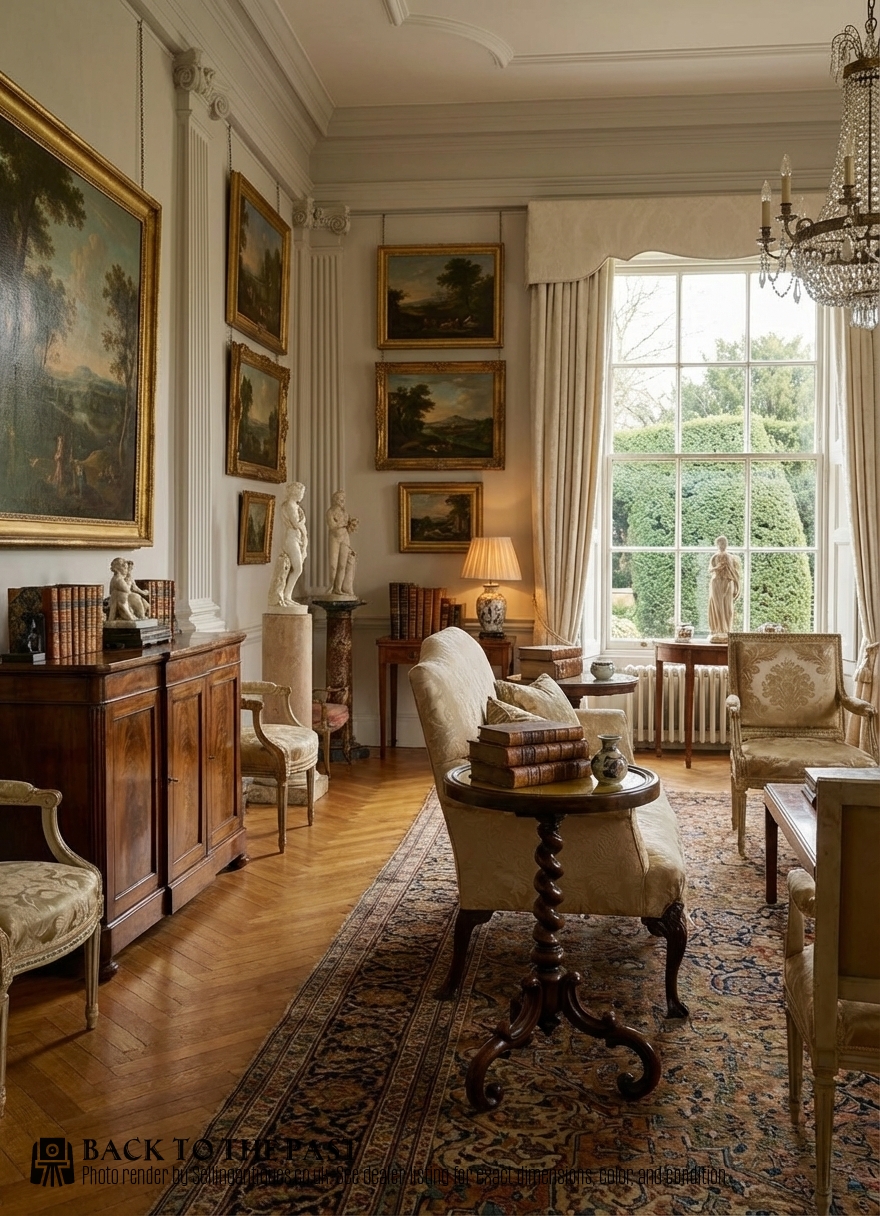
Brown Mahogany End Table
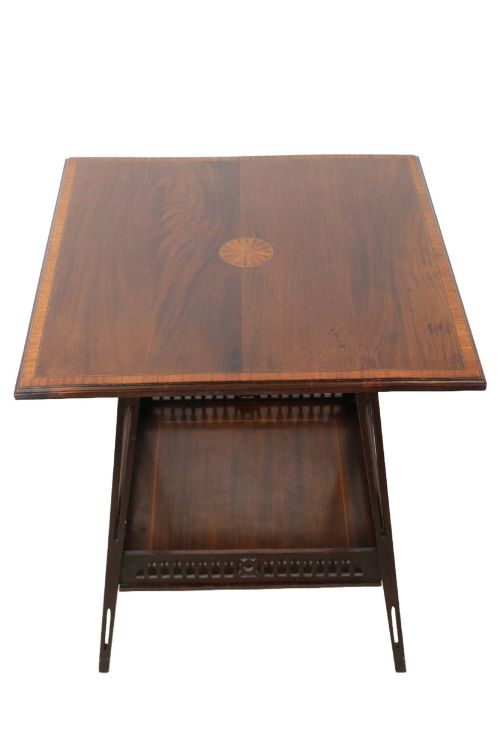
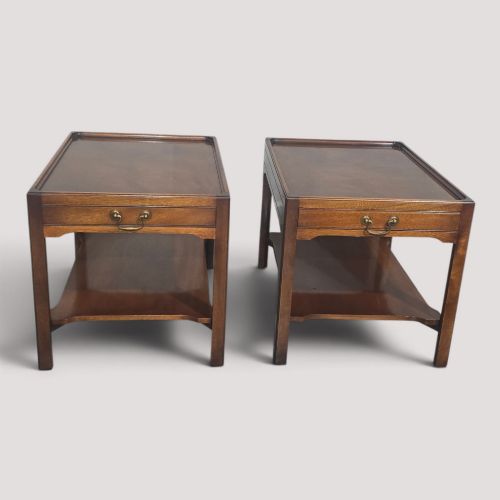
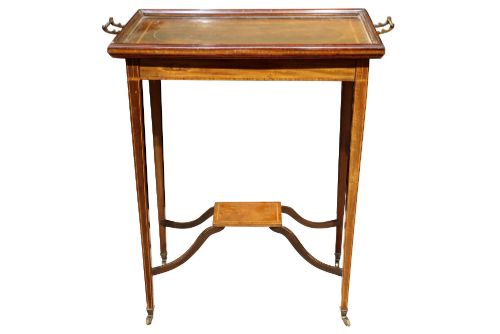
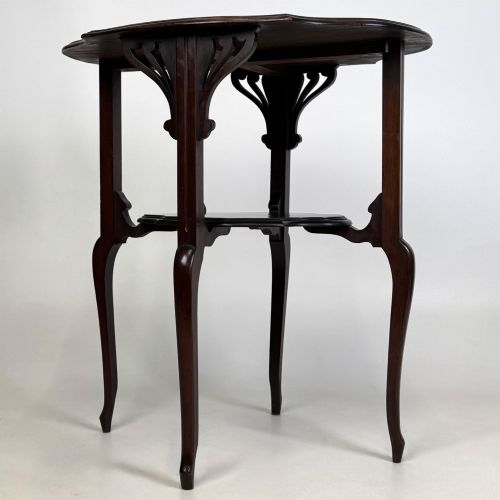
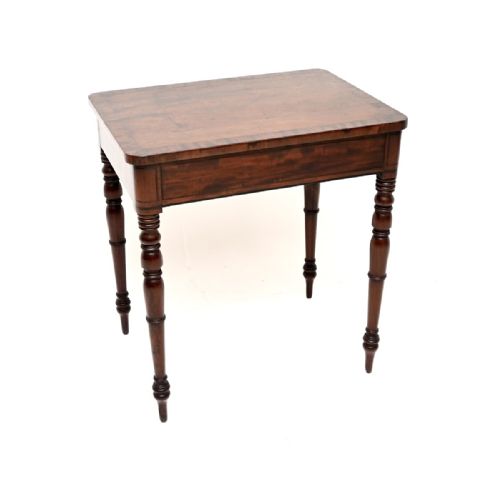
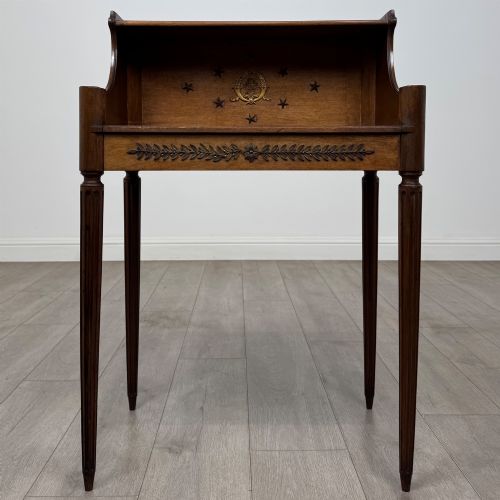
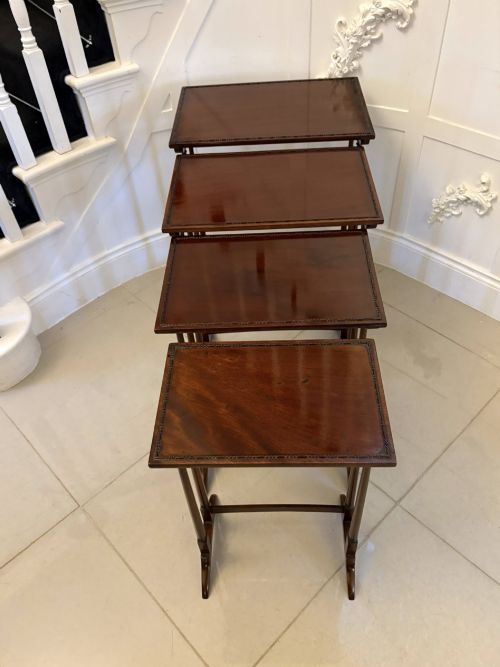
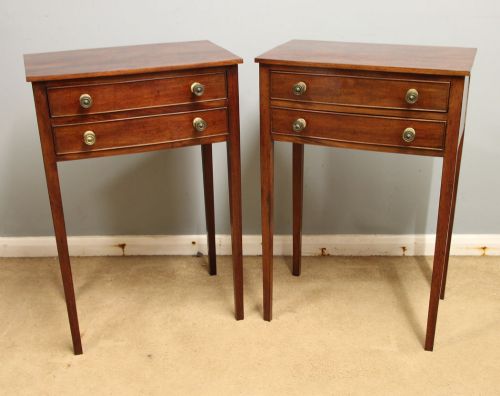
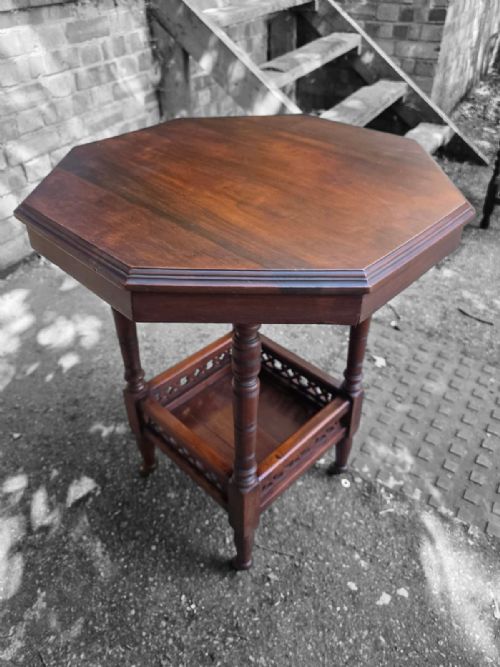
A brown mahogany end table encompasses a variety of compact surfaces designed for placement beside seating or beds, spanning periods from the Georgian era through to the Edwardian period. The selections visible here include side tables, lamp tables, nests of tables, occasional tables, and bedside tables.
The Edwardian pieces dominate the selection, frequently featuring inlaid wood details, satinwood, and boxwood accents. Alongside these, earlier examples from the Georgian and Regency periods provide simpler lines or folding mechanisms such as Pembroke and D-shaped designs.
How they were made
Makers utilised solid mahogany and figured veneers over secondary timbers, often incorporating brass hardware such as castors or handles. Decorative surfaces frequently relied on wood inlay, satinwood, and boxwood stringing to create contrast along tabletops and borders.
Construction techniques varied from traditional mortise and tenon joinery on Georgian tables to lighter framed structures on Edwardian nests and occasional tables. Leather inserts and ceramic components also appear on specific bedside and side variants.
Brown Mahogany End Table Retail Price Guide 2026
Typical asking prices for brown mahogany end table among the pieces listed under this phrase on Sellingantiques today, from the lower quarter to the upper quarter. They describe what is for sale here now, not the wider market.
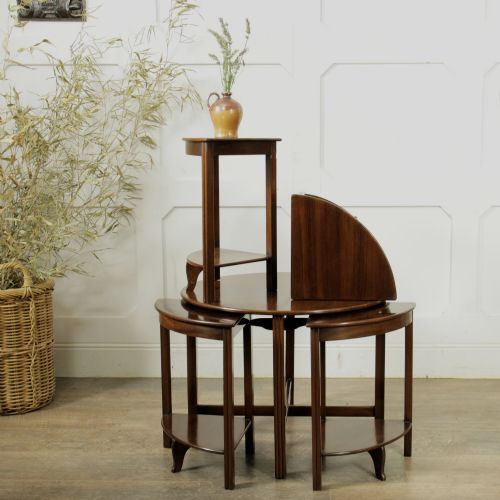
One exceptional Edwardian table forms a complete circular nest of five tables that fit inside one another like a wooden puzzle.
What varies in quality
Quality separates through the selection of timber figures, particularly where highly figured mahogany or intricate wood inlay displays superior hand-craftsmanship. Exhibition pieces demonstrate refined proportions and more complex forms, such as kidney-shaped surfaces or multi-tiered nesting sets.
The integrity of the structural joinery and the subtlety of decorative stringing distinguish standard utility items from higher-grade workshop production. Retaining original brass fittings and leather surfaces further elevates the standing of an individual piece.
Trevor Page & Co·Waring & Gillow
The Brown Mahogany End Table Glossary
- Pembroke table
- A small form of table featuring hinged drop leaves on two opposing sides, supported by folding brackets or swinging legs.
- Satinwood
- A durable, yellowish timber native to Ceylon and India, frequently utilised for contrasting inlay and stringing on Edwardian furniture.
- Stringing
- A narrow line of contrasting veneer inlaid into the surface of a piece to outline panels or borders.
- Occasional table
- A light, movable table intended for intermittent use around a sitting room or bedroom rather than a fixed dining purpose.
Brown Mahogany End Table: Frequently Asked Questions
What distinguishes a lamp table from an ordinary side table?
A lamp table generally provides a compact top specifically proportioned for holding a lighting fixture next to a chair or sofa.
These surfaces often share dimensions and forms with standard occasional or bedside tables found across the Edwardian and Georgian eras.
How do I identify an Edwardian mahogany table?
Edwardian tables frequently incorporate decorative wood inlay, satinwood stringing, and lighter framing techniques typical of the early twentieth century.
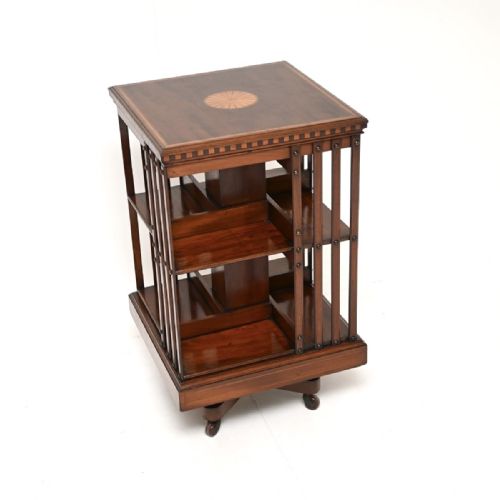
They often appear as nests of tables, revolving bookcases, or kidney-shaped occasional pieces rather than heavier Georgian or Victorian forms.
Where should I place a nest of tables?
A nest of tables suits a sitting room where surface space needs to expand and contract for guests without cluttering the floor.
The smaller constituent tables slide neatly beneath the primary larger surface when not in active use.
What is a drop-leaf table used for?
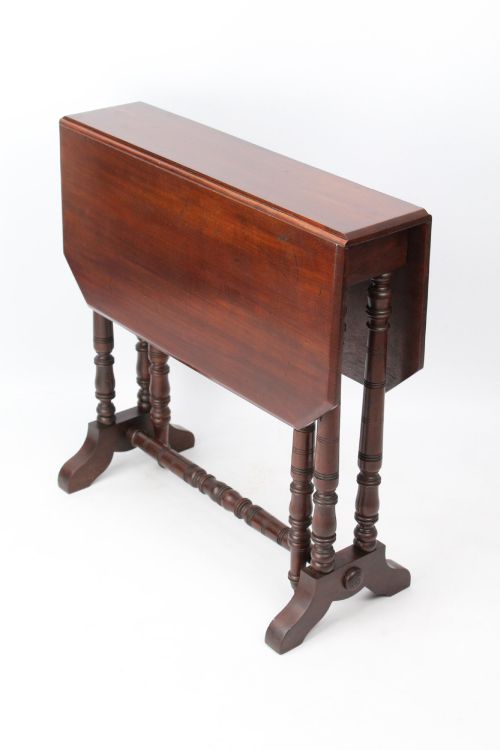
A drop-leaf table provides an adjustable surface area that expands by raising hinged flaps supported by swinging legs or brackets.
This mechanism allows the furniture to function in compact spaces as an end table or occasional surface.