
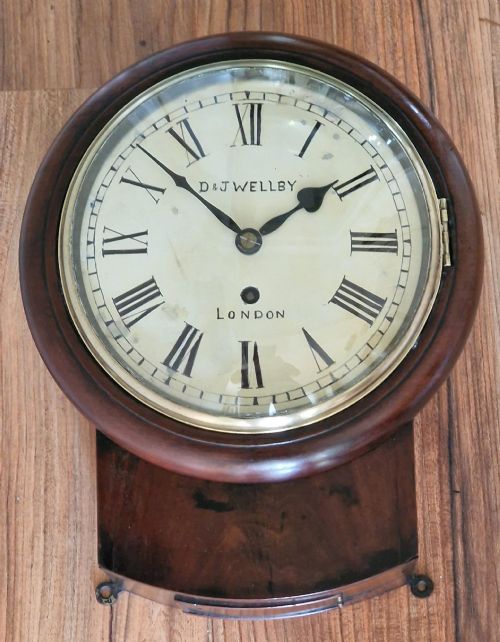


Brown Mahogany Drop Dial
Brown mahogany drop dial wall clocks are sturdy timepieces valued for reliable fusee movements and handsome wooden cases.
Brown Mahogany Drop Dial
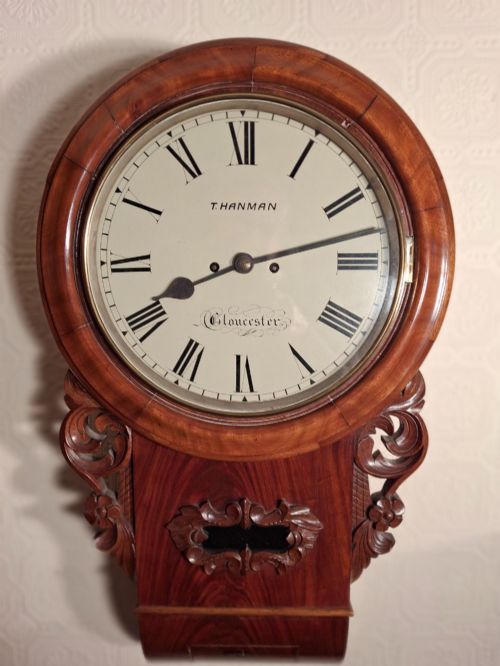
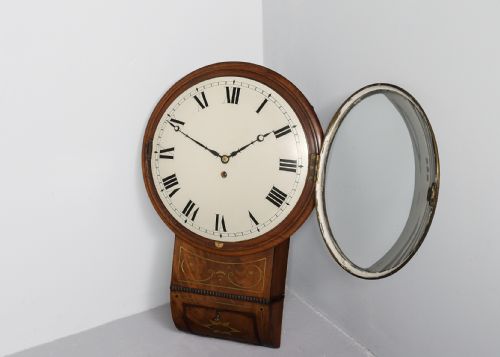
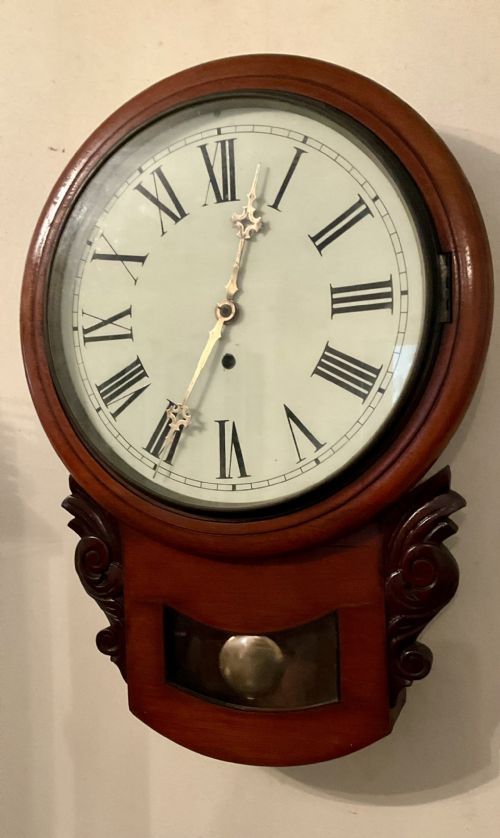
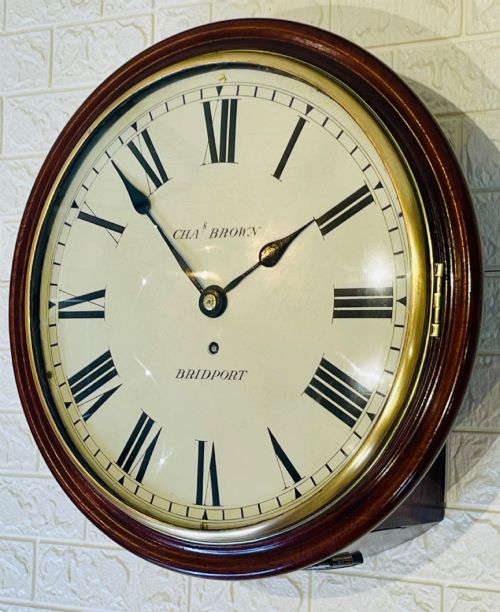
When you search for brown mahogany drop dial, you are looking at wall-mounted timepieces housed in wooden cases with extended lower trunks. These clocks are designed to hang in hallways, offices, and large rooms where clear timekeeping is required.
The pieces listed here date across the nineteenth and twentieth centuries, spanning Victorian, Georgian, and Edwardian periods. Most examples employ dependable fusee movements, though weight-driven and bell-striking variants also appear.
Sizes range from petite eight-inch dials up to extra large wall clocks suitable for public buildings or grand interiors. Mahogany frames predominate, often complemented by brass details and enamel or painted steel dials.
How they were made
Cabinet makers built the distinctive cases using solid mahogany timbers, occasionally adding brass inlay or carved decoration to the bezels and trunk doors. Glass protects the dial face, while side doors or bottom flaps grant access to the pendulum and movement.
Clockmakers fitted brass fusee or striking movements inside the wooden housings to regulate power delivery from the mainspring and ensure steady timekeeping. Dials were formed from painted steel or enamel, featuring clear Roman or Arabic numerals.
The selection includes regional pieces from Bristol, Bridport, Swindon, and Norwich alongside London makers.
What varies in quality
Quality rests on the precision of the movement and the crispness of the case carpentry. Finer examples feature clean engraving on the dial plates and well-figured mahogany timbers with minimal repairs.
Maker signatures on the dial or movement elevate a piece, distinguishing standard commercial clocks from workshop items produced by named makers in London or regional towns.
D and J Wellby·Edward Hannam·Mark Bartley
The Brown Mahogany Drop Dial Glossary
- Drop dial
- A wall clock featuring a circular dial attached to a lower wooden trunk or box that houses the pendulum. This shape helped accommodate the swing of the pendulum while maintaining a compact profile on the wall.
- Fusee
- A conical pulley connected to the mainspring by a chain or cord, designed to equalise the torque as the spring unwinds. This mechanism improves the timekeeping accuracy of the clock throughout its running cycle.
- Dial
- The face of the clock where the numbers and hands are displayed. On these pieces, dials are typically made of painted steel or white enamel.
- Bezel
- The ring, often hinged and glazed with glass, that holds the protective cover over the clock dial. Brass is the most common material used for this component.
Brown Mahogany Drop Dial: Frequently Asked Questions
How do I wind a fusee wall clock?
Use the winding key provided with the clock to turn the square arbor on the dial face clockwise until gentle resistance is felt. Take care not to overwind the mainspring.
Most eight-day fusee movements require winding once a week on the same day to maintain consistent tension and accurate timekeeping.
Where should I hang a drop dial clock?
Hang the clock on a sturdy internal wall using appropriate fixings that can support the combined weight of the mahogany case and movement. Avoid exterior walls subject to dampness.
Position the clock at eye level where the dial can be read easily and where it will not suffer from vibration caused by doors slamming.
How do I tell Victorian clocks apart from Georgian ones?
Georgian clocks often feature simpler, heavier proportions with plain mahogany cases and provincial dial signatures. Victorian models frequently display more elaborate carving, brass inlay, or standardised railway and office formats.
Examining the maker signature and construction style inside the trunk will often clarify the period of manufacture.
Why does my clock have a side door?
The side door or bottom flap on the wooden trunk allows access to the pendulum bob and the suspension spring. This access is necessary for starting the pendulum after moving the clock.
It also enables the owner to regulate the timekeeping by adjusting the small regulating nut beneath the pendulum bob.