

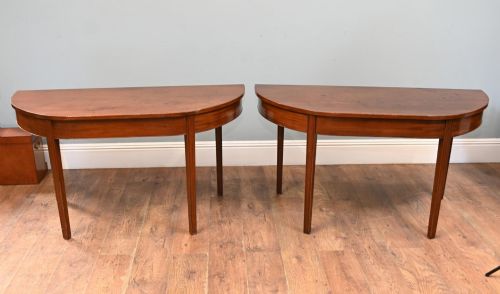
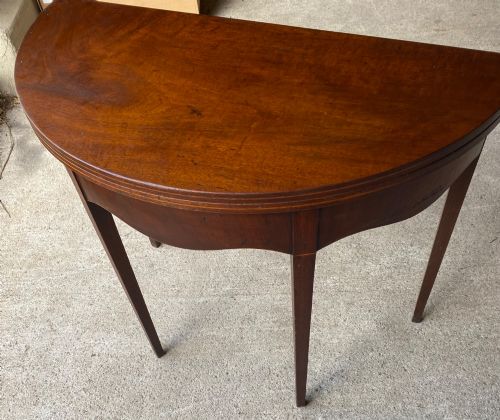
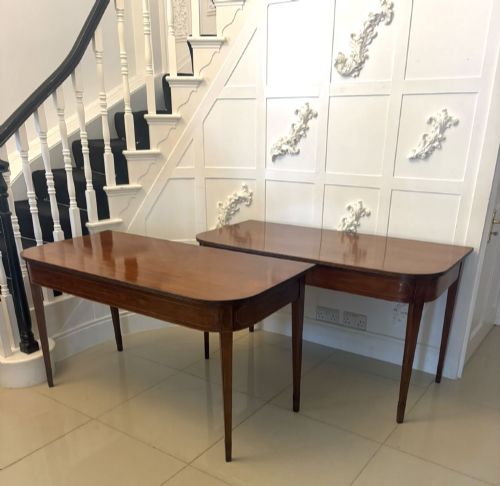
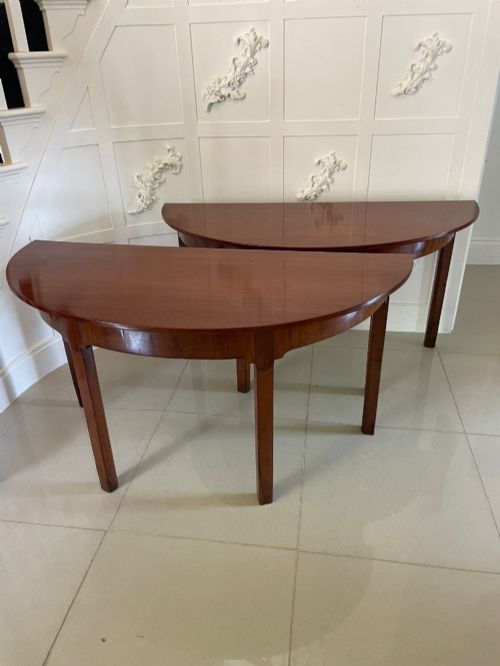

Brown Mahogany Demilune
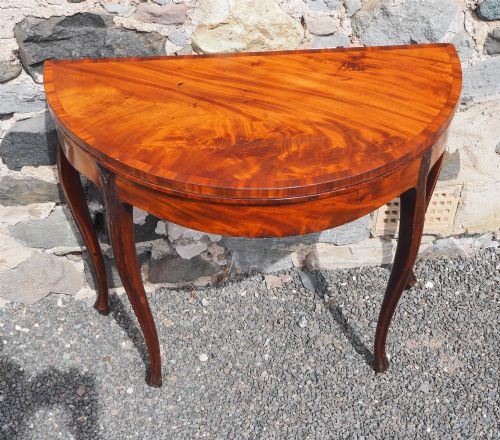
Brown mahogany demilune tables are semicircular timber furnishings designed to stand flush against a wall, offering elegant surface space and clever folding tops for card games or tea.
Brown Mahogany Demilune
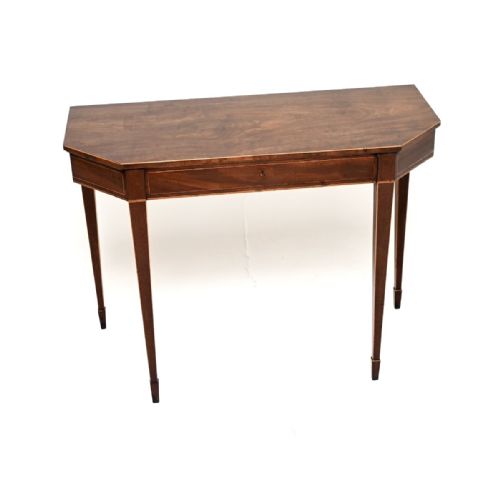
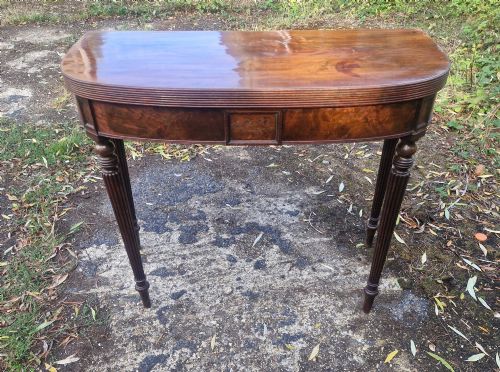
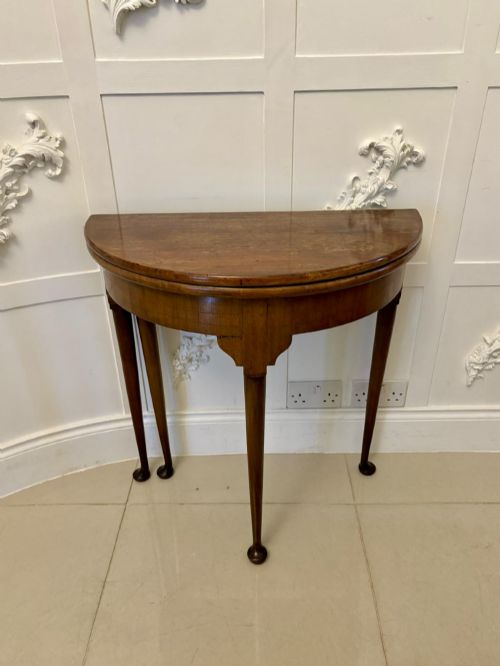
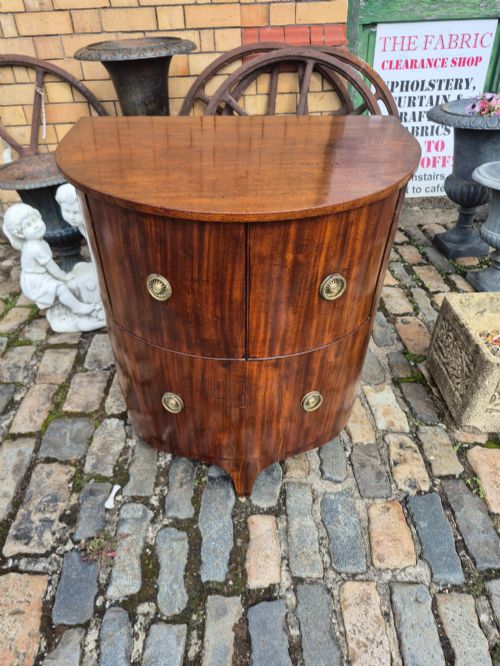
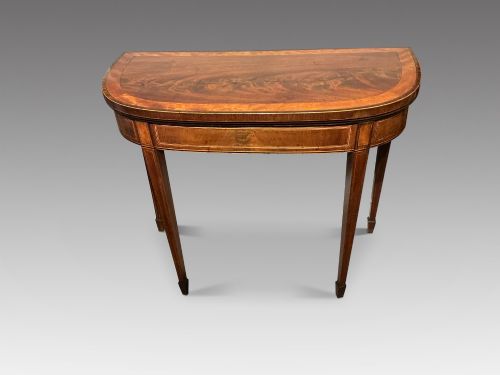
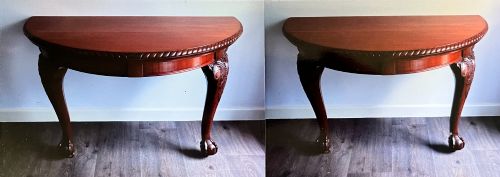
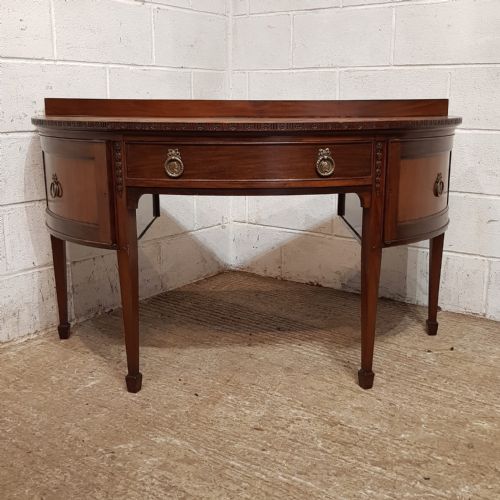
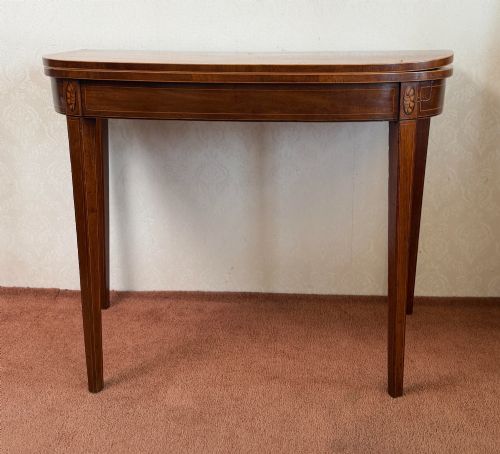
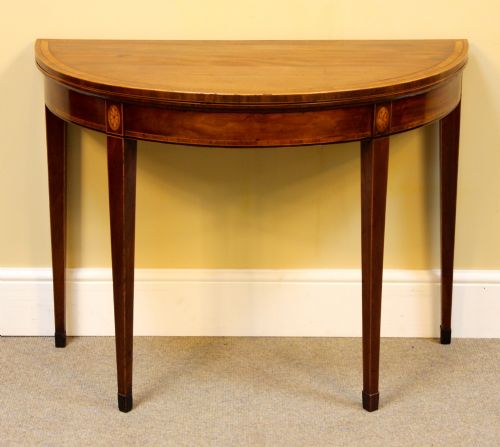
A brown mahogany demilune is a semicircular table designed to sit flat against a wall, often expanding via a fold-over top into a full circle for dining, tea, or card games. These pieces appear frequently in Georgian, Regency, and later periods, taking the form of console tables, card tables, tea tables, and side cabinets.
The assortment on this page spans console tables, card tables, tea tables, and side desks built in the half-round or D-shape format. Buyers will encounter both simple utilitarian examples and elaborate inlaid specimens dating from the eighteenth century through to the Edwardian era and the twentieth century.
How they were made
Cabinetmakers constructed these tables primarily using mahogany, frequently applying wood veneer over secondary timbers to create expansive flat surfaces. Workshops accented the rich brown grain with contrasting satinwood and boxwood inlay, alongside delicate wood inlay and marquetry.
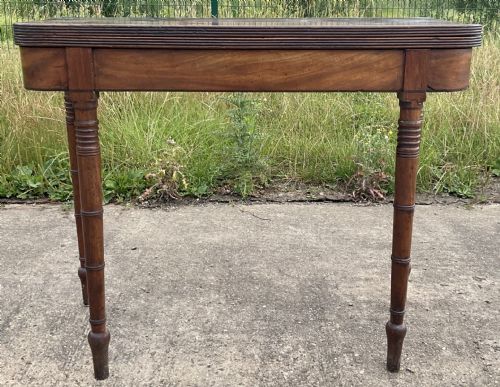
Structural elements incorporated brass fittings and specialised hinges for the fold-over leaves that transform the console format into a functional games or tea table. Legs range from straight tapering supports to turned designs executed in the manner of Gillows.
Brown Mahogany Demilune Retail Price Guide 2026
Typical asking prices for brown mahogany demilune among the pieces listed under this phrase on Sellingantiques today, from the lower quarter to the upper quarter. They describe what is for sale here now, not the wider market.
Some ingenious card tables hide secret wells beneath their folding tops, designed precisely for storing stray gaming counters.
What varies in quality
The distinction between standard and superior pieces rests heavily on the selection of timber, particularly the presence of well-figured mahogany across the top. Craftsmanship in the execution of boxwood and satinwood inlay also dictates the overall merit of an individual table.
Proportion and structural integrity define the higher tiers of these furnishings, where clever mechanism design allows folding leaves to rest perfectly level. The refinement of stylistic details, such as hand-painted decoration or precise edge banding, separates ordinary production from exceptional work.
Gillows·Bruce and Burns of Edinburgh·Edward and Roberts
The Brown Mahogany Demilune Glossary
- Demilune
- A half-moon or semicircular shape utilised in furniture design. This profile allows tables to occupy minimal floor space against a wall while providing ample surface area.
- Foldover
- A hinged tabletop design that doubles the surface area when opened. This mechanism allows a compact console to function as a card or tea table.
- Inlay
- A decorative technique where contrasting materials such as satinwood or boxwood are embedded into the primary mahogany surface. This creates geometric patterns or pictorial motifs.
- Veneer
- A thin layer of highly figured mahogany applied over a sound structural timber. This method displays striking grain patterns economically.
- Console
- A table designed to be fixed against a wall, often supported by front legs with the rear securing to the architectural structure. They serve decorative and functional roles in hallways and drawing rooms.
Brown Mahogany Demilune: Frequently Asked Questions
What is a demilune table used for?
These tables served primarily as decorative side pieces in hallways and drawing rooms, holding lamps, mirrors, or ornamental objects against the wall.
Many examples feature clever folding tops that swivel or open to create a stable surface for card games, tea, or occasional dining.
How do I identify a Georgian mahogany demilune?
Georgian pieces typically exhibit solid mahogany construction or fine veneer work, often featuring straight tapering legs and restrained classical proportions.
Look for period characteristics such as hand-cut dovetails in the framing and traditional timber preparation rather than modern mechanical fastenings.
What is the difference between a console and a card table?
A console table stands permanently against a wall as a decorative architectural feature with a fixed, single-slab semicircular top.
A card table incorporates a hinged dual-leaf top that opens up and rotates to reveal a baize-lined playing surface supported by a swing leg.
Where should I place a demilune table at home?
These semicircular tables excel in narrow entryways, hallways, or behind sofas where rectangular furniture would project too far into the floor space.
They also pair effectively beneath matching wall mirrors to create a coordinated focal point in a dining room or sitting room.