
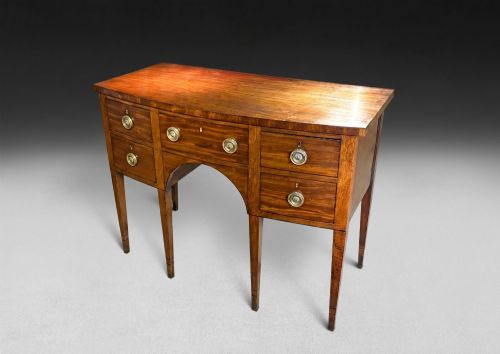
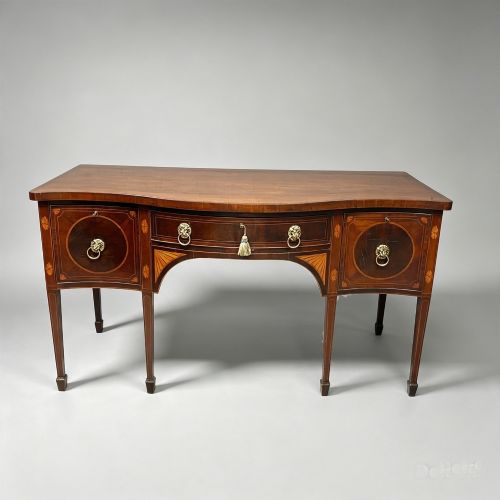
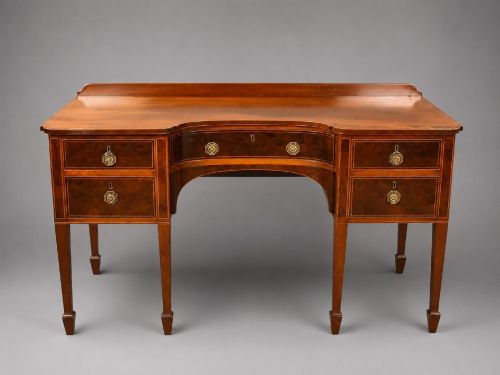
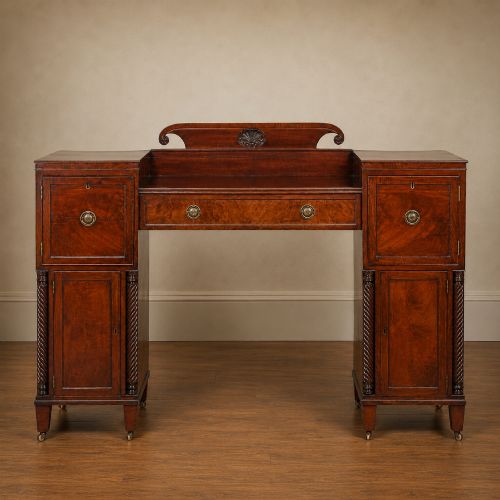
Brown Mahogany Buffet Server
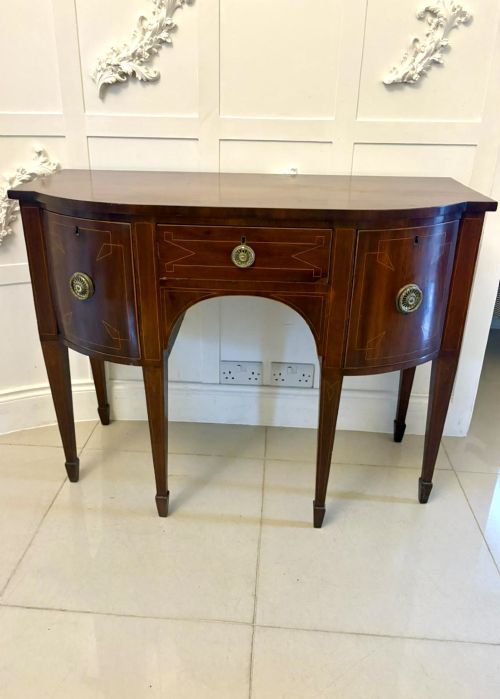
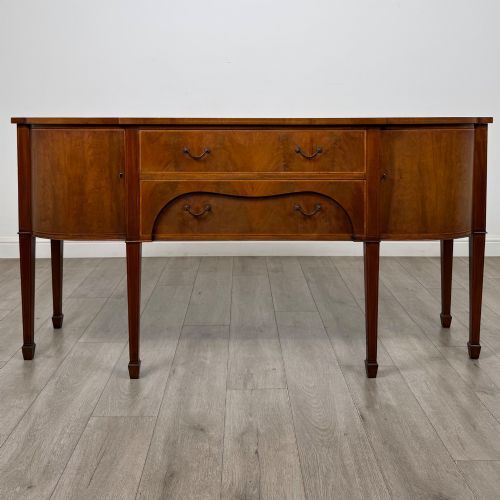
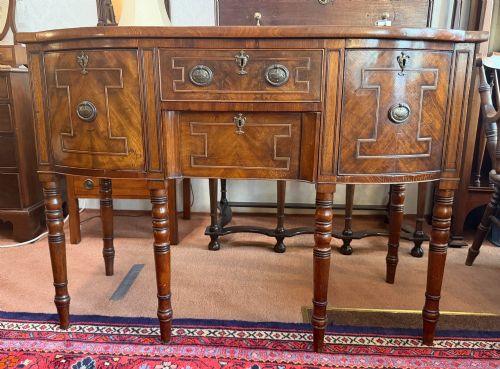
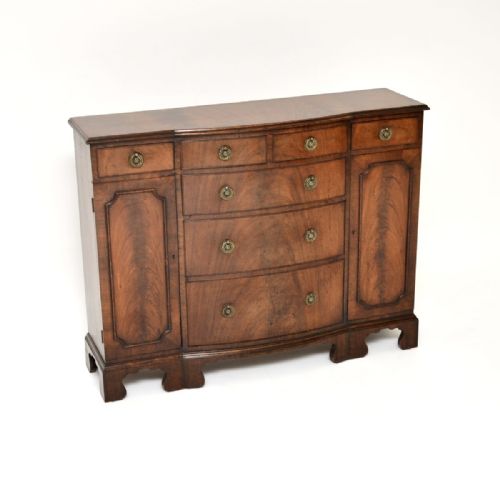
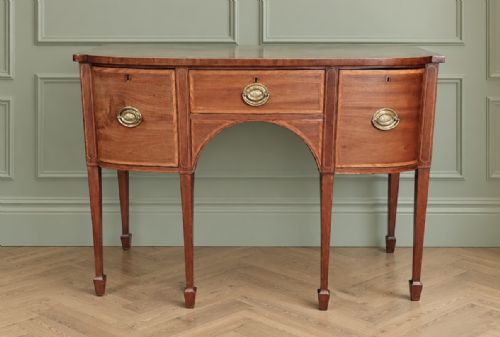
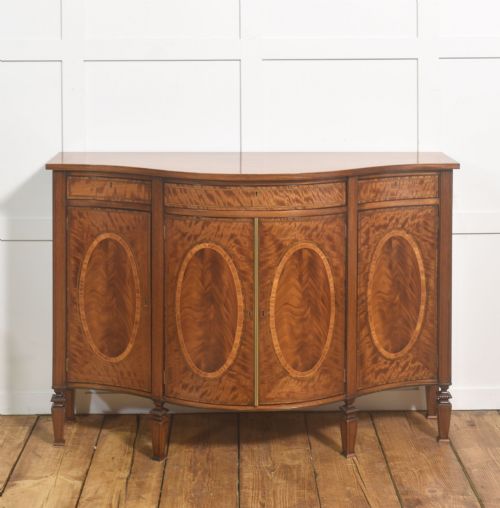
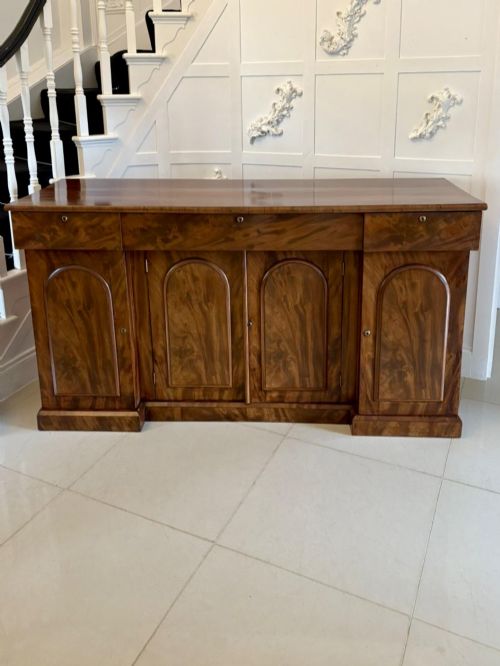
A brown mahogany buffet server brings robust timber and formal dining room utility to an interior.
Brown Mahogany Buffet Server
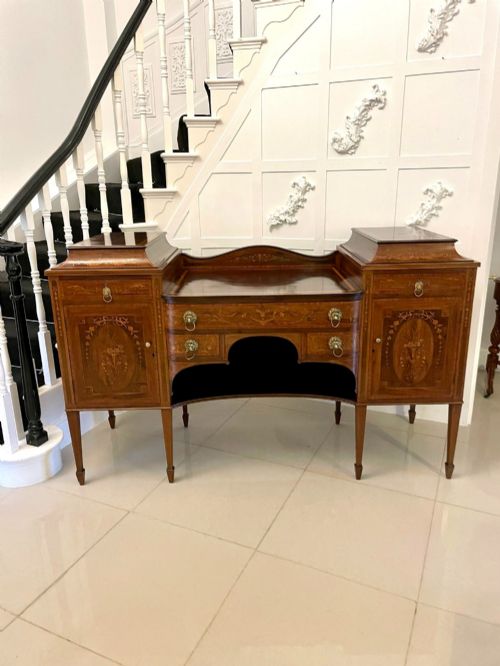
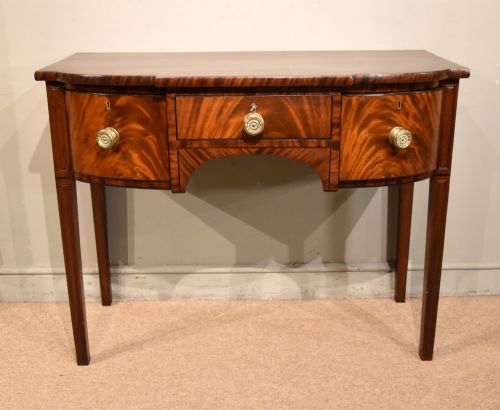
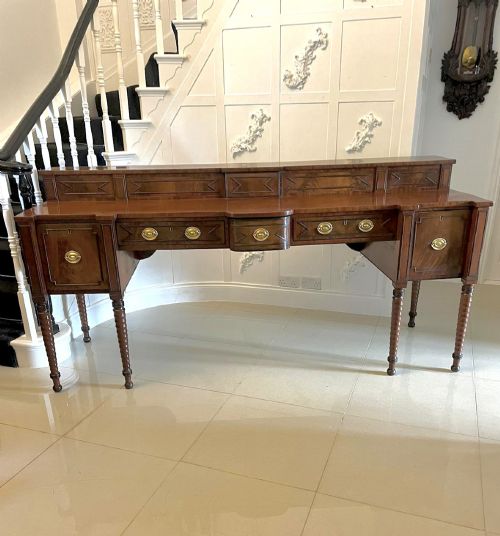
A brown mahogany buffet server encompasses formal dining room storage furniture designed to hold serving dishes, cutlery and glassware during meals. When searching for a brown mahogany buffet server, buyers encounter diverse forms ranging from large stage-back sideboards to compact side tables and servers.
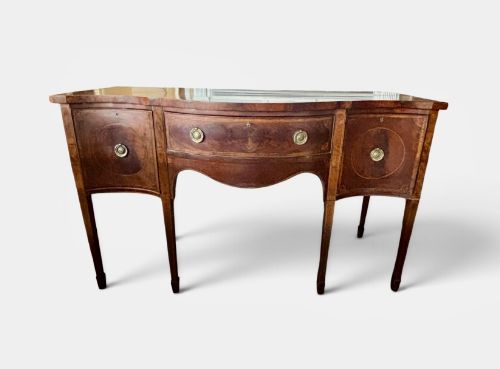
The pieces span Georgian, Regency and Victorian periods, alongside Edwardian and later revivals. Bow-front and serpentine shapes appear frequently alongside straightforward linear profiles.
Makers and workshops constructed these dining pieces using rich timber figure, with many examples originating in the eighteenth and nineteenth centuries.
Construction and materials
Cabinet makers utilised solid mahogany and figured mahogany veneers over secondary timbers, often incorporating flame mahogany variants for visual depth on drawer fronts and doors. Surface enrichment relied on contrasting timbers such as satinwood, boxwood and purpleheart banding.
Hardware typically comprises brass handles and escutcheons, while interior construction involves oak drawer linings and traditional joinery methods suited to heavy domestic service.
Listings span Georgian, Regency, Victorian and Edwardian periods, constructed primarily in mahogany with brass and satinwood inlay.
Assessing quality and craftsmanship
Quality rests upon the choice of timber figure, where highly figured flame mahogany veneer or well-matched grain elevates an example above plain stock. Precision in stringing, marquetry inlay and crossbanding distinguishes finer cabinet work.
Proportion and execution of serpentine or bow fronts determine the overall elegance, with superior pieces showing crisp edge moulding and intact original brass hardware.
Hewetsons London·M D Miller And Sons Nottingham
The Brown Mahogany Buffet Server Glossary
- Bow-front
- A curved cabinet front that swells outward in the centre, offering a softer profile than a flat facade. This shape appears frequently on nineteenth-century servers.
- Serpentine
- A shaped front featuring a concave centre flanked by two convex curves, or the reverse. It represents advanced cabinet-making skill.
- Crossbanding
- A border of veneer laid perpendicular to the grain of the main surface, framing drawer fronts or tabletops. It provides a neat visual margin.
- Marquetry
- Decorative patterns formed by fitting together small pieces of veneer depicting floral or geometric motifs. Craftsmen utilised contrasting woods to achieve tonal variation.
- Stage-back
- A raised rear superstructure on a sideboard providing extra display or shelf space. This form occurs in larger Scottish dining room pieces.
Brown Mahogany Buffet Server: Frequently Asked Questions
Where did people place these servers?
Dining rooms formed the primary location for these large pieces, where servants prepared dishes and stored silverware during banquets.
Today, they function effectively in spacious dining spaces or large hallways for everyday storage.
How do I distinguish Georgian from Victorian pieces?
Georgian examples often display restrained classical proportions and fine stringing, dating from the eighteenth and early nineteenth centuries.
Victorian and later revival pieces tend toward heavier timber dimensions and bolder carved details.
What is the difference between a sideboard and a buffet?
Sideboards traditionally incorporate banks of drawers and cupboards specifically arranged for dining room service equipment.
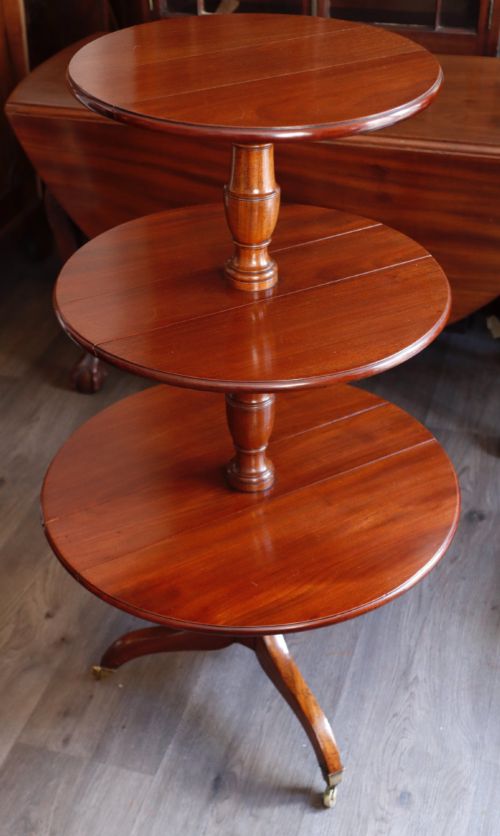
Buffets and servers often present lighter frame constructions or tier arrangements for presenting food.
How should I maintain mahogany surfaces?
Regular dusting with a dry lint-free cloth preserves the polished finish without building up unwanted wax layers.
Keeping timber items away from direct heat sources prevents the mahogany veneer from drying and splitting.