

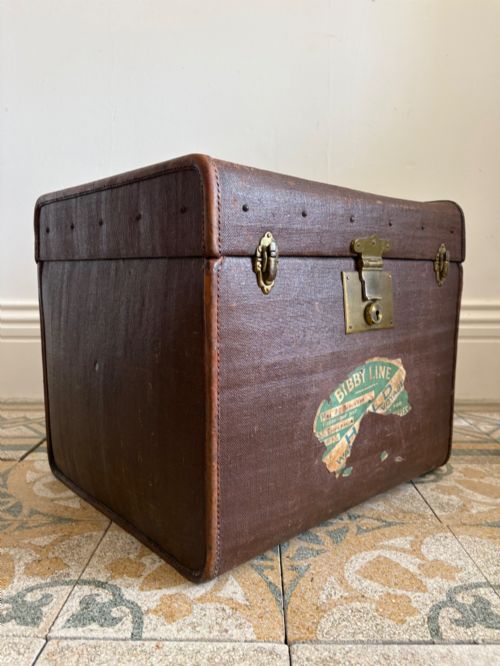


Brown Leather Travelling Chest
A brown leather travelling chest is a robust piece of antique luggage designed for transit, offering practical storage with historic character.
Brown Leather Travelling Chest
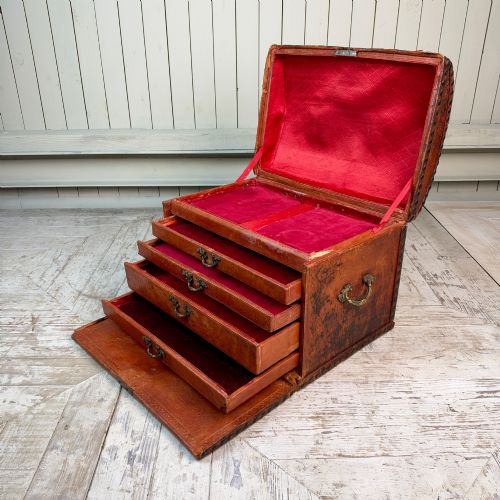
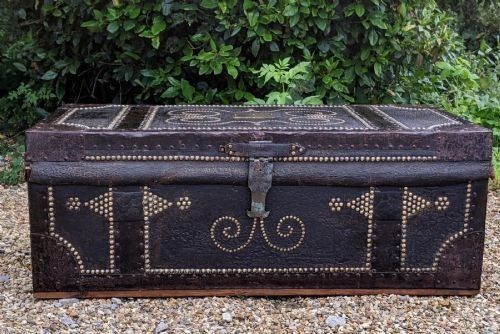
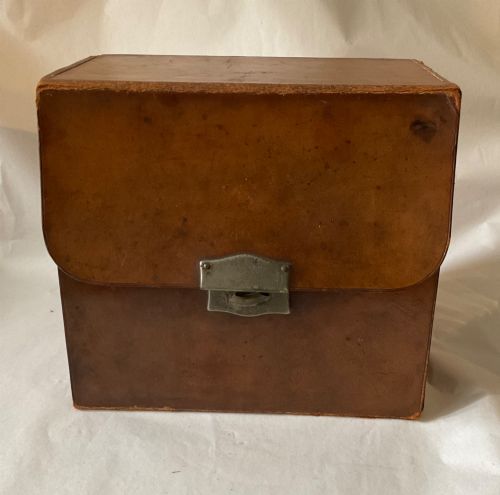
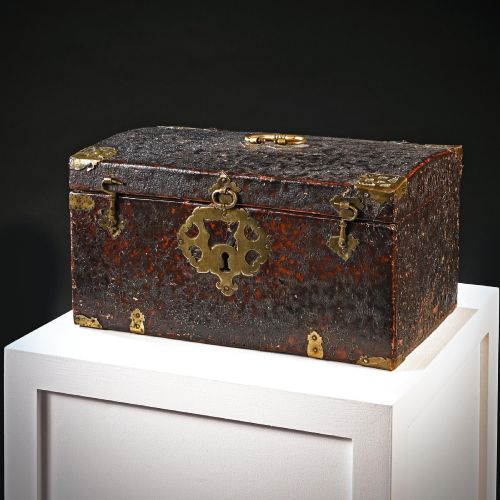
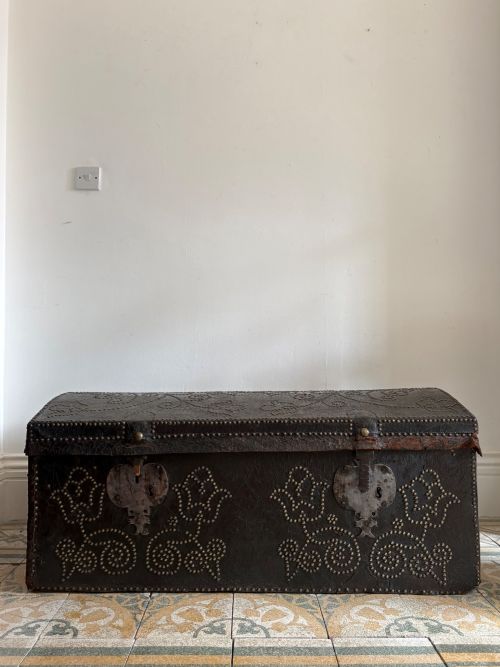
A brown leather travelling chest serves as a durable receptacle for belongings during journeys, taking forms such as domed trunks, flat-topped storage cases, and fitted wardrobes. Buyers searching for a brown leather travelling chest encounter examples spanning from the seventeenth century through to the early twentieth century, reflecting shifting demands for portable storage. The selection includes pieces originating from English, French, Spanish, and Dutch workshops, showing diverse regional construction methods.
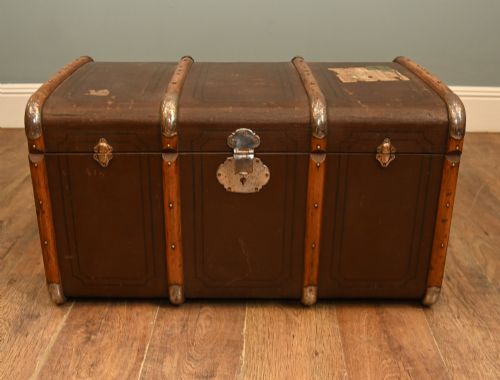
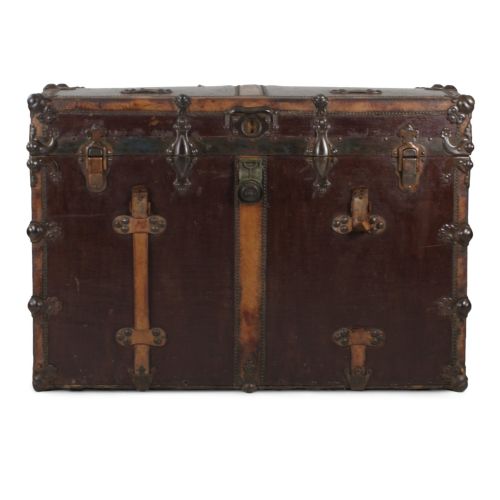
Victorian and Edwardian versions appear frequently alongside earlier seventeenth and eighteenth-century coffers and later twentieth-century steamer trunks. These pieces range from large travelling wardrobes and heavy brass-bound trunks down to small apothecary cases, picnic sets, and hat boxes. Each variant demonstrates the specific packing requirements of its era, whether for carriage travel, ocean liner voyages, or military campaigns.
Materials and Construction
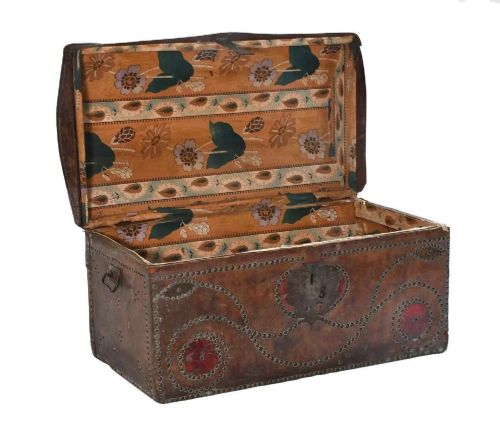
Maker construction relies heavily upon a combination of timber, hide, and metal. Wooden carcases, formed from oak, teak, or general timber, provide a rigid structural foundation to withstand heavy handling during transit. Heavy leather, canvas, or hide clads the exterior, secured firmly with iron or brass tacks and studs.
Reinforcement comes from metal bands, corner brackets, and carrying handles fashioned from brass or iron to protect vulnerable edges. Inside, linings of fabric, paper, or fitted wood compartments organise garments, bottles, or documents for the traveller.
Brown Leather Travelling Chest Retail Price Guide 2026
Typical asking prices for brown leather travelling chest among the pieces listed under this phrase on Sellingantiques today, from the lower quarter to the upper quarter. They describe what is for sale here now, not the wider market.
Some travelled trunks retain original labels and monograms, whispering tales of long-forgotten railway journeys and grand ocean voyages.
Factors of Quality
Quality in these trunks rests upon the integrity of the original materials and the sophistication of the internal fittings. Superior examples display fine metalwork, robust locking mechanisms bearing maker stamps, and intact leather surfaces retaining their natural grain. The presence of original travel labels, monogrammed initials, and complete internal compartments elevates the distinction of a piece.
Construction depth also dictates standing, where hand-stitched leather seams and substantial brass bound framing outlast simpler pinned canvas coverings. Lesser quality manifests in heavily degraded hides without structural support or replaced hardware that alters the original character of the trunk.
Samuel Pratt·Chapple and Sons·Drew and Sons·Aux Etats Unis·Louis Vuitton·John Pound·W Insall
The Brown Leather Travelling Chest Glossary
- Campaign case
- A portable chest or trunk designed for military officers on the move, often featuring recessed brass handles and sectional internal fittings.
- Dome top
- A curved lid construction designed to shed water during travel and allow for extra packing capacity in the upper section.
- Steamer trunk
- A lower-profile luggage piece developed in the late nineteenth and early twentieth centuries to fit beneath the cabin berths of ocean liners.
- Coffer
- A heavy wooden storage chest, frequently leather-clad and studded, representing an earlier seventeenth or eighteenth-century tradition of domestic and travel containment.
- Apothecary case
- A small specialised box fitted for carrying medical bottles, scales, and compounding ingredients securely.
Brown Leather Travelling Chest: Frequently Asked Questions
How were these chests used?
Travellers packed clothing, personal valuables, and equipment into these chests for long journeys by coach, ship, or rail. They protected contents from moisture and rough handling during transit.
Over time, many transitioned from active travel gear to stationary domestic storage or decorative display pieces within homes.
How do I clean the leather?
Maintenance requires gentle cleaning with appropriate leather balms to preserve the hide without saturating the underlying wood or fabric linings. Harsh chemical cleaners remove historical patination and damage dry surfaces.
Professional conservation advice is recommended for pieces with fragile finishes, paper linings, or delicate metal hardware.
Can I use one as a coffee table?
Flat-topped trunks function well as living room tables, providing hidden storage for blankets and books while anchoring a room with historic texture. Dome-topped variants remain better suited for corner placement or end-of-bed positioning due to their curved lids.
Protecting the surface with glass or avoiding heavy liquid placement helps safeguard aged leather surfaces from rings and spills.
How do I date an antique trunk?
Dating relies upon examining construction methods, lock types, lining materials, and exterior hardware styles. Brass bands, iron studs, and maker stamps often point to specific manufacturing decades.
Travel labels and railway stickers added by owners across the nineteenth and twentieth centuries also offer clear clues to a trunk's active period.